Pebblely Review for Product Photos (2026)


If you are considering Pebblely for product images, you are probably trying to answer a practical question: can it produce ecommerce-ready visuals quickly enough to justify adding another tool to your workflow? For many Shopify store owners, the appeal is obvious. AI product photography tools may help you create cleaner product shots, lifestyle-style scenes, and campaign assets without booking a full studio shoot for every SKU. Still, speed is not the same as consistency, and attractive AI output is not always merchandising-ready. This review breaks down where Pebblely-style tools tend to fit, where they can fall short, and what to check before you commit. If you are also weighing a more controlled studio setup, our guide to a product photography studio is a useful starting point.
Contents
What Pebblely Is and Why Store Owners Consider It
Pebblely is generally evaluated as an AI product photography tool for merchants who want faster image production, especially for background generation and styled product scenes. The typical use case is straightforward: you already have a basic product cutout or plain image, and you want new variants for product pages, ads, emails, or seasonal promotions without arranging a full reshoot.
That can be attractive for lean ecommerce teams. A solo founder, in-house marketer, or Shopify operator often needs more visual volume than a traditional photo workflow can support. AI can help fill that gap, particularly for campaign testing, social creatives, and secondary image slots.
Where you need to be careful is consistency and brand control. If your store depends on exact lighting, packaging accuracy, regulated claims, or close-up texture fidelity, AI outputs may still need review and post-editing. That is why many merchants use these tools as part of a blended workflow rather than a complete replacement for conventional photography. If you are still comparing the broader category, the Catalog Photography section and our guide to ai photography can help frame the bigger picture.
Key Features to Evaluate
When you assess Pebblely, do not focus only on whether it can generate attractive scenes. The better question is whether it fits how your store actually publishes and tests product imagery.
Background generation is usually the core appeal. If you sell products that benefit from seasonal, lifestyle, or contextual scenes, this may reduce the need to source props, locations, or multiple shoots. For ecommerce teams, the value is less about novelty and more about producing enough usable variants for PDPs, paid social, and email campaigns.
Cutout quality matters just as much. If the original product isolation is weak, the generated scene often looks artificial. That is why some merchants prefer specialized editing utilities before they move into AI scene generation. Relevant alternatives in this space include tools like AI Background Generator, Free White Background Generator, and Background Swap Editor.
Output flexibility is another practical checkpoint. Store owners often need more than one image style: white background images for marketplaces, lifestyle scenes for Shopify product pages, and resized creatives for ads. Tools that support multiple image tasks in one workflow may reduce friction. For example, some merchants will also need Increase Image Resolution or editing support through Magic Photo Editor.
Merchandising realism should be reviewed image by image. AI can create visually strong scenes that still miss important retail details, such as true package dimensions, label readability, color accuracy, or correct shadow direction. That may be acceptable for campaign experimentation, but less so for hero images where trust and product clarity drive conversion.
Workflow speed is where AI product photo tools often make the strongest case. If you launch products frequently, run promotions often, or manage many SKUs, the ability to create variants quickly may support faster merchandising cycles. Still, the real benchmark is usable output per hour, not just images generated per hour.

Pebblely Pricing, Plans, and “Is It Free?”
Pricing is usually the deciding factor for store owners comparing Pebblely with other AI background and product scene tools. Here is the thing, the sticker price matters less than how the plan structure maps to your actual Shopify production workflow.
Most AI photo tools in this category typically price around some mix of credits, exports, and feature access. Before you assume a plan is good value, check what is really limited.
From a practical standpoint, these are the pricing mechanics that tend to affect ecommerce teams most:
If you are trying to decide whether Pebblely is “worth it,” estimate your cost per usable image instead of cost per generated image. A simple way to do that is to run the same 10 to 20 SKU pilot you would run for operational fit, then track three numbers: how many images you generated, how many you actually published, and how much time you spent fixing issues like edges, shadows, or label weirdness.
Think of it this way: if you generate 200 images in a pilot but only 60 are genuinely publishable without heavy cleanup, your real cost per usable image is based on 60, not 200. Then factor in labor time. If you or your team spends an extra hour per SKU cleaning up artifacts, that can wipe out the “speed advantage” even if the subscription looks cheap on paper.
Before you subscribe, it is also worth checking whether pricing changes based on usage patterns that are common in ecommerce: generating multiple variants per SKU, exporting multiple crops for ads, or creating seasonal scenes for the same product every month. Those are normal workflows for Shopify stores, but they can move you into higher usage tiers faster than you expect.
Pros and Cons
Strengths
Considerations
Who Pebblely Is For
Pebblely is most likely to suit ecommerce brands that already have acceptable source images and want to expand visual coverage without building a large in-house production setup. That includes Shopify merchants launching new collections, DTC brands testing paid creative, and small teams that need more than simple cutouts but cannot justify custom shoots every month.
It is especially relevant when your bottleneck is content volume rather than art direction perfection. If your product pages need lifestyle support images, your ad team wants fresh variants, or your email calendar demands regular new visuals, AI-assisted production may help.
If you sell premium products where texture, finish, and true-to-life presentation are central to the sale, a professional product photographer may still be the better primary option, with AI used selectively for campaign extensions.

AcquireConvert Recommendation
If you are a Shopify merchant deciding whether Pebblely belongs in your stack, treat it as a workflow tool first and a creative tool second. That means testing whether it can reliably produce images you can actually publish, not just images that look impressive in isolation. Giles Thomas approaches this from a practitioner angle as a Shopify Partner and Google Expert, where the real question is whether visuals support product clarity, click-through rate, and merchandising consistency across channels.
Before choosing, compare Pebblely-style outputs against your current process. If you mainly need polished scene generation, also review alternatives like photoroom. If you need broader foundations before selecting a tool, explore our E Commerce Product Photography resources. AcquireConvert is built for store owners making exactly these decisions, with specialist guidance designed to help you compare options side by side and choose what fits your catalog, team size, and growth stage.
How to Use Pebblely in a Shopify Workflow (PDP, Ads, Email)
What many store owners overlook is that Pebblely outputs are only as good as the workflow around them. If you treat the tool like a random scene generator, you will usually get random-looking results. If you treat it like a production step with guardrails, it can be far more consistent.
Start with the right source image
Your best starting point is a clean product photo with clear edges, accurate color, and enough resolution to crop. In many cases, it helps to isolate the product first on a neutral background, then move into AI scene generation. If your product cutout is messy, the AI scene can make that mess more obvious.
A practical workflow that fits Shopify publishing
The way this works in practice for most Shopify stores looks like this:
Where AI images tend to work best on a Shopify store
AI-generated scenes are typically most useful where variety helps and the shopper already has product context. Good placements often include:
Now, when it comes to your main product hero image, be stricter. That first image is doing a trust job. If you sell color-critical SKUs, anything reflective, or packaging where label accuracy matters, a conservative approach is to keep the hero image fully controlled and use AI for supporting visuals.
Operational guardrails that keep output consistent
Consistency is the difference between “AI helped our content calendar” and “our product pages look like a different brand every week.” Simple guardrails help a lot:
One more thing, if you are using these images for paid ads, you still need to review them like an advertiser. Policies change, and you should verify current ad platform guidelines before launching new creative, especially in regulated categories.
How to Choose if Pebblely Is Right for You
Here are the five criteria that matter most before you commit.
1. Start with your image job, not the tool
Define the actual output you need. Do you want hero images, ad creatives, email banners, collection graphics, or social assets? Pebblely-style AI tools are often stronger for creative expansion than for strict catalog standardization.
2. Check source image quality first
If your original photo has poor lighting, weak edges, or low resolution, AI generation can amplify those flaws. A cleaner starting image usually means better final output. This is where background cleanup and resolution support can matter more than prompt creativity.
3. Match the tool to your product category
Simple packaged goods, accessories, homeware, and many beauty items may work well with AI-generated environments. Harder categories include reflective products, transparent packaging, apparel fit shots, and products where exact material representation is essential. In beauty merchandising, for example, adjacent tools such as an ai makeup generator may be useful for specific creative tasks, but they still need careful brand review.
4. Evaluate for conversion usefulness
Ask whether the image helps a shopper understand the product faster. Attractive images are not automatically useful images. On Shopify product pages, the first few visuals should reduce uncertainty, show scale where relevant, and support purchase confidence. AI can help, but only if the images still serve those jobs.
5. Test operational fit
Run a small batch before making a broader decision. Try 10 to 20 SKUs across your main product types. Measure how many outputs are publishable, how much editing they still need, and whether your team can keep a consistent style. If publishable yield is low, the tool may not save time in practice.
A good decision framework is simple: if Pebblely helps you create on-brand, usable assets faster than your current process, it is worth serious consideration. If it produces attractive but unreliable imagery that still needs too much cleanup, keep it for experiments and maintain a more controlled core workflow.

Photography Rules and Art Direction Basics (Including the 20 60 20 Rule)
If you want Pebblely outputs to look less random, you need a little bit of art direction discipline. You do not need to be a photographer, but you do need a consistent visual rule set, because AI will happily generate “pretty” images that are still bad for ecommerce clarity.
What the 20 60 20 rule in photography means for ecommerce
The 20 60 20 rule is a simple composition idea: about 60 percent of the frame is your subject and supporting context, while the remaining 40 percent is split into “breathing room” and visual support. You will see it explained different ways, but the useful ecommerce translation is this: keep the product dominant, keep the environment supportive, and avoid letting background props become the real subject.
For Shopify product pages, this matters because shoppers scan fast. If your AI scene gives equal attention to props, textures, and background objects, the product becomes harder to identify at thumbnail size. In many cases, that can hurt clarity on collection pages, in email, and in ad placements where the image is small.
Art direction principles that improve AI scene consistency
Consider this set of practical constraints when you generate scenes:
Category-specific caveats to watch for
Some products break realism faster than others, even when the output looks good at a glance.
Reflective and transparent items are common failure points. Glass, polished metal, glossy packaging, and clear plastic often reveal incorrect reflections, warped refraction, or unrealistic shadows. If you sell in these categories, you may want to keep AI scenes as secondary images only, and maintain controlled hero shots.
Apparel is another tricky one, especially for fit and drape. If you are selling clothing, shoppers often need truthful fabric texture, seams, and fit cues that AI scenes can distort. AI can still support lifestyle context for banners or email, but be cautious about using it as a substitute for core product presentation.
Frequently Asked Questions
Is Pebblely good for Shopify product pages?
It may be useful for Shopify product pages if you need supporting lifestyle-style images or faster creative variety. For primary hero images, you should review outputs carefully for product accuracy, packaging detail, and consistency with the rest of your catalog. Many merchants use AI visuals as supporting assets rather than relying on them for every main product image.
Can Pebblely replace a professional product shoot?
Sometimes for selected use cases, but not always. If your products are visually simple and your goal is campaign variation, AI may reduce the number of shoots you need. If accurate texture, scale, color, or packaging presentation is central to the sale, a professional shoot often remains the more dependable option for core catalog assets.
What is the main benefit of Pebblely-style AI product photography?
The main benefit is usually content speed. Ecommerce teams can potentially generate more visual variations for ads, email, social, and product detail pages without producing every image from scratch in a physical studio. That may be valuable for fast-moving stores, especially when launch calendars and promotional demands outpace traditional photo workflows.
What are the biggest drawbacks of Pebblely?
The biggest drawbacks are usually consistency and realism. AI-generated scenes can look polished while still introducing subtle issues with shadows, proportions, edges, or packaging detail. That means quality control remains important. For stores with strict visual standards, those review and editing steps can reduce the time savings.
Is Pebblely better for ads than for catalog images?
In many cases, yes. AI-generated visuals often work well for ad creative testing because variation matters and absolute precision may be less critical than on a marketplace or product detail hero image. For catalog-standard images, especially white background formats, a more controlled workflow may still be the better fit.
Do AI product photography tools help with seasonal campaigns?
They often can. Seasonal backgrounds and themed lifestyle scenes are one of the more practical use cases because they let merchants create campaign-specific imagery without organizing a custom shoot each time. The key is to keep brand colors, product presentation, and overall art direction consistent across your seasonal assets.
Should I use Pebblely if I sell cosmetics or beauty products?
Possibly, especially for campaign and merchandising variations. Beauty products can work well with styled visual environments, but detail accuracy still matters for shade, finish, labeling, and packaging. If you sell in this category, review every output closely and compare it against category-specific creative needs before using AI-generated images in high-importance placements.
How should I test Pebblely before committing?
Start with a representative SKU sample rather than your entire catalog. Include products with different colors, shapes, finishes, and packaging styles. Then assess publishable rate, editing time, visual consistency, and whether the outputs fit your Shopify theme and paid media creative. That small pilot will usually tell you more than a feature list.
How much does Pebblely cost?
Pricing varies by plan and can change over time, so you should verify current pricing directly with the provider. For decision-making, focus less on the headline monthly number and more on what is limited, such as credits or exports, resolution, watermarking, batch generation, and whether commercial usage is included.
Is Pebblely AI free?
Some AI photo tools offer a free tier or trial, but free access is often limited, for example watermarked exports, fewer generations, lower export resolution, or restricted features. If you are testing Pebblely, a limited trial can be enough to validate image quality and workflow fit, but you typically need a paid plan for consistent production use.
What is the 20 60 20 rule in photography?
It is a simple composition guideline that helps keep the product as the clear subject. The practical ecommerce takeaway is that your product should dominate the frame, the context should support it, and you should leave enough clean space so the image still reads clearly at thumbnail size on collection pages, in email, and in ads.
What is the best AI product photo generator?
The best option depends on your product category and how you plan to use the images. For some stores, the “best” tool is the one that produces the highest publishable rate with the least cleanup, fits your Shopify workflow, and maintains consistent brand style across SKUs. If you need strict cutouts and controlled backgrounds, a more specialized editing workflow may be better. If you need fast scene variety for campaigns, a scene generation tool can be a strong fit, as long as you keep QA and brand consistency tight.
Key Takeaways
Conclusion
Pebblely may be a smart option if your store needs more product image variations and you are willing to manage quality control carefully. Its strongest use case is usually speed: helping you create more visual assets for campaigns, product pages, and testing without relying entirely on traditional shoots. The trade-off is that AI-generated imagery still needs review for realism, consistency, and product accuracy. That matters even more for Shopify stores where trust, clarity, and merchandising discipline directly affect performance. If you want a more informed decision, compare options side by side on AcquireConvert, explore our broader catalog photography resources, and use Giles Thomas's Shopify and ecommerce expertise to choose a tool that fits your actual workflow rather than just the demo output.
This article is editorial content intended to help ecommerce store owners evaluate AI product photography tools. It is not a paid endorsement unless explicitly stated otherwise. Pricing and product features for referenced tools are subject to change and should be verified directly with each provider. Any performance or conversion impact discussed is illustrative only and not guaranteed.
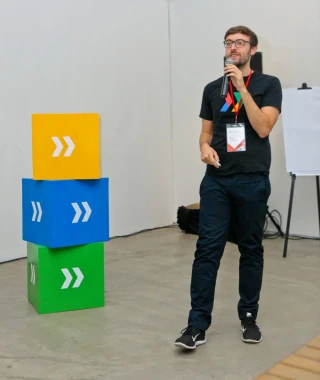
Hi, I'm Giles Thomas.
Founder of AcquireConvert, the place where ecommerce entrepreneurs & marketers go to learn growth. I'm also the founder of Shopify agency Whole Design Studios.