Photographers Price List: Cost Guide (2026)

If you're comparing a photographers price list for your Shopify store, the real question is not just "What does a shoot cost?" It's "What kind of photography will actually help me sell more profitably?" Product photography pricing varies widely based on the shot type, styling, editing, usage rights, and how many SKUs you need photographed. For most ecommerce brands, the smartest approach is to match your spend to your catalog stage. Simple white background images cost less, while styled lifestyle images and campaign assets cost more but may support stronger merchandising. At AcquireConvert, Giles Thomas brings a Shopify Partner perspective to this decision, helping store owners weigh cost against conversion impact. This guide breaks down common pricing models, realistic ranges, and when it makes sense to hire a pro versus use AI-supported tools.
Contents
Overview
A photography price list can look confusing because photographers price in different ways. Some charge per image, some per product, some per hour or day rate, and others bundle shooting, retouching, and usage rights into a project quote. For ecommerce brands, that difference matters because the cheapest quote is not always the lowest total cost.
If you're still deciding what setup you need, reviewing a product photography studio setup first can help you understand what drives cost. A simple tabletop session for clean catalog photos is very different from a styled brand shoot with props, models, and art direction.
In practical terms, most Shopify merchants need three levels of imagery: clean product page images, a smaller set of conversion-focused lifestyle images, and occasional campaign or social content. That is why many stores now combine professional photography with AI editing tools. ProductAI's current listed tools include AI Background Generator, Free White Background Generator, Increase Image Resolution, Remove Text From Images, Background Swap Editor, Place in Hands, Magic Photo Editor, and Creator Studio. The pricing data was not provided in the product feed, so no cost assumptions should be made here. Still, these tools point to a common workflow, shoot a solid base image once, then use editing and variation tools to extend its value.
For store owners comparing human services with software, this is usually the most useful lens: what must be photographed from scratch, and what can be enhanced after the shoot.
Pricing and Costs
There is no single commercial photography price list, but most ecommerce photography quotes fall into a few common models:
Per photo pricing: often used when you need a fixed number of edited deliverables. This works well for small catalogs because budgeting is straightforward.
Per product pricing: common when each SKU needs multiple angles. Make sure you confirm whether the quote includes retouching, clipping paths, and alternate crops.
Hourly or day rate: better suited to larger shoots with many variables, such as apparel, cosmetics, or lifestyle scenes.
Project-based pricing: often the best fit for growing brands because it bundles pre-production, shooting, editing, and usage rights into one number.
For a basic ecommerce catalog shoot, many merchants can expect entry-level service providers to charge modest rates for white background images, while experienced commercial photographers charge significantly more for advanced styling, art direction, and post-production. Costs usually rise based on product complexity, reflective materials, ghost mannequin work, on-model photography, and licensing terms.
If you're comparing a photographer against editing software, remember that software subscription cost and photography service cost solve different problems. ProductAI tools such as the AI Background Generator or Free White Background Generator may reduce editing time, but they do not replace a strong original image in every case. For many Shopify stores, the most cost-effective route is a limited professional shoot, followed by AI-assisted cleanup and asset expansion.
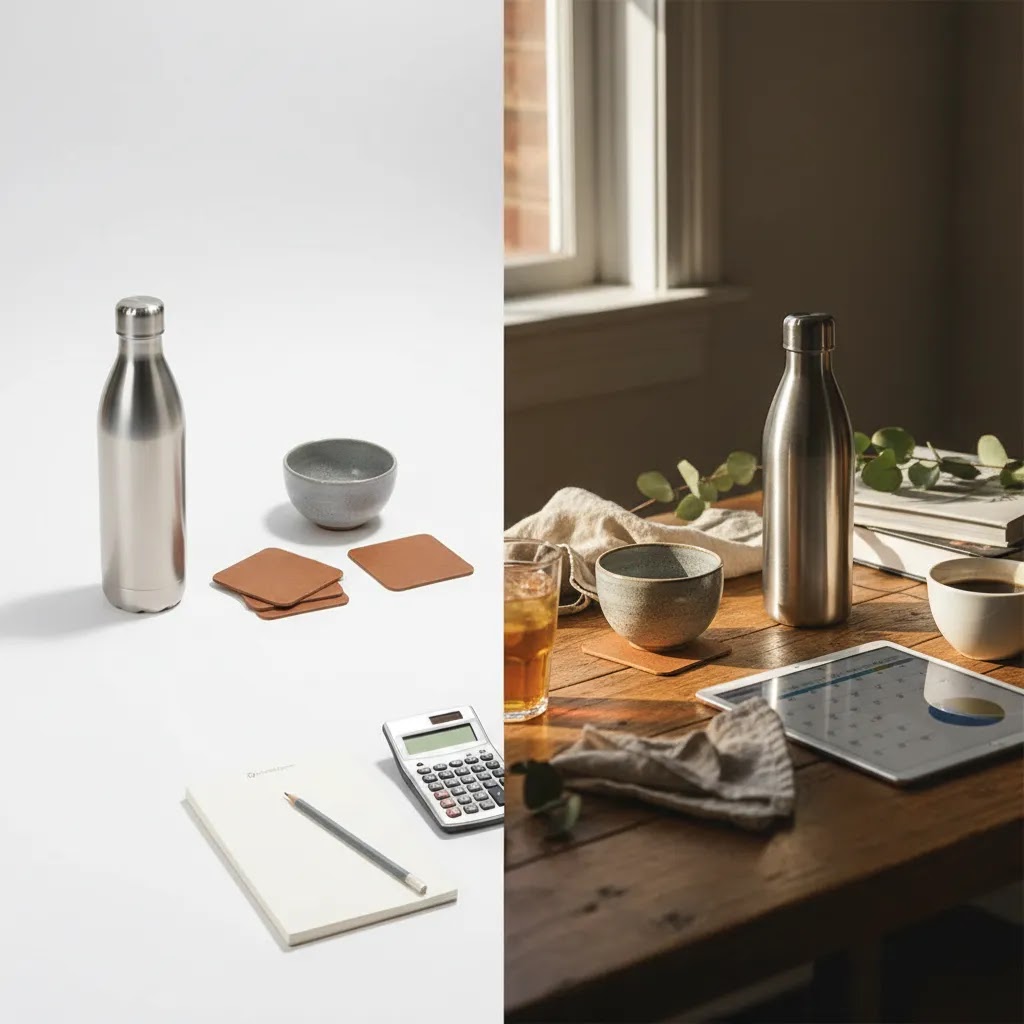
Product Photography Rate Benchmarks (Per Photo, Per Product, Hourly, Day Rate)
If you have not hired a photographer before, it is hard to know whether a quote is fair because pricing can be presented in totally different units. These benchmarks are meant to help you sanity-check ranges, not lock you into a single number. Your actual price will depend on your product type, styling needs, and the level of retouching required.
Per photo (delivered final): Many ecommerce packshot quotes land somewhere around $25 to $150 per delivered image for clean, consistent catalog work. Styled or advertising-focused images often run higher, commonly $150 to $500+ per delivered image, because you are paying for set styling, lighting complexity, and more time in post-production.
Per product (SKU): A per-SKU quote typically makes sense when you need multiple angles per product. For simple items on white, you may see ranges around $50 to $300 per SKU for a small set of angles, with higher ranges for apparel, reflective packaging, or anything that needs careful shaping and cleanup. The key detail is the included angle count and the retouching standard.
Hourly rates: You will often see $50 to $150 per hour for newer photographers or small studios doing straightforward catalog work, and $150 to $300+ per hour for experienced commercial photographers and retouchers. Hourly can work well when the product list is uncertain, but it can also become expensive if your team is still figuring out the shot list on the day.
Half-day and day rates: Many studios quote a half-day (often 4 hours) or full-day (often 8 hours) shooting fee, commonly in the $500 to $2,000+ range for smaller providers and $2,000 to $6,000+ for established commercial teams. In many cases, the day rate covers capture time and basic setup, while retouching, advanced clipping paths, and usage licensing may be quoted separately.
Packages: For Shopify merchants, a package is often the most practical format because it bundles a defined outcome. A lean packshot package might include a fixed number of SKUs with 3 to 6 angles each and basic cleanup. A mid-tier package may add consistent shadows, better styling, and tighter color matching across variants. A high-end commercial package usually includes creative direction, prop sourcing, model or location work, and heavier post-production.
Here is what many store owners overlook: what is included varies as much as the rate. One quote might include clipping paths and consistent shadowing, another might deliver quick edits with minimal cleanup. Even file delivery standards can change the real cost if you need square crops for Shopify product grids, 4:5 for paid social, and wide crops for banners.
From a practical standpoint, price changes quickly as scope changes. More angles per product increases both capture time and editing time. Variants can double the workload if each color needs separate shots. Ghost mannequin and apparel fit work can add a meaningful post-production step. Reflective products like glass and glossy packaging typically require slower, more deliberate lighting and retouching. Tight turnaround can trigger rush fees, especially if the photographer needs to prioritize your edit queue over other client work.
Trust and Credibility
Photography pricing is one of those areas where vague quotes create expensive surprises. A reliable photographer should be clear about exactly what is included: number of final images, resolution, retouching level, background treatment, file delivery, turnaround, reshoots, and licensing. If those terms are not written down, your final invoice may end up higher than expected.
This is where an ecommerce-first review process matters. AcquireConvert evaluates decisions through the lens of store performance, not just creative quality. Giles Thomas's background as a Shopify Partner is especially relevant here because image quality affects product pages, collection pages, ad creatives, and overall conversion rate optimization. If your store relies on Google Shopping or paid social, photography quality can influence click-through rate as much as onsite conversion.
Trust also comes from process. Ask photographers for ecommerce-specific samples, not just editorial work. A strong product photographer should understand consistency across variants, image ratios for Shopify themes, and the difference between marketplace-compliant images and brand-led creative assets.
Key Pricing Factors
What you pay is driven less by the phrase "photoshoot price list" and more by the scope hidden behind the quote. These are the biggest cost drivers for ecommerce brands:
Shot type: White background packshots are usually the lowest-cost option. Lifestyle, in-context, and model photography cost more because they require styling, set building, or talent.
Product complexity: Jewelry, cosmetics, glass, reflective packaging, and textiles with tricky drape often take longer to light and retouch.
Image volume: The more SKUs and angles you need, the more important process efficiency becomes. Large catalogs often benefit from standardized shot lists and templated editing.
Editing requirements: Background cleanup, color correction, shadow work, wrinkle removal, and compositing can push costs up quickly. Tools like Remove Text From Images, Increase Image Resolution, and Magic Photo Editor may help extend usable assets after the shoot, depending on the starting file quality.
Usage rights: Ecommerce-only use is often priced differently from broader advertising rights. If you plan to use the same images in paid social, display ads, print, or retail packaging, ask for licensing details before approving the estimate.
Turnaround time: Rush delivery typically adds fees. If your launch dates are fixed, build extra lead time into the schedule.
Some brands now blend traditional shoots with AI-supported content workflows. If you are exploring that route, our guide to ai photography is a useful starting point. For background cleanup and visual consistency, you can also browse AcquireConvert's Background Removal & Editing resources or the wider Catalog Photography hub.
What Photographers Usually Charge Per Photo (And Why “Per Photo” Quotes Can Mislead)
Per-photo pricing sounds simple, but it can be one of the easiest ways to misunderstand a quote. The reality is that “per photo” can mean different things depending on the photographer’s workflow and what they count as a “photo.”
Consider this: a photographer may capture 30 to 60 frames of a single product to get the perfect angle, reflection control, and focus. Your quote should be based on delivered finals, not captured frames. If you are comparing multiple quotes, ask each photographer to confirm in writing the number of delivered, fully edited final images you will receive per SKU.
What many store owners overlook is the hidden cost drivers that often attach to per-photo pricing:
If you are considering a per-photo rate, here are the questions that typically protect you from surprises:
The way this works in practice is simple: per-photo pricing can be great when the deliverables are tightly defined. If they are not, hourly or project-based quotes can actually be more predictable because everything is spelled out as a scope.
Pros and Cons
Strengths
Considerations
A Simple Pricing Rule of Thumb for Budgeting a Shoot
If you are trying to budget without overthinking it, a simple rule of thumb is to split your budget across three buckets. This is inspired by the “20/60/20” style of thinking, but you should treat it as a planning tool, not a universal rule.
Capture: This is the shoot time itself. It covers studio time, lighting, and the photographer actually producing consistent base images.
Post-production: This is where ecommerce images often win or lose. Clean cutouts, consistent shadows, accurate color, and file prep for Shopify can take real time, especially for reflective products and apparel.
Contingency: This is the buffer that keeps the project from going off the rails. It can cover revision rounds, reshoots, shipping products back and forth, replacement samples, rush fees, and extra exports once you realize you need new crops for ads.
For most Shopify store owners, the practical priority is to fund PDP “must-haves” first. That usually means a consistent hero image, a few supporting angles, and any detail shots that prevent returns or support confident buying. After that, lifestyle and ad creative become the second layer, especially for your top sellers. Then keep a buffer for variants, because a new colorway or a packaging refresh can quietly add a lot of work.
Think of it this way: sometimes it is smarter to shift budget from shoot time to post-production. If you sell glossy packaging, glass, or metal, you may need heavier retouching and reflection control. If you sell apparel, you may spend more on capture and styling to get fit and drape right, then use post-production for consistency across the line. If your product is simple but your catalog is large, efficiency and templated editing matter more than elaborate set builds.
This approach also works well with a hybrid workflow. You can invest enough to get strong base captures, then use tools like background generators, cleanup, and resizing to create additional formats. Just make sure a human reviews outputs before publishing, especially if color accuracy or product realism is critical.
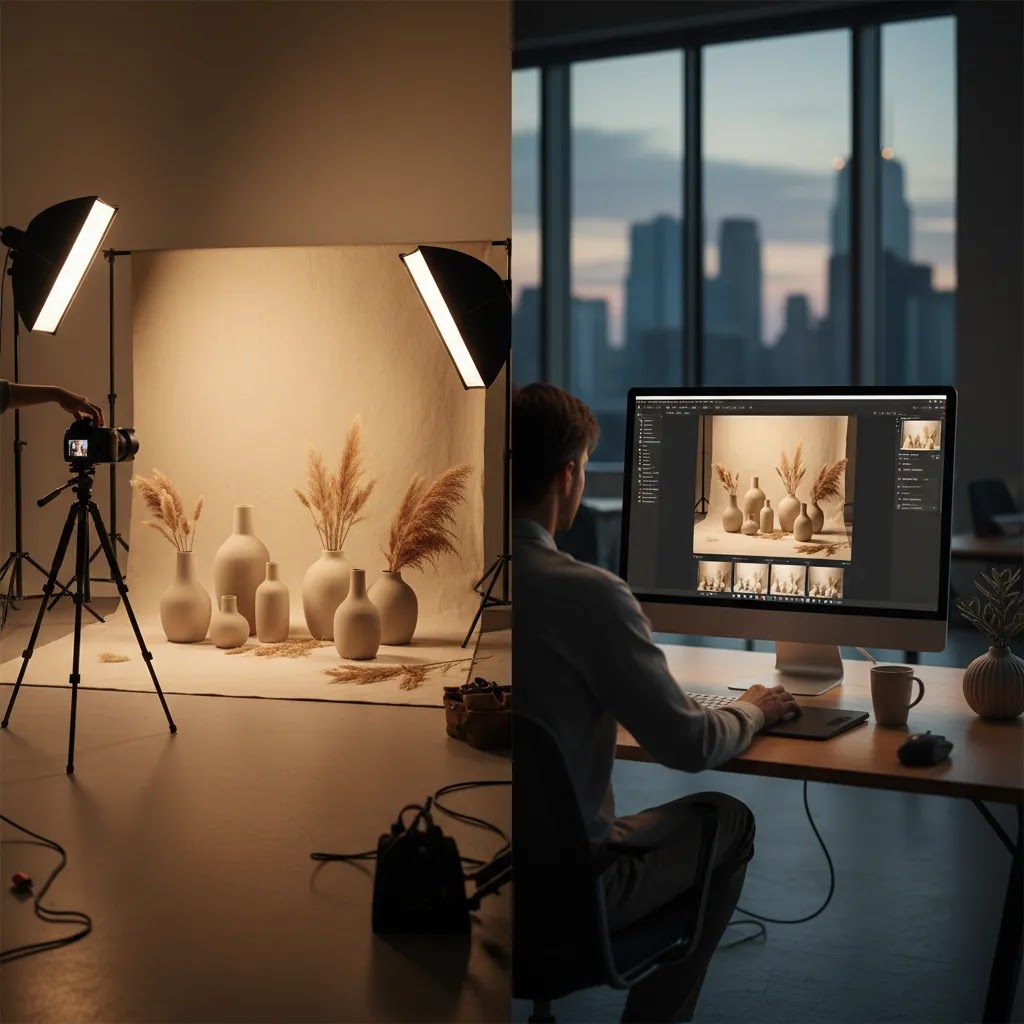
Who This Approach Is Best For
This pricing framework is best for Shopify merchants who are actively comparing photography service quotes and want to avoid under-scoping their project. It is especially useful for brands launching a new catalog, refreshing outdated PDP images, or preparing creative for paid acquisition.
If you are a smaller store, you may not need a full commercial photography package right away. A leaner mix of clean studio images plus selective AI enhancement can be enough to get products live faster. If you are in beauty or cosmetics, AI-supported creative concepts can also overlap with tools discussed in our ai makeup generator coverage. If you want a software-led alternative for quick image cleanup, our review of photoroom may help you compare options.
How to Get Started
Start by listing your actual asset needs, not just asking for a generic photographer price list. Count your SKUs, note how many angles each product needs, and separate must-have PDP images from nice-to-have lifestyle shots.
Next, brief photographers using a fixed shot list. Include dimensions, desired aspect ratio, background style, reference images, and where the assets will be used. This keeps quotes comparable.
Then ask three practical questions before you sign anything: what editing is included, what usage rights are included, and how many revision rounds are included. Those answers usually matter more than the headline rate.
Finally, consider a hybrid workflow. Use a photographer for base image capture, then extend the content set with tools like Creator Studio, Background Swap Editor, or Place in Hands where appropriate. That can be a practical way to control costs while still improving your store's presentation.
Frequently Asked Questions
How much should I expect to pay for product photography?
It depends on whether pricing is per image, per product, hourly, or project-based. Simple white background ecommerce images usually cost less than styled or model-based shoots. Your total may also increase with retouching, complex products, and licensing. The best way to compare quotes is to standardize the brief and confirm exactly what deliverables are included.
What should be included in a photography price list?
A useful photography price list should spell out shooting fees, editing, file count, file format, delivery timing, revisions, reshoots, and usage rights. For ecommerce, it should also clarify image dimensions and whether assets are prepared for Shopify product pages, marketplaces, or paid ads. If that detail is missing, ask before approving the quote.
Is per-photo pricing better than hourly pricing?
Per-photo pricing is usually easier for small catalogs because you can predict total spend more clearly. Hourly or day-rate pricing often works better for larger or more creative shoots where timing is harder to estimate. Neither is automatically better. The right model depends on how standardized your products and shot requirements are.
What is a reasonable price for a photographer?
A reasonable price is one that matches the complexity of what you are asking for and is clear about deliverables. For straightforward ecommerce packshots, you may see per-image rates in the tens to low hundreds of dollars, while lifestyle or campaign work can be hundreds per image or priced as a day rate plus retouching. The most important part is that the quote clearly states how many edited final images you get, what retouching level is included, and what usage rights are covered.
What do photographers usually charge per photo?
For ecommerce, per-photo pricing often falls somewhere around $25 to $150 per delivered, edited image for clean catalog shots, with higher ranges for styled or advertising images. Pricing varies widely based on product complexity, styling, and retouching. Before you compare rates, confirm whether “per photo” means per delivered final image, and whether alternate crops or file exports are included.
How much do beginner photographers charge per hour?
Beginner or early-career photographers often charge around $50 to $150 per hour for basic product photography, depending on location, experience, and what editing is included. A lower hourly rate can still become expensive if the shoot is not well planned, so you will usually get a better outcome by locking in a shot list and confirming what post-production is included.
How much does a photographer cost for 2 hours?
If a photographer charges hourly, two hours could cost roughly $100 to $600+ based on the hourly rate. In many cases, the bigger cost is not the shoot time itself but the editing and file prep after the shoot. Some photographers also have a minimum booking length or a small-session fee, so it is worth confirming minimums, what editing is included, and whether you are paying for delivered final images or just capture time.
Can AI tools replace a professional product photographer?
Sometimes they can reduce the amount of paid photography you need, but they do not replace every part of the process. AI tools are often strongest for background changes, cleanup, and creative variations. They are less reliable when the original capture is weak, reflections are difficult, or exact product realism is essential. Most stores get better results from a hybrid workflow.
Do I need lifestyle photos as well as white background photos?
In most cases, yes. White background images are important for clean product pages and marketplace compliance, while lifestyle images help shoppers understand scale, use, and brand feel. If budget is tight, prioritize clean PDP images first, then add a smaller number of lifestyle shots for top sellers and campaign pages.
How can I keep photography costs under control?
Scope the project tightly. Standardize your shot list, group similar products, avoid last-minute styling changes, and clarify licensing before the shoot. You can often control spend by capturing strong core product images once, then using editing tools to create additional formats and scenes afterward rather than organizing multiple reshoots.
Does better photography improve conversion rate?
It may, especially if your current images are weak or inconsistent, but results vary by niche, traffic source, product type, and pricing. Better images typically support trust and reduce uncertainty for shoppers. They also tend to help merchandising and ad performance. Still, photography works best alongside strong product pages, pricing, reviews, and clear offers.
Key Takeaways
Conclusion
A good photographer price list should help you make a confident buying decision, not leave you guessing what the final bill will be. For most ecommerce brands, the right choice is not the cheapest quote. It is the option that gives you consistent, conversion-ready assets without unnecessary production overhead. If you're running a smaller Shopify store, start with essential catalog images and avoid overbuying creative complexity. If you're scaling, invest in a more structured shoot with clear licensing and post-production terms. Where it makes sense, combine professional capture with AI-based editing to extend the value of every shot. Your next step is simple: define your shot list, compare quotes line by line, and choose the workflow that fits your current catalog and growth plan.
Disclosure: AcquireConvert may receive affiliate compensation from some third-party links referenced in this article, where applicable. Product tool information cited here is based on currently available source data. Photography costs, software pricing, and performance outcomes vary by provider, store niche, traffic, implementation quality, and creative requirements. Nothing in this article should be treated as a guarantee of results.
Hi, I'm Giles Thomas.
Founder of AcquireConvert, the place where ecommerce entrepreneurs & marketers go to learn growth. I'm also the founder of Shopify agency Whole Design Studios.