Product Photography Chicago: What to Expect (2026)

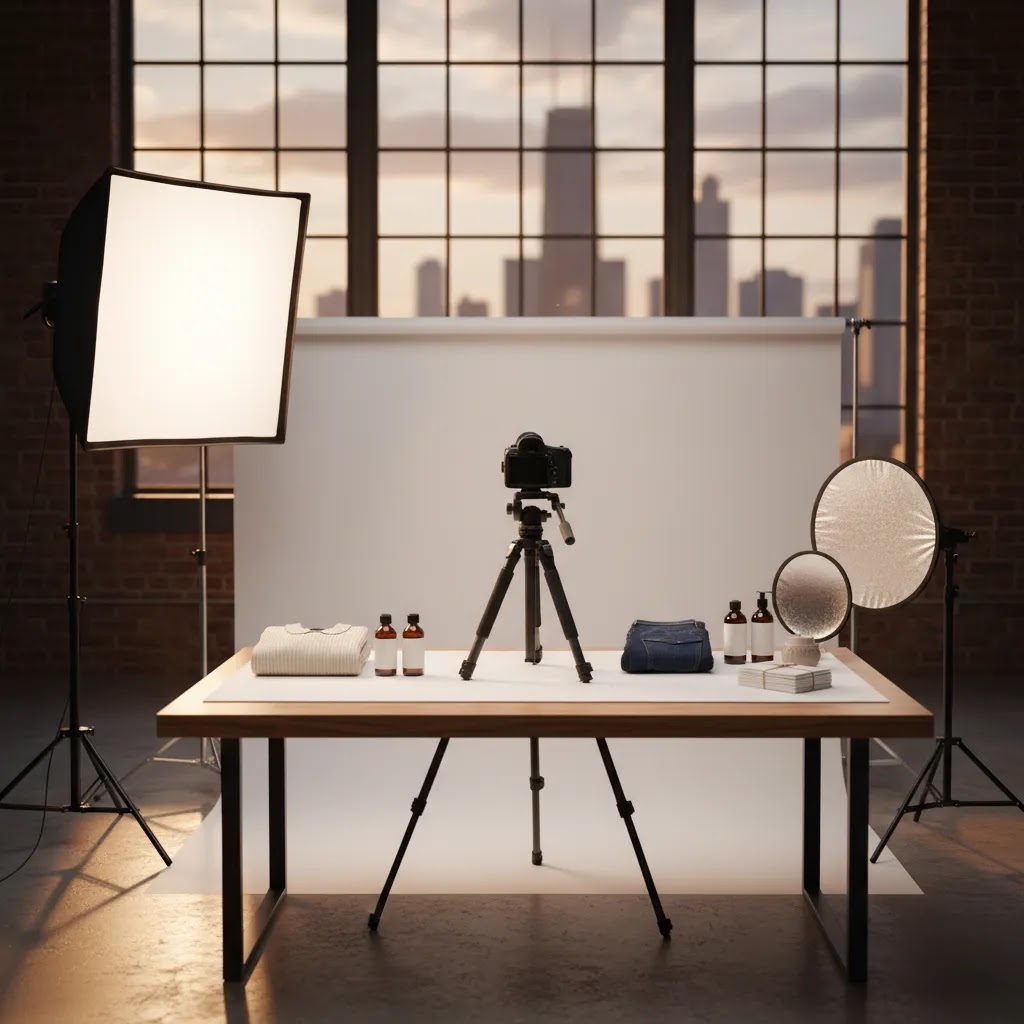
If you are searching for product photography Chicago services, you are usually close to a buying decision. You need images that look professional, fit your brand, and help convert traffic on Shopify, Amazon, or your own website. In practice, Chicago sellers have three realistic options: hire a local studio, work with a freelance product photographer, or use AI-assisted image tools for faster turnaround on simple catalog assets. The right choice depends on your product type, required image volume, and how much creative control you need. For most ecommerce brands, the best route is not automatically the most expensive one. It is the option that gives you usable images for product pages, ads, and marketplaces without slowing down launches or eating too much margin.
Contents
Overview
Product photography in Chicago covers a wide range of services, from clean white-background catalog shots to styled lifestyle campaigns for ecommerce brands. If you sell on Shopify, the core question is not just whether the images look good. It is whether they support conversion rate optimization by making your products clearer, more credible, and easier to buy.
For many merchants, a local product photography studio is the best fit when you need repeatable quality, art direction, and consistency across a full catalog. Freelancers can be a good option for smaller shoots or founder-led brands that want more flexibility. If you are comparing service models, our guide to choosing a product photographer helps clarify what matters before you commit.
There is also a third route. AI-assisted product image workflows are now useful for straightforward ecommerce tasks such as background cleanup, white-background outputs, or creative variations. That does not replace a full studio for every brand, but it can reduce reshoot costs and speed up merchandising. AcquireConvert reviews these options through a practical ecommerce lens, shaped by Giles Thomas’s experience as a Shopify Partner and Google Expert, so store owners can choose what is likely to move the needle rather than just look impressive in a portfolio.
If you are still mapping the space, our Catalog Photography section and broader E Commerce Product Photography resources can help you compare formats, use cases, and workflows.
Studio vs DIY vs “Remote Studio” Services
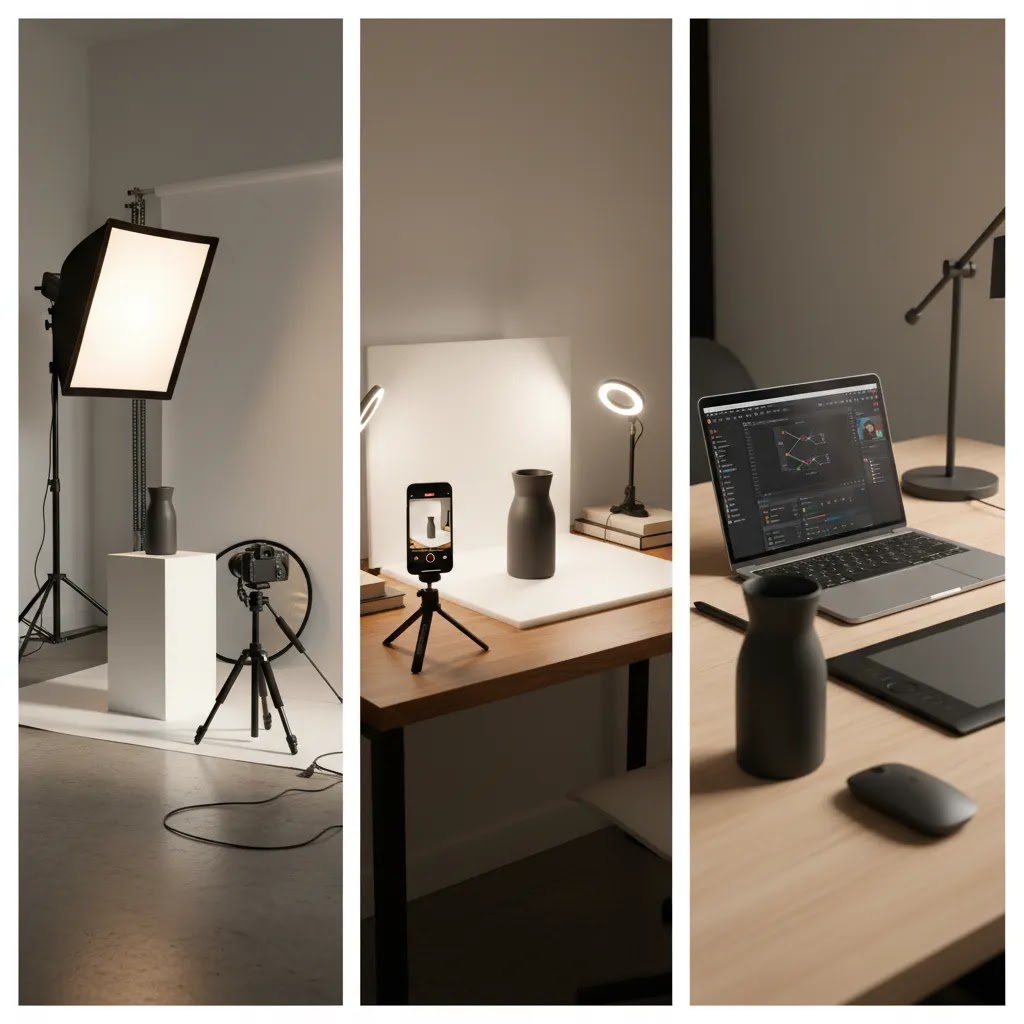
Here’s the thing: “Chicago product photography” does not automatically mean you have to book a traditional studio in the city. You can usually pick from three service models, and each one can be the right move depending on how your Shopify store actually operates.
Traditional Chicago studio (or local freelancer)
This is the best fit when you need hands-on control, category expertise, and consistent lighting across a lot of SKUs. It is also where you typically get the strongest results for products that are hard to capture well: reflective packaging, glossy cosmetics, glass, jewelry, and anything color-critical. Apparel is a big one too. Ghost mannequin, steaming, pinning, and repeatable flat lay take real production discipline.
Now, when it comes to timing, local studios often schedule around shoot days and batch retouching. That is great for consistency, but it can mean you are working around availability, especially in peak retail periods.
DIY in-house (with or without AI-assisted editing)
DIY makes sense if you have low SKU volume, you are early-stage, or you need speed more than perfection. In practice, the DIY trap is inconsistency: different lighting day to day, shifting crop and scale, and color that changes across variants. That hurts conversion because your collection pages look messy and buyers lose confidence.
AI-assisted editing can help here. Background cleanup, white background conversions, and simple scene variations can speed up production, as long as you have decent source photos and someone on your team reviewing for realism and color.
“Remote studio” or standardized production services
Some services position themselves between a local studio and DIY. Think of it as a standardized workflow with defined per-photo pricing and fast turnaround, where you ship products in, they shoot to a consistent template, and you get ecommerce-ready files back.
For most Shopify store owners, this can work well when you want predictable outputs without investing in your own setup. The tradeoff is control. If you need highly specific art direction, unusual props, complex styling, or constant iteration, a standardized workflow can feel restrictive.
A practical hybrid framework for Shopify sellers
What many store owners overlook is that you do not have to choose one model forever. A hybrid approach is often the most commercial option:
From a practical standpoint, the products that tend to break remote and DIY workflows are the ones that demand perfect texture and color, or detailed shaping: shiny materials, transparent items, complex apparel, and highly reflective packaging. Those are usually worth doing locally with experienced hands.
Pricing and Costs
Chicago product photography pricing varies widely because service scope varies widely. A simple catalog session with white-background shots usually costs less than styled creative work with props, models, retouching, and multiple aspect ratios for ads and marketplaces. Most ecommerce brands should expect pricing to reflect some combination of per-image fees, day rates, setup fees, retouching charges, and usage complexity.
If you are selling straightforward products and only need compliant marketplace imagery, your cheapest path may be a lean studio workflow or AI-assisted editing after a basic shoot. For example, ProductAI offers several entry points for store owners who want to improve or adapt existing product photos. Available tools listed in current data include AI Background Generator, Free White Background Generator, Increase Image Resolution, Remove Text From Images, Background Swap Editor, Place in Hands, Magic Photo Editor, and Creator Studio. Current product data provided does not include pricing tiers or app-style subscription costs, so any cost comparison with Chicago photography services has to be treated as incomplete.
That matters for decision-making. If a provider cannot give you a clear estimate for shot count, retouching rounds, and deliverables, total cost can drift upward fast. Ask for pricing based on SKU count, number of final selects per SKU, turnaround time, and whether revisions are included. If you are comparing service work with AI options, evaluate total output cost, not just the starting quote.
Product Photography Pricing Benchmarks in Chicago
Most Chicago providers structure quotes in a few common ways. Even when the total price “varies,” you can usually normalize quotes if you know what format you are looking at.
Common quote structures you will see
In many cases, you will also see retouching as a separate line item. Basic cleanup and color correction may be included, while advanced work is billed per image or per hour.
What is often included vs commonly billed extra
Included tends to mean: a consistent lighting setup, basic color correction, minor dust cleanup, and standard file export. Extras are where invoices can drift, especially if your products show up unprepared or the brief is vague.
Common add-ons include: styling and props, steaming and prep time for apparel, ghost mannequin, model and talent fees, clipping paths and complex cutouts, advanced skin or surface retouching, reflective surface control, rush fees, and special usage or licensing terms for broader advertising needs. The reality is that “white background” can be simple or complicated depending on edges, transparency, and how perfect you need it to look.
A quote comparison checklist (so you can compare like for like)
Consider this before you choose a provider. Ask every vendor to quote the same spec:
If two quotes are not based on the same SKU count, angle count, and retouching assumptions, they are not really comparable. Getting this right upfront usually saves money, not just time.
Trust and Credibility
Trust matters more in product photography than many merchants expect. A missed deadline can delay product launches, ad creative, seasonal campaigns, and marketplace approvals. A poor shoot can also create hidden costs because you may need to reshoot hero images, re-edit files, or rebuild PDP assets.
When assessing a Chicago provider, look for consistency across categories, not just one standout portfolio piece. Apparel product photography, cosmetics, hard goods, and reflective surfaces all create different production challenges. Ask to see complete sets, including front, side, detail, scale, and lifestyle images. For beauty and cosmetic brands, AI-assisted creative workflows are becoming more relevant, especially in visual concepting. Our cross-hub guide to an ai makeup generator shows how AI can support visual production in specific niches without replacing every traditional photography need.
If you are considering AI-heavy workflows instead of a local studio, compare output quality and editing control carefully. Our photoroom review is useful for merchants evaluating whether software can replace part of a manual production process. In most cases, the most trustworthy choice is the one with clear deliverables, revision policy, and experience producing ecommerce-ready files rather than just social-friendly visuals.

Key Features to Expect
A strong Chicago product photography service should offer more than a camera and a nice set. For ecommerce, the practical features matter most.
First, expect clean catalog outputs. That includes white-background product image photography, accurate color handling, and consistent framing across variants. This is essential for Shopify collections, Amazon listings, Google Shopping feeds, and any store that depends on visual consistency.
Second, expect flexible file delivery. You should be able to request web-ready files, high-resolution masters, cropped social formats, and marketplace-safe image versions. If your team manages uploads in-house, ask for naming conventions that match SKU structure.
Third, expect retouching and background control. AI tools now make this much faster in some cases. ProductAI’s currently listed tools show where the market is going: background generation, white-background conversion, resolution enhancement, text removal, scene editing, and product-in-hand placement. For simple website product photography, those capabilities can reduce manual editing time and help you test creative variants before booking a full reshoot. If you are new to this shift, our primer on ai photography explains where AI is genuinely useful for ecommerce and where it still needs human oversight.
Fourth, expect category-specific styling. Apparel product photography and clothing product photography often need ghost mannequin, flat lay, on-model, and detail shots. Beauty products may need texture, ingredient, and scale imagery. If a Chicago studio does not have a process tailored to your product type, image quality may look polished but still underperform on the page.
Finally, expect workflow clarity. Good providers outline prep requirements, shipping instructions, shot lists, timeline, revision rounds, and final delivery format before the shoot begins. That operational discipline usually matters more than flashy marketing.
Pros and Cons
Strengths
Considerations
Who It’s Best For
Chicago product photography services are best for ecommerce brands that already know their catalog direction and need dependable output. This usually includes Shopify stores preparing a launch, brands refreshing product detail pages, Amazon sellers needing compliant imagery, and growing merchants investing in paid acquisition where creative quality affects click-through and conversion.
If you are a smaller store with limited traffic, a hybrid approach often makes more sense. Use a local studio for hero shots, then support merchandising with AI-assisted editing tools for alternate backgrounds, resized assets, or quick testing. That can be a more practical route than commissioning full lifestyle shoots for every SKU.
How to Get Started
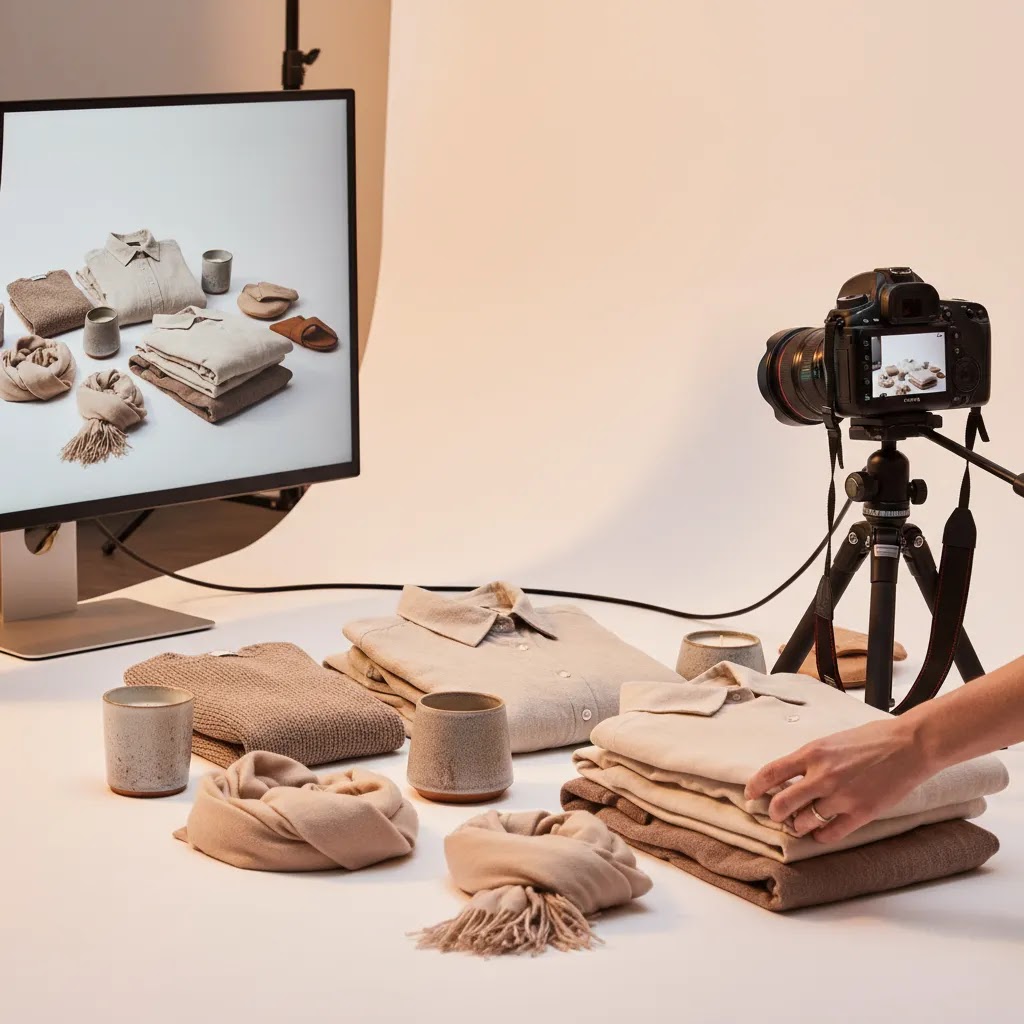
Start by defining what the images need to do. Are they for Shopify PDPs, Amazon listings, email campaigns, paid social ads, or all of the above? Your use case shapes the shot list and your budget.
Next, sort your catalog by complexity. Flat product photography for soft goods is different from glass, cosmetics, jewelry, or reflective packaging. Then request quotes using the same brief for every provider so you can compare properly. Include SKU count, required angles, background style, retouching needs, file dimensions, and target turnaround.
After that, decide where AI fits. If your team wants a lighter production workflow, you may be able to handle certain edits and creative variants internally. If not, a local service partner may be worth the higher upfront spend. Before signing, review sample sets, revision policy, and delivery specs. This is also a good point to compare a studio-led route with modern AI workflows, especially if speed matters more than bespoke art direction.
Preparing Products for a Shoot
The way this works in practice is simple: the more time your photographer spends fixing avoidable issues, the more you pay. Even if the invoice does not list “fixes,” it usually shows up as extra retouching, extra shoot time, or extra revisions.
A pre-shoot prep list that reduces retouching and reshoots
What to send to the photographer (so your outputs match Shopify needs)
Send a shot list that is written like an ecommerce brief, not a creative mood board. Include the SKU, required angles, and which image is the hero. If you have crop rules for Shopify product detail pages, specify them, especially how tight you want the framing and whether you need space for zoom and cropping.
If you also sell on Amazon, note that requirements can be stricter there. Ask for separate deliverable sets if needed so you are not re-cropping later. File naming is another one that matters. Agree on a naming convention that matches your SKU structure so uploading to Shopify does not turn into a manual sorting project.
Logistics most merchants only learn the hard way
Think through shipping and returns upfront. If inventory is being shipped to a studio or a remote service, confirm who is responsible for inbound and outbound shipping, how products are tracked, and what happens if something is damaged in transit. For higher-value inventory, ask what insurance coverage exists and what is expected from you.
Also define the approval workflow before retouching starts. Many providers shoot a lot of frames and then retouch only the “selects.” Agree on how you will review selects, how many rounds of feedback are included, and what counts as a revision. That one decision often controls your timeline and your final bill.
Frequently Asked Questions
How much does product photography cost in Chicago?
It depends on shot complexity, product type, and deliverables. White-background catalog work usually costs less than styled lifestyle photography. Ask for quotes based on SKU count, angles per item, retouching, and turnaround time. Without that detail, two estimates can look similar upfront but lead to very different final invoices.
How much should I pay a photographer for a product shoot?
Most ecommerce shoots are priced based on a combination of volume and complexity. The most practical way to decide what you “should” pay is to back into cost per usable asset. Ask how many final images you get per SKU, what retouching level is included, and what deliverables you receive for Shopify, marketplaces, and ads. Then compare providers on cost per final delivered image set, not just a headline day rate or a per-photo number that hides extra fees.
Is local product photography better than AI-generated product photography?
Not always. Local photography is usually stronger for original hero images, difficult materials, and brand-specific styling. AI-generated product photography can work well for background swaps, alternate scenes, and scaled content production. Many ecommerce brands now get the best results from a hybrid workflow rather than choosing only one approach.
What should Shopify store owners ask before hiring a Chicago studio?
Ask about ecommerce experience, turnaround time, retouching policy, file formats, SKU-based pricing, and whether the studio has handled your product category before. Also ask for complete image sets, not just portfolio highlights. That gives you a better sense of consistency across a full catalog, which matters more than one strong hero shot.
Can I use Chicago product photography for Amazon and Shopify at the same time?
Yes, in many cases you can, but you need to specify platform requirements before the shoot. Amazon often has stricter image rules than a branded Shopify store. Request file sets tailored to each channel so you do not end up cropping or re-editing assets later, which adds time and cost.
What types of products usually need professional photography most?
Apparel, cosmetics, jewelry, reflective packaging, premium gift items, and tactile products usually benefit most from professional handling. These categories depend heavily on texture, color accuracy, and detail visibility. Commodity items with simple shapes may be more suitable for lighter production or AI-assisted image workflows.
Is AI a realistic option for apparel product photography?
AI can help with some apparel workflows, especially background cleanup, scene generation, and visual testing. It is less reliable when fit, fabric texture, drape, and color precision are critical. For clothing product photography, AI is often a support layer rather than a complete replacement for a studio, model, or flat lay setup.
How quickly can I expect usable ecommerce images?
Turnaround depends on shoot volume, complexity, and revision rounds. Simple catalog work may move much faster than styled campaigns. AI-assisted editing can shorten some production timelines, but results still depend on source image quality and review standards. Always ask for a realistic delivery schedule before sending inventory.
What is the 20 60 20 rule in photography?
In ecommerce photography, you will sometimes hear a rough “20 60 20” split used as a planning guideline. It usually means: about 20% of your effort goes into capturing strong source images, about 60% goes into lighting, styling, and setup consistency, and about 20% goes into post-production and delivery. The exact split depends on your product category, but the point is practical. Most of the work that makes product photos convert is in repeatable setup and control, not in clicking the shutter.
What is the 50 50 rule in photography?
The “50 50 rule” is typically used as a reminder that photography results are split between capture and post-production. For ecommerce, that translates to: you need both a clean, consistent shoot and a predictable editing workflow. If your source images are inconsistent, editing becomes expensive. If your editing is sloppy, even a great shoot can look unreliable on Shopify collection pages. Treat it as a balance check when you are choosing between DIY, studio, or a hybrid workflow.
Key Takeaways
Conclusion
If you are evaluating product photography in Chicago, the smartest approach is to choose based on output, workflow, and commercial fit, not just creative style. A local studio can be worth the investment if you need consistent catalog images, strong art direction, or category-specific expertise. If you are a smaller Shopify brand, a hybrid setup may be the better call, using professional photography where it matters most and AI tools to extend those assets further. That is often the best balance between speed, quality, and cost control. Your next step is simple: build a shot list, request like-for-like quotes, and decide whether you need a full-service provider, a freelance specialist, or an AI-assisted workflow that helps your store launch faster.
Disclosure: AcquireConvert may receive affiliate compensation from some third-party links or tool providers mentioned where applicable. Product and service availability, pricing, and feature scope can change. Any performance impact from product photography or AI image tools will vary based on your store’s traffic, niche, offer strength, creative execution, and implementation quality. No specific commercial outcome is guaranteed.
Hi, I'm Giles Thomas.
Founder of AcquireConvert, the place where ecommerce entrepreneurs & marketers go to learn growth. I'm also the founder of Shopify agency Whole Design Studios.