Product Photography Houston TX Pricing Guide (2026)

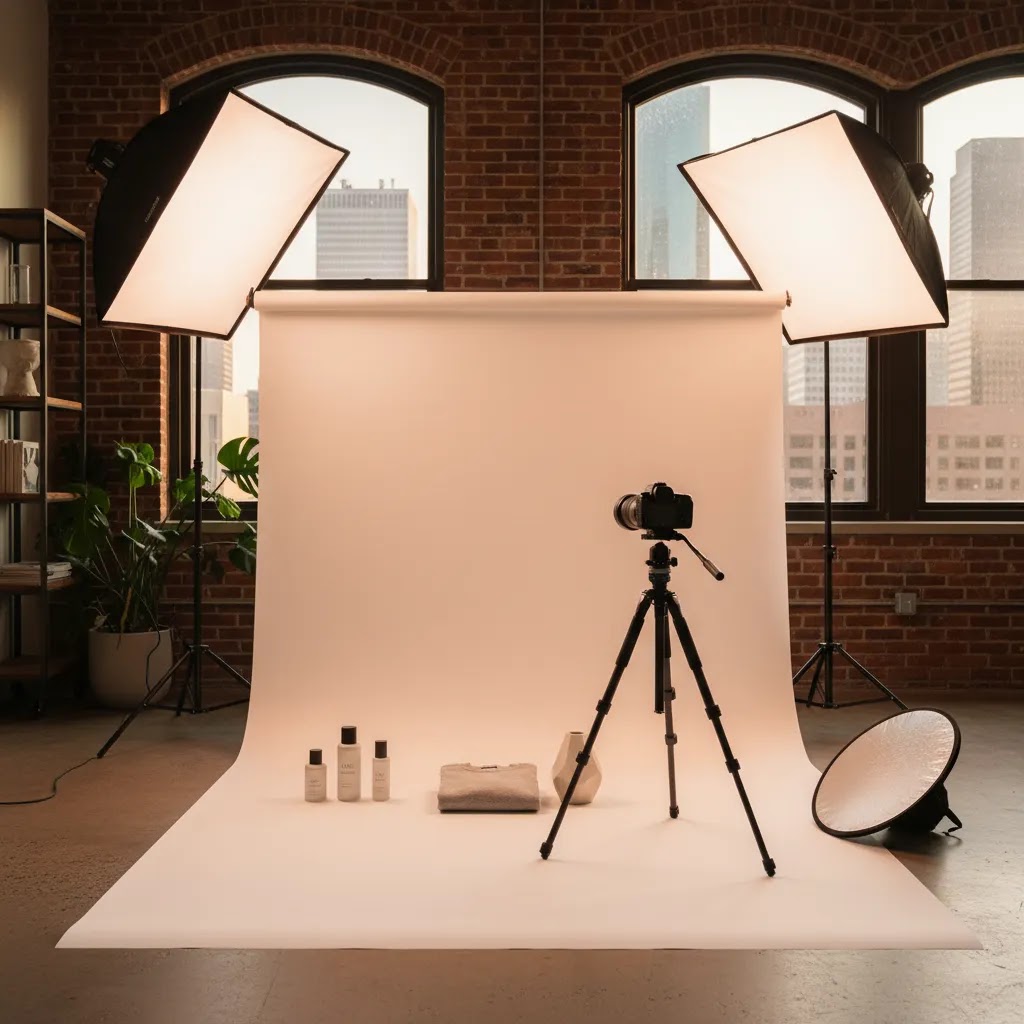
If you are searching for product photography houston tx, you are usually close to making a buying decision. You need clean images, a realistic price range, and a workflow that fits your Shopify or Etsy store. For most Houston sellers, the right choice comes down to three options: a local studio for polished custom work, a freelance product photographer for flexibility, or an AI-assisted tool for speed and lower production effort. My view is simple: use a Houston studio when brand presentation and consistency matter most, use AI for fast catalog expansion, and combine both if you sell across Shopify, marketplaces, and paid ads. AcquireConvert reviews visual commerce tools through the lens of real store performance, drawing on Giles Thomas’s experience as a Shopify Partner and Google Expert.
Contents
Overview
Houston gives ecommerce brands a broad mix of product photography options, from full-service commercial studios to smaller freelance setups. The practical question is not just who shoots the best photos. It is who can produce the right asset mix for your store, ads, email campaigns, and marketplaces without creating delays or overspending.
For a standard ecommerce workflow, most sellers need three image types: product on white photography for clean catalog listings, styled or lifestyle images for conversion-focused product pages, and resized creative for social and paid campaigns. If you are still comparing formats and workflows, start with this guide to a product photography studio so you know what a studio engagement should include.
Houston studios can be a strong fit for larger catalogs, premium packaging, cosmetics, food, industrial products, and corporate product photography. They also help if your team wants consistent lighting, retouching standards, and file delivery across hundreds of SKUs. On the other hand, newer Shopify stores may find that a hybrid workflow works better, using local shoots for hero images and AI tools for variants, backgrounds, and campaign creative.
That is where tools such as ProductAI come in. Based on the live product data available, ProductAI offers ecommerce image tools including AI Background Generator, Free White Background Generator, Increase Image Resolution, Remove Text From Images, Background Swap Editor, Place in Hands, Magic Photo Editor, and Creator Studio. The available tool data did not include public pricing or ratings, so any buying decision should include direct verification on the provider site before you commit.
What Houston Product Photography Services Usually Include
Most Houston providers package their services around asset types, image volume, and retouching depth. For ecommerce sellers, the key deliverables usually include white background product images, close-up detail shots, group images, scale references, packaging shots, and simple lifestyle compositions. If you sell on Shopify, Amazon, Etsy, or wholesale channels, ask for final exports sized for each channel before the shoot starts.
Studios often differ more in process than in camera gear. Some handle art direction, prop sourcing, styling, and shot lists. Others expect you to send a tight brief. If you want simple product photography for a growing catalog, make sure they can produce repeatable angles and lighting across new launches. This matters more than dramatic creative if your store depends on consistent product page layouts.
AI-assisted workflows can fill some of the gaps. ProductAI’s Free White Background Generator and AI Background Generator can help create alternate settings for paid ads, landing pages, or collection banners after your base assets are captured. The Background Swap Editor and Magic Photo Editor may also help teams repurpose existing product shots faster, while Increase Image Resolution can be useful for resizing older assets. If you are evaluating AI image workflows more broadly, this article on ai photography is a good next step.
For marketplace sellers, speed often matters as much as originality. Etsy product photography, for example, usually benefits from clean lead images and a few contextual shots that explain size, texture, or use. For beauty merchants, visual testing can cross into shade simulation or creative concept work, which makes this guide to an ai makeup generator relevant if you also sell cosmetic products.
If your needs are mostly clean cutouts and quick edits, you may also want to compare dedicated app-style options like photoroom against a local studio quote.
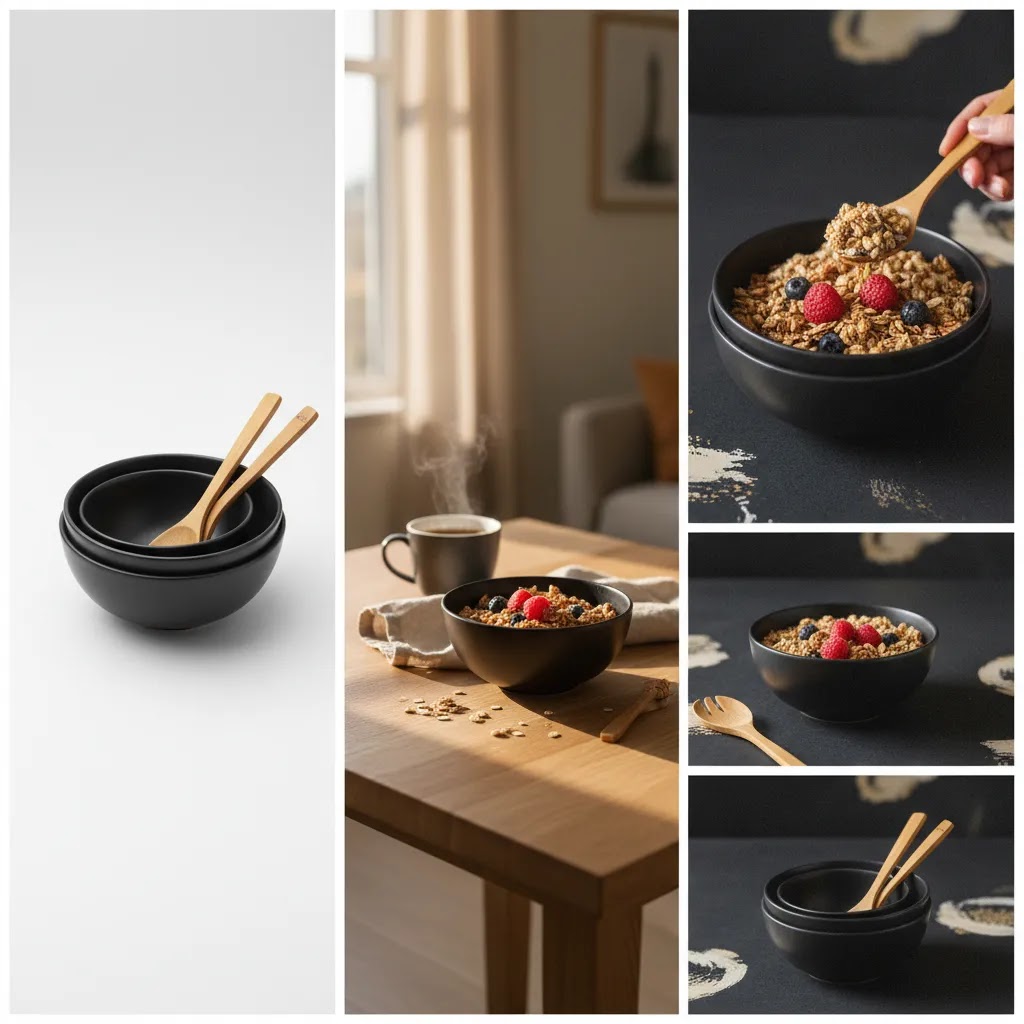
Houston Ecommerce Shot Types You Should Request
Here is the thing, most quote requests fail because the seller asks for “product photography” and the studio replies with a generic package. You will get a better outcome, and usually a cleaner quote, if you request the shot types that match how shoppers actually evaluate products on Shopify and Etsy.
Product on white photography is the backbone of most catalogs. It is what makes collection pages and search results feel consistent, and it is usually the easiest format to scale across many SKUs. If you want these to look premium, ask for a defined standard: true white background (not gray or cream), consistent shadow style, and color-accurate editing so your red is the same red across every product variation.
Flat lay photography is a practical choice for smaller items, bundles, kits, and products where arrangement helps people understand what they get. It also works well for Etsy listings because it can communicate handmade detail and scale without needing a full lifestyle set. What many store owners overlook is angle consistency: if you flat lay a category, keep camera height and framing consistent across the whole set so your collection grids do not look chaotic.
Ghost mannequin photography is most common for apparel because it shows shape without a model, and it can look more consistent than on-model if you have lots of sizes and colors. From a practical standpoint, it usually requires more prep than sellers expect: steaming, pinning, careful alignment, and more post-production to build the “invisible” interior. If you sell apparel, plan for that extra production time and make sure the studio has a clear retouching standard for collar lines, sleeves, and symmetry.
On-model product photography is often the best way to sell fit, scale, and style for clothing, accessories, and some beauty products. It can also be useful when your brand relies on identity and lifestyle. The reality is that it is not just “add a model,” it is scheduling, wardrobe, styling, and typically more selects to get the right expressions and poses. If you are paying for on-model work, ask for consistent poses and cropping rules so your Shopify product pages do not look like five different campaigns stitched together.
Campaign or lifestyle photography sits above the product page basics. It is designed for ads, email headers, landing pages, and brand storytelling. If you plan to run paid social or Google ads, consider requesting a small set of campaign assets alongside your white background shots so you can test creative angles without having to book a separate shoot later.
No matter which style you choose, ask for the details that actually affect conversion: consistent angles across SKUs (front, side, back, detail), texture clarity (especially for fabrics, leather, and matte finishes), and reliable color fidelity. Reflective products, glossy packaging, jewelry, and metallic surfaces tend to take longer because lighting and retouching are less forgiving, so it helps to flag those SKUs upfront when you request a quote.
Pricing and Costs
Houston product photography prices vary widely because studios quote in different ways. Some charge per image, others per hour, half day, day rate, or project bundle. In most cases, your final quote will depend on product size, styling complexity, number of angles, retouching needs, and whether the shoot includes models, props, or location work.
For straightforward product on white photography, smaller sellers often see pricing built around volume. A simple catalog shoot may be priced lower per image if you have consistent products and minimal retouching. Styled shoots, ghost mannequin apparel, reflective items, cosmetics, food, or technical products usually cost more because setup and editing take longer.
You should also ask about hidden production costs. Common extras include rush turnaround, deep retouching, clipping paths, prop purchases, talent, art direction, pickup and return shipping, and usage expansion for advertising. Ad creative needs can raise the price because your imagery has to work not only on product pages but also in product photography advertising formats across Meta, Google, and email.
For AI-supported alternatives, the live product data available here lists ProductAI tools and URLs, but it does not include public pricing tiers. That means I cannot responsibly quote plan costs in this review. If cost certainty is a priority, verify pricing directly from the ProductAI site before building it into your workflow. The useful comparison point is operational, not just financial: studios cost more but give you tailored creative control, while AI tools may reduce production time for background changes, white background cleanup, and asset variations after a shoot.
If your immediate need is clean catalog output, the broader White Background Photography category can help you compare approaches before you send products to a studio.
How to Compare Houston Product Photography Quotes (So You Can Compare Apples to Apples)
Houston quotes can look wildly different even when two studios are offering roughly the same output. Think of it this way, your job is to standardize the scope so you are comparing deliverables, not pricing formats.
First, clarify how the studio charges: per image, per SKU, by the hour, day rate, or a bundle. A per-image quote can be good for a tight SKU list with predictable angles. A day rate can make sense if you have lots of products and can keep the shoot moving. Bundles can be fine too, but only if the bundle defines exactly what you receive.
Now, when it comes to what “includes” actually means, ask the studio to put these specs in writing so you can compare fairly across providers:
Usage and rights is the other area where quotes can be hard to compare. You do not need to get overly legal, but you should clarify whether the quote covers ecommerce use on your Shopify site, Etsy listings, email marketing, and paid ads. Some commercial photographers treat advertising usage differently from website usage, and policies can vary, so it is better to align expectations upfront than discover a limitation after you build creatives around the images.
Trust and Credibility
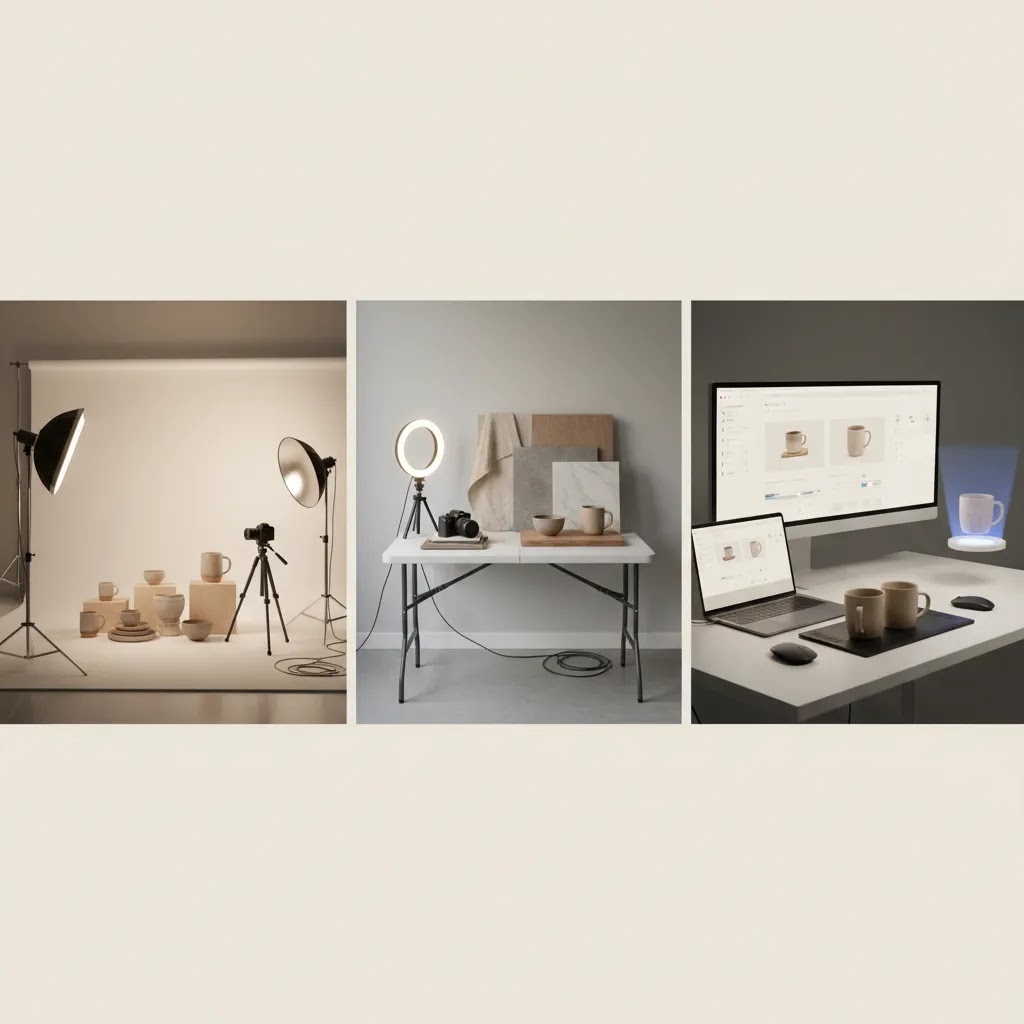
When you hire a Houston studio or adopt an AI product photography tool, trust should be judged on process clarity, not marketing language. Ask a local provider for recent ecommerce examples of product photography, not just editorial portfolio shots. You want proof they can shoot consistent front, side, back, detail, and packaging angles at scale.
Turnaround time is another trust signal. A good studio should be able to explain intake, prep, shot approval, post-production, and file delivery clearly. If they cannot tell you how revisions work, that usually becomes a problem later. For Shopify stores, consistency matters because uneven imagery can hurt the perceived quality of your catalog and create friction on collection pages.
On the AI side, the product data confirms ProductAI offers several ecommerce editing tools, but the available data set does not include ratings, review counts, or pricing. That does not make the tools unusable, but it does mean you should validate support quality, export controls, and commercial suitability yourself before rolling them out across a large catalog.
At AcquireConvert, we approach these decisions from the store owner’s side. Giles Thomas’s Shopify Partner and Google Expert background is useful here because image quality affects both conversion rate optimization and paid acquisition performance, especially for Shopping feeds, landing pages, and creative testing.
Pros and Cons
Strengths
Considerations
Who This Is Best For
This approach is best for Shopify and Etsy sellers who are close to purchasing photography services and need a realistic path, not generic inspiration. If you run a premium brand, have repeat launches, or need highly consistent imagery across a catalog, a Houston studio is often worth the cost. If you are a lean team with a growing SKU count, a hybrid setup may be smarter: commission a local shoot for core assets, then use AI editing to create more channel-specific versions.
Stores selling cosmetics, apparel, packaged goods, home products, and giftable items tend to benefit most. If you are still assessing the wider market, the Catalog Photography category is a useful place to compare adjacent workflows and vendors.

How to Get Started
Start by listing the exact images your store needs in the next 30 to 60 days. Separate them into white background catalog shots, product page hero images, detail shots, and ad creatives. Then request quotes from Houston studios using the same brief so pricing is easier to compare.
Ask each provider five things: cost per final image or day rate, included retouching, turnaround time, revision policy, and file specs for Shopify and marketplaces. If you plan to use AI for post-production, confirm that the studio will deliver high-resolution originals with clean edges and consistent lighting.
Next, test one product line before committing to a full catalog. That gives you a better sense of whether the studio understands your brand and whether AI enhancements look natural enough for commercial use. If the trial works, document your shot list, naming conventions, and cropping standards so future launches stay consistent.
Your best next step is simple: shortlist one Houston studio, one freelancer, and one AI-assisted workflow, then compare output quality, not just price.
Preparing Products for a Studio Shoot (What to Ship, Label, and Decide Beforehand)
What many store owners overlook is that prep work is one of the biggest levers for controlling cost and turnaround. If your products arrive unlabeled, wrinkled, missing parts, or with unclear variations, the studio either pauses the shoot or spends billable time figuring it out.
Before you ship anything, label every unit by SKU and variation, and make sure the label matches how the product is named in Shopify. If you have colorways, sizes, or bundles, be explicit. Then provide a shot list by SKU that states the exact angles you want and any “must-have” details, such as fabric texture, closure hardware, ingredient panel, or scale reference.
Pack like you expect the box to be dropped. Use protective wrap, keep sets together, and include a simple inventory list inside the package so intake is faster. If you sell fragile or high-scratch items, include backups when possible. It is often cheaper to ship a spare than to reschedule a shoot because one item arrived damaged.
Color accuracy is another area that can quietly cause problems. If you sell cosmetics, apparel, or food, define what “correct” means. Provide a brand reference, packaging standards, or a note about tones that must match. The way this works in practice is that the photographer can light and edit for accuracy, but they need to know which colors are non-negotiable versus which ones just need to look good.
For Shopify sellers, decide on naming conventions and cropping rules upfront. For example, define whether every primary image is centered with the same padding, whether products face the same direction, and whether you want square crops for collection grids. If the studio delivers mixed aspect ratios and inconsistent framing, you will feel it immediately on collection pages, and your team will waste time fixing it later.
Frequently Asked Questions
How much does product photography cost in Houston?
It depends on image volume, styling complexity, retouching, and whether you are paying per image or by project. Simple product on white photography is usually priced differently from lifestyle or advertising creative. Always request itemized quotes so you can compare editing, revisions, and turnaround fairly.
Is a local Houston studio better than an AI product photography tool?
A local studio is usually better for original hero assets, premium brand presentation, and complex products. AI tools can be useful for background changes, white background cleanup, and creating extra variations after the base shoot. For many ecommerce stores, the strongest setup is a combination of both.
Can I use Houston product photography for Shopify and Etsy at the same time?
Yes, as long as you define deliverables clearly before the shoot. Ask for file sizes and crops suited to Shopify product pages, collection pages, and Etsy listing requirements. You may also want alternate exports for ads, email, and social so you do not need to recreate assets later.
What is ghost mannequin product photography?
Ghost mannequin photography is an apparel photography method where the garment is photographed on a mannequin, then the mannequin is edited out in post-production. The goal is to show the shape and structure of the clothing, including details like collars or inner labels, without using a live model. It typically requires more prep and retouching than simple on-white shots, so you should confirm how many angles and how much editing are included in the quote.
What is the difference between flat lay and on-model product photography?
Flat lay is shot with the product arranged on a surface, usually photographed from above. It is great for showing kits, bundles, packaging, and small items in a clean, consistent format. On-model photography shows the product being worn or used, which helps shoppers judge fit, scale, and style, but it often involves more coordination and higher production complexity.
How many photos per product do I need for Shopify (or Etsy)?
For many Shopify stores, a practical starting point is a clean primary image, a few consistent angles, and at least one close-up that shows texture or a key feature. Etsy listings often benefit from a clear lead image plus a couple of contextual shots that communicate scale or use. The right number depends on product complexity and return risk, so start with your top sellers and add angles where shoppers typically hesitate, like sizing, materials, and key details.
How do I prepare products and a shot list for a product photography session?
Label products clearly by SKU and variation, then send a shot list that maps each SKU to the exact images you need, including angles, backgrounds, and any must-capture details. Pack products securely, include an inventory list, and call out any items where color accuracy is critical. If you want clean Shopify collection pages, define cropping and naming conventions upfront so the delivered files fit your catalog layout without extra rework.
What should I ask before hiring a product photographer?
Ask for ecommerce-specific examples, pricing structure, turnaround times, retouching limits, file specs, and revision policy. You should also confirm how products are received, stored, and returned. A good photographer should explain the production process clearly and show consistency across multiple SKUs, not just one standout image.
Do I need white background photos for my store?
In most cases, yes. White background images are useful for clean catalog presentation, marketplace compliance, and a more uniform shopping experience. They are especially helpful for stores with larger assortments where consistency affects perceived quality and makes collection pages easier to scan.
Are AI tools good enough for product photography advertising?
They can be useful for creating additional backgrounds, visual concepts, and ad variants, but quality control matters. Results will vary by product type, original image quality, and how realistic the final output looks. Premium brands should review AI-generated assets carefully before using them in paid campaigns or high-intent landing pages.
What if I only need simple product photography?
If your products are straightforward and you mainly need clean, consistent catalog images, you may not need a full-service commercial studio. A freelancer or a smaller studio with repeatable lighting and editing standards could be enough. You can then use AI editing for variants and seasonal creative if needed.
Key Takeaways
Conclusion
If you need product photography houston tx for a store that is ready to sell, the best decision is usually the one that matches your channel mix and catalog size. Choose a Houston studio if brand quality, custom styling, and consistency are mission-critical. Choose a lighter workflow if you only need simple product photography or want to test demand before investing heavily. For many Shopify and Etsy sellers, the most practical route is a blended setup: professional local shooting for core assets, then AI editing for scale and speed. That keeps quality high while giving you more flexibility for ads, seasonal campaigns, and new product launches. Your next move should be to brief one local provider and compare that quote against an AI-assisted workflow using the same product set.
Disclosure: AcquireConvert may receive affiliate compensation from some third-party links or tool providers mentioned on this site. The ProductAI tool references in this article are based only on the live product data available at the time of writing, which did not include public pricing, ratings, or review counts. Any cost, performance, or conversion impact from a photography service or AI tool will vary based on your store, niche, image quality, traffic, and implementation. No specific commercial outcome is guaranteed.
Hi, I'm Giles Thomas.
Founder of AcquireConvert, the place where ecommerce entrepreneurs & marketers go to learn growth. I'm also the founder of Shopify agency Whole Design Studios.