Product Photography Ideas for Every Product Type

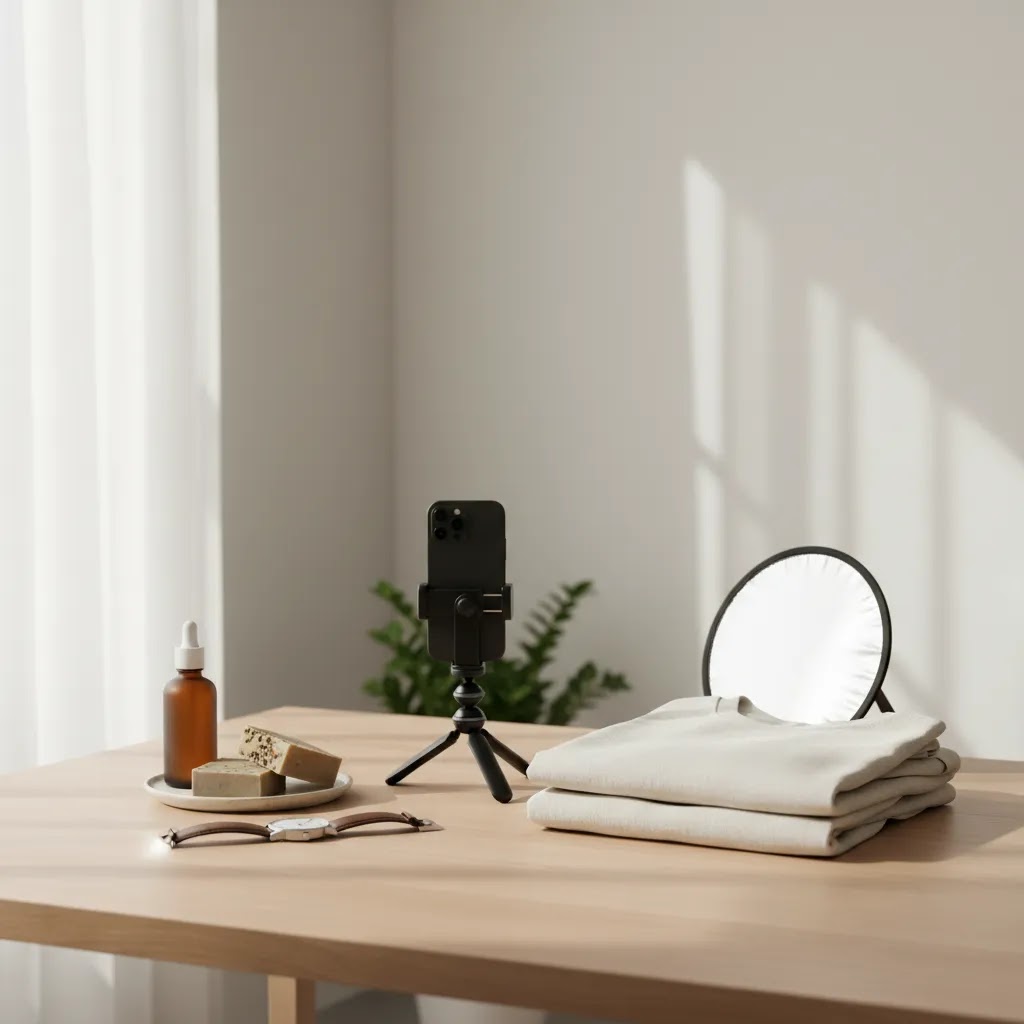
You line up a product, take a few photos on your phone, upload them to your store, and then wonder why the page still feels flat. That is a common problem for ecommerce owners. The product itself may be strong, but the images do not explain quality, scale, texture, or how the item fits into real life. For many Shopify stores, weak visuals quietly hurt click-through rate, time on page, and conversion.
This is where better product photography ideas make a real difference. You do not always need a huge studio or expensive crew to improve your results. In many cases, you need the right concept for the product type, a cleaner setup, and a better understanding of what your customer needs to see before buying. If you want a stronger foundation, AcquireConvert has related resources on setting up a product photography studio and building a more effective visual workflow for ecommerce.
In this article, you will find practical product photography ideas for beauty, apparel, handmade goods, watches, and more, along with tips you can use at home or in a small studio space.
Contents
What makes product photos work in ecommerce
Before you think about props or angles, start with buyer intent. Your customer is trying to answer a few simple questions: What is this? What does it look like in real life? How big is it? What details justify the price?
The best product photography ideas solve those questions fast. That usually means a mix of clean catalog images, detail shots, scale references, and a few context images that show use or mood. If you are still defining the basics, AcquireConvert’s guide on what is product photography is a useful starting point because it frames product images as a sales tool, not just a design asset.
From a practical standpoint, strong ecommerce photos tend to share a few qualities:
Here’s the thing, creative product photography ideas at home only help if they support clarity. A dramatic shadow or bold prop can improve the image, but not if it hides the product or creates confusion about what is being sold.
Product photography examples by shot type (a simple framework)
If you want more consistent results across your store, do not start by inventing a totally new “concept” for every SKU. Start with shot types. Most high-performing product galleries are built from a handful of repeatable image categories, then styled to fit the brand.
Think of these as product photography examples you can apply to almost anything, from skincare to jewelry to apparel:
Consider this, every image in your gallery should earn its place by answering a buyer question. A quick way to audit your existing product photos is to run through a checklist for each shot:
What many store owners overlook is that consistency comes from repeating shot types, not repeating the exact same styling. You can use the same shot type system across a whole collection, then rotate surfaces, props, and model choices in a controlled way so your product pages stay clear while your brand still feels alive.
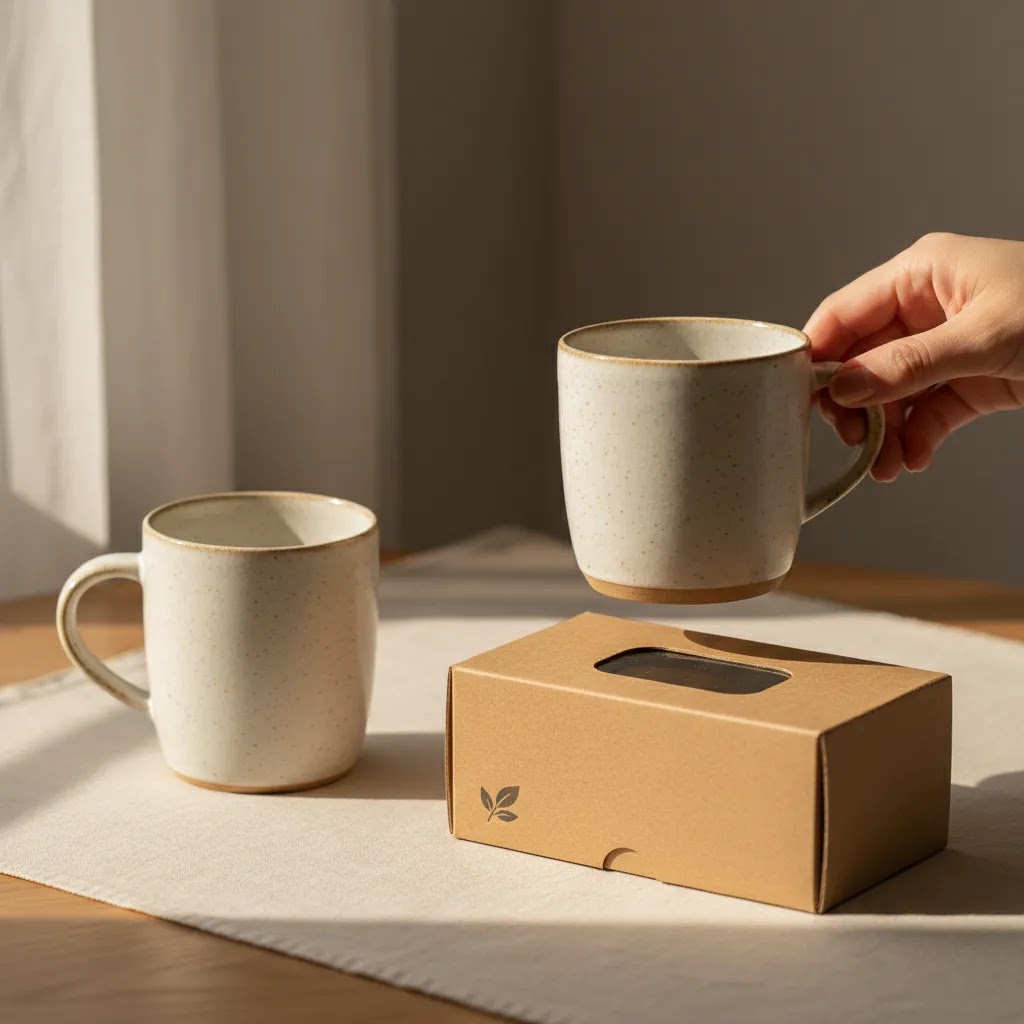
Product photography ideas at home that still look professional
Many store owners assume home setups always look amateur. That is not true. What usually hurts home photography is inconsistency, not location. If you can control light, stabilize the camera, and repeat your composition, you can produce ecommerce product photography ideas at home that look polished enough for a product page.
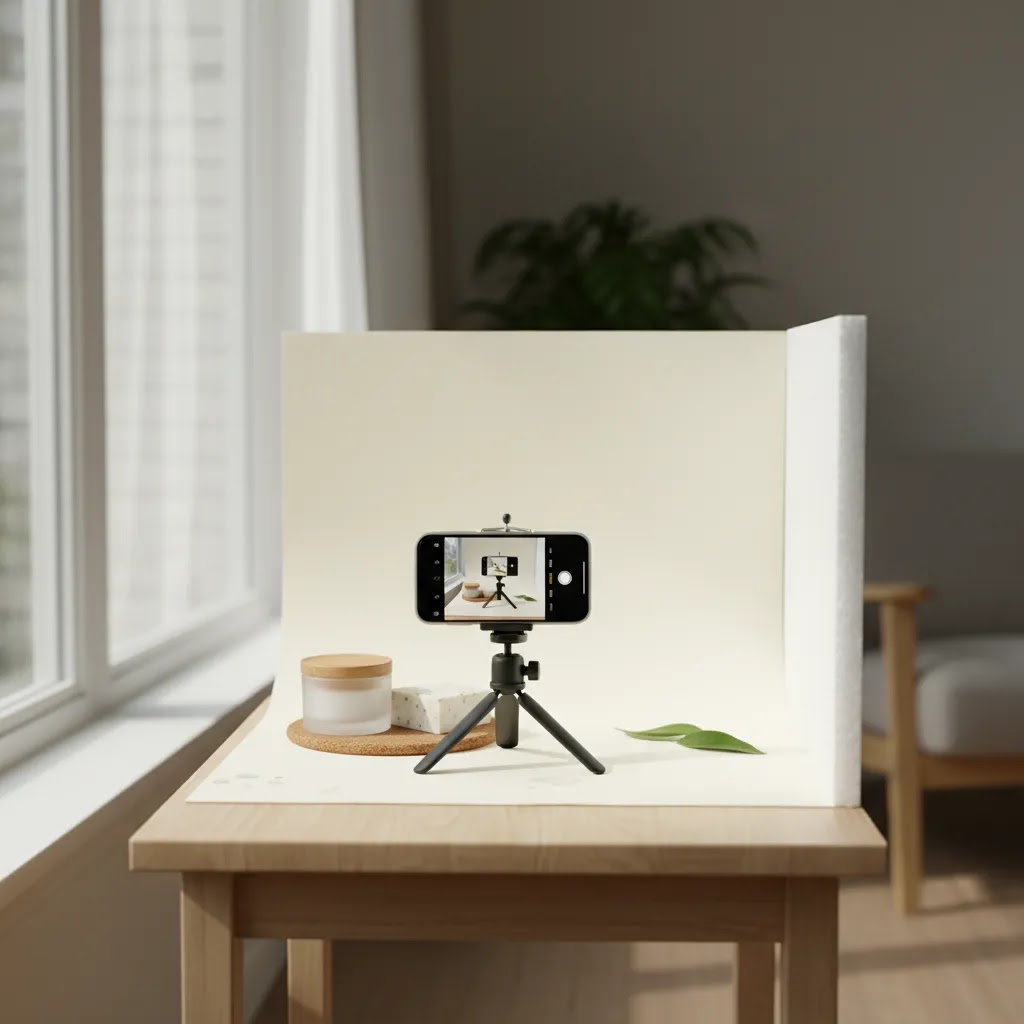
Use a window setup for soft light
A large side window with indirect daylight often gives better results than harsh overhead room lighting. Place the product near the window, use a white foam board opposite the light to bounce it back, and keep the background simple. This approach works especially well for skincare, soap, ceramics, and stationery.
Build one modular shooting space
What many store owners overlook is the value of repeatability. Instead of rebuilding every shoot from scratch, create one corner of your office or home with a foldable table, interchangeable backdrops, reflectors, clips, and a tripod. That saves time and helps your store look more consistent from one launch to the next. If you need a fuller setup plan, AcquireConvert also covers product photography studio considerations in more detail.
Try simple home concepts that photograph well
Easy product photography ideas often outperform overly styled ones. Consider these options:
Your first goal is not originality, it is usability. Once the core catalog images are covered, then add the more creative frames for ads, social content, and collection banners.
Product photography ideas for Instagram and social content (without hurting catalog consistency)
Social content changes the job of your images. On a product page, you are answering questions. On Instagram, Reels, and Stories, you are earning attention first, then creating enough clarity that someone wants to click and learn more.
The reality is you do not need a separate “social shoot” if your core catalog system is solid. You can adapt your main product photo set into social-first formats without turning your store visuals into a messy mix of styles.
Adapt your core shots into social-first formats
Start with the images you already need for Shopify, then rework them for vertical feeds and overlays. In practice, that means:
Think of it this way, your product page needs consistency across the collection, while your social needs consistency across a content series. They can be the same system if you plan for it.
A practical shot set you can repeat for social
If you want product photography ideas that actually produce usable social content, aim for short, repeatable patterns. A few that tend to work well for ecommerce brands are:
For most Shopify store owners, the simplest approach is to shoot these right after your catalog set, using the same light and surface. You are already set up, so you might as well collect the extra footage.
Common pitfall: going “too editorial” and losing product clarity
Some social-first product photography ideas look great, but they can create the wrong kind of attention. If the shot is so moody or stylized that the product is hard to identify, you may get views but weaker clicks and lower-quality traffic.
A practical way to avoid that is to keep your product page hero images clean and predictable, then use creative variety in secondary images, ads, and social series. You can still be bold with props, crops, and edits for campaigns, but your core catalog should stay clear enough that a shopper never has to guess what is being sold.
Beauty, skincare, and cosmetics photography ideas
Beauty products need to communicate texture, finish, cleanliness, and trust. Customers want to see packaging clearly, but they also want cues that suggest routine, self-care, and results. That is why skincare product photography ideas often work best when they combine neat catalog shots with soft lifestyle details.
Skincare product photography ideas that feel premium
For serums, creams, and cleansers, start with clean upright pack shots on white or pale neutral backgrounds. Then add close-ups of the formula, such as a cream swipe, gel drop, or serum texture on glass. Consider this: customers often buy skincare based on texture cues as much as packaging.
Creative skincare product photography ideas can include water reflections, frosted glass, stone surfaces, towels, or subtle greenery. Keep props restrained. The product should still dominate the frame. If you sell across multiple beauty categories, the Cosmetics Photography hub is worth exploring for more niche-specific visual approaches.
Makeup product photography ideas that show payoff
Makeup needs swatches, shade accuracy, and detail. A lipstick tube alone is rarely enough. Show the product open, the pigment on skin or a clean surface, and the packaging from multiple angles. For palettes, capture both the whole item and macro crops of key shades.
There is also a growing role for ai makeup generator tools in campaign ideation and visual concepting, especially for testing creative directions before a full shoot. That said, AI-generated beauty visuals should be checked carefully for shade accuracy, packaging fidelity, and compliance with your brand standards.
Beauty product photography ideas that convert better
For most Shopify stores, beauty images perform better when they answer these three things quickly: what the product is, what it looks like up close, and how it fits into a routine. That may mean a six-image sequence such as hero shot, angled pack shot, texture detail, in-hand photo, routine context shot, and ingredient or benefit callout graphic.
Clothing and fashion photography ideas
Clothing product photography ideas have to deal with fit uncertainty. Unlike a candle or bottle, a shirt looks different on every body and in every fabric. Your job is to remove as much guesswork as possible.
Use three visual modes for apparel
The most useful fashion product photography ideas usually include flat lay, mannequin or ghost mannequin, and on-model shots. Flat lays are efficient for colorways and folded products. Ghost mannequin images help shape and structure. On-model photos show fit, drape, and styling potential.
Focus on detail where returns often start
In practice, this means photographing the collar, stitching, cuffs, zipper, lining, waistband, and fabric texture. Many apparel returns happen because the customer formed the wrong expectation about material, cut, or finish. Detailed photos may not eliminate that issue, but they can reduce ambiguity.
Fashion product photography ideas for small brands
If you are shooting apparel at home, use a clean wall, even light, and enough distance between subject and background to avoid harsh shadows. Keep editing consistent across the collection. A store that sells minimalist basics should not switch between warm lifestyle tones, stark studio whites, and moody editorial shadows without a clear reason.
If you are experimenting with digital workflows, AcquireConvert’s overview of ai photography can help you think through where AI may support ideation, background work, or post-production without replacing the need for accurate core product imagery.
Handmade, soap, jewelry, and Etsy product ideas
Handmade products sell on story and craftsmanship. The customer is often comparing your item not just on function, but on giftability, uniqueness, and perceived care. That makes diy product photography ideas especially useful for Etsy sellers and small independent brands.
Soap product photography ideas
Soap photographs well with texture, ingredients, and routine context. Try stacked bars, sliced-edge close-ups, wrapped and unwrapped versions, and bathroom scenes with towels or trays. If the soap has botanical ingredients, show those nearby, but only if they are actually relevant to the formula.
Etsy product photography ideas
Etsy buyers often respond well to warmth and personality, but clarity still matters. Combine a clean hero shot, a scale image, a detail image, and a styled image that suggests gifting or use. This is especially useful for candles, jewelry, ceramics, and personalized items. Good handmade photography balances charm with precision.
Small-product styling tips
For jewelry, pins, keychains, and mini accessories, use a macro-capable lens or phone attachment if needed. Shoot on neutral backgrounds first, then add one or two styled surfaces like linen, wood, or stone. The Catalog Photography section on AcquireConvert can help you think through how to standardize these images across a larger product range.
Watch and small accessory photography ideas
Watch product photography ideas are a different challenge because reflective surfaces can quickly make the item look distorted or low quality. You need controlled light, careful positioning, and enough detail to show craftsmanship.
Show the product as an object and as an accessory
Start with clean front, side, and angled shots on a simple background. Then add a wrist shot and a close-up of the face, clasp, and strap texture. Think of it this way: one set of images sells specification, another sells aspiration.
Manage reflections early
Use diffused light and adjust the angle of both product and camera until the watch face reads clearly. Black foam board can help control unwanted reflections by subtracting light. This same method works for sunglasses, metallic beauty packaging, and glossy accessories.
Add scale and material cues
For small accessories, scale is often missing from product pages. Include at least one image in hand, on body, or next to a familiar object if appropriate. Scale is one of the fastest ways to reduce purchase hesitation.
Unique product photography ideas using light, shadows, and surfaces
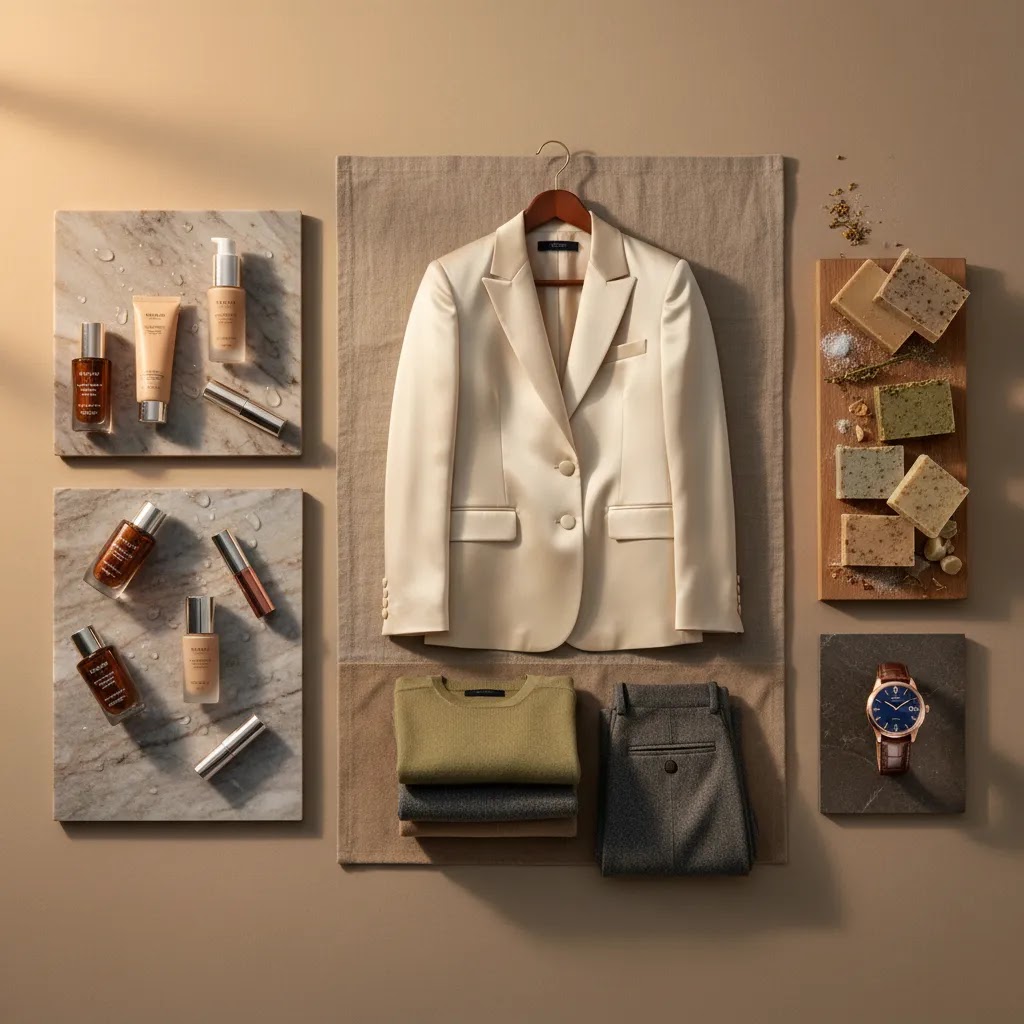
Once your core images are solid, you can create more unique product photography ideas by changing one variable at a time: light quality, shadow shape, or the surface under the product. These concepts can work well for ads, banners, and social content, as long as you keep the product readable.
Hard light shadow patterns (bold, but still controlled)
Hard light creates crisp shadow edges and instant contrast. You can get this by using direct sunlight through a window, or by using a small light source without heavy diffusion. Try placing something between the light and the product, like blinds or a cutout pattern, to create repeatable shadow lines.
Now, when it comes to ecommerce product photography ideas, use this style for campaign images, collection banners, or social series covers. Avoid it for your main hero image if it makes the product harder to evaluate, especially for color-critical items.
Prisms and refraction (when you want a premium, experimental feel)
A small prism or glass object can create refraction streaks and subtle rainbow highlights. The way this works in practice is simple: place the prism close to the lens, move it until you see a controlled flare, then lock your camera position and repeat for the set.
This can look great for fragrance, skincare, jewelry, and watches. The risk is that it can also distort color and hide details, so keep it as an accent rather than the main read of the product.
Reflections (high-end look with a simple setup)
Reflections can make a product look more premium, but they need control. Acrylic sheets, glossy tiles, or even a clean baking tray can work as reflective surfaces at home. Keep your background simple, and watch for unwanted reflections of your room, your phone, or your face.
From a practical standpoint, use reflections for ads and standout images. For product pages, keep at least one clean non-reflective shot so shoppers can judge shape and edges clearly.
Colored gels (brand color without repainting your whole style)
Colored gels over a light source let you introduce brand color in a controlled way. This is useful if your packaging is neutral and you want more visual punch for paid social or email headers. Keep one light neutral for accuracy, and use the gel as a secondary accent light so the product color stays believable.
Be careful with skin tones and shade-accurate cosmetics photography. Gels can quickly make color look wrong, which is the opposite of what you want for conversion.
Textured backdrops (paper, tile, stone, fabric)
Textures add depth without adding clutter. Paper backdrops can create a clean but tactile look. Stone and tile can signal premium quality. Fabric can add warmth and softness for handmade or lifestyle categories.
What many store owners overlook is that textures should be repeatable. If you pick one or two “house surfaces” and stick to them, your store stays cohesive even as you experiment with creative frames.
How to keep creative frames on-brand and repeatable
Creative product photography ideas only work long term if you can repeat them across launches. A simple rule set helps:
If you build these constraints into your process, you can create variety for ads and social while keeping your Shopify product pages consistent and easy to shop.
How to plan a repeatable shot list for every product type
The difference between stores that publish polished collections and stores that scramble every launch usually comes down to systems. Product photography ideas matter, but a repeatable shot list matters more.
Use a core structure for every SKU or collection:
Now, when it comes to creative product photography ideas, add them after this core list is complete. That is the safest way to protect catalog consistency while still giving your brand personality. If your workflow includes editing backgrounds or improving image consistency, tools like AI Background Generator or Free White Background Generator may help with test images or lighter post-production tasks. Tool features can change, so verify current capabilities directly with the provider before relying on them for production work.
AcquireConvert regularly covers practical visual merchandising and ecommerce image strategy through hubs like Catalog Photography, which can be useful once you move from one-off shoots to a more structured storewide process.
The strategies and tools discussed in this article are based on current ecommerce best practices and publicly available information. Results will vary depending on your store, niche, and implementation. Always verify tool pricing, features, and platform compatibility directly with the relevant provider before making purchasing decisions.
Frequently Asked Questions
What are the best product photography ideas for beginners?
The best starting point is a simple set of repeatable shots rather than complex styling. Focus on one clean hero image, one angle shot, one detail photo, one scale image, and one lifestyle image. That gives your customer enough information to judge the product without overwhelming your workflow. Beginners often improve fastest by fixing lighting and consistency first. Natural window light, a tripod, and a neutral backdrop can go a long way. If your goal is ecommerce, prioritize clarity and color accuracy over dramatic creative effects.
Can I create good product photography ideas at home without a studio?
Yes, in many cases you can. A home setup works well if you control light, reduce clutter, and keep your framing consistent. Indirect daylight, foam boards for bounce, and a stable shooting surface are often enough for beauty, handmade goods, and many accessories. Apparel and reflective items can be more demanding, but they are still possible with planning. What matters most is whether your images answer buyer questions clearly. If you need more structure, reviewing a dedicated product photography studio setup can help you standardize your process.
What product photography ideas work best for Shopify stores?
For Shopify stores, the most effective images usually combine catalog clarity with conversion support. That means a clean first image, strong detail shots, and a few context images that help shoppers imagine using the product. Collections also benefit from visual consistency across backgrounds, crop ratios, and lighting style. This is especially important for mobile browsing, where your first image has to do a lot of work. In practice, the stores that perform better often use a repeatable image system instead of creating completely different photography styles for every product launch.
What are some skincare product photography ideas that do not look generic?
Start with clean pack shots, then build around product texture and routine context. Show a serum dropper in use, a cream texture swipe, or a moisturizer jar on a bathroom shelf with restrained props. Frosted acrylic, stone, glass, and soft towels can all work well. The key is to keep the scene believable and aligned with your brand position. Premium skincare often benefits from minimal styling and soft light. More natural or botanical ranges may suit ingredient cues, but only if those ingredients genuinely connect to the product.
How should I approach makeup product photography ideas for ecommerce?
Makeup photography should show packaging, pigment, and shade payoff. A closed product image is rarely enough. Include swatches, close-up texture shots, and open-product photos where the formula is visible. If you sell multiple shades, consistency is essential so shoppers can compare options accurately. This is one area where digital tools may help with concept development, but you should review outputs carefully. If you are exploring beauty-focused workflows, AcquireConvert’s beauty resources and its guide to an ai makeup generator can offer additional context on where AI fits and where real product accuracy still matters most.
What are easy product photography ideas for Etsy sellers?
Etsy sellers often do well with a mix of clean and styled imagery. Use one straightforward hero image so buyers can identify the item quickly in search results. Then add warmth through detail shots, in-hand photos, or simple lifestyle scenes that suggest gifting, crafting, or home use. Handmade products especially benefit from visible texture and process cues. Keep backgrounds simple and editing light so the item still feels authentic. Your photography should communicate both trust and personality, because Etsy shoppers often care about craftsmanship as much as function.
What are good clothing product photography ideas for small brands?
Small apparel brands should cover fit, fabric, and styling potential. A strong starting mix is flat lays for overview, ghost mannequin or hanger shots for shape, and model photos for fit and movement. Add close-ups of stitching, fabric texture, and key design details like cuffs or waistbands. If you only have resources for one extra image type beyond the hero shot, choose detail images. Those often help answer the quality questions that drive hesitation. Keep your lighting and editing consistent across the collection so your storefront looks cohesive.
How many product photos should each product page include?
There is no universal number, but many ecommerce products benefit from five to eight useful images. The right amount depends on how much uncertainty the product creates. A simple notebook may need fewer images than a jacket, skincare set, or watch. Aim to cover front view, angle view, detail, scale, and use context. If packaging matters, include that too. More images are not always better if they repeat the same information. Each image should answer a distinct shopper question or reinforce a buying decision with more confidence.
Can AI help generate product photography ideas?
Yes, AI can be helpful for concepting, background variations, mockups, and lighter editing tasks. It may save time during creative planning, especially if you want to test several visual directions before a full shoot. Still, AI is not a substitute for accurate core product imagery. Colors, proportions, packaging details, and textures can drift if you rely on generated visuals too heavily. That is why many merchants use AI as a support layer rather than the main source of catalog images. AcquireConvert’s coverage of ai photography explores that balance in more detail.
What is the most overlooked part of ecommerce product photography?
The most overlooked part is often consistency. Store owners spend time on individual hero images but forget that shoppers see your products as a group across collection pages, search results, ads, and mobile grids. Inconsistent lighting, cropping, color tone, or styling can make the store feel less trustworthy. Another commonly missed element is scale. Customers often hesitate because they cannot judge size, thickness, or proportions. A simple in-hand shot or on-body image may do more to help conversion than a highly styled photo that looks impressive but communicates less.
What is the 20-60-20 rule in photography?
The 20-60-20 rule is a simple way to plan your product image mix so you do not overinvest in one type of shot. In many ecommerce shoots, you can think of it as 20% clean hero images for catalog consistency, 60% supporting images that answer buyer questions like angles, details, and scale, and 20% creative images for marketing, ads, and social. The exact percentages can vary by product type, but the idea is useful because it protects your Shopify product page clarity while still leaving room for brand personality.
What are the 7 C’s of photography?
The 7 C’s are commonly used as a composition and quality checklist. Different photographers define them slightly differently, but for ecommerce product photography they usually come down to: clarity, consistency, color accuracy, composition, context, close-ups, and credibility. If you are reviewing a product gallery, those seven themes are a practical way to spot what is missing. For example, you might have great composition but weak credibility because you never show what is included, scale, or real texture.
What are product photography examples?
Product photography examples are less about specific products and more about shot types you can reuse. Common examples include a clean hero image on white or neutral, a 45-degree angle shot, a macro detail crop, a scale image in hand or on body, a lifestyle context shot, and a proof shot that shows what is included or how a feature works. If your gallery has those basics covered, you can then add more creative variations for ads and social without losing the core buying information.
How to make good product photography?
Good product photography starts with repeatable fundamentals. Use consistent lighting, stabilize your camera with a tripod, and choose a background that keeps the product readable. Then build a gallery that answers buyer questions in order: what it is, what it looks like from key angles, what the details are, how big it is, and how it is used. Keep editing consistent across the collection, especially for exposure and color. If you are using AI tools for background cleanup or concepting, review outputs carefully before publishing so your product details stay accurate.
Key Takeaways
Conclusion
Strong product photography ideas are not really about chasing trends. They are about showing the right information in the right order for the product you sell. A skincare bottle needs texture and routine context. A shirt needs fit and fabric detail. A handmade soap bar needs craftsmanship and ingredient cues. Once you start thinking this way, your photo decisions become much easier.
Your next step is simple. Pick one product category in your store and create a standard shot list for it this week. Then review your current product pages and note where customers still have to guess about size, texture, finish, or usage. Fix those gaps first.
If you want to keep refining your visual strategy, explore more AcquireConvert resources in the Catalog Photography hub and related beauty content under Cosmetics Photography. Giles Thomas’s ecommerce-focused approach is especially useful if you want photography that supports both stronger storefront presentation and better conversion decisions over time.
Results from ecommerce strategies vary depending on store type, niche, audience, budget, and execution. Nothing in this article constitutes a guarantee of specific outcomes. Third-party tool features and pricing are subject to change: verify current details directly with each provider.

Hi, I'm Giles Thomas.
Founder of AcquireConvert, the place where ecommerce entrepreneurs & marketers go to learn growth. I'm also the founder of Shopify agency Whole Design Studios.