Product Photography London Studios and Rates (2026)

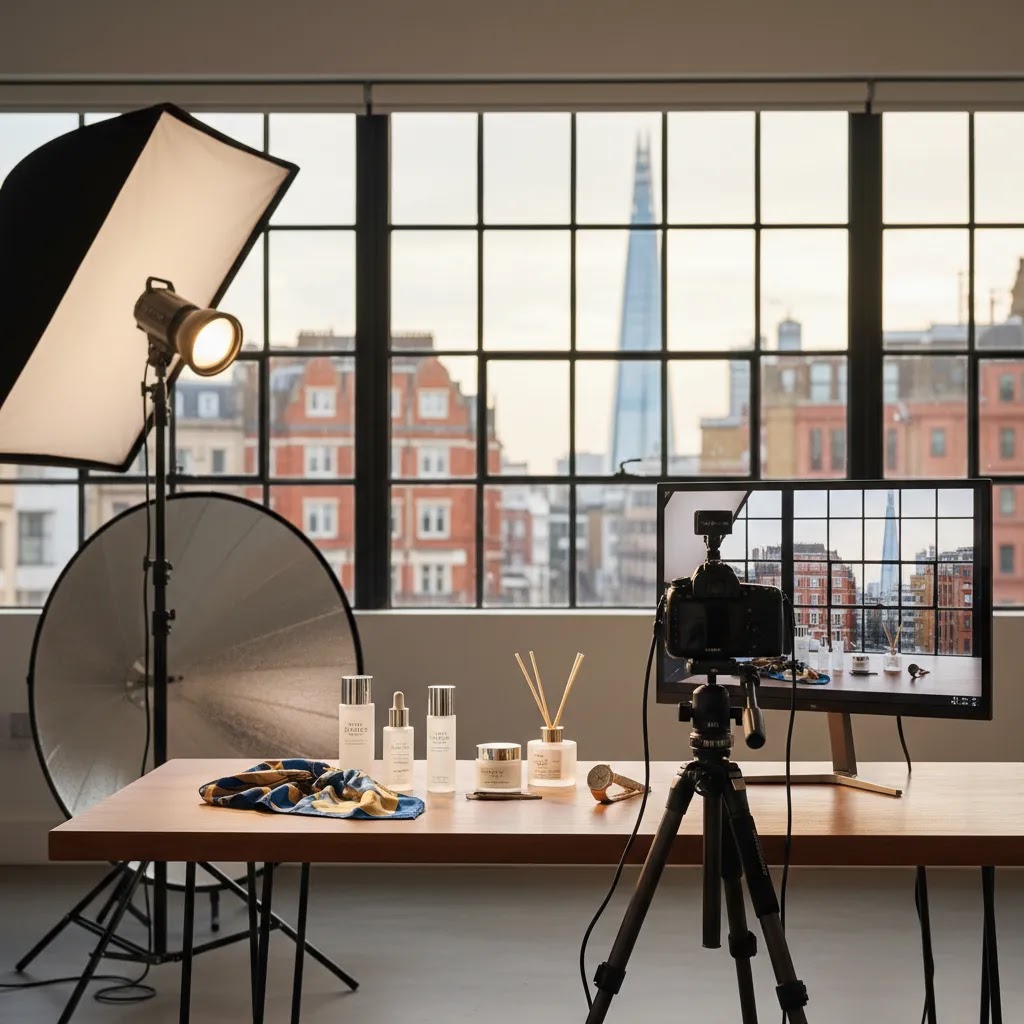
If you are searching for product photography London services, you are usually close to making a buying decision. You already know your store needs stronger images, cleaner packshots, or more persuasive lifestyle content. The real question is which London studio setup fits your catalog, margin, and growth stage. For most ecommerce brands, the right choice depends on product type, shot count, usage rights, turnaround, and whether you need static packshots, styled scenes, or 360 product photography. This guide reviews the London market from a practical ecommerce angle, with an honest look at typical rate structures, where studios add value, and where AI image tools may reduce costs. AcquireConvert evaluates visual commerce tools and workflows through real store performance considerations, informed by Giles Thomas's experience as a Shopify Partner and Google Expert.
Contents
Overview
London gives ecommerce brands a wide range of product photography options, from compact packshot studios to full creative teams handling art direction, models, retouching, and motion content. If your goal is consistency across a growing catalog, a dedicated product photography studio will usually outperform ad hoc shooting. That matters for Shopify stores where image consistency affects conversion rate, perceived quality, and trust.
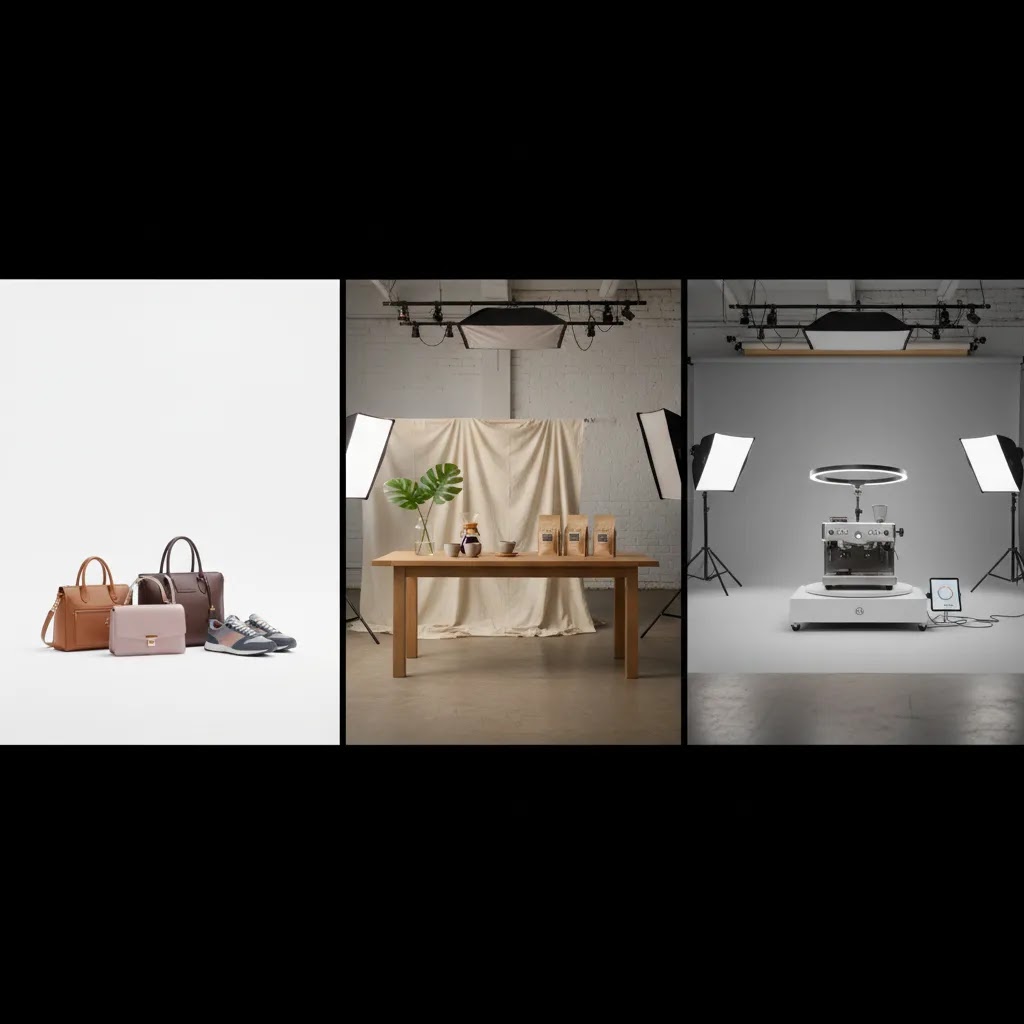
Most service providers in this market fall into four groups. First, there are straightforward packshot specialists focused on white background product images for product pages, marketplaces, and ads. Second, there are lifestyle studios that produce campaign-style content for social media, homepages, and retention channels. Third, some providers specialize in fashion product photography London brands need for apparel, accessories, and lookbooks. Fourth, there are advanced operators that offer 360 spin product photography studio in London services, short-form video, or CGI-style outputs.
For ecommerce operators, the decision should not be based on portfolio aesthetics alone. You need to assess throughput, SKU handling, revision policy, file delivery specs, and whether the studio understands marketplace standards for Amazon and Shopify image requirements. If you are still comparing the difference between hiring a studio and hiring an individual product photographer, the right setup often comes down to volume and repeatability.
There is also a growing middle ground. Some brands now combine traditional shoots with AI-assisted workflows, especially for background changes and content variation. If that is relevant to your workflow, AcquireConvert's guide to ai photography is a useful starting point.
Types of London Product Photography Services
Here’s the thing: most London studios can produce “product photos,” but the deliverable type changes the cost, the prep work, and how well the images perform across your Shopify store. When you know the common service types, it gets much easier to brief a studio and compare quotes.
Packshots (white background, cutout-ready). This is the baseline for most ecommerce catalogs. Packshots are usually best for product detail pages, collection grids, Google Shopping, and marketplace listings. From a practical standpoint, you want consistent camera angle, crop, and lighting so your collection pages look cohesive. Packshots typically require the least styling, but they still benefit from careful product prep, dust control, and accurate color handling.
Styled flat lay photography. Flat lays are popular for apparel, accessories, gift items, and beauty sets, especially when you want more personality than a plain packshot. In a Shopify context, flat lays often work well as secondary images in the product page gallery, collection tiles for specific categories, and email creative. What many store owners overlook is that flat lays can be slower than packshots if each SKU needs styling, folding, steaming, or prop selection.
Invisible mannequin (ghost mannequin) photography. This is a common choice for fashion product photography London brands rely on when they need apparel to look worn and structured without using a model. It is often used for tops, dresses, jackets, and anything where fit and silhouette sell the product. The way this works in practice is that the item is shot on a mannequin, then parts are composited so the mannequin disappears and the inside labels, collars, and linings look clean. It is great for Shopify product pages where you want a premium look and consistent fit presentation, but it usually involves more post-production than a standard packshot.
Tabletop product photography (on set, with controlled surfaces). Tabletop is often confused with packshots, but it typically refers to products photographed on a table or surface with more dimensional lighting and set control. It is common for homeware, electronics, supplements, and packaged goods where you want the product to feel real and tactile. For Shopify, tabletop can work as hero images, PDP galleries, and ad creative where shadows and depth help convey quality. It can also be paired with detail shots, like close-ups of materials, texture, or finishes.
Model photography, lookbook, and campaign stills. This is where you move beyond catalog consistency into brand storytelling. Model shoots can be effective for apparel, jewelry, and accessories, and they often feed multiple channels: PDP galleries, homepages, Meta ads, and email campaigns. The reality is that model shoots add coordination overhead, including casting, usage terms, styling, and location or set build. That can be worth it for hero SKUs, seasonal drops, or higher-margin lines.
How to choose the right mix for a catalog rollout. For most Shopify store owners, start with consistent packshots across the catalog so the store looks trustworthy and uniform. Then layer in flat lays, ghost mannequin, tabletop, or model shots based on SKU priority. A simple rule that holds up in many cases is to invest first where the margin is highest, the product has more competition, or shoppers need more visual proof to buy.
Pricing and Costs
Product photography London prices vary widely because studios charge in different ways. Some price per image, some per SKU, and others per day rate. For ecommerce brands, the structure matters just as much as the headline number. A low per-image rate can become expensive once styling, retouching, clipping paths, model fees, props, or usage licensing are added.
For basic packshot photography, you will commonly see quotes built around simple white background images, often with extra fees for ghost mannequin work, reflective products, cosmetics textures, glass, or complex retouching. Ecommerce product photography London studios handling higher volume may offer better per-unit pricing once your catalog reaches a meaningful SKU count. Smaller brands, on the other hand, often pay more per image because setup time is spread across fewer products.
Fashion product photography London projects usually cost more because they can involve models, steaming, styling, art direction, and set changes. Lifestyle product photography also tends to sit above plain packshots because it requires scene planning and more post-production. If you need amazon product photography in london, confirm that the quote covers marketplace-compliant white background shots, close-ups, infographic variants, and image sizing requirements.
For 360 product photography london services, expect additional costs tied to capture equipment, frame count, processing, hosting format, and integration support. This can be worthwhile for products where rotation helps answer purchase objections, but it is rarely essential for every catalog. For many stores, a blended approach works better: invest in high-volume packshots first, then add premium lifestyle or interactive assets to hero SKUs.
If you want to lower production costs for simple edits between shoots, tools like photoroom can sometimes support background cleanup and fast marketplace-ready variations, though they will not fully replace a strong source image.
Typical Service Add-ons London Studios Bundle (and What’s Usually Included)
One of the biggest reasons quotes are hard to compare is that studios describe “what’s included” in different ways. Some will say retouching is included, or even “free retouching,” but the scope can range from basic cleanup to time-intensive compositing.
What “included retouching” often means. In many cases, it covers basic dust and scratch removal, minor label straightening, simple color correction, and exposure balancing. For packshots, it may include a clean white background and a standard crop. It often does not include advanced compositing, rebuilding reflections, fixing crushed packaging, swapping labels between variants, or complex clipping paths for fine hair, lace, or transparent plastics. If your products are glossy, reflective, or highly detailed, clarify the retouching level upfront.
Add-ons that commonly change the real price. These line items show up a lot in London product photography quotes because they add time or specialist handling:
A quick quote normalization checklist. If you want to compare studios apples-to-apples, ask each provider to confirm the same scope in writing. Consider this:
From a practical standpoint, a slightly higher quote can be the better deal if it includes the angles, exports, and retouching your store actually needs. The cheapest headline rate is often only cheap on paper.
Trust and Credibility
A strong London product photography service should give you more than a polished portfolio. The real trust signals are operational. Look for clear quoting, a documented revision process, image handling instructions, agreed delivery formats, and proof they understand ecommerce usage rather than just editorial photography.
Studios that work well with ecommerce brands usually ask practical questions early. They want to know your sales channels, whether files need to fit Shopify product pages, if Amazon compliance matters, how many variants each SKU has, and whether your team needs layered assets for future editing. That is a better sign than broad creative language with no workflow detail behind it.
For beauty and personal care brands, this matters even more. Skincare product photography london projects often involve reflective packaging, texture shots, ingredient close-ups, and shade accuracy concerns. If your catalog falls into that category, it is worth reviewing adjacent visual workflows such as ai makeup generator content to understand where AI can support, but not replace, specialist beauty visuals.
At AcquireConvert, we assess these decisions from the perspective of store execution, not just creative quality. Giles Thomas's Shopify Partner background is especially relevant here because the final output needs to work on collection pages, product pages, ads, and landing pages, not only in a portfolio gallery.
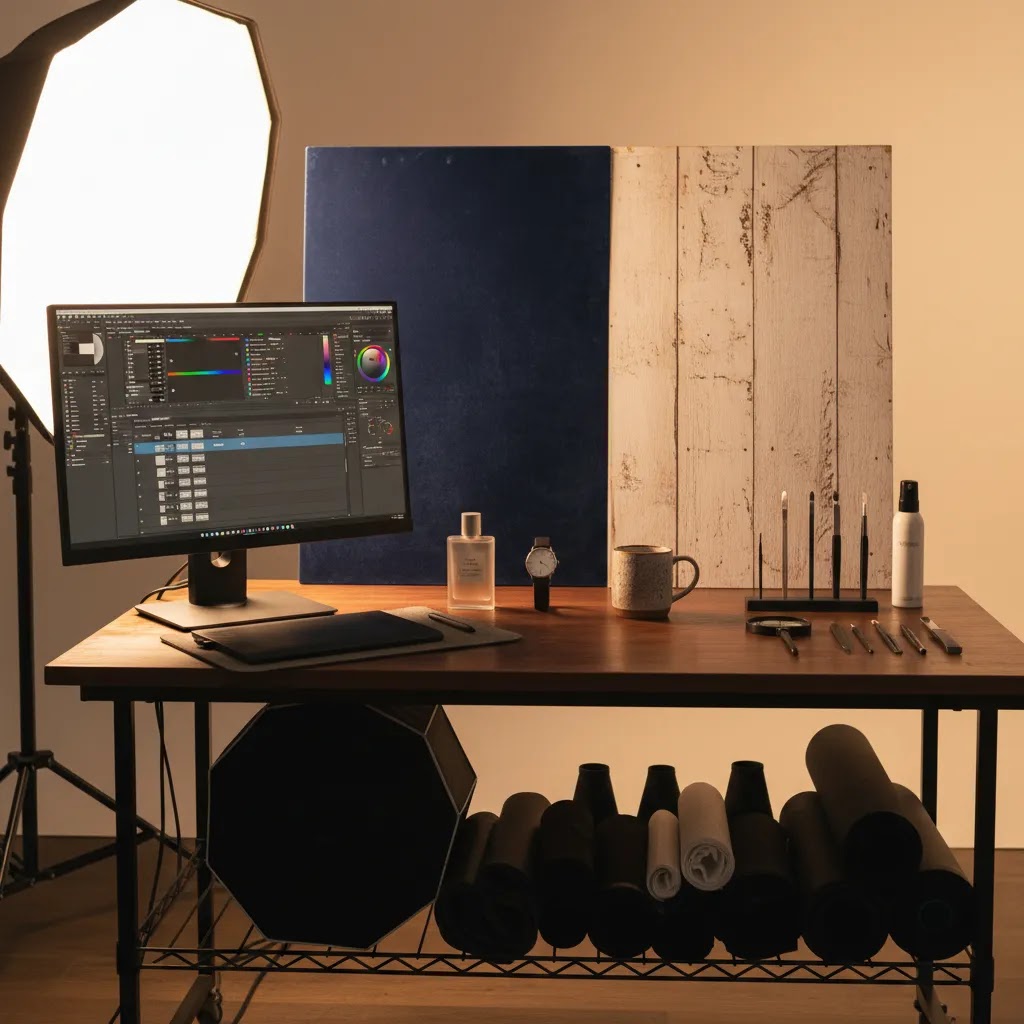
Logistics and Turnaround: Shipping, Collection/Delivery, and Handling Your Inventory
Operational perks can be a real decision driver, especially “free collection and delivery” and “fast turnaround.” Those offers can be genuinely helpful, but you want to confirm the details before you build your launch timeline around them.
What to verify for collection and delivery. If a studio offers pickup and drop-off, confirm whether it is an insured courier, how items are counted on receipt, and how responsibility is handled if something arrives damaged. For higher-value inventory, ask about chain-of-custody and how products are stored between shoot days. You should also confirm packaging requirements, especially for fragile items, liquids, or products that can scuff easily.
How to prep SKUs so the shoot does not stall. Delays usually come from missing information, not the camera work. For most Shopify store owners, the simplest way to keep things moving is to send products with clear SKU labels, group variants together, and provide a shot list that matches your catalog structure. If your products have color variants, clarify whether the studio should match your existing Shopify color names and whether any shades are “must match” for brand trust. If you have props, inserts, or packaging variations, include them in the shipment and note which version is the selling version.
What turnaround time typically depends on. Turnaround is usually driven by SKU count, retouching complexity, and approval cycles. A studio may be able to shoot quickly but still take longer in post-production if you need ghost mannequin, reflective product cleanup, or a high volume of exports for multiple channels. Your own review process also matters. If feedback comes in waves across multiple stakeholders, you can accidentally turn “fast turnaround” into a long project.
A practical way to validate speed and communication. If timeline is a concern, run a pilot batch that reflects reality, not your easiest products. Include at least one tricky item, such as reflective packaging, a garment that needs steaming, or a product with multiple variants. Then watch for how the studio handles inventory check-in, questions, first proofs, and revision turnaround. That small test usually tells you more about reliability than any promise on a website.
Key Features to Look For
1. Clear specialization by product type. A studio that is excellent at packshot photography may not be the right fit for fashion or skincare. Ask for examples in your exact category, especially if you sell cosmetics, apparel, jewelry, supplements, or reflective packaging.
2. Repeatable catalog workflows. If you are building or scaling a Shopify catalog, you need consistent framing, lighting, cropping, and naming conventions. This is especially important for collection pages where visual inconsistency can make a store look fragmented.
3. Post-production built for ecommerce. Good service providers should handle retouching, background cleanup, export sizing, and file formats without needing constant follow-up. If you are comparing studio work with DIY editing, AcquireConvert's Catalog Photography resources can help you benchmark what "good enough" should actually look like.
4. Marketplace and channel awareness. Amazon product photography london work has different constraints from direct-to-consumer Shopify creative. Confirm whether the studio can deliver primary images, secondary detail shots, infographics, and ad-ready crops as separate outputs.
5. Option for motion or 360 capture. 360 spin product photography studio in london services are useful for products that benefit from dimensional visibility, such as footwear, electronics, premium packaging, and collectibles. It can improve shopper understanding, though it may not justify the extra spend for low-margin products.
6. Scalable content beyond white background packshots. The strongest partners can support simple packshots now, then move into styled scenes, short-form product video, or homepage hero imagery later. That flexibility matters if your visual content roadmap is evolving.
Many store owners now mix studio output with AI-assisted enhancement, especially for derivative images and campaign testing. That can make sense, but your base images still need to be strong. If your focus is selling online rather than building a print campaign, browse AcquireConvert's E Commerce Product Photography content for channel-specific standards.
Pros and Cons
Strengths
Considerations

Who It's Best For
Professional product photography london services are best for brands that already know visual quality affects conversion and customer trust. That includes Shopify stores preparing a relaunch, brands moving onto Amazon, growing DTC companies with inconsistent supplier imagery, and higher-margin product businesses that need stronger on-site presentation.
It is usually a particularly good fit for skincare, fashion, premium accessories, homeware, and gift brands where image quality shapes perceived value. Smaller merchants with very tight margins may want to start with core packshots only, then layer in lifestyle content after they validate product demand. If you are still in testing mode, a hybrid workflow using studio images plus selective AI editing may be more sensible than commissioning a full creative campaign upfront.
How to Get Started
Start by listing the exact assets you need, not just the vague goal of "better product photos." Break your brief into white background images, detail shots, lifestyle images, marketplace outputs, and any 360 requirements. Then prioritize hero SKUs first. This keeps your first project commercially focused.
Next, request quotes from two to four London studios using the same brief. Ask each one how they price by SKU, image, and retouching level. Confirm turnaround times, revision policy, file dimensions, color handling, and whether they have experience with your sales channels.
Before approving the full project, test a small batch. A pilot run of a few representative products often reveals whether the studio understands your brand and operational needs. Once approved, document the style guide so future shoots stay consistent.
After delivery, upload the new assets to your Shopify store methodically. Update hero products first, review mobile cropping, and compare engagement on product pages. Results will vary by niche, traffic quality, and the strength of the rest of the product page, but stronger visuals can support better conversion decisions when paired with solid offers and product copy.
Frequently Asked Questions
How much does product photography cost in London?
There is no single market rate because studios charge per image, per SKU, or per day. The final cost usually depends on product complexity, retouching, styling, props, model use, and licensing. Basic packshots are usually the lowest-cost option, while fashion, lifestyle, and 360 work are more expensive.
Is a product photography studio better than hiring a freelancer?
A studio is often the better choice for repeatable ecommerce volume because it usually has more structured workflows, equipment, and post-production support. A freelancer can still be a strong fit for smaller projects or more creative shoots. The right option depends on your SKU volume, timeline, and need for consistency.
Do I need 360 product photography for my Shopify store?
Not always. It makes the most sense for products where shape, finish, or construction are hard to judge from static images alone. Examples include footwear, premium packaging, collectibles, and some electronics. For many catalogs, standard packshots plus a few detail images deliver a better return on production spend.
What should I ask before booking a London product photography service?
Ask how pricing works, what retouching is included, how revisions are handled, what file formats you will receive, and whether they understand Shopify and Amazon image requirements. You should also ask for category-specific samples, especially if you sell apparel, skincare, jewelry, or reflective products.
Do London product photography studios offer free collection and delivery?
Some do, and some offer it only above a certain job size or within specific areas. If it matters to your timeline, confirm whether a courier is insured, how products are checked in and counted, what packaging they require, and how liability is handled if items are damaged in transit. Do not assume “collection and delivery included” means the same thing across providers.
How fast is the typical turnaround time for product photography in London?
It varies based on SKU volume, the type of photography, and how much retouching is required. Simple packshots are often faster than ghost mannequin, reflective product work, or lifestyle sets. Your approval process can also slow things down, so agree on proofing and revision timelines upfront, then run a small pilot batch if speed is critical.
What is ghost mannequin (invisible mannequin) photography, and when do I need it?
Ghost mannequin photography is a method used for apparel where the item is shot on a mannequin, then the mannequin is removed in post-production so the clothing keeps its shape and looks “worn” without a model. It is most useful when fit, silhouette, and structure are key to the purchase decision, and when you want a consistent look across a Shopify catalog.
What’s the difference between packshot photography and tabletop product photography?
Packshots are usually clean, consistent product images, commonly on a pure white background, designed for ecommerce and marketplace compliance. Tabletop photography is often shot on a surface or set, with more dimensional lighting and styling options that can make products feel more tactile. Both can work well on Shopify, but packshots are typically the starting point for catalog consistency.
Can AI replace a professional product photography service?
AI can help with editing, background changes, and content variation, but it is usually not a full replacement for professionally captured source images. In most cases, AI works best as a support layer after a strong shoot, not as the entire visual production strategy for a serious ecommerce brand.
Is product photography worth it for a smaller ecommerce store?
It may be, but only if you scope it carefully. For smaller stores, the strongest starting point is often a limited packshot project focused on best sellers or hero products. A full creative shoot can be hard to justify early on unless your average order value and margins support the investment.
What is the difference between ecommerce product photography and lifestyle product photography?
Ecommerce photography is usually more functional and conversion-focused, with clean, clear images designed for product pages and marketplaces. Lifestyle photography shows the product in context and helps with branding, social content, and higher-funnel persuasion. Most stores benefit from some combination of both.
Key Takeaways
Conclusion
If you are evaluating product photography london providers, focus on commercial fit before creative flair. The best partner for your store is the one that can produce reliable, channel-ready assets at a cost your margins can support. For many brands, that means starting with clean packshots, proving the impact on key product pages, and then expanding into lifestyle or 360 content for top-performing products. Hold off on a large creative brief if your catalog is still changing rapidly or your offer is not yet validated. If you want a smarter buying process, use this guide to shortlist studios, compare quotes on the same scope, and run a pilot batch first. That gives you a clearer path to better visuals without overcommitting early.
Disclosure: AcquireConvert may receive affiliate compensation from some third-party links or tools mentioned where applicable. This article is for informational purposes and does not constitute legal, financial, or guaranteed performance advice. Visual improvements may support better ecommerce performance, but results vary based on your store, traffic quality, product category, pricing, and implementation.
Hi, I'm Giles Thomas.
Founder of AcquireConvert, the place where ecommerce entrepreneurs & marketers go to learn growth. I'm also the founder of Shopify agency Whole Design Studios.