Product Photography Near Me: Find Local Studios (2026)

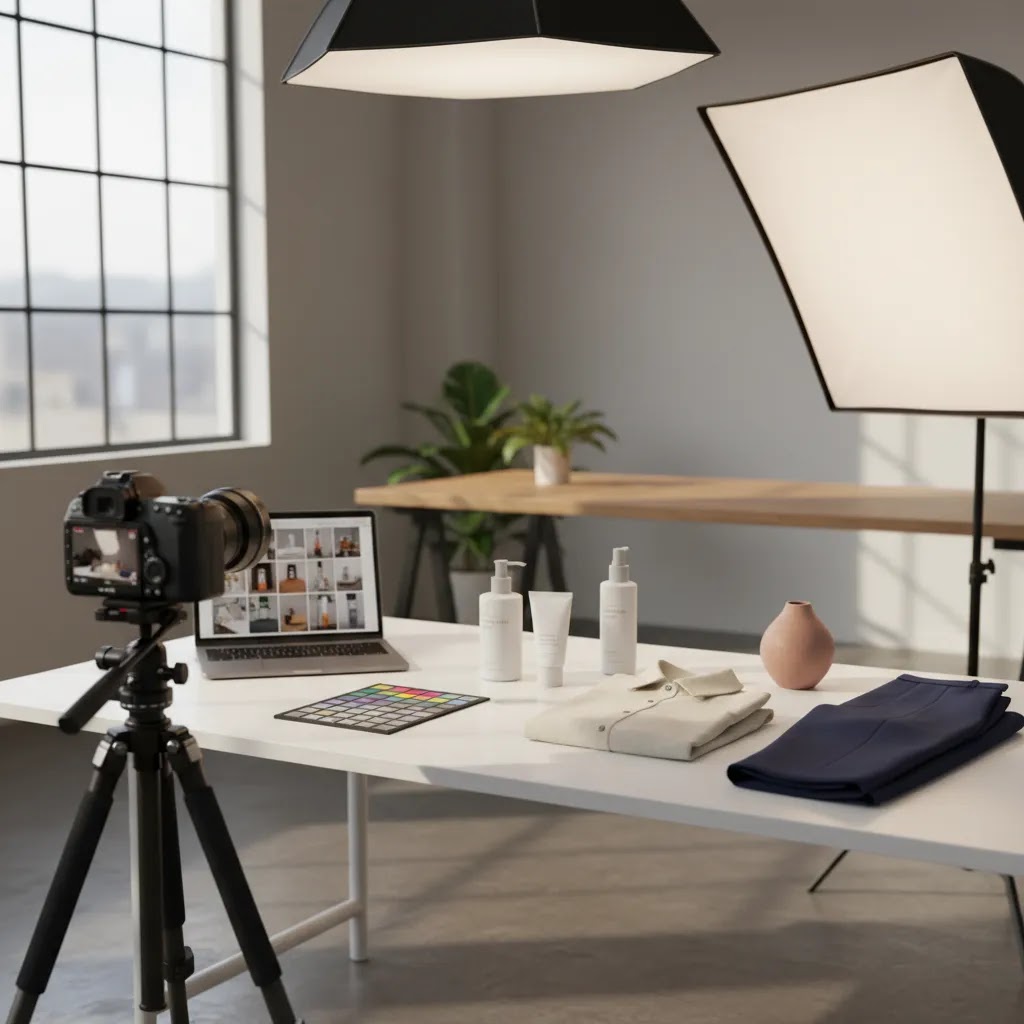
If you are searching for product photography near me, you are probably close to making a hiring decision. The challenge is not finding a local studio. It is finding one that understands ecommerce image requirements, pricing structure, turnaround time, and how your photos need to perform on Shopify product pages, ads, marketplaces, and email campaigns. For many store owners, a local studio is the right move for larger catalogs, fragile items, apparel, or lifestyle shoots that need hands-on direction. For others, AI-assisted image tools can be faster and more cost-effective for routine edits and background work. This guide will help you compare local options, understand what to ask before booking, and decide whether a nearby studio, a remote specialist, or an AI workflow is the smartest fit for your store.
Contents
What product photography near me really means for ecommerce
For an ecommerce brand, searching for product photography near you is usually about more than convenience. You want a partner who can produce images that match your storefront, ad creative, marketplace requirements, and brand standards. That could mean clean white-background catalog shots, styled lifestyle scenes, apparel flat lays, ghost mannequin images, or even spin-style visuals for stores searching for 360 product photography near me.
A local studio can be especially useful if you need physical collaboration, quick product handoff, live art direction, or recurring shoots as your catalog changes. If you are still comparing formats, our guide to choosing a product photography studio can help narrow the shortlist.
Still, “near me” should not be your only filter. The better question is whether the provider understands ecommerce conversion needs. A technically good photographer is not always a good ecommerce photographer. File naming, retouching consistency, aspect ratios, mobile cropping, and variant imagery all matter. In some cases, stores can also combine studio shoots with AI workflows for speed. AcquireConvert evaluates these options through a practical ecommerce lens, informed by Giles Thomas’s experience as a Shopify Partner and Google Expert, so store owners can choose based on store performance, not just aesthetics.
If you are open to both local and software-led workflows, it is worth reviewing the wider Catalog Photography resources on AcquireConvert before committing.
What to look for in a local studio
The best local studios for ecommerce usually offer a mix of shooting, editing, and delivery services. Start with the essentials: white-background photography, lifestyle scenes, retouching, and resized exports for your storefront and paid channels. If you sell beauty, fashion, supplements, accessories, or home goods, ask for niche-specific examples. A studio that handles fashion product photography near me may not be equally strong in cosmetics or reflective products.
Ask whether they can support repeatable workflows. That includes lighting consistency, shot lists, SKU tracking, variant grouping, cropping rules, and file exports sized for Shopify themes. If your team needs frequent updates, this matters more than a dramatic portfolio.
Many store owners also ask about AI-assisted editing. Some studios now speed up production with background replacement, cleanup, and alternate scene generation. If that interests you, review how ai photography fits into an ecommerce workflow. It can help for catalog refreshes, faster iterations, and lower-cost secondary creative.
There are also direct tool options if your need is mainly editing, not a full shoot. Based on current product data, ProductAI offers several relevant resources and editors, including AI Background Generator, Free White Background Generator, Increase Image Resolution, Remove Text From Images, Background Swap Editor, Place in Hands, Magic Photo Editor, and Creator Studio. These are most useful when you already have source images but need cleaner deliverables, alternate backgrounds, or ecommerce-ready variations. For stores considering app-style image workflows, our review of photoroom is a helpful comparison point.
If you sell cosmetics or visual-first products, cross-category image generation can also matter. For example, creative assets linked to the ai makeup generator topic may be relevant for beauty merchants building campaign visuals beyond standard catalog shots.
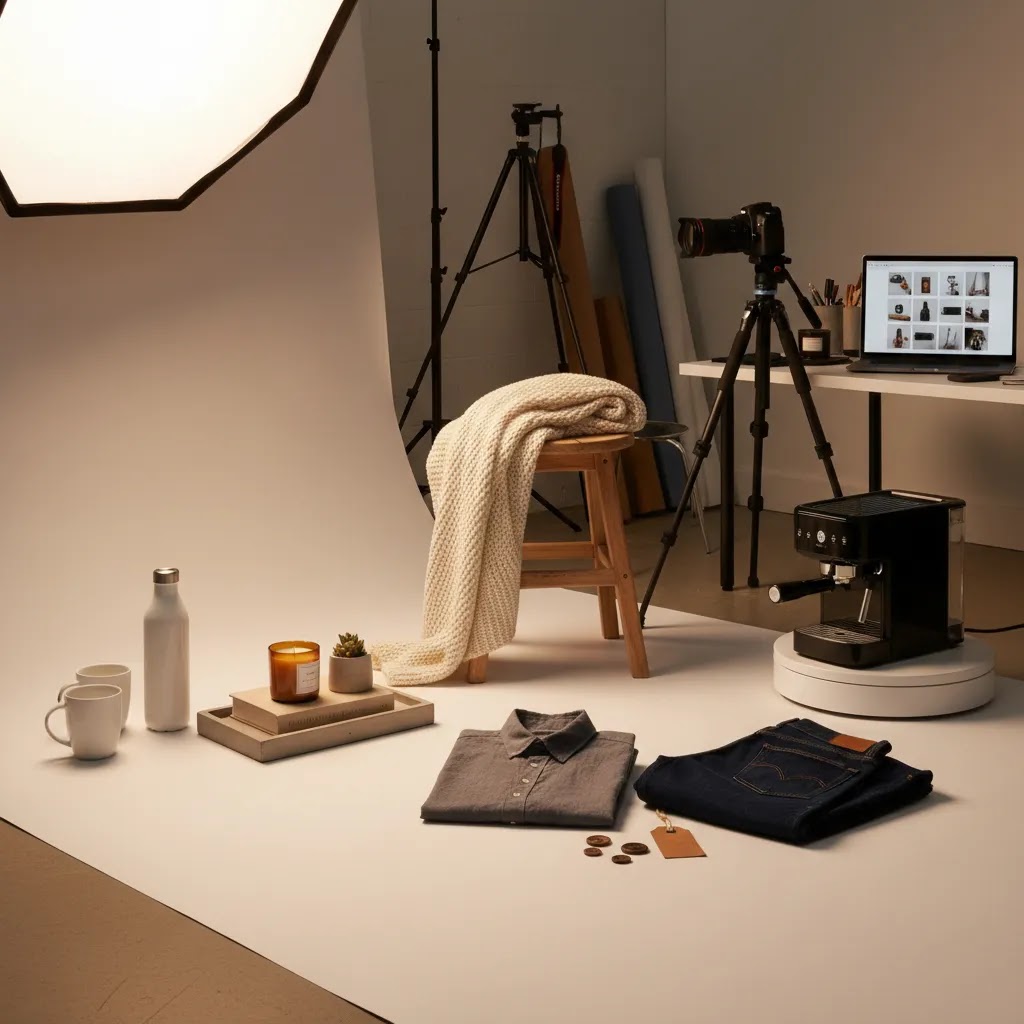
Product photography service types (and which ones you actually need)
Here’s the thing: most quote confusion starts because “product photography” can mean totally different deliverables. Before you compare studios, get clear on which image types actually move the needle for your Shopify store, and which ones are optional for your stage.
White background product images are your foundation. They keep your hero image consistent across a collection page, make your store feel cohesive, and typically help shoppers compare variants quickly. From a practical standpoint, these are also the easiest to keep consistent across new SKUs over time, which matters if you launch often.
Amazon-compliant product images are a specific subset of white background work. Studios that do this regularly should be able to explain requirements like pure white backgrounds, acceptable cropping, and how they handle shadows and props so you are less likely to run into compliance headaches. Even if you are not selling on Amazon today, this can be useful if you want optional marketplace-ready exports later.
Lifestyle product photography is about context. It tends to matter most when your product benefit is hard to understand from a pack shot, or when you need creative for ads. Think of it this way: lifestyle imagery is often your scroll stopper, while white background images are what shoppers use to confirm details and feel confident clicking Add to Cart.
Flat lay photography is common for apparel, kits, and bundles. It can be faster than on-model, and it is a clean way to show what’s included. For Shopify conversion, it often works well as a secondary image that quickly communicates “what you get” without forcing the customer to zoom and guess.
Ghost mannequin photography is the ecommerce staple for apparel that needs structure without a visible model. It usually requires more post-production, but it can create a high-end, consistent look across sizes and color variants. If you sell clothing, ask whether they do this frequently, because the quality varies a lot between studios.
Macro or detail shots are for materials, textures, craftsmanship, ingredients, and any product where perceived quality is in the details. This is especially useful for jewelry, cosmetics, leather goods, and anything with fine print or surface finishes that can affect returns if not shown clearly.
Short product video clips are showing up more in ecommerce, even if you are not producing full ads. A simple 5 to 10 second rotation, unboxing moment, or “in-hand” clip can improve how your product feels on a Shopify product page and gives you extra creative for Meta ads. Not every studio offers video, and not every store needs it on day one, but it is worth asking if you plan to test more paid social.
Now, when it comes to getting consistent results, ask the studio for help building a shot list per product type. In most cases you want a repeatable structure: a consistent hero angle, 2 to 3 supporting angles, any required variant images, one detail shot for key features, and one context image if the product is hard to interpret by scale. The goal is not more photos, it is fewer photos that answer the real buying questions.
Pricing and costs
Local product photography pricing varies widely, and that is exactly why vague quotes create problems for store owners. Most studios price in one of four ways: per image, per product, per hour, or per day. Some combine a creative fee with editing fees and usage charges. If you are searching for product photography near me with price, ask every provider to break the quote into these parts before you compare options.
Typical cost drivers include product size, styling complexity, number of angles, retouching depth, on-model photography, prop sourcing, set building, and whether the shoot happens in-studio or on location. Apparel, jewelry, cosmetics, and reflective surfaces often cost more because they require more handling and post-production. A studio offering lifestyle product photography near me will usually charge more than one handling basic white-background product shots.
For stores that only need editing support, software costs may be much lower than a full local shoot. The current product data available here includes ProductAI tools and editors, but no verified pricing figures were supplied through the tool dataset. That means it would be irresponsible to quote a subscription amount. If you are evaluating those options, visit the listed product pages directly and compare them against your projected studio costs.
A practical rule is this: if you need original source photography, a local studio may be worth the higher spend. If you already have decent images and need cleanup, white backgrounds, resolution improvements, or scene variations, AI editors may offer a better cost-to-output ratio. If you are weighing whether to hire locally or remotely, our guide on choosing a product photographer can help clarify the tradeoffs.
Product photography pricing ranges: what you will typically see in quotes
If you are trying to budget for ecommerce product photography near me, ballpark ranges can help, but they come with a big caveat: rates vary by city, demand, and category. A studio that specializes in apparel on-model work in a major metro will often price differently than a small local setup focused on simple pack shots.
With that said, most quotes you will see fall into a few common models. Per-image pricing is usually used when the deliverables are tightly defined, for example one white-background angle per SKU with standard retouching. Per-product pricing typically bundles a set number of angles and edits per SKU. Half-day and full-day rates are common when you have many SKUs to capture, or when styling and set changes are the real time sink.
What many store owners overlook is that the “shoot” is only one part of the cost. The line items that often create sticker shock include styling time, prop sourcing, on-model fees (or model agency fees), product prep (steaming apparel, lint removal, folding), retouching tiers (basic cleanup versus advanced compositing), rush turnaround fees, and usage or licensing terms for lifestyle imagery. You can also see extra charges for multiple export versions, for example Shopify-ready crops plus additional sizes for ads or marketplaces.
Consider this when you compare quotes: calculate an effective cost per final usable image, not just a headline project total. To do that, confirm how many final selects are included, whether revisions are included and how many rounds, and what turnaround is actually guaranteed. Some studios include a standard editing pass and one revision, others bill revisions hourly. Those details change the real cost quickly, especially if you care about consistent cropping and color across a full collection.
A practical way to keep comparisons fair is to ask each studio to quote the same mini-scope first, for example 5 products, a defined number of angles, and a defined retouching level. Once you see how they shoot and how they communicate, you can scale up with fewer surprises.

Trust and credibility
Trust matters because product imagery affects conversion rate, return expectations, and how professional your store feels. Before you hire a local studio, ask for client samples that match your category, not just their most polished creative work. You should also ask about turnaround times, revision limits, image ownership, and whether they keep backup files for repeat orders.
For ecommerce teams, process credibility is often more important than awards or trendy visuals. A reliable provider should explain how they manage intake, labeling, shot approvals, post-production, and delivery. If they cannot explain that clearly, they may struggle once your catalog grows.
For AI-supported alternatives, trust looks different. You want transparent tool capabilities, clear upload behavior, consistent outputs, and realistic editing expectations. AcquireConvert approaches these decisions from practical store operations rather than hype. That perspective is shaped by Giles Thomas’s Shopify Partner and Google Expert credentials, with a focus on what actually helps merchants publish stronger product pages and conversion assets.
If you want broader help evaluating service providers, the Product Photography Services category is a good place to continue your research.
Red flags when hiring a local product photographer
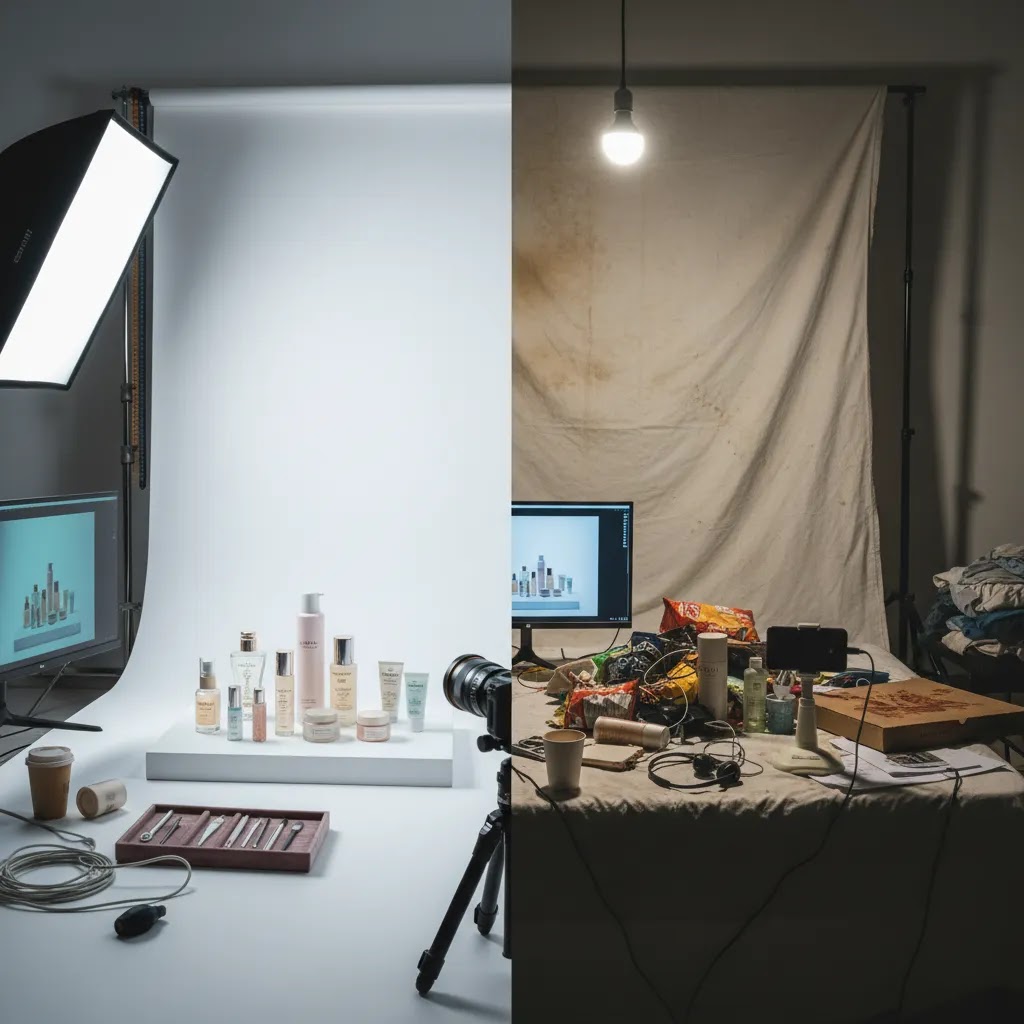
The reality is that a polished portfolio can hide a messy process. Ecommerce product photography is operational work. If the process breaks, your Shopify catalog gets inconsistent fast, and you end up paying twice to fix it.
Watch for process red flags early. If a studio does not want to work from a shot list, or they cannot explain how approvals and revisions work, you are likely to get surprises later. Vague deliverables are another common issue, for example “20 edited photos” without defining angles, crops, background type, or retouching level. If you are shooting a catalog, ask how they track SKUs through intake to delivery. If the answer is basically “we will keep it organized,” that is not a system.
Portfolio consistency matters more than a few standout hero shots. If lighting, white balance, and cropping jump around across their product work, you may struggle to build cohesive collection pages and clean ads. On Shopify, mobile cropping is a real constraint, so if a photographer ignores safe margins and delivers tight crops that cut off edges in square formats, you will feel that immediately on collection grids and in paid social placements.
There are also ecommerce-specific red flags that are easy to miss if you have only hired photographers for creative work. If they cannot describe basic export specs, file formats, and aspect ratios, or they do not ask where the images will be used, they might not be used to ecommerce deliverables. Variant support is a big one. A studio should understand that a product may need consistent angles across color variants, and that file naming should make it obvious which image belongs to which SKU and variant.
Before you pay a deposit, get the basics locked in. Confirm the delivery timeline, the number of final selects included, revision terms, and who owns the final images. Ask whether retouching is done in-house or outsourced, because that can affect consistency and turnaround. For some stores, requesting one sample edit first, even from an existing test shot, can be a practical way to confirm their retouching style before you commit to a bigger batch.
Pros and Cons
Strengths
Considerations
Who local product photography is best for
Local product photography is usually best for Shopify merchants with physical inventory, mid-sized or growing catalogs, and products that benefit from hands-on styling or art direction. It is especially useful for apparel, beauty, food, home goods, and brands investing in premium visual identity. It also suits founders who want to attend shoots, review setups in person, or avoid shipping inventory to a remote team.
If you are a smaller store with limited volume and already have usable product images, AI-assisted editing may be the better starting point. In that case, compare a local quote against the simpler workflow offered by ProductAI tools or similar editing platforms before you spend on a full shoot.
How to get started
Start by listing exactly what your store needs for the next 30 to 90 days. Include product count, image types, required dimensions, marketplaces, ad channels, and whether you need white-background, lifestyle, apparel, or detail shots. That gives you a practical scope instead of a vague request.
Next, shortlist three local providers and ask for itemized quotes. Request sample work in your category, turnaround time, revision policy, and delivery format. If you run Shopify, mention your theme image requirements and any variant image needs up front.
Then compare those quotes against AI-supported alternatives. If your problem is cleanup rather than capture, tools like background replacement or resolution enhancement may cover the gap at lower cost. A small pilot is usually the best next step. Send 3 to 5 products to one studio, compare the output to your current images, and judge the results on clarity, consistency, and how well they support your product pages.
If the local option is not clearly better, expand your search beyond geography. “Near me” is a good starting point, but not always the best final filter.
Frequently Asked Questions
How do I choose between a local studio and an online product photography service?
Choose local if you need in-person collaboration, complex styling, or frequent reshoots. Choose online or AI-assisted workflows if speed, lower operating cost, and repeatable editing matter more. For many Shopify stores, a hybrid setup works well: local capture for hero shots, software for cleanup and secondary creative.
What should I ask a product photography studio before booking?
Ask about pricing structure, turnaround time, revision limits, image ownership, retouching scope, delivery formats, and whether they have worked with ecommerce catalogs like yours before. You should also ask for examples in your category, not just a general portfolio, so you can judge fit more accurately.
Is product photography near me better for Shopify stores?
Not automatically. A nearby studio helps with logistics, but the better question is whether they understand ecommerce requirements such as consistent cropping, variant handling, mobile presentation, and image exports that suit your Shopify theme. Proximity helps, but workflow quality matters more.
Can AI replace local product photography?
Sometimes, but not always. AI tools can help with background cleanup, resolution improvements, alternate scenes, and creative variations if you already have source images. They are less suitable when you need original photography, complex material handling, or model-based shoots. Results will vary by product type and image quality.
How much does product photography usually cost near me?
There is no reliable local average because pricing depends on product complexity, number of images, styling, and editing. Ask for itemized quotes and compare per-image, per-product, and project fees. If you only need editing, compare that quote with AI tool costs before committing to a full studio engagement.
What if I need 360 degree product photography near me?
Ask whether the studio offers true multi-angle capture, interactive spin output, or just several still frames. Those are not the same thing. Confirm file format, viewer compatibility, and whether the final output works with your storefront setup before you book the shoot.
Should smaller stores hire a studio right away?
Not always. Smaller stores can often start with a limited test shoot or use editing tools to improve existing assets first. If your current images are the main conversion problem, a pilot project is usually the safest way to validate whether a studio is worth the ongoing cost.
How much does a product photographer cost?
It depends on your city, product type, and deliverables. Many photographers price per image, per product, hourly, or by half-day or full-day. Your real cost will typically be driven by how many final images you need, how many angles per SKU, retouching depth, and whether you need lifestyle setups, props, or on-model work. If you are comparing quotes, ask each photographer to define what counts as a “final image,” what revisions are included, and what turnaround time is actually covered in the price.
What is the 50 50 rule in photography?
The term can mean different things depending on who is using it, so it is worth asking a photographer what they mean. In a product photography context, some people use “50/50” to describe how results come from both capture and post-production. The lighting and exposure you get in-camera matter, and so does retouching, color correction, and consistent cropping afterward. From an ecommerce standpoint, the takeaway is simple: you want a studio that can do both parts well, and can do them consistently across a full catalog.
Can I pay someone to photoshop something for me?
Yes. You can hire a photographer who includes retouching, a dedicated retoucher, or a studio that offers editing as a standalone service. This can be a good option if you already have usable photos but need cleanup like dust removal, background fixes, color correction, shadow work, or compositing. Just make sure you agree on the exact edits, the number of revision rounds, and the export formats you need for Shopify and ads. If you are considering AI editors for similar tasks, it is still smart to review outputs before publishing, since automated results can vary by image quality and product type.
How many photographers are making over $300,000 a year?
There is no single reliable public number, and it varies a lot by niche, geography, and whether the photographer runs a scaled studio with staff. Most photographers are not earning that level from shooting alone. The ones who do typically have a strong commercial niche, high-volume retainer work, or a studio model that can handle large catalogs and repeat clients. For a Shopify merchant, the practical point is that price is not a perfect proxy for ecommerce fit. You are usually better off evaluating category experience, process quality, and deliverable consistency than trying to infer quality from income assumptions.
Key Takeaways
Conclusion
If you are ready to hire for professional product photography near me, make the decision based on ecommerce output, not just location or portfolio style. The right local studio can improve image consistency, save internal time, and support better merchandising across Shopify, ads, and marketplaces. The wrong one can add cost without solving your workflow problems. For stores with simple editing needs, AI-supported tools may be the better first step. The smartest path is usually to define your image requirements, collect itemized quotes, and run a small test before expanding. If you want a broader view of your options, review AcquireConvert’s related catalog photography guides, then choose the provider or workflow that best matches your store stage, catalog size, and creative needs.
Disclosure: AcquireConvert may receive affiliate compensation from some third-party links, where applicable. We aim to evaluate tools and services independently through an ecommerce performance lens. Any results from product photography services or AI editing tools may vary based on your product type, source images, niche, store traffic, and implementation quality. No specific outcome is guaranteed.
Hi, I'm Giles Thomas.
Founder of AcquireConvert, the place where ecommerce entrepreneurs & marketers go to learn growth. I'm also the founder of Shopify agency Whole Design Studios.