Product Photography NYC: Studios and Pricing (2026)

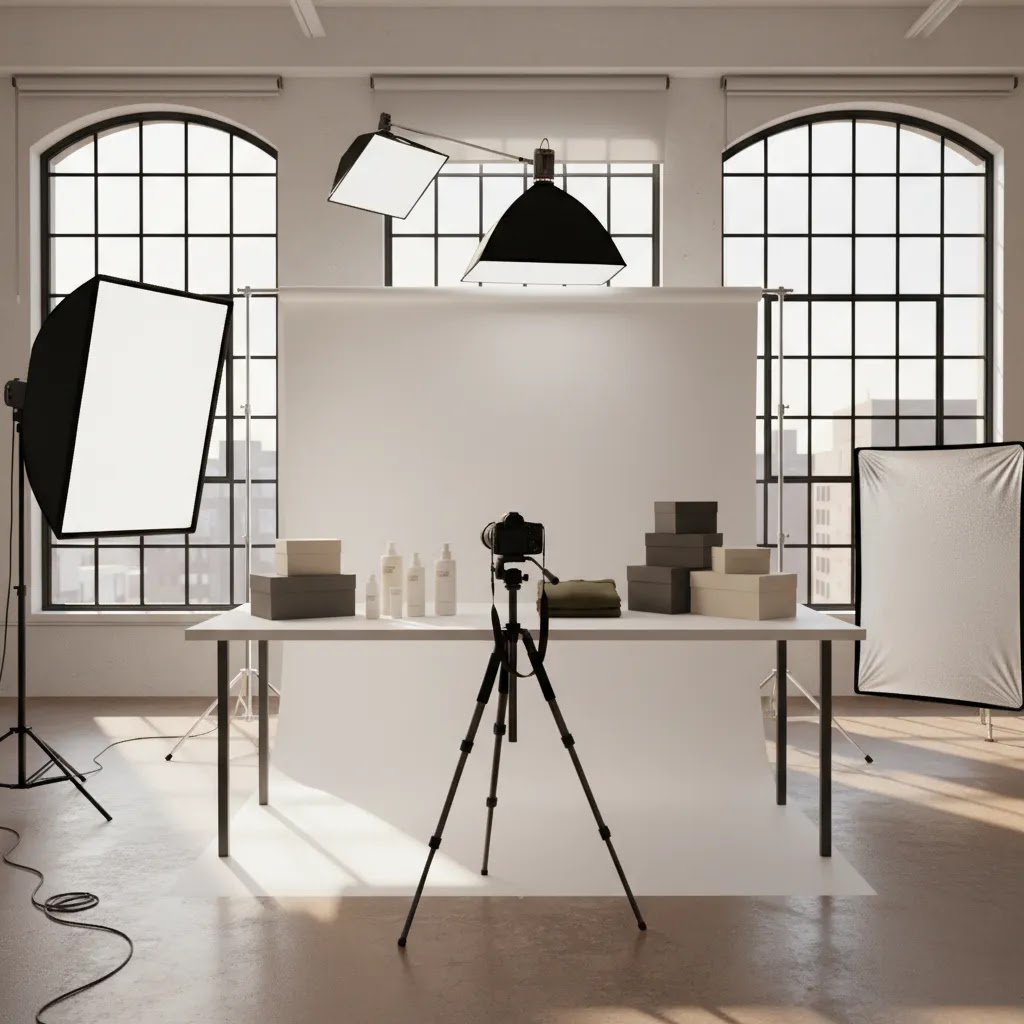
If you are searching for product photography nyc options, you are likely close to hiring a studio, testing a photographer, or deciding whether AI editing can replace part of the workflow. The right answer depends on your catalog size, channel mix, and how polished your brand needs to look across Shopify, Amazon, wholesale, and social. For most ecommerce brands, NYC gives you strong access to experienced photographers, stylists, and studios, but pricing can rise quickly once retouching, props, and shot variations are added. This guide breaks down what NYC product photography typically includes, what affects cost, and where AI tools from ProductAI.photo can fit if you want to reduce reshoot volume or speed up content production without lowering visual standards.
Contents
Overview
NYC is one of the strongest markets in the U.S. for ecommerce product imagery. You can find everything from minimalist tabletop shooters to full-service studios with art direction, model casting, set design, and post-production. That makes product photography nyc a strong option for brands that need premium assets for launches, ads, retail decks, or a Shopify refresh.
The challenge is fit. A beauty brand may need reflective surface control, texture close-ups, and lotion product photography that shows consistency and color accurately. A fashion label may need ghost mannequin, flat lay, and lifestyle imagery. A lean Shopify merchant may just need clean white-background shots plus a few social assets. If that sounds familiar, start by understanding what a product photography studio actually includes and which services are optional rather than essential.
For some stores, hiring locally in NYC still makes sense because physical sample handling, on-set approval, and brand styling matter. For others, AI-assisted workflows can reduce the number of expensive reshoots. ProductAI.photo sits in that second category. Based on the product data available, its current tools include AI Background Generator, Free White Background Generator, Increase Image Resolution, Remove Text From Images, Background Swap Editor, Place in Hands, Magic Photo Editor, and Creator Studio. Those are editing and enhancement tools, not a replacement for every studio shoot, but they may help ecommerce teams stretch photography investments further.
AcquireConvert evaluates these decisions through the lens of store performance. Giles Thomas, a Shopify Partner and Google Expert, focuses on what actually helps merchants publish stronger PDPs, ads, and collection pages without adding unnecessary production cost.
Trust and Credibility
When choosing product photographers nyc brands often focus on the portfolio first, but reliability matters just as much. You need clear usage terms, dependable turnaround times, consistent color work, and retouching that matches your brand across future shoots. That is especially important for Shopify stores that depend on repeatable image standards across large catalogs.
On the software side, ProductAI.photo appears positioned as an image editing and AI content creation workflow rather than a traditional service studio. The available product data confirms multiple editing tools and direct URLs, but it does not provide public pricing tiers, review scores, or merchant rating counts. That means you should treat it as a practical production aid to test, not as a fully verified substitute for studio-grade photography in every use case.
If you are comparing studio work against editing tools, it also helps to review alternatives like photoroom style workflows and understand when to hire a dedicated product photographer instead of trying to automate too much of the process.
How to Compare NYC Studios Beyond the Portfolio
Here is the thing, almost any decent studio can show you a handful of hero shots. What many store owners overlook is whether the studio can produce consistent, repeatable output across your whole catalog, and whether they have a process that avoids surprises once your products are already in their hands.
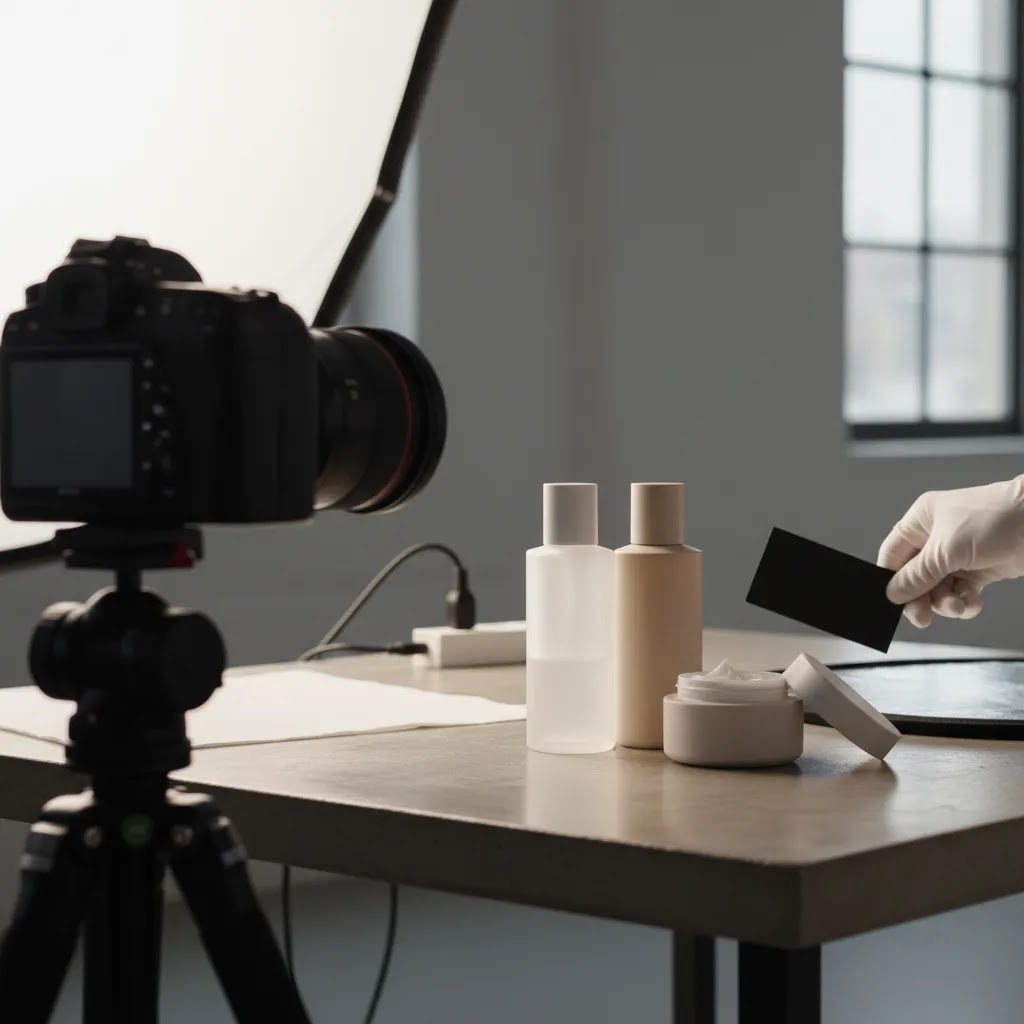
From a practical standpoint, the first question is category fit. Beauty product photography nyc work is not the same as food, jewelry, or glossy consumer packaged goods. You want a studio that is comfortable with the specific problems your products create, such as reflective packaging, transparent bottles, metallic labels, powders, or liquids that show texture and color shifts under different lighting.
Next, look for consistency across sets, not just individual images. Ask yourself if the white background tone, shadows, label alignment, and angles match across multiple SKUs. For Shopify stores, that consistency is what makes collection pages and search results feel premium, because your thumbnails read as one cohesive brand.
Consider asking for proof points that are harder to fake than a portfolio grid. A full gallery from a real project shows if they can maintain quality across dozens of shots. Before-and-after retouch examples help you understand their editing standard, and whether their cleanup is subtle or overly aggressive. If exact color matters, ask how they manage color accuracy in practice, including how they handle monitor calibration and product-to-file matching. If you sell reflective or transparent items, ask how they typically light and retouch those materials, and whether they expect additional time for them.
Now, when it comes to rights and revisions, get clarity before you book. Confirm how you can use the images, for example on your Shopify site, in Google Ads, Meta Ads, email, and marketplaces. Clarify whether licensing is included, whether there are restrictions by channel, and what happens if you need updates later. Also confirm the revision policy in plain language, including what counts as a revision versus a reshoot, because that is where quotes can drift after the shoot.
Key Features to Look For
If you are evaluating ecommerce photography nyc providers or deciding whether to pair studio shots with AI editing, these are the practical capabilities that matter most.
Consistent catalog output: Your PDP grid should look cohesive across white-background, detail, and hero images. For brands with dozens or hundreds of SKUs, consistency often matters more than artistic flair.
Retouching flexibility: Studios usually charge separately for clipping paths, dust cleanup, label straightening, color correction, shadow work, and advanced compositing. AI tools such as ProductAI.photo's Free White Background Generator, AI Background Generator, and Background Swap Editor may help with routine edits after the main shoot.
Channel-specific asset creation: A good NYC workflow should support Shopify, Amazon, wholesale line sheets, email, and social. Social media product photography nyc campaigns usually need vertical crops, contextual scenes, and faster batch production than classic studio catalogs.
Detail enhancement: Small labels, texture shots, and packaging often need sharpening or upscale support. ProductAI.photo lists Increase Image Resolution as one of its available tools, which may be useful for recovering image quality for marketplace listings or resized campaign assets.
Creative mockup use cases: Tools such as Place in Hands and Magic Photo Editor are relevant if you want more lifestyle variation without scheduling another set build. This overlaps with broader ai photography workflows that some ecommerce brands now use for content testing, seasonal variants, and paid social creative refreshes.
Category-specific handling: Beauty product photography nyc projects often need clean reflections, cap alignment, ingredient texture visuals, and close attention to packaging finish. In beauty and cosmetics, supporting tools like an ai makeup generator may support campaign ideation, but the base product image still needs to be accurate and commercially usable.
Pricing and Costs
NYC studio pricing varies widely, and the biggest mistake ecommerce brands make is comparing only a per-image or day rate. Real cost usually depends on what is included: pre-production, sample prep, art direction, assistant time, props, styling, retouching, usage rights, and number of final selects. For ecommerce product photography nyc projects, a low quote can become expensive once revisions and edit requests are added.
As a practical framework, many NYC product shoots are priced one of three ways: per image, half-day or full-day studio booking, or custom project quote for campaigns and larger catalogs. White-background Amazon product photography nyc work usually lands at the simpler end. Lifestyle, set-based, or product placement photography is usually higher because it adds creative labor and post-production.
For ProductAI.photo specifically, the live product data provided here lists the available tools and URLs but does not include pricing tiers, plan names, or review ratings. Because of that, I cannot verify exact subscription costs in this article. If you are considering it, click through and confirm current pricing before building it into your production budget. The upside is that tools like Free White Background Generator and Remove Text From Images may help reduce editing costs or salvage assets that would otherwise need a paid reshoot.
For broader benchmarks and style direction, the AcquireConvert Catalog Photography and E Commerce Product Photography categories are useful starting points if you are still narrowing your production approach.
NYC Product Photography Cost Drivers: What Actually Changes the Quote
The reality is that two quotes can look similar on the surface and still produce very different totals once the shoot starts. If you want to compare product photography studio nyc options fairly, you need to understand what the studio is actually pricing.
One of the biggest levers is whether pricing is per photo or per product. Per-photo pricing can work well when you already know your exact shot list and you will not keep adding angles. Per-product pricing can be easier for catalogs, but you still need to define what counts as a “product,” especially with variants. For example, a colorway that requires separate shots for each color is usually not a single product in production terms, because it requires a repeatable setup and separate selects.
Retouching depth is another major driver. Basic cleanup and color correction is one level. High-end work, such as label rebuilding, reflection control, shadow creation, compositing, or complex masking around hair-like details, is another. If you sell glossy packaging, glass, transparent bottles, or metallic finishes, plan for more time in both lighting and post-production.
Then there are production elements that look small but add up: props and styling, set builds for lifestyle work, and models. Even “simple” hand model shots can introduce casting, scheduling, and more retouching. If you are asking for multiple aspect ratios for ads, marketplace-safe crops, or Amazon-ready white background exports, call that out up front. Those deliverables may require additional framing, additional exports, and more QC.
What to do instead is request quotes in a way that makes them comparable. Define how many final images you want per SKU, define the angles, specify background requirements, and list every output you need for Shopify, Amazon, and paid social. Also confirm what counts as an included revision, what counts as billable extra retouching, and what would trigger a reshoot. That one step tends to prevent the “the quote was low but the invoice was not” problem.
Product Photography NYC: Booking Workflows and Turnaround
Competitors tend to emphasize the operational process for a reason, it is often the difference between a smooth catalog shoot and a week of back-and-forth while your launch date gets closer. Most NYC studios fall into two common service models, and the one you pick affects cost, speed, and how much control you have.
The first is a drop-off workflow. You deliver your products to the studio, they shoot based on your brief, and you review selects remotely. This can be efficient for simple catalogs, Amazon white background work, and repeatable setups, especially if you do not need to art direct every frame. The tradeoff is that you need a tighter brief, because you will not be there to catch small issues like cap alignment, label rotation, or a fingerprint on glossy packaging.
The second is an attended in-studio shoot. You or someone on your team is on set to approve lighting, angles, and styling as the shoot happens. For beauty, premium packaging, and hero imagery, this can reduce revision loops because decisions are made in real time. The tradeoff is that it can be more expensive and harder to schedule, and you still want a brief so the team is not making key decisions on the fly.
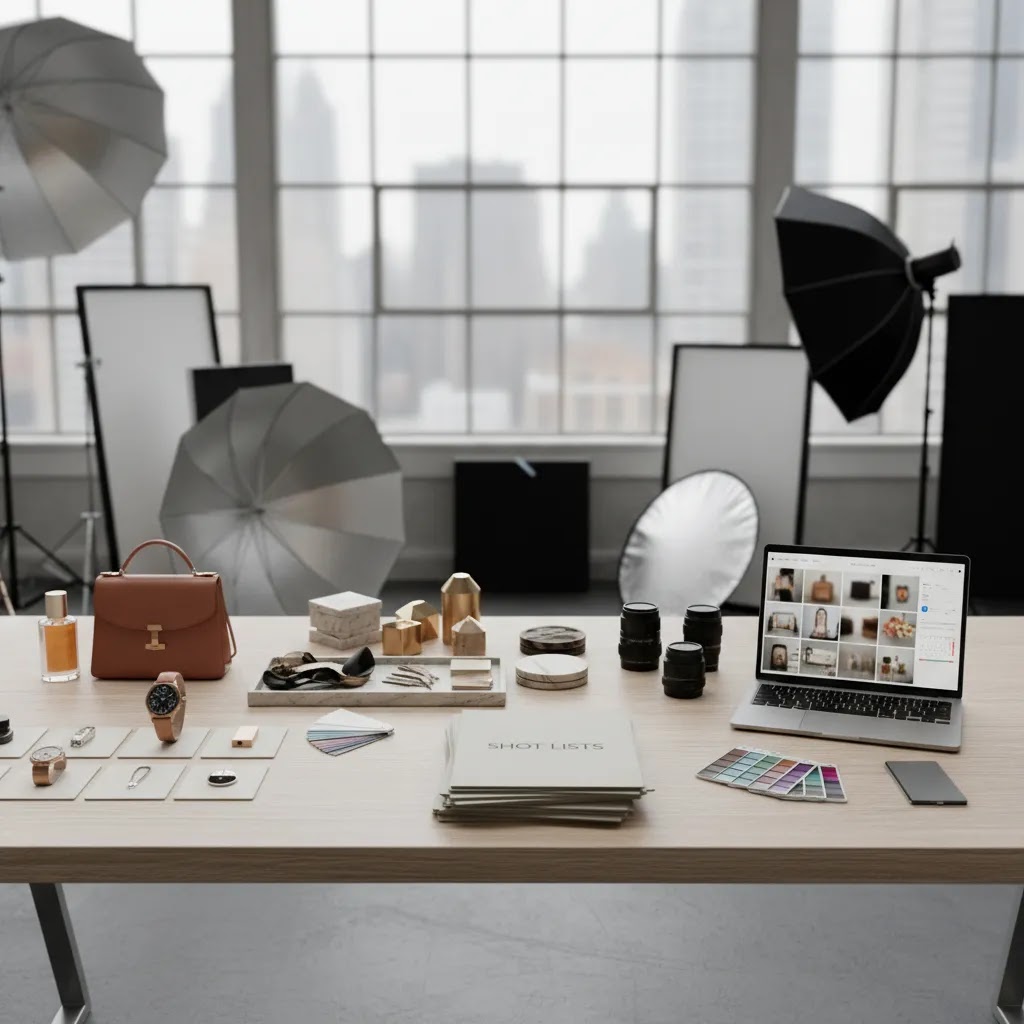
Before you deliver products, clarify the brief in plain terms. Include the shot list per SKU, required angles, background requirements, props or styling notes, and the retouching level you expect. Also specify practical delivery details that matter for ecommerce teams, such as file naming conventions by SKU, whether you want square crops for Shopify collection thumbnails, and whether you need exports tailored for Amazon listings. If you plan to use AI tools after the shoot, for example background variations or resizing, tell the studio what your base deliverable needs to be so the files hold up in editing.
Now, when it comes to turnaround, ask about timelines in stages, not as one vague number. You typically want to know when you will receive selects to approve, how many approval rounds are included, and how long final retouching takes after approval. Also ask how they handle reshoots if something is missed, and the logistics for pickup and delivery if you are tight on time. Some studios may offer rush production, but rush fees and feasibility vary, and you should confirm details before assuming a same-day or 24-hour window is realistic for your scope.
Who This Is Best For
This NYC-focused approach is best for ecommerce brands that need premium, repeatable visual standards and want some level of direct creative control. That includes Shopify stores preparing for a relaunch, beauty brands with packaging-sensitive products, Amazon sellers that need marketplace-compliant white-background shots, and DTC teams running regular social creative tests.
A traditional NYC studio is usually the better fit if your products are reflective, translucent, highly textured, or require exact color fidelity. ProductAI.photo is a better fit as a supplement for brands that already have base photography and want to create more variants, clean up existing files, or test alternate scenes faster.
If you are a smaller store with only a few SKUs, you may not need a premium Manhattan studio. A focused photographer, a tighter shot list, and selective AI editing may get you most of the benefit at a lower overall production cost.
How to Get Started
Start by listing every image type you actually need: homepage hero, PDP gallery, collection thumbnails, Amazon main image, social crops, and ad creative. This avoids paying NYC studio rates for shots that do not support revenue-driving pages.
Next, sort your catalog into three groups. Group one is products that need full studio treatment. Group two is products that can reuse lighting and composition. Group three is products that may only need editing, background cleanup, or alternate scenes from existing files.
Then request quotes using the same brief from each provider. Ask what is included, how many selects you get, whether retouching is separate, and what revision rounds cost. If you are testing hybrid production, use ProductAI.photo tools such as AI Background Generator, Magic Photo Editor, or Creator Studio on a small set of images first. Compare those results against your live PDPs and paid social requirements before scaling up.
For Shopify merchants, upload final images in a consistent aspect ratio, compress files appropriately, and review how they display on mobile collection pages before approving the full batch.
Pros and Cons
Strengths
Considerations
Frequently Asked Questions
How much does product photography in NYC usually cost?
It depends on the scope more than the city alone. Simple white-background ecommerce shots may be priced per image, while campaign or lifestyle shoots are often quoted by half day, full day, or custom project. Retouching, props, assistants, and licensing can all increase the final total, so always ask for an itemized quote.
Is a NYC studio worth it for a Shopify store?
Often yes, if your products need high visual trust to convert. Beauty, luxury, apparel, and giftable products usually benefit most. If your store relies on strong PDP imagery, paid social, and marketplace listings, a studio can be worth it. If you have a smaller catalog and limited cash flow, a lighter shoot plus AI editing may be enough.
Can AI tools replace a product photography studio?
Usually not fully. AI tools can help with backgrounds, cleanup, resizing, and creative variations, but they do not always replace accurate base photography. Most ecommerce brands get better results from a hybrid model, using a professional shoot for core images and AI editing to extend those assets across channels.
What ProductAI.photo tools are relevant for ecommerce imagery?
The current product data lists AI Background Generator, Free White Background Generator, Increase Image Resolution, Remove Text From Images, Background Swap Editor, Place in Hands, Magic Photo Editor, and Creator Studio. Those are most useful for editing, creative variants, and cleanup rather than full-service physical product shoots.
What should I ask a product photographer in NYC before booking?
Ask about category experience, lighting style, retouching standards, delivery timelines, revision policy, usage rights, and whether files are optimized for Shopify, Amazon, and social. Also confirm how they handle sample intake, damaged packaging, color consistency, and extra charges for alternate angles or platform-specific crops.
Do NYC product photography studios offer drop-off services, or do you need to attend the shoot?
Many studios support both. Drop-off is common for white-background catalog work where the setup is repeatable and your brief is clear. Attended in-studio shoots are more common for hero images, lifestyle sets, or categories like beauty where small styling decisions affect the final result. If you cannot attend, tighten your shot list and request a clear select and approval process so you can catch issues before final retouching.
How long does product photography take in NYC from drop-off to final images?
It depends on volume, complexity, and how many approval rounds are built into the process. In many cases you will see an initial select set first, then final retouched files after you approve the picks. Ask for a timeline that covers each stage, including when you receive selects, how long you have to approve them, and how long post-production typically takes once approvals are in.
How many photos per product do I need for Shopify or Amazon listings?
For Shopify, you typically want enough images to answer common buying questions quickly: a clean hero image, a few supporting angles, and detail shots for texture, labels, or features. For Amazon, you usually need at least a compliant main image plus additional images that support conversion, such as angles, detail, scale, and packaging. The right number depends on your category and how much visual proof customers need, but you should define the exact shot list per SKU before you request quotes so you do not pay for extra angles you will not use.
Can I get same-day or 24-hour product photography in NYC?
Sometimes, but it depends on studio availability, product complexity, and retouching requirements. Same-day delivery is more realistic for small sets with minimal retouching, while larger catalogs or reflective products often need more post-production time. If you are working against a launch deadline, ask whether rush production is available, what is included, and whether the timeline covers final retouched exports, not just unedited selects.
What image styles matter most for ecommerce product photography NYC brands?
For most stores, prioritize white-background hero shots, detail close-ups, scale or in-use imagery, and a few branded lifestyle images. Minimalist product photography can work very well for premium brands, but the right mix depends on your category, price point, and whether customers need more visual proof before purchasing.
How can I control costs without lowering quality?
Reduce unnecessary shot types, batch similar products together, standardize your shot list, and approve lighting once before shooting the full catalog. After that, use editing tools for alternate scenes or cleanup where appropriate. This approach often controls spend better than commissioning separate shoots for every campaign update.
Key Takeaways
Conclusion
If you are evaluating product photography nyc services, the right choice is rarely just studio versus software. It is about deciding which parts of your image workflow truly need expert hands and which parts can be standardized or edited faster. For high-stakes launches, beauty products, and premium DTC brands, a NYC studio often makes sense. For routine catalog expansion, alternate backgrounds, and social variations, ProductAI.photo may be a useful support layer. The practical next step is simple: build a shot list, request itemized quotes, and test a small hybrid workflow before scaling. That gives you cleaner cost control and a better sense of what will actually improve your Shopify merchandising.
Disclosure: AcquireConvert may receive affiliate compensation from some links to third-party tools, where applicable. Product availability, features, and pricing can change. The ProductAI.photo data available for this article included tool names and URLs, but not verified pricing or ratings. Any performance impact from improved photography or AI editing will vary based on your store, product category, traffic quality, merchandising, and implementation.
Hi, I'm Giles Thomas.
Founder of AcquireConvert, the place where ecommerce entrepreneurs & marketers go to learn growth. I'm also the founder of Shopify agency Whole Design Studios.