Product Photography Singapore Pricing Guide (2026)

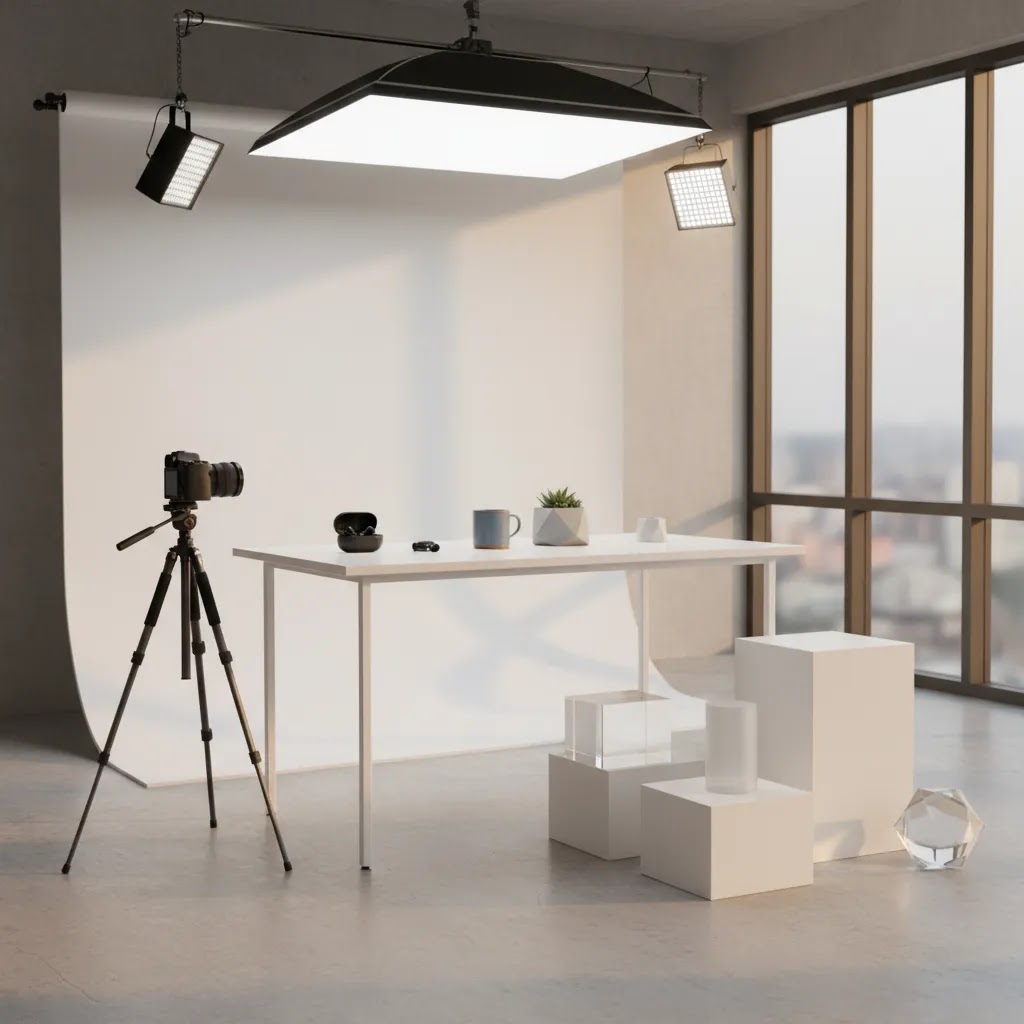
If you are searching for product photography Singapore services, you are usually close to a buying decision. You need clean images, clear pricing, and a setup that fits your catalog, margin, and timeline. For most ecommerce brands in Singapore, the right choice comes down to three paths: a local studio for polished campaign or catalog work, a freelancer for smaller shoots, or an AI workflow for fast updates and lower ongoing production costs. This guide is written from AcquireConvert's practical ecommerce perspective, shaped by Giles Thomas's experience as a Shopify Partner and Google Expert. It will help you compare studio-style product shoots, understand what affects product photography prices, and decide when an ai photography workflow may be the smarter option.
Contents
Overview
Product photography in Singapore covers several distinct use cases, and pricing changes based on which one you actually need. A brand selling on Shopify, Amazon, Lazada, or Shopee may need simple product on white photography for collection pages, marketplace listings, and ads. Another brand may need styled imagery for social campaigns, homepage banners, or seasonal launches. Corporate product photography can also sit in a different pricing bracket if the brief includes team coordination, art direction, location work, or commercial usage rights.
For ecommerce operators, the practical question is not just who can shoot the product. It is whether the output will support conversions. That means consistent angles, accurate color, enough image count for product pages, and versions that work across paid ads, email, and marketplaces. If you are comparing local studios, it helps to review broader benchmarks from our product photography studio guide and our wider Catalog Photography resources.
There is also a growing middle ground between full studio production and fully DIY shooting. AI editing and generation tools can help create white background images, alternate backgrounds, or lifestyle variations once you already have a decent source image. That matters for lean teams that need more creative volume without reshooting every SKU.
Category-Specific Considerations
One reason product photography Singapore pricing feels hard to compare is that categories behave very differently under lights, lenses, and retouching. Two quotes can look similar on paper, but the real difference is whether the studio has done your exact category at ecommerce scale, with repeatable standards for Shopify product pages and marketplace listings.
Here is how the usual problem areas show up in practice, and why they can increase time, complexity, and cost.
Jewelry and reflective products
Jewelry, polished metal, glass, and glossy packaging tend to be the most technically sensitive. Reflections, dust, micro scratches, and unwanted color casts show up fast. Studios that shoot jewelry well typically have tighter lighting control, cleaning routines, and retouching expectations. AI edits can help with background cleanup or minor variants, but anything that changes highlights, stones, or precise material look should be checked carefully, because realism is what builds trust in this category.
Food and beverage
Food often needs styling, timing, and consistency across a set of shots. A drink with condensation, a plated meal, or a baked product can look different minute by minute. That makes planning and on-set process more important than just camera skill. If you sell food online, clarity matters for conversion and return reduction, so you typically want a vendor who can match color and texture across a full menu, not just one hero shot.
Cosmetics and shade accuracy
Cosmetics can be deceptively hard. Shade accuracy, packaging finish, and texture detail are everything. Many brands also need close-ups that hold up when zoomed on Shopify product pages. AI-assisted workflows may be useful for background variations or creative exploration, but you usually want the core product images to be validated carefully, especially if customers are buying based on exact shade and finish.
Apparel and soft goods
Apparel tends to push you toward repeatable templates. Flat lay, ghost mannequin, and model shoots each create very different outcomes for product pages. Ghost mannequin can show structure and fit without hiring models, but it often requires more prep and post-production. For apparel, the real cost driver is consistency across sizes, colors, and new drops, so you want a provider who can standardize angles and spacing across the whole catalog.
Furniture and large items
Large items add logistical constraints. Moving inventory, set size, and damage risk become part of the project. If you sell furniture, the right question is often whether the vendor can handle the practical side, including safe intake, staging, and enough space to light the product evenly. AI can sometimes help create lifestyle scenes once you have a strong cutout, but getting the base capture right is still the foundation.
Industrial, B2B, and technical products
Industrial products are usually less about “mood” and more about clarity, labeling, connectors, scale, and documentation. That often means more angles, detail shots, and sometimes exploded-style visuals for listings. AI tools can help with background cleanup and output formatting, but you still need accurate representation. Over-cleaning or altering product details can create confusion and support issues later.
Think of it this way: category fit affects not only visuals, but also conversion outcomes. The right specialization usually means fewer reshoots, fewer inconsistent listings, and fewer “this does not look like the photo” moments that lead to returns.
Pricing and Costs
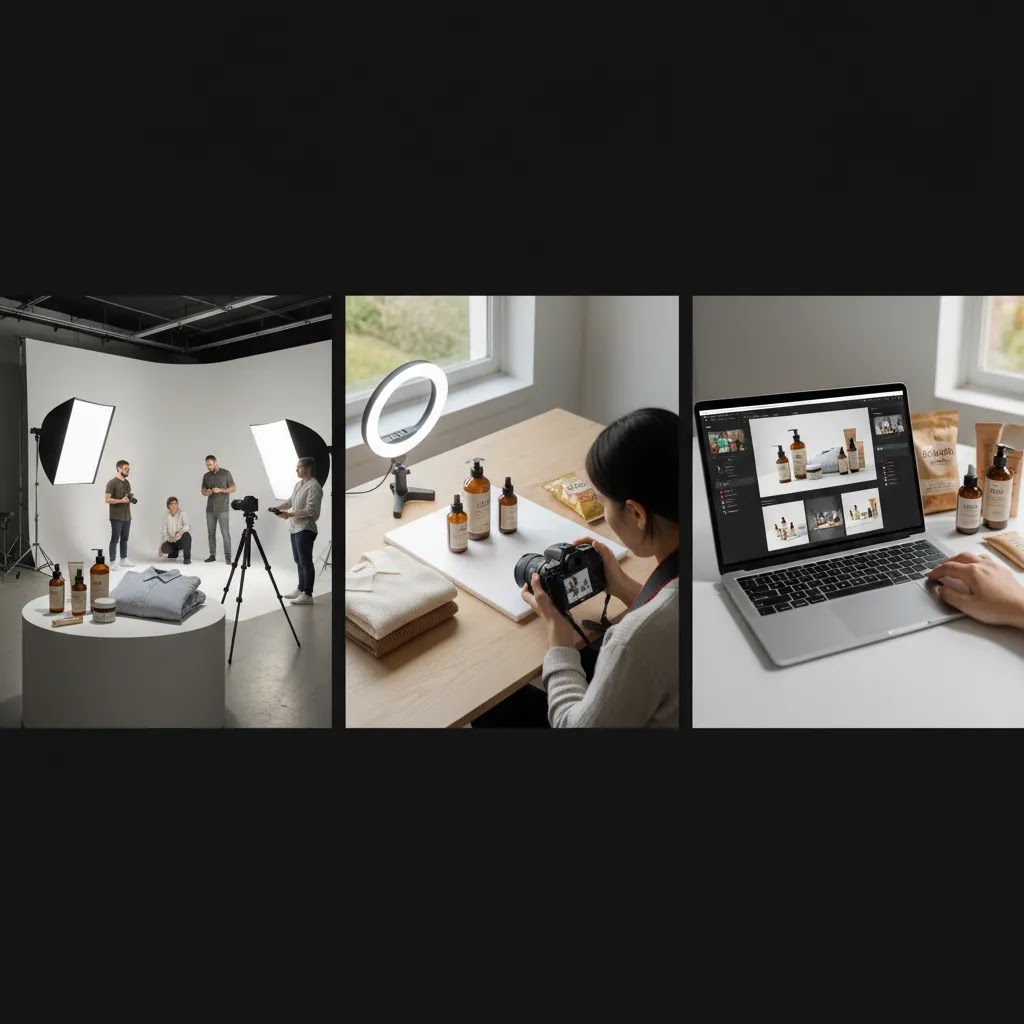
Singapore product photography prices vary too much by brief to quote one fixed number responsibly. In practice, studios and freelancers often price based on image count, complexity per SKU, styling requirements, retouching depth, and usage rights. A straightforward product on white photography brief is usually the lowest-cost option. Styled flat lays, reflective products, cosmetics, apparel, food, and campaign sets tend to cost more because they take longer to prep, light, and retouch.
If you are budgeting for a local shoot, ask for pricing on these line items separately: per-product fee, per-final-image fee, retouching, model or hand talent, prop sourcing, rush turnaround, and usage licensing for advertising. That gives you a cleaner comparison between vendors. Many merchants underestimate post-production time, which is often where costs increase.
There is also an AI-assisted alternative for part of the workflow. Based on the current product data available, ProductAI offers several tools relevant to ecommerce imagery, including AI Background Generator, Free White Background Generator, Increase Image Resolution, Remove Text From Images, Background Swap Editor, Place in Hands, Magic Photo Editor, and Creator Studio. The supplied product data includes URLs, but no current pricing figures, so it would be inaccurate to state subscription costs here. What we can say is that these tools may reduce the need for repeated studio reshoots for some catalog updates, especially after an initial photography session has created usable source assets.
For merchants deciding between traditional editing and app-based workflows, our photoroom review is another useful comparison point.
High-Volume Catalog Photography and Operational Logistics
If you run a Shopify store with a growing catalog, pricing is only half the decision. The other half is whether the provider can handle volume without quality drifting. Competitors in this space often highlight logistics for a reason. A studio can produce great images, but if intake is messy or throughput is limited, launches slip and product pages stay incomplete.
Pickup, delivery, and inventory intake
Some Singapore studios will support product pickup and delivery, while others will require drop-off and collection. Either can work. What matters is whether the process reduces risk for your team and your inventory. From a practical standpoint, ask how they handle intake. Do they label items by SKU, check quantities, and confirm what was received before shooting starts? For fragile or high-value items, ask about handling procedures and how they store products between shoot days.
If you are shipping products to a studio, confirm packaging expectations and what happens if an item arrives damaged. Clear process here protects both sides.
Capacity, throughput, and why it changes cost
High-volume ecommerce product photography Singapore projects tend to break when the vendor does not have a repeatable production line. You will sometimes hear capacity described as “images per day” or “SKUs per day.” Treat those as rough indicators, not guarantees. Real throughput depends on product type, shot list, retouching level, and how standardized your templates are.
What many store owners overlook is that higher capacity can change pricing structure. A studio set up for volume may price more predictably because they can batch lighting, angle templates, and post-production. A campaign-focused studio can still do volume, but timelines and costs may rise if every SKU is treated like a custom set.
A simple way to pilot, then scale
If you have dozens or hundreds of SKUs, avoid committing the entire catalog on day one. A pilot batch is the simplest risk control.
This is also where a hybrid workflow can help. Use the studio to establish consistent base assets, then use AI tools for controlled variations, seasonal backgrounds, or alternate crops for ads. The reality is that once the foundation is consistent, scaling content becomes much easier.
Trust and Credibility
When you hire a product photography service in Singapore, trust matters as much as style. You are handing over inventory, visual brand standards, launch timelines, and in some cases embargoed products. A reliable provider should be able to show consistent category-specific work, explain turnaround times clearly, and define what is included in retouching and revisions.
For ecommerce brands, credibility also means operational fit. Can the studio handle batch shoots for a growing catalog? Do they understand marketplace image requirements? Can they deliver both white background images and ad-ready creative crops? These are practical signs that the provider understands commerce, not just photography.
AcquireConvert evaluates visual production options through the lens of store performance, not aesthetics alone. That is where Giles Thomas's Shopify Partner background is useful. The question is whether imagery will support product page clarity, conversion rate optimization, and merchandising consistency. If you are weighing whether to use a studio, a freelancer, or a hybrid workflow, our guide to choosing a product photographer can help you assess fit more objectively.
Key Features
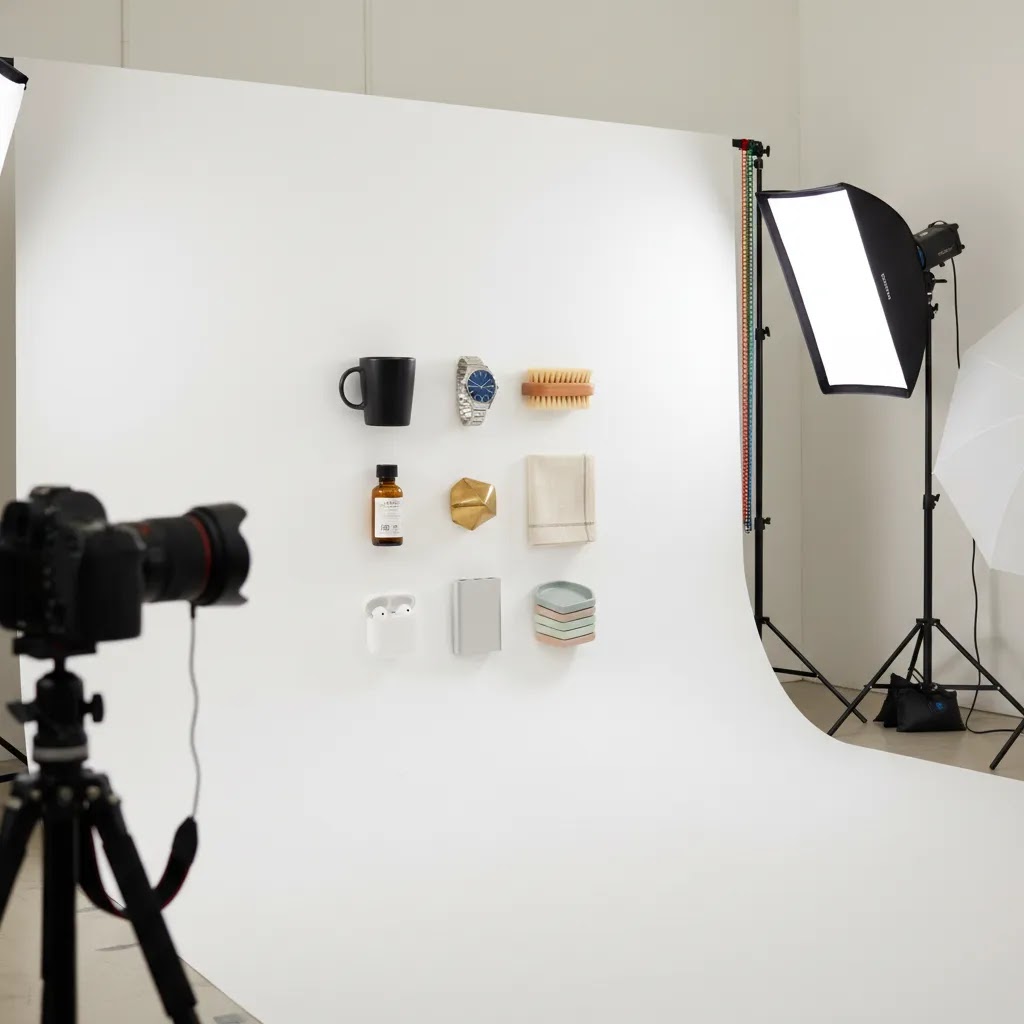
The best product photography setup for a Singapore ecommerce brand usually combines four capabilities: clean capture, efficient editing, flexible outputs, and repeatability. Traditional studios are strongest on capture quality. They control product photography lights, reflections, shadows, and color accuracy better than most in-house teams. This is especially useful for jewelry, cosmetics, glass, tech accessories, and premium packaging.
Where AI tools enter the picture is speed and asset expansion. Based on current product data, ProductAI's image tools support common ecommerce editing tasks. AI Background Generator and Background Swap Editor can help create alternate scenes without rebuilding a physical set. Free White Background Generator is relevant for merchants who need marketplace-friendly images or consistent product on white photography across a large catalog. Increase Image Resolution may help improve older images for newer displays, although results will vary depending on the source file quality. Remove Text From Images can be useful when reworking supplier or previous campaign assets. Place in Hands supports lifestyle-style composites for categories where scale and use context matter. Magic Photo Editor and Creator Studio suggest a broader editing environment for generating multiple asset variants from one base image.
For Shopify merchants, the practical advantage of this hybrid approach is straightforward. You can use a local studio for hero shots and core listing images, then use AI tools for variants, seasonal refreshes, or test creative for ads and landing pages. This can be especially relevant in categories like beauty, where adjacent creative workflows such as an ai makeup generator may support campaign ideation or cosmetic visualization.
If you are building your own setup before outsourcing, our E Commerce Product Photography category also covers the production basics that affect conversion quality.
Typical Deliverables and Service Options
When you request a quote for product photography Singapore services, most studios are really quoting a menu of deliverables. The deliverable mix changes both price and turnaround, so it is worth being explicit about what you need for Shopify product pages, paid ads, and marketplaces.
Common ecommerce deliverables you will see in quotes
These are the most common “building blocks” you will run into:
Now, when it comes to ecommerce usage, “how many images” is only part of the story. You also want to know which images are intended as your main Shopify product images, which are supporting images, and which are ad variations.
Product video and AR-style outputs
Competitors increasingly bundle video alongside stills, because video can lift product understanding in categories where movement, texture, or “how it works” matters. In practice, studios may offer short clips, 360-style rotations, or simple motion content designed for product pages and paid social. Whether you need it depends on your product and your traffic sources. If most of your growth is coming from Meta ads, TikTok-style placements, or you have a complex product that needs demonstration, video may be worth scoping from the start.
Some teams also ask about AR-style outputs. In the real world, this usually means either 3D assets or assets prepared for interactive viewing rather than a single “AR photo.” Not every photography studio offers this in-house. If AR is a requirement, confirm early what formats they deliver and whether the output is intended for Shopify experiences, marketplaces, or ad platforms.
What to confirm in a quote, so you can compare vendors properly
To avoid scope creep, confirm the specifics for each deliverable before you sign off:
Consider this: a quote that looks higher at first can be a better value if it includes the crops, retouching depth, and file organization you would otherwise pay for later.
Pros and Cons
Strengths
Considerations

Who It's Best For
A Singapore product photography service is usually the right fit for brands that need launch-ready images, accurate color, premium presentation, or consistent output across dozens of SKUs. It is especially well suited to Shopify stores with established margins, physical inventory on hand, and a need for polished catalog or advertising visuals.
An AI-assisted workflow is often a better fit for lean teams that already have usable source images and need faster asset production for experiments, seasonal updates, or channel-specific formats. Smaller stores may start with a simple shoot, then extend the asset library with an ai product photography tool rather than booking new studio time every month. The best option depends on your catalog complexity, brand standards, and how often your imagery needs to change.
How to Get Started
Start by separating your image needs into must-have and nice-to-have assets. Most stores need white background product images first, then close-ups, scale shots, and lifestyle content second. Build a shot list by SKU, angle, and channel. That alone will make vendor quotes more comparable.
Next, request quotes from Singapore providers using the same brief. Ask for per-SKU pricing, number of final edited images, turnaround, revision terms, and whether usage rights for product photography advertising are included. If you are shooting apparel or soft goods, ask whether they can handle product clothing photography with ghost mannequin, flat lay, or model styling.
Then test a hybrid workflow. Use a small local shoot for your hero images, then trial AI-based editing on a limited batch of products using ProductAI's relevant tools from the current product set, such as Free White Background Generator or Background Swap Editor. Compare the final output on real product pages and ad creative before scaling. This measured approach is usually smarter than committing your full catalog to one production method immediately.
Frequently Asked Questions
How much does product photography cost in Singapore?
There is no single market-wide rate that applies to every shoot. Pricing usually depends on the number of SKUs, image complexity, retouching, styling, props, usage rights, and turnaround time. White background ecommerce shots tend to cost less than styled advertising images. Always ask for itemized quotes so you can compare services on the same scope.
Is a local studio better than an AI product photography tool?
It depends on what you need. A local studio is usually stronger for first-time hero imagery, precise lighting, and products that need accurate color or reflection control. An AI product photography tool may be more useful for scaling variations, background changes, and extending your image library after the core shoot is complete.
Can AI replace product on white photography?
Sometimes, but not always. If you already have a clear source image, tools like the current ProductAI white background and editing options may help create usable marketplace-style assets. If your starting image is poorly lit or low quality, AI may not deliver the consistency you need for a premium storefront or ad campaign.
What should I ask before hiring a Singapore product photographer?
Ask about category experience, turnaround, revision rounds, retouching depth, file delivery specs, and usage rights. You should also ask whether they understand ecommerce image requirements for Shopify, Amazon, and marketplaces. A visually strong portfolio matters, but production consistency and process clarity matter just as much.
Do product photography studios in Singapore offer product pickup and delivery?
Some do, and some do not. It depends on the studio's workflow, what they are insured to handle, and the type of products you sell. If pickup and delivery matters for your team, confirm the process in writing, including how inventory is checked in by SKU, how products are stored between shoot days, and who is responsible if packaging is damaged in transit.
How fast is the turnaround time for ecommerce product photography in Singapore?
Turnaround varies by vendor and by brief. White background catalog work can be faster than styled shoots, and large SKU batches may take longer even if the per-SKU setup is simple. The best way to get a realistic timeline is to ask for two dates: when the shoot can happen, and when final edited images will be delivered, including how revisions affect the schedule.
Do I need product video as well as photos for my Shopify product pages?
Not always, but it can help in categories where customers benefit from motion or demonstration, such as apparel fit, product mechanisms, texture, or size perception. If you drive a lot of traffic from paid social, video may also be useful for ad creative testing. The practical approach is to start with strong core photos, then add video for best sellers where it clearly improves product understanding.
Can a studio handle high-volume product photography for a large SKU catalog?
Some studios are set up for it, others are not. Ask how they manage SKU tracking, shot templates, and file naming conventions, and whether they have a defined capacity for batch work. A pilot batch of 10 to 20 SKUs is usually the fastest way to confirm whether they can deliver consistent results at scale before you commit the full catalog.
Do I need lifestyle images or just white background images?
Most ecommerce stores need both, but not in equal volume. White background images help with clarity, consistency, and marketplace compliance. Lifestyle images help customers understand scale, use case, and brand feel. If your budget is limited, prioritize clean catalog images first, then add selected lifestyle shots for best sellers.
Are AI-edited images suitable for Shopify stores?
In many cases, yes. For Shopify stores, AI-edited images can be practical for collection pages, alternate creatives, and campaign testing, especially when the edits start from good original photos. Results will vary by niche, brand standards, and product complexity, so it is worth testing edited images on a small set before wider rollout.
What if I sell cosmetics or beauty products?
Beauty brands often need more controlled lighting, texture detail, and shade accuracy than general merchandise. You may still use AI-assisted editing for content expansion, but core product imagery should be validated carefully. If beauty visualization is part of your workflow, related tools like an AI makeup generator can also support adjacent creative testing.
Key Takeaways
Conclusion
If you are comparing product photography Singapore options, the right decision comes down to image quality needs, catalog size, and how often you refresh creative. A local studio is usually the stronger choice for first-time hero imagery, premium presentation, and technically challenging products. AI editing tools become more compelling once you already have a reliable source image and want to expand outputs efficiently. From AcquireConvert's ecommerce perspective, the smartest approach for many Shopify brands is to avoid treating this as an either-or decision. Use studio production where precision matters most, then layer AI tools into the workflow where speed and scale matter more. Your next step is simple: build a tight shot list, request itemized quotes, and run a small hybrid test before scaling across the full catalog.
Disclosure: AcquireConvert may receive affiliate compensation from some third-party links referenced in its content, where applicable. Product and service suitability depends on your catalog, brand standards, source image quality, traffic, niche, and implementation. Outcomes are not guaranteed, and costs such as studio fees, retouching, licensing, and any tool subscriptions should be verified directly with the provider before purchase.
Hi, I'm Giles Thomas.
Founder of AcquireConvert, the place where ecommerce entrepreneurs & marketers go to learn growth. I'm also the founder of Shopify agency Whole Design Studios.