Product Photography Studio Near Me (2026 Guide)

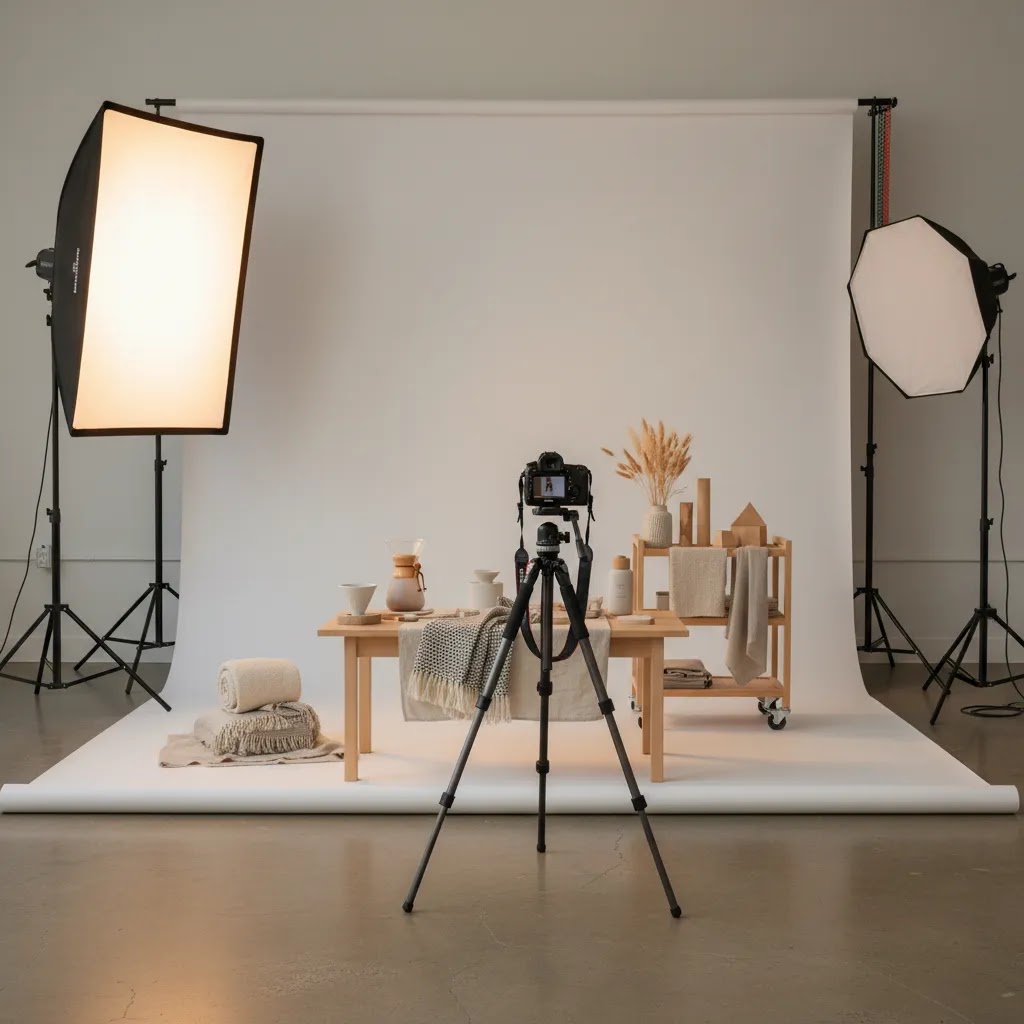
You need better product photos, and you need them soon. Maybe your Shopify store is getting traffic but shoppers are not converting. Maybe your current images look inconsistent across collections, or your supplier photos make everything feel generic. This is usually when store owners start searching for product photography studio near me, hoping a nearby studio can fix the problem fast.
That search can help, but location alone is not the real decision. The better question is whether a studio understands ecommerce, can match your brand, and can produce assets that work across product pages, ads, email, and marketplaces. A local option may be ideal, especially if you need frequent shoots or want hands-on collaboration. But plenty of stores also benefit from remote workflows, AI-assisted production, or hybrid setups.
This guide walks you through what actually matters when choosing a studio, what to ask before you book, how to assess lighting and setup quality, and when alternatives may make more sense. If you want a broader foundation first, AcquireConvert also has a useful guide to choosing a product photography studio based on your ecommerce goals.
Contents
Why “near me” is not enough
Searching for a product photo studio near me makes sense when you want convenience. You may want to drop products off in person, oversee styling, or avoid shipping fragile inventory. Those are valid reasons. But from a practical standpoint, proximity is just one factor in a buying decision that affects conversion, return rates, and brand perception.
The reality is that many local studios are built for portraits, events, or general commercial work, not ecommerce. They may produce beautiful images that still do not fit the requirements of a Shopify product page. For most Shopify stores, clean consistency matters as much as creativity. You need image sets that work in thumbnails, zoom views, mobile layouts, and paid ad placements.
What many store owners overlook is that a studio can be nearby and still be the wrong fit if it lacks experience with white background listings, variant consistency, lifestyle compositions, or post-production workflows for catalog volume. That is why your shortlist should start with ecommerce capability first, then location second.
If you are still mapping the category, the broader Catalog Photography hub on AcquireConvert can help you compare different image styles and production options.
How to judge studios that rank for “near me” but are not product specialists
Here’s the thing, local SEO results can be misleading. A studio might rank well for product photography studio near me because it has strong reviews and a well-optimized website, not because it actually runs ecommerce catalog shoots every week.
A common pattern is that the first page is full of studios focused on family photography, headshots, weddings, or general commercial work. Those studios can still be talented. But the deliverables you need for Shopify, and the operational discipline required to produce consistent images across dozens of SKUs, is a different job.
From a practical standpoint, do a fast screening pass before you spend time on calls:
Consider this when you review an “our work” gallery: do not only judge whether a photo looks nice. Look for repeatability across a set. If ten products are shot, do they all sit at a similar scale, with similar shadows, and similar background tone? That consistency is what makes collection pages look professional, and it is what keeps your catalog from drifting as you launch new products.
What a good ecommerce studio actually delivers
A strong professional product photography studio does more than shoot attractive pictures. It builds a repeatable system for your catalog. Think of it this way, you are not buying a single hero image. You are buying a visual production process that should hold up as your SKU count grows.
Consistent framing and image standards
Your customers should not feel like every product came from a different brand. Good studios define angle, crop, scale, aspect ratio, and spacing rules before the shoot begins. This becomes especially important for apparel, beauty, home goods, and accessories where inconsistency makes collection pages look messy.
Lighting that supports the product, not just the photo
Product photography studio lighting affects more than aesthetics. It changes texture visibility, color accuracy, material perception, and even trust. Shiny packaging, glass, cosmetics, jewelry, and reflective tech accessories all need careful control. If you want to understand these variables better before hiring, AcquireConvert’s Product Photo Lighting resources are a solid next stop.
Output formats for ecommerce use cases
Ask whether the studio can deliver the following without friction:
Post-production that respects your brand
Retouching should make products look accurate, not artificial. Over-edited shadows, unreal colors, and aggressive skin or surface correction can hurt trust. This is especially true in beauty and skincare. If you sell those products, related tools such as an ai makeup generator may support concept testing or creative workflows, but they should not replace careful color and finish accuracy for ecommerce listings.
What branding photography means for ecommerce (and when you need it)
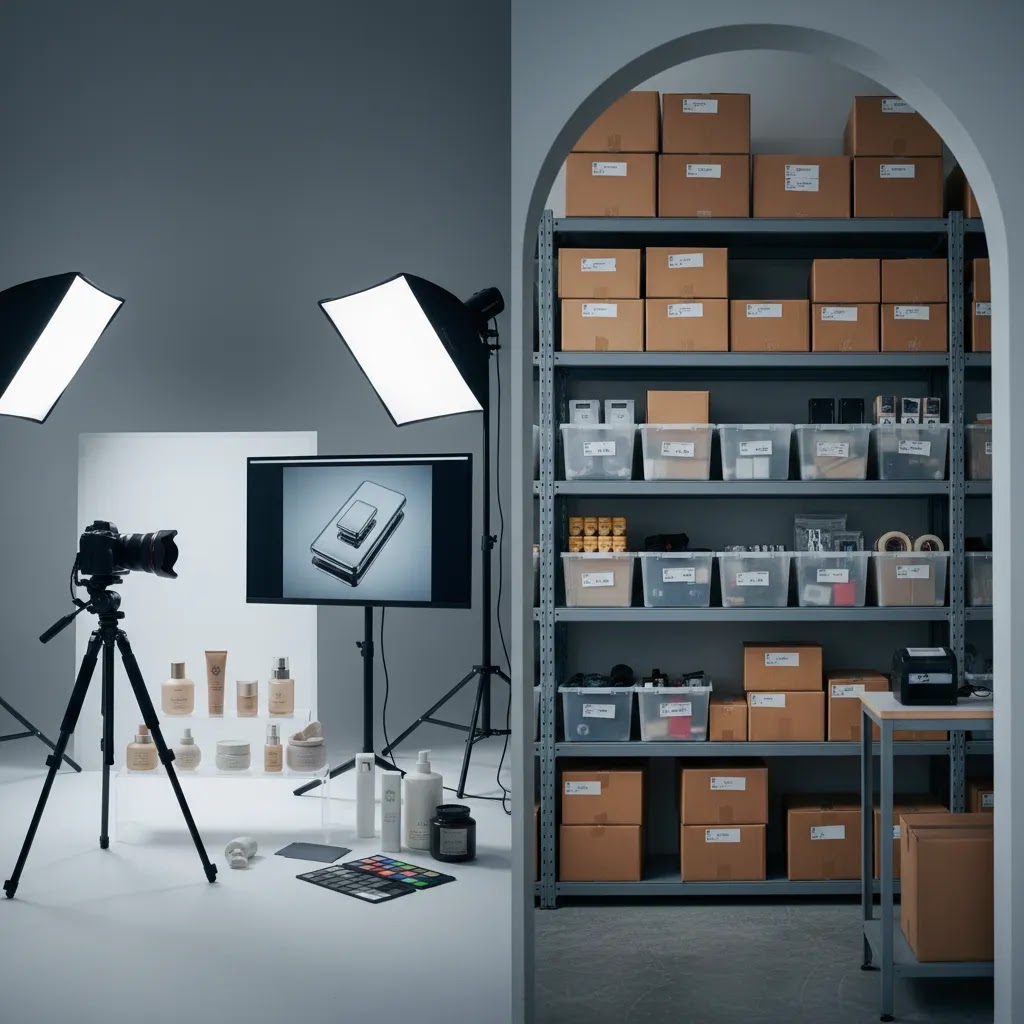
Branding photography gets talked about like it is only for “nice looking” lifestyle shots. For ecommerce, it is more specific than that. Branding photography is the set of images that makes your store feel like one coherent brand across product pages, collection pages, ads, and email, even when a shopper is moving fast on mobile.
The way this works in practice is that you are building an asset system, not commissioning random creative. A branding-style shoot should give you a consistent visual language, backgrounds, surfaces, props, lighting mood, and usage context that you can reuse across launches without reinventing everything every time.
What to ask for if you want branding coverage
If you are booking a studio and you want more than catalog basics, ask for coverage that translates into a reusable library:
Now, when it comes to value, branding photography is not automatically the right first step for every store. If your current problem is that your core product images are inconsistent or unclear, fix that before you pay for elaborate scenes.
How to decide if branding images will actually help your store
Branding-style images tend to help most when your shopper is buying based on taste, identity, or perceived quality, not only specs. Think apparel, beauty, home decor, specialty food, premium accessories, and giftable products. In those categories, the images are doing real positioning work.
For more utilitarian products, or categories where shoppers are highly price-sensitive and comparison-driven, cleaner catalog-first photography is often the better use of budget early on. You can still do a few lifestyle scenes for ads, but you typically want your core Shopify PDP set to stay straightforward and consistent.
Consider this, if you can describe your product’s differentiation in one clear sentence and your current photos already show the product accurately, branding coverage may be the thing that helps you communicate personality and values. If you cannot, you may get more ROI from fixing the fundamentals, angles, details, and consistency, before you invest in brand storytelling visuals.
How to review a studio’s portfolio
Most store owners look at a portfolio and ask, “Do these photos look good?” That is too broad. A better question is, “Would these images help a shopper decide to buy this product online?”
Look for category relevance
A studio that shoots beverages may not know how to handle matte black packaging, translucent serums, or soft goods. If you sell cosmetics, apparel, supplements, or furniture, ask to see examples that match your category as closely as possible. A studio with relevant category experience will usually move faster and make fewer styling mistakes.
Check color consistency and shadow control
Open several examples side by side. Do the whites match? Do metallic products keep detail without harsh glare? Are shadows controlled and believable? In practice, this means you are evaluating the studio’s setup discipline, not just its creativity.
Review how images work in a store context
Ask to see finished work on a real product page, not only isolated portfolio shots. This matters because a hero image can look polished on its own and still fail in thumbnail grids or mobile swipes. If a studio cannot show ecommerce implementation, that is not a deal-breaker, but it should make you ask more detailed questions.
Notice whether they understand editing tools and modern workflows
Some studios now combine camera capture with AI cleanup, background editing, or faster reshoots. That can be efficient if quality control is strong. If you are comparing AI-assisted editing options, this AcquireConvert review of photoroom is useful for understanding where software can help and where manual oversight still matters.
Questions to ask before you book
Here’s the thing, the fastest way to avoid a poor fit is to ask operational questions before discussing creative ideas. A studio may sound confident in a sales call but still lack the process your store needs.
You should also ask who actually shoots the products. In some studios, the portfolio is created by a senior photographer, but lower-priority client work is handed to junior staff. That is not automatically a problem, but you need clarity.
Now, when it comes to selecting the right partner, individual expertise still matters a lot. If you are unsure whether to hire a studio or a specialist freelancer, comparing your options against a dedicated product photographer can clarify what level of control and specialization you need.
Shot list templates for ecommerce: product, lifestyle, and behind the scenes
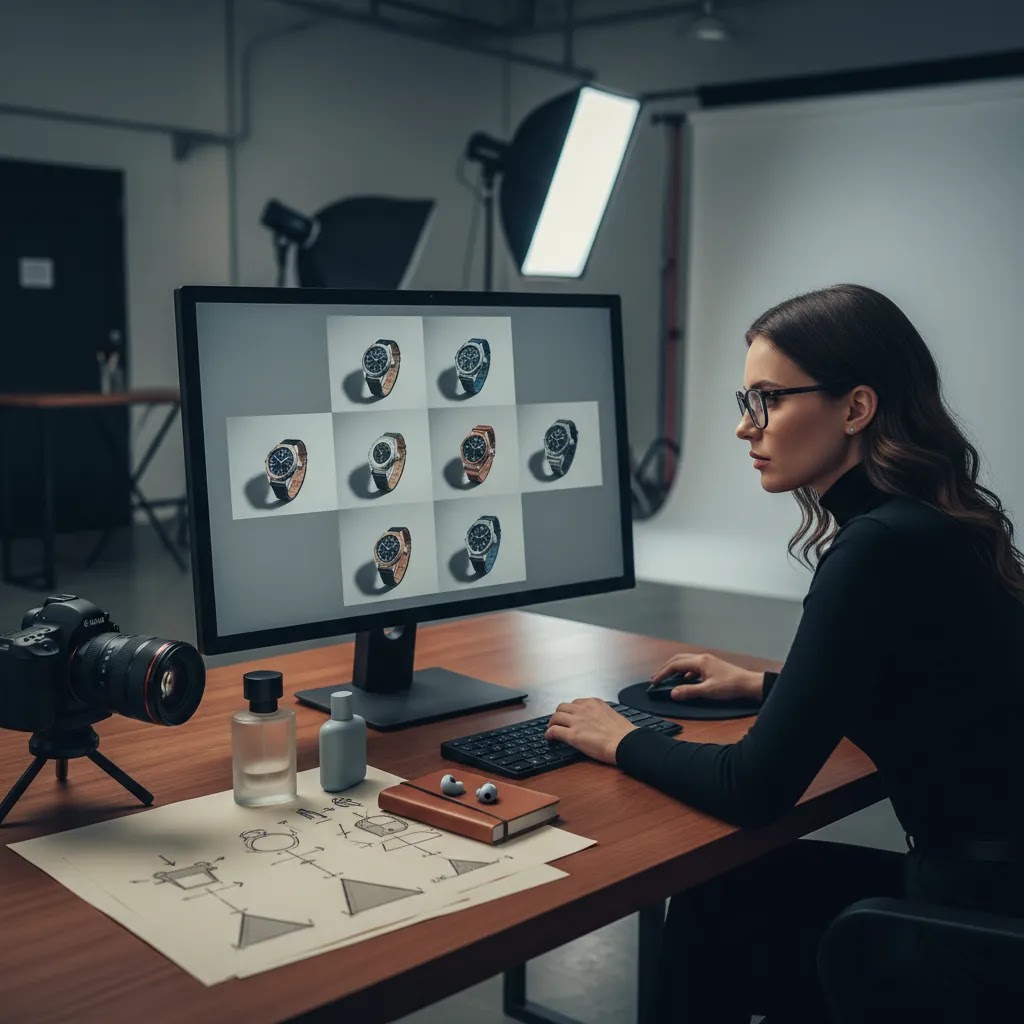
A shot list sounds basic, but it is one of the highest-leverage tools you have as a Shopify store owner. It turns “we need photos” into a repeatable spec that protects consistency across launches. It also helps studios quote accurately, because everyone is aligned on volume and complexity from the start.
A simple shot list structure most studios can follow
If you want a straightforward template you can reuse across products, start here and adjust per category:
What many store owners overlook is that the shot list should also specify outputs. If you know you need square crops for ads and portrait crops for Stories, call that out up front so your framing supports it. Otherwise you end up paying for extra edits later, or you get crops that cut off important product details.
Behind-the-scenes and process shots as marketing assets
Behind-the-scenes content is not a vanity add-on. For some products, it is a trust asset. If you manufacture locally, use premium materials, hand-finish items, or have a meaningful quality process, ask the studio if they can capture:
These images tend to show up on About pages, email flows, and paid social creative where “who are you” matters. They can also work in Shopify product descriptions and landing pages where you need to justify a higher price point. Outcomes vary by category and audience, so treat it as a testable asset type, not a guaranteed conversion lever.
How to keep shot lists consistent across future launches
The way to avoid catalog drift is to standardize your shot list for each product type. For example, one template for bottles, one for boxes, one for apparel, one for bundles. Keep the naming consistent, keep the angles consistent, and keep the background and crop rules consistent.
Once you have a baseline set you like, reuse it every time you launch. That makes it much easier to brief a new studio, add AI-assisted variations without quality surprises, and keep your collection pages looking like one brand instead of a patchwork.
Local studio vs remote vs AI
Many store owners assume local is always best. Sometimes it is. Sometimes it is just familiar. The better choice depends on your catalog, shoot frequency, creative standards, and internal resources.
When a local studio makes the most sense
A nearby studio is often worth paying for if your products are fragile, perishable, oversized, high value, or difficult to style remotely. It also helps if you are building a distinct visual brand and want to attend the shoot, test props, or approve scenes in real time.
When remote production can work well
Remote studios are often efficient for straightforward white background work. You ship products, approve a shot list, review proofs, and receive edited files. If the process is standardized, this can work very well for brands that reorder similar shoots throughout the year.
Where AI product photography fits
AI product photography studio tools can be useful for concepting, background swaps, light retouching, and creating supporting images without booking a full production day. They are especially helpful for testing ad creatives, seasonal refreshes, or lower-stakes catalog expansion. Still, results vary by product type. Reflective packaging, texture-heavy fabrics, and regulated categories often need closer review.
AcquireConvert regularly covers this space from a practical ecommerce angle, and its guide to ai photography is worth reading if you want to compare real use cases rather than AI hype.
Useful AI-assisted production tools to know
Some stores blend studio photography with editing and generation tools to extend asset output after the initial shoot. Examples from current tool data include:
Features and availability may change, so verify current details directly with each provider before making workflow decisions.
Pricing and production realities
Pricing for professional product photography near me varies widely. Geography plays a role, which is why searches like product photography studio Miami, product photography studio London, product photography studio in USA, or product photography studio UK often return very different rates. But location is only one input.
The main pricing drivers are usually product complexity, styling needs, number of final images, retouching depth, set construction, model usage, and turnaround speed. A simple tabletop SKU on white may be priced very differently from a styled cosmetics set with multiple props and reflective packaging.
Consider this, a lower quote can become expensive if you need reshoots, extra edits, or missing aspect ratios later. A higher quote may be reasonable if it includes shot planning, prop sourcing, file optimization, and repeatable standards for your whole catalog.
If you are building your own product photography studio setup in-house, compare that cost against outsourced production honestly. Equipment, lighting, editing time, staff training, and process documentation add up quickly. The difference between stores that outsource effectively and those that regret it often comes down to volume. High-SKU brands with frequent launches sometimes benefit from a hybrid model, outsourced hero shots plus in-house maintenance content.
How Shopify stores should decide
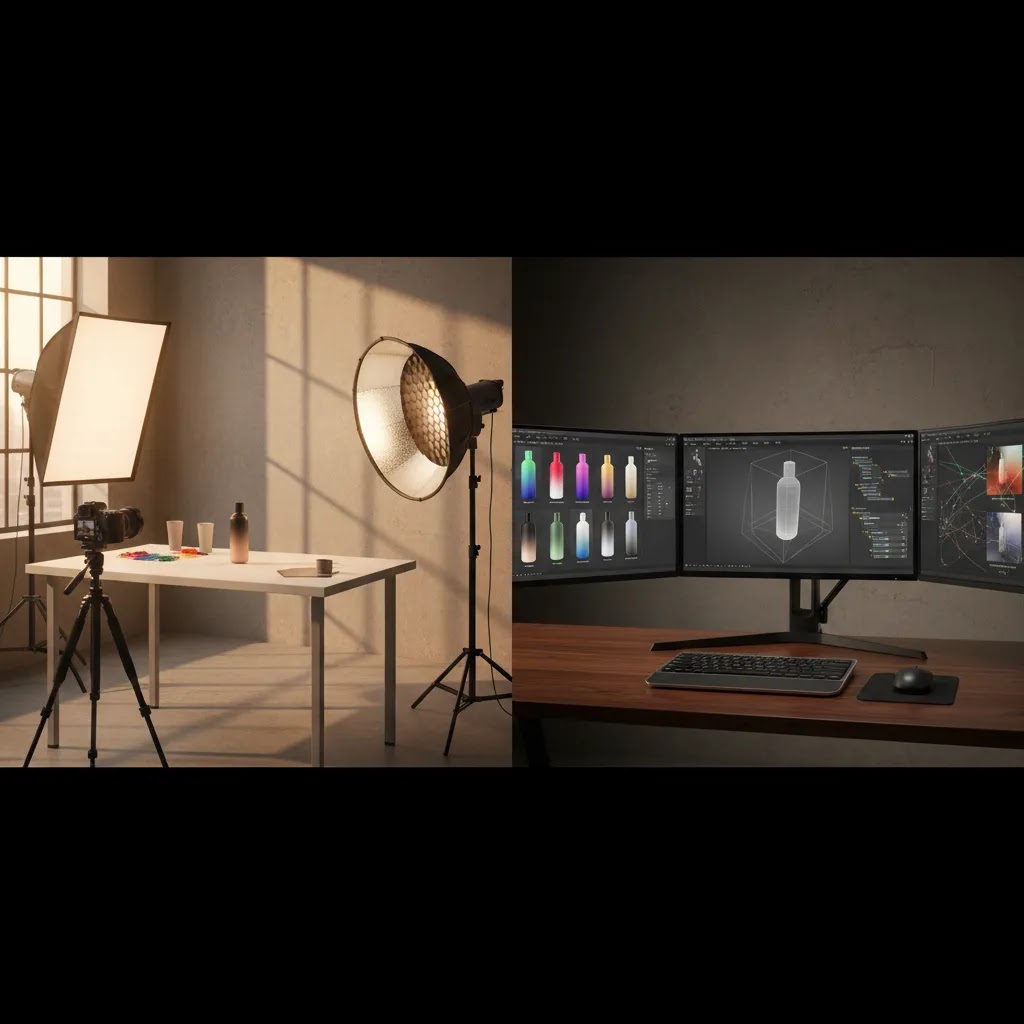
For most Shopify stores, the right decision comes down to your stage of growth and the role photography plays in conversion. If your current images are actively hurting trust, the priority is not artistic perfection. It is getting clean, accurate, consistent visuals live across your highest-revenue products first.
Start with your top 20 percent of SKUs
Do not try to reshoot everything at once. Choose the products that drive the most revenue, traffic, or margin. Build standards there, then expand. This approach usually makes the project easier to brief, easier to measure, and easier to repeat.
Match the asset type to the page role
Your product page needs a different image mix than Instagram or a paid social ad. White background images help clarity and consistency. Lifestyle shots help context. Detail crops help reduce uncertainty. If you plan around where the image will be used, you will get more value from the same shoot.
Document your visual rules
Create a one-page guide covering framing, crop, angles, props, background, retouching preferences, and naming conventions. Whether you use a local studio, remote partner, or AI-assisted workflow, this document becomes your quality control system.
That practical mindset is a big part of what makes AcquireConvert helpful for merchants. Giles Thomas approaches visual ecommerce topics like a Shopify operator, not just a creative director, which is why the advice tends to connect image choices back to store performance and buyer trust.
The strategies and tools discussed in this article are based on current ecommerce best practices and publicly available information. Results will vary depending on your store, niche, and implementation. Always verify tool pricing, features, and platform compatibility directly with the relevant provider before making purchasing decisions.
Frequently Asked Questions
How do I choose the best product photography studio near me?
Start by filtering for ecommerce experience, not just location. Review portfolios for category relevance, color accuracy, lighting control, and consistency across multiple SKUs. Then ask practical questions about pricing, turnaround, retouching, file delivery, and repeatability. A nearby studio is helpful if you need frequent approvals or are shipping fragile products, but distance matters less if the studio has a strong remote workflow. Your goal is to find a partner that understands how images need to perform on product pages, not only how they look in a portfolio.
Is a local product photo studio always better than a remote one?
No. Local studios are often useful when products are delicate, oversized, high value, or need hands-on styling. They are also helpful if you want to attend the shoot. But remote studios can work very well for standardized catalog photography, especially white background images or repeatable SKU shoots. The better choice depends on your products, review process, and how often you need new assets. In many cases, workflow quality, communication, and ecommerce experience matter more than geography.
What should a professional product photography studio include in its quote?
A clear quote should explain whether pricing is based on SKU count, final image count, scene count, or day rate. It should also specify retouching, cropping, color correction, proof rounds, revision limits, file formats, licensing, and turnaround time. If props, models, stylists, or set building are involved, those should be separated clearly. Quotes that look low at first can become more expensive if basics are treated as add-ons, so ask for a sample deliverables list before you commit.
How important is product photography studio lighting for ecommerce?
It is extremely important because lighting affects clarity, material texture, color accuracy, and perceived quality. Shoppers cannot touch your products, so the photo has to do more of the selling work. Poor lighting can flatten texture, distort colors, or create reflections that make products look lower quality than they are. Strong lighting setups help customers understand what they are buying and may reduce uncertainty. That can support better on-page performance, although outcomes depend on your audience, pricing, and overall store experience.
Can AI replace a professional product photography studio?
Sometimes it can replace part of the workflow, but not always the whole process. AI tools are useful for background changes, concept testing, cleanup, and generating supporting creative for ads or social content. They can also help smaller stores produce more variations without paying for a full reshoot every time. Still, highly reflective products, fine textures, and exact color matching often need human oversight. AI works best as a complement to real photography unless your products and brand standards are relatively simple.
Should I hire a product photographer instead of a full studio?
If your project is small, specialized, or highly collaborative, an individual photographer may be the better fit. You may get more direct communication and a more tailored creative approach. A studio can be stronger when you need scalability, multiple sets, standardized retouching, or ongoing catalog production. The right choice depends on scope and workflow. If you are weighing both options, compare how each handles briefing, revisions, and repeat shoots rather than assuming a studio is automatically more capable.
What if I need 3D product photography near me instead of standard studio photos?
3D product photography can be valuable if your shoppers benefit from rotational views, interactive visualization, or highly detailed product inspection. This tends to matter more for furniture, electronics, customizable goods, and products where dimensional understanding affects buying confidence. Not every standard studio offers 3D workflows, so ask specifically about modeling, rendering quality, texture realism, and output formats. It is usually a separate capability with different pricing and production steps than standard still photography.
How can I tell if a studio understands Shopify needs?
Ask whether they can build image sets around product page requirements rather than general commercial photography. They should understand thumbnail consistency, mobile cropping, variant presentation, zoom detail, file optimization, and the need for both white background and supporting lifestyle shots. A studio that understands ecommerce should also be comfortable working from a SKU list and naming files in a way that fits your upload process. That operational awareness often matters more than flashy creative language.
Do I need a product photography course near me instead of hiring a studio?
That depends on volume and internal capacity. If you launch products frequently and have a team member who can learn basic lighting, editing, and shooting standards, training may make sense. If you only need periodic high-quality shoots, outsourcing is often more efficient. Building an in-house process takes equipment, time, and documentation. Many brands eventually use a hybrid model, they outsource hero assets and create simpler maintenance images internally once a style system is established.
Are AI editing tools useful after a studio shoot?
Yes, in many cases they can extend the value of your original shoot. You might use them for alternate backgrounds, quick campaign variations, or simple cleanup. That said, keep your source files and approved retouching standards consistent so AI outputs do not drift away from your brand look. This is where AcquireConvert’s practical coverage can help. If you are evaluating AI-assisted visuals alongside traditional production, the site’s guides in catalog photography give you a grounded way to compare tradeoffs before changing workflows.
What is branding photography, and do I need it for my Shopify store?
Branding photography is the set of images that creates a consistent, recognizable look across your Shopify store and marketing, not just a few “pretty” lifestyle shots. You may benefit from it if your products are taste-driven or premium, and if your brand story, materials, and context matter in the purchase decision. If you are earlier stage or your main issue is unclear core product images, you will usually get more value by fixing your catalog basics first, then adding branding coverage once your standards are locked in.
Can a studio also shoot behind-the-scenes content for my brand?
Often yes, but you need to request it explicitly and include it in the shot list. Behind-the-scenes content might include process photos, packing moments, workspace details, or team images that support trust. These assets can be used on About pages, email flows, landing pages, and paid social creative. Whether it helps depends on your category and audience, so it is usually best treated as an add-on you test, rather than the core of your product photography budget.
What should be included in a product photography shot list?
A solid shot list typically includes a hero image, standard angles, detail macros, a scale reference, packaging shots, and at least one in-use or lifestyle scene if it fits your product. You should also specify output needs like aspect ratios and crops for Shopify, ads, and marketplaces. If you sell regulated products, include any compliance-relevant views where shoppers need to read labels or warnings clearly.
How do I know if a studio that ranks for “near me” is actually good at product photography?
Look for evidence of repeatable catalog work, not only one-off hero shots. A true product studio usually shows multi-SKU sets with consistent lighting and cropping, clean white background work, and examples that handle reflective or transparent products well. Pay attention to whether they talk about retouching consistency, file delivery, and ecommerce outputs. Those operational details are usually the difference between “a nice photo” and a set of assets that actually works in a Shopify catalog.
Key Takeaways
Conclusion
If you are searching for a product photography studio near me, you are probably trying to solve a bigger business problem than just “getting nicer photos.” You want images that build trust, clarify the product, and help shoppers feel confident enough to buy. That means the right studio is the one that understands ecommerce execution, not just camera technique.
Your next step is simple. Shortlist two or three studios, request ecommerce-specific samples, and compare their process as carefully as their portfolio. Then decide whether you need a local partner, a remote workflow, or a hybrid setup that includes AI-assisted production for flexibility. If you want to keep researching before you book, explore AcquireConvert’s related guides on product photography studios, product photographers, and AI photography workflows. A little extra diligence here can save you from expensive reshoots later.
Results from ecommerce strategies vary depending on store type, niche, audience, budget, and execution. Nothing in this article constitutes a guarantee of specific outcomes. Third-party tool features and pricing are subject to change: verify current details directly with each provider.
Hi, I'm Giles Thomas.
Founder of AcquireConvert, the place where ecommerce entrepreneurs & marketers go to learn growth. I'm also the founder of Shopify agency Whole Design Studios.