Product Photography Work, Career Guide (2026)

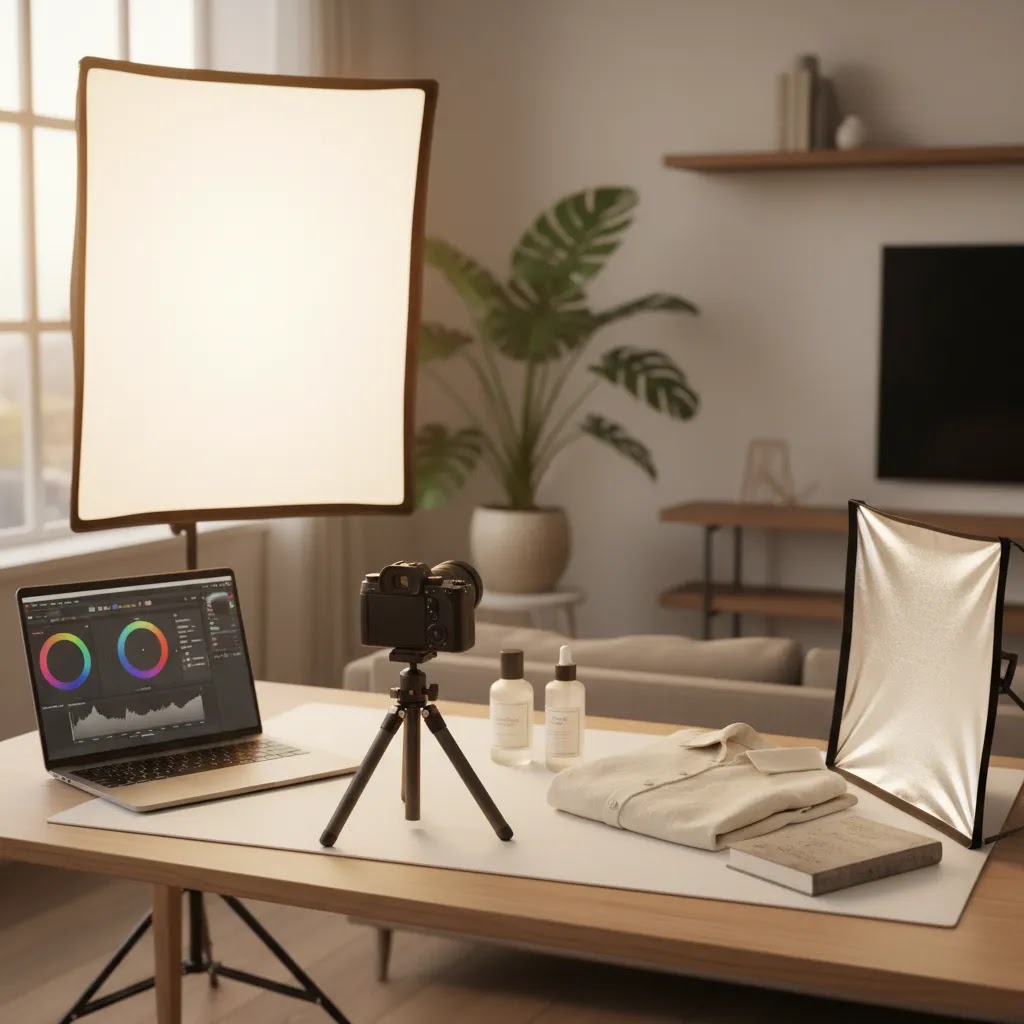
Product photography work can be a realistic career path if you approach it like a service business, not just a creative hobby. The strongest opportunities usually come from ecommerce brands that need steady image production for product pages, ads, marketplaces, and social content. That makes this a practical lane for photographers who want recurring client work, remote projects, or a home-based studio setup. If you are still building skills, start with a narrow niche, a simple workflow, and a portfolio that shows commercial results rather than random artistic shots. For store owners reading this, the same advice helps you understand what makes a capable product photographer. At AcquireConvert, we assess ecommerce tools and workflows through real store performance, with Giles Thomas bringing Shopify Partner expertise and hands-on experience in AI-assisted visual commerce.
Contents
What Product Photography Work Looks Like
Product photography work is commercial photography focused on helping brands sell. That is an important distinction. Clients are not paying only for beautiful images. They are paying for images that fit product pages, paid ads, Amazon listings, email campaigns, and social media.
Most beginners picture a full-time studio career with expensive gear. In reality, many product photographers start with a small home setup, one or two lighting arrangements, and a tight service offer. That might mean white background product images for DTC brands, lifestyle shots for social ads, or content refreshes for seasonal launches. If you want a clearer sense of how a working setup should function, this guide to a product photography studio is a useful next read.
The best early career move is specialization. A photographer handling e commerce product photography for skincare brands will build momentum faster than someone trying to shoot cosmetics, furniture, jewelry, books, food, and apparel all at once. Specialization also makes your portfolio easier to understand and your outreach more persuasive.
This field is also changing. Alongside traditional shoots, brands now expect faster turnaround, multiple aspect ratios, and some AI-assisted editing. That is why understanding ai photoshoot workflows and modern ai product photography tools can increase your value, especially for smaller Shopify brands that need content at scale.
Product Photography Rules and Consistency Frameworks
Here’s the thing: in ecommerce, consistency often beats “the best single photo.” A Shopify product page, a collection page grid, and a paid ad carousel all reward catalogs where every item looks like it belongs in the same brand universe.
The 20-60-20 rule (and how it applies to ecommerce catalogs)
One simple framework is the 20-60-20 rule. Think of it as a way to structure your deliverables so a brand gets both coverage and creative flexibility.
For most Shopify store owners, this mix is practical because it keeps the catalog clean while still feeding acquisition channels like Meta Ads, Google Ads display placements, and email campaigns with fresher creative.
A simple shot list template you can standardize by product type
From a practical standpoint, a repeatable shot list is what keeps you fast and consistent. Your exact list varies by niche, but these patterns hold up across most ecommerce work.
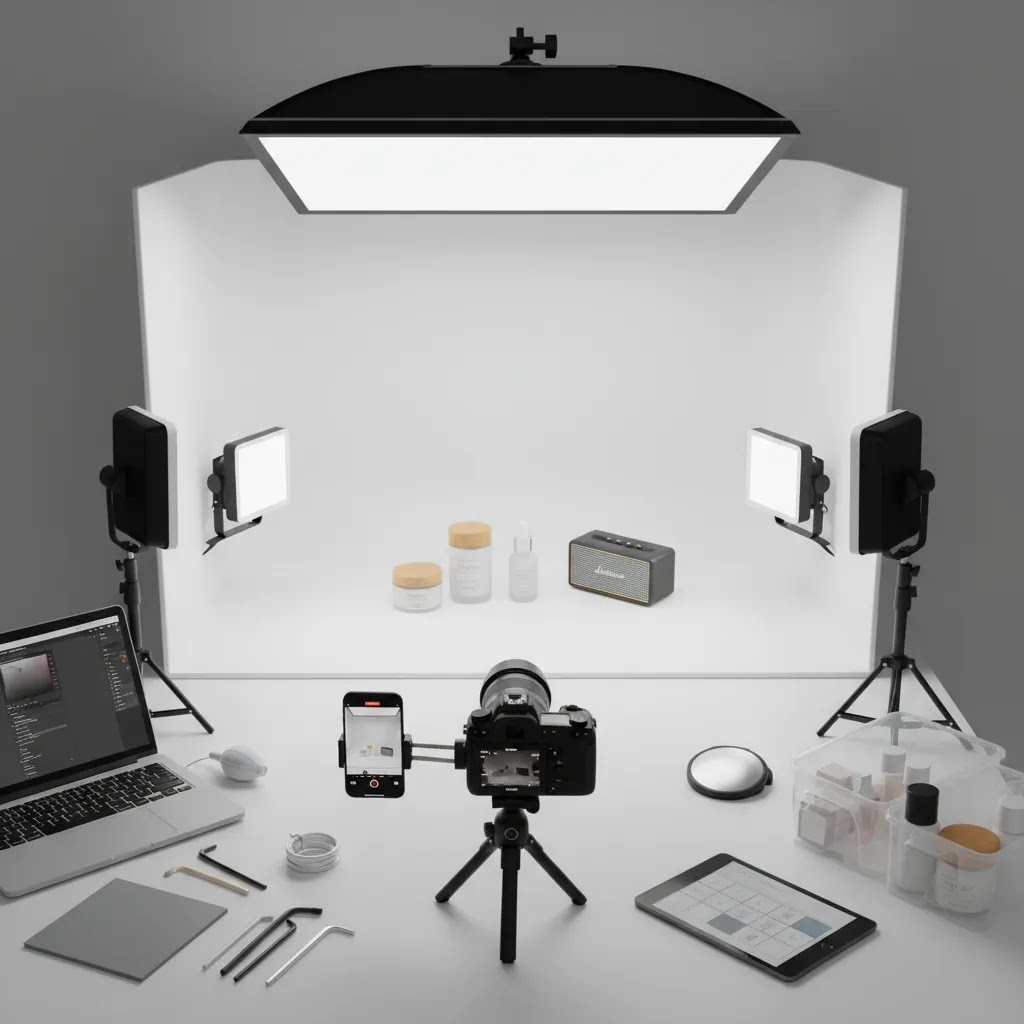
Standardize three things across the whole catalog: camera height and angle, crop boundaries, and lighting direction. If your hero shots are all framed the same way, your edits become faster and the site looks more premium.
Common consistency mistakes (and how to fix them with a repeatable setup)
What many store owners overlook is that “inconsistent” often comes from tiny differences, not major mistakes. Here are the issues that usually show up first:
The way this works in practice is simple: once you have a setup that produces a “store-ready” hero image, document it. Take behind-the-scenes reference photos, write down camera settings, and save an editing preset. That is how you scale a one-person studio without quality drifting over time.
How to Build Skills, Services, and Workflow
If you want to turn product photography into paid work, focus on five areas first.
1. Choose a niche you can shoot repeatedly. Cosmetics, apparel, books, packaged goods, and handmade products all require different lighting, styling, and retouching approaches. Product photography cosmetics work often depends on reflections, textures, and color accuracy. Product photography apparel may involve flat lays, ghost mannequin work, or on-model photography. Book product photography often leans on simple prop styling and marketplace compliance.
2. Build a results-driven portfolio. Your portfolio should look like a product photography website for a client-ready service, not a school project gallery. Show white background images, cropped detail shots, a few lifestyle images, and examples formatted for ecommerce use. Include before-and-after edits when relevant, especially if you offer background cleanup or compositing.
3. Learn a repeatable production system. Clients value consistency. A good workflow covers intake, shot list planning, lighting setup, file naming, editing, delivery, and revision boundaries. If you work from home, consistency matters even more because your setup needs to be reliable across repeat orders.
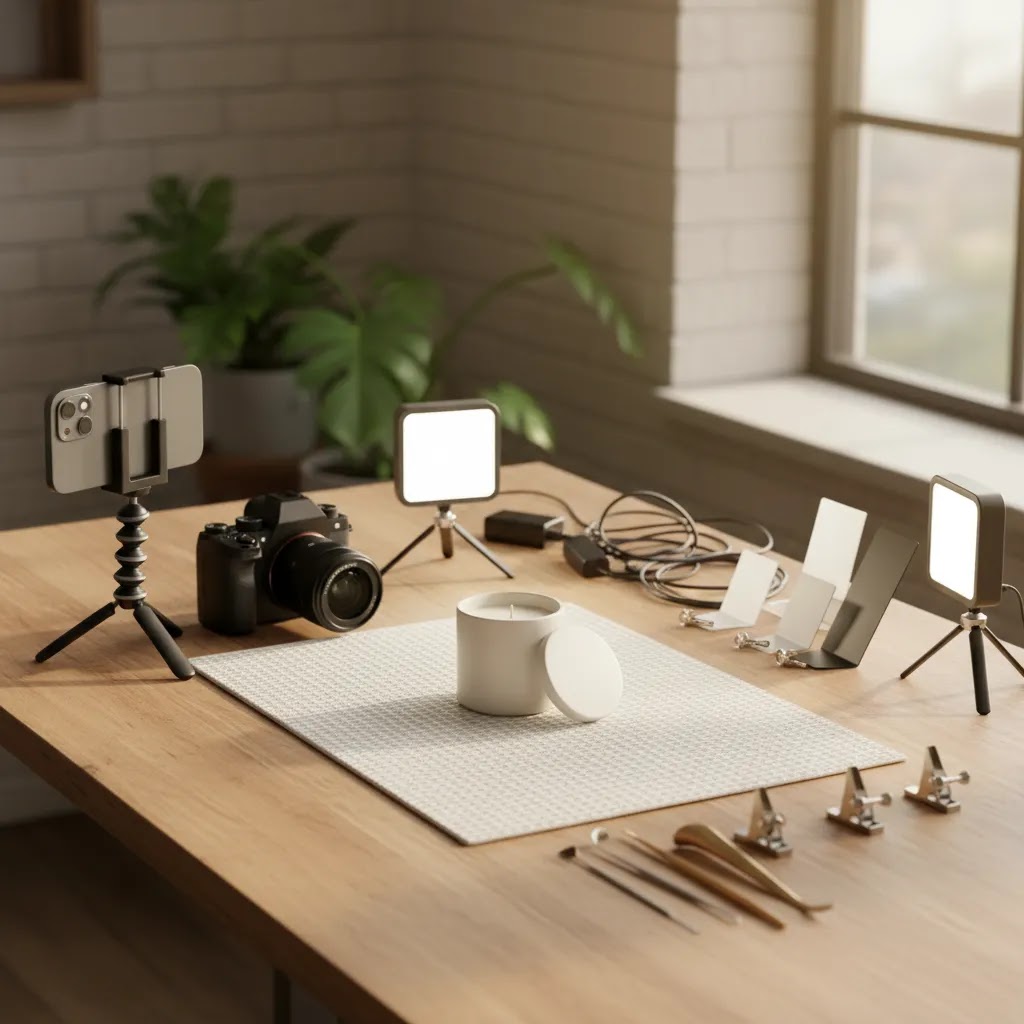
4. Start with simple tools before expanding. A basic product photography kit can include a camera or modern phone, tripod, lights, white sweep, reflectors, and editing software. A product photography booth can help with small objects, but it is not required for every niche. Many beginners now start with iphone product photography for simple catalog work, then upgrade gear once client demand is stable.
5. Add AI carefully where it saves time. Generative AI product photography can help with background creation, cleanup, concept mockups, and variant testing. It works best as part of an ai product photography workflow, not as a replacement for lighting knowledge and composition. If you serve beauty brands, tools related to an ai makeup generator may also influence the kind of visual experimentation clients expect.
For many new photographers, the fastest route to paid work is offering three packages: clean catalog images, simple lifestyle images, and monthly content retainers. That keeps your sales process clear and easier for ecommerce brands to buy.
Getting Hired: Entry-Level Paths, Remote Work, and a “No Experience” Strategy
The reality is you do not need a perfect portfolio to get your first paid product photography work, but you do need a believable path from “I can shoot this” to “I can deliver this for a brand, every week, without drama.” That is what clients are really hiring for.
Entry-level paths that lead to paid product photography work
Competent entry-level work often comes from roles that give you repetition and real production constraints:
Think of it this way: early on, your advantage is reliability. Brands often prefer someone who can produce consistent, usable images over someone who can make one amazing hero shot but struggles with the other 30 SKUs.
How to become a product photographer with no experience (without misleading clients)
If you are starting from zero, build 2 to 3 spec-style portfolio projects that mimic real ecommerce deliverables. Spec work is fine as long as you present it honestly as a self-directed project and not as a paid client campaign.
Present the work like a deliverable: include your shot list, the style rules you followed, and what the final file set contained. That signals you understand production, not just photography.
How “product photography work from home” works in practice
Remote product photography is absolutely workable, but clients usually worry about product handling and predictable results. A simple intake and delivery process reduces that fear.
Now, when it comes to remote trust, consistency is your product. The more standardized your workflow is, the easier it is for a Shopify brand to hire you again for the next launch.
Startup Costs and Income Expectations
There is no single pricing model for product photography work, but there are predictable cost buckets when you start. Your initial expenses usually include camera or phone gear, lighting, backdrops, props, editing software, storage, and shipping if clients send products to you. If you are building a home setup, keep your first version lean and functional.
A practical beginner setup often starts with one table, controlled lighting, a white background solution, and editing software. You do not need a large commercial space to begin. Product photography diy setups are common, especially for solo operators focused on small to medium products. The key is delivering consistent files that a brand can publish immediately.
Income depends on your niche, experience, turnaround speed, and how well you package services. You might charge per image, per product, per hour, or per project. Monthly retainers are often more stable for product photography work from home because they reduce the need to constantly chase one-off gigs. Product photography jobs work from home are most realistic when you are serving ecommerce brands that ship inventory to you or rely on remote editing and AI-assisted compositing.
Brands comparing in-house and outsourced production will often assess speed and software as much as camera skill. That is one reason some photographers also study tools like Photoroom for quick background cleanup and batch-ready assets.
If you want category-level context around niches and formats, browse AcquireConvert’s Catalog Photography section for related workflows and examples.

Product Photography Salary and Career Outlook (What You Can Realistically Earn)
How much money you can make in product photography work varies by market, client type, and how you package your services. The more your work ties into ecommerce outcomes like faster launches, cleaner catalogs, and more usable ad creative, the more pricing power you typically have.
Common earning models (and what they mean for stability)
Most product photography income falls into a few models:
Pricing ranges are all over the map, so be cautious about any single “average salary” number you see online. A photographer shooting simple white background images for small products in volume will price and earn differently than someone shooting jewelry with heavy retouching or styled lifestyle campaigns with a team.
What moves earnings up or down
Consider this: two photographers can shoot the same number of images and make very different money because of what is bundled into the job.
Practical income math for a solo operator
If you want a realistic planning exercise, start from output, not ambition. For example, if you are a solo operator and you can reliably produce 8 products per day at 5 final images per product, that is 40 deliverable images in a day. If you shoot 3 days per week and spend 2 days editing, admin, and client management, you might deliver around 120 images per week in a sustainable rhythm.
Now apply your pricing. If your average effective rate after revisions and admin time works out to $20 per delivered image, 120 images per week is $2,400 per week, or roughly $9,600 per month before expenses and taxes. If your effective rate is $10 per image because you are underpricing, doing heavy retouching, or handling unlimited revisions, that same output is roughly $4,800 per month. The gap is rarely “talent.” It is usually packaging, scope control, and production efficiency.
What caps output for most photographers is not shooting time. It is editing time, client communication, shipping logistics, and reshoots. Tight shot lists, clear revision boundaries, and tools that speed up cleanup can matter as much as lens choice.
Pros and Cons
Strengths
Considerations
Frequently Asked Questions
Can product photography be a full-time career?
Yes, but it usually becomes sustainable when you run it as a specialized service business. Full-time income is more likely when you focus on ecommerce clients, create repeatable packages, and build recurring work rather than relying only on occasional one-off shoots. Results vary based on niche, pricing, client acquisition, and production speed.
Do I need expensive gear to start product photography work?
No. Many photographers begin with a simple lighting setup, tripod, background sweep, and either an entry-level camera or a strong smartphone. Gear matters less than control over lighting, consistency, and editing. Upgrade once your client work justifies it, rather than overinvesting before you have demand.
Is iphone product photography good enough for paid client work?
It can be, especially for social content, simple catalog images, and smaller brands with modest content needs. The limitation is usually not the phone itself, but lighting control, lens consistency, and editing discipline. For higher-volume ecommerce work, a more structured setup may improve reliability and output quality.
What niche is best for beginners?
Small product categories are usually easier to start with, such as cosmetics, supplements, books, candles, or packaged goods. These are easier to light and ship, and they fit home studios well. If you want more ideas, AcquireConvert’s coverage of Background Removal & Editing can help you understand the post-production side clients often care about.
How do I find product photography clients?
Start with direct outreach to Shopify brands, Etsy sellers, Amazon sellers, and local ecommerce businesses. Your pitch should show relevant niche examples, clear deliverables, turnaround times, and pricing structure. A focused portfolio and a simple service page usually perform better than broad claims about shooting every type of product.
Is generative AI product photography replacing photographers?
Not fully. It is changing the workflow, especially for concept generation, background creation, and image expansion. Photographers who understand both real production and AI-assisted editing may be better positioned than those ignoring the shift. The strongest service model combines commercial judgment, lighting skill, and efficient post-production.
Can I do product photography work from home?
Yes, and many people do. Work from home is especially viable for lightweight products and remote client relationships. You will still need space for storage, shipping intake, staging, and editing. Clear process matters because home-based work can become disorganized quickly if product handling and delivery standards are not documented.
How much money does a product photographer make?
It varies widely by location, niche, and whether you are in-house or freelance. Some photographers earn more through volume-based catalog work and retainers, while others earn more through higher-complexity shoots that include styling, heavy retouching, or broader usage rights. A practical way to estimate is to calculate your weekly output capacity, multiply by your average effective rate per deliverable, then subtract typical operating expenses and taxes.
Is product photography a good career?
It can be, especially if you like repeatable production work and you are willing to treat it like a service business. Many photographers build stable careers by specializing in one ecommerce niche, standardizing their workflow, and prioritizing recurring client relationships. It is less attractive if you want only highly creative one-off shoots, because a lot of product photography is consistency, speed, and process.
How do I become a product photographer with no experience?
Create a small spec portfolio that looks like real ecommerce deliverables, then start pitching narrow services. A good starting point is a white background set (consistent angles for 10 to 15 products), a simple lifestyle set (ad-ready compositions), and examples cropped for common ecommerce placements. Be transparent that the work is self-directed, and focus your outreach on brands that match the niche you practiced.
What is the 20 60 20 rule in photography?
It is a simple framework for balancing deliverables: 20% core catalog coverage, 60% supporting angles and details, and 20% creative or lifestyle images. In ecommerce, it helps you produce a clean, consistent product page experience while still creating a smaller set of images that work well for ads and social content.
Key Takeaways
Conclusion
Product photography can become a solid career if you match creative ability with operational discipline. The photographers who grow fastest usually specialize, document their workflow, and position themselves around ecommerce outcomes such as cleaner catalogs, faster launches, and more usable marketing assets. If you are starting out, avoid building a complicated service menu too early. Pick one niche, create a focused portfolio, and test outreach with a simple offer. If you are a store owner hiring for this work, look for consistency, ecommerce awareness, and a production process that fits your publishing needs. For more practical guidance on shooting, editing, and AI-assisted workflows, continue through AcquireConvert’s catalog photography resources and apply one improvement to your setup this week.
Disclosure: AcquireConvert may receive affiliate compensation from some third-party links referenced across the site, where applicable. This article is for educational purposes and does not guarantee career outcomes, client acquisition, revenue, or business growth. Results vary based on skill level, niche, portfolio quality, outreach, client demand, and implementation.

Hi, I'm Giles Thomas.
Founder of AcquireConvert, the place where ecommerce entrepreneurs & marketers go to learn growth. I'm also the founder of Shopify agency Whole Design Studios.