Best AI UGC Generator for Ecommerce Brands (2026)


If you are trying to choose the best ai ugc generator for your ecommerce brand, the real question is not which tool looks the flashiest. It is which one helps you produce believable ad creative, product visuals, and short-form content fast enough to support testing without making your brand look generic. For Shopify store owners, that usually means balancing speed, image quality, editing control, and how well the output fits your product page and paid social workflow. This guide focuses on practical evaluation, not hype. I will walk you through what matters, where AI UGC tools help most, where they still fall short, and how to decide if one belongs in your workflow. If you need a wider primer first, start with our guide to ugc and then come back ready to compare options.
Contents
- What ecommerce brands should expect from an AI UGC generator
- Key features to evaluate before you buy
- AI UGC video generators vs image-first tools: what you actually get
- Pros and Cons
- What “believable” AI UGC means: realism, compliance, and brand safety checks
- Who AI UGC generators are best for
- AcquireConvert recommendation
- How to choose the right tool
- How to evaluate ROI for AI UGC tools (for ecommerce teams running paid social)
- Frequently Asked Questions
- Key Takeaways
- Conclusion
What ecommerce brands should expect from an AI UGC generator
An AI UGC generator is usually best thought of as a creative production tool, not a complete replacement for customers, creators, or brand strategy. For most ecommerce brands, its value comes from speeding up content testing. You can create ad concepts, product-in-use scenes, creator-style visuals, or edited assets for landing pages without organizing a full shoot every time.
That matters most when you are testing multiple hooks, audiences, or offers. A growth-stage brand running Meta, TikTok, or short-form paid social often needs new creative faster than a traditional content process can supply it. AI tools can reduce the gap between idea and test.
Still, the best ai ugc generator for ads is not always the best fit for product pages. Some tools are stronger at background edits and image cleanup than at believable creator-style content. Others help with lifestyle compositions but need manual review before anything goes live. If you are still comparing the wider field, our roundups on best ugc platforms and user generated content tools can help you benchmark what belongs in your stack.
Key features to evaluate before you buy
For an ecommerce brand, features only matter if they map to an actual workflow. A nice demo is not enough. Here are the core areas worth checking.
1. Product scene generation and editing flexibility
If you sell physical products, your AI UGC workflow often starts with image preparation. Tools like AI Background Generator, Free White Background Generator, and Background Swap Editor are useful when you need cleaner ad variations, marketplace-ready images, or quick alternate contexts for testing.
If your products need lifestyle framing, hand-held scenes, or more realistic creator-style placement, Place in Hands may be more relevant than a generic background remover. This is especially useful for beauty, accessories, wellness, and small packaged goods where scale and usage context affect conversion.
2. Image quality and post-processing
Low-quality outputs can hurt trust quickly. Before choosing a ugc ai generator, look at how it handles image sharpness, edges, text, labels, skin tones, and packaging details. Tools such as Increase Image Resolution and Remove Text From Images can support cleanup, but they do not solve poor base assets on their own.
3. Creative control for ad testing
Store owners rarely need just one final asset. They need versions. If you are trying five hooks across three audiences, you need a system that lets you adapt scenes, revise backgrounds, and create multiple outputs without starting from zero each time. A broader workspace such as Creator Studio or Magic Photo Editor may be more practical than a single-purpose tool.
4. Fit for your brand style
The best ai ugc generator is the one that helps your content feel more native to your channel, not more artificial. A premium skincare brand, a playful impulse-purchase product, and a technical home goods store all need different visual treatment. Review outputs against your current best-performing creatives, not just against the tool demo.
If you need inspiration on what believable social proof content actually looks like, review these user generated content examples. If your challenge is more about source imagery than ad scripting, a better route may be improving your raw product assets or working from a stronger product photography studio setup first.

AI UGC video generators vs image-first tools: what you actually get
Here is the thing, a lot of “AI UGC” marketing blurs two very different categories. If you know what you are buying, you can avoid the classic mistake of expecting a tool to do video creator ads when it is really built for still images.
Image-first UGC-style tools usually focus on product visuals: background swaps, lifestyle stills, in-hand placement, and cleanup that helps your images feel more native to social. In practice, these tools can be great for Shopify brands that need fast variations of product scenes for ads, collection pages, or landing pages.
True AI UGC video generators typically try to produce the full short-form ad: script, talking head or avatar, voice, captions, and a finished 9:16 video export. Some also support swapping actors, changing languages, and building multiple versions from the same base concept.
Now, when it comes to evaluating video specifically, these are the practical checks that matter for ecommerce use:
Video format and placement requirements
Most paid social creative is mobile-first, so you should confirm the tool supports 9:16 exports and does not force awkward cropping. It is also useful to have 1:1 and 4:5 options for feeds, plus control over safe areas so captions and product overlays do not land under UI elements.
Captions and burn-in controls
Many stores rely on captions to carry the hook. Check whether captions can be styled to match your brand (font, color, highlight words), whether they can be repositioned, and whether you can export with captions burned in or as a separate file. The more you can do inside one workflow, the less time you lose in post-production.
Lip sync and voice quality
If the tool uses a talking head, lip sync issues show up fast, especially on direct-to-camera UGC. Look for natural mouth movement, pacing, and voices that do not sound overly robotic. Also check how many voice options you have, and whether you can adjust tone and speed without the voice breaking.
B-roll and product insert options
For ecommerce, the best video workflows usually let you add product shots and b-roll into the timeline. That could be a quick cut to the product, an on-screen overlay, a “how it works” slide, or a simple unboxing sequence. If a tool only outputs a talking head with no product integration, it may struggle to sell anything that needs visual proof.
Export formats and watermark limitations
Confirm you can export in a format your ad workflow expects, typically MP4 with a sensible resolution. Also check for watermark rules on trial plans. A watermark can be fine for internal concept testing, but it can also prevent you from running a clean split test if your “control” creative is not watermarked.
From a practical standpoint, AI video is usually safest at the top of the funnel: hook tests, angle tests, and quick concept validation where speed matters more than perfect realism. Where you need to be careful is high-trust moments like testimonials, medical or wellness claims, or product demos that require precise handling. If the video looks even slightly off, you can end up creating curiosity without confidence, and that can hurt click quality and conversion downstream.
Pros and Cons
Strengths
- AI UGC generators can help ecommerce teams produce more creative variations for ad testing without planning a full shoot every time.
- They are especially useful for early concept validation, seasonal campaigns, and rapid iteration across paid social formats.
- Image editing tools such as background removal, white background conversion, and resolution enhancement can support cleaner PDP and ad assets.
- They can reduce creative bottlenecks for small Shopify teams that do not have an in-house designer or recurring creator roster.
- For products that benefit from context, tools that simulate in-hand or lifestyle placement may improve how clearly the product use case is communicated.
Considerations
- AI-generated content can still look generic or artificial if the source image quality is weak or the prompt direction is vague.
- Not every AI UGC tool is equally strong for video, voice, or creator realism, so some brands may still need real creators for top-performing campaigns.
- Brand safety and visual accuracy need manual review, especially for packaging claims, colors, and fine details.
- Single-purpose tools can be useful, but a fragmented workflow may slow your team down if you need multiple edits across many assets.
What “believable” AI UGC means: realism, compliance, and brand safety checks
What many store owners overlook is that “believable” is not just about whether an image looks pretty. It is about whether a shopper believes it is accurate, and whether the creative is safe to run at scale across paid social without causing trust issues or ad review problems.
Before you publish anything, a simple pre-check can save you a lot of back-and-forth later. Here are the main things to look for.
Visual accuracy checks (the stuff shoppers notice)
Packaging accuracy: Does the bottle, jar, or box match what a customer will actually receive? If your Shopify product photos show a new label version, but the AI output invents an older one, it can create confusion and support tickets.
Color match: AI can shift product color, especially with cosmetics, apparel, and anything reflective. Compare the output against your approved product imagery and make sure it still matches the variant you are selling.
Label text and fine details: Many generators struggle with readable text. If your label becomes gibberish, the creative may still get clicks, but it can also feel fake. For close-up product claims, keep real product photography in the mix.
Hands, skin, and object artifacts: In-hand images are powerful, but AI artifacts around fingers, nails, jewelry, and edges are a dead giveaway. If you spot anything odd, it is usually better to regenerate than to “hope no one notices.” People notice.
Too-perfect creator vibe: If the “creator” looks like a generic stock model every time, performance can plateau because the content does not feel native. This is where mixing AI concepts with real creator content often works better than trying to replace creators entirely.
Compliance and ad policy risk checks (especially for paid social)
Consider this, you can make a strong ad that still gets rejected or restricted if it crosses a line on implied claims. Policies change, and enforcement varies by account and category, so you should always verify current platform guidelines before you scale spend.
In general, be careful with:
Implied claims and before/after visuals: If your AI creative implies outcomes that are hard to substantiate, you may trigger reviews or distrust. This is common in wellness, beauty, and personal care.
Testimonial-style claims that look real: AI “reviews” can be risky if they feel like a real person making a specific promise. Even if you are using it as a concept test, it is worth keeping language and visuals conservative until you have a compliant final creative approach.
Sensitive attribute cues: Avoid creative that appears to call out personal characteristics about the viewer. Even subtle phrasing or imagery can create avoidable ad review issues.
A lightweight QA workflow that works for small Shopify teams
The way this works in practice is pretty simple. Keep a small “reference set” of approved visuals: your best product pack shots, your correct label versions, brand colors, and a few examples of your top-performing ad styles. When you generate new AI assets, compare them against that reference set before anything goes live.
Require human review every time, even if you trust the tool. AI is fast, but it is not accountable for your customer experience. Then run controlled creative tests instead of scaling the newest output because it “looks good.” If a style drives clicks but lowers product page conversion, it is usually a trust problem, not a traffic problem.

Who AI UGC generators are best for
AI UGC generators are usually the best fit for ecommerce brands that already understand their offer and need more creative throughput. That includes Shopify stores testing paid social, founders producing their own ads, lean teams managing a growing SKU catalog, and agencies supporting multiple brands with repeated asset requests.
They are less ideal as a first fix for a weak offer, poor positioning, or unclear product-market fit. If your conversion problem starts on the product page, checkout flow, or pricing structure, more ad variants alone may not solve it. In that case, you may need stronger merchandising, photography, and offer testing before AI UGC has much impact.
AcquireConvert recommendation
If you are close to choosing a tool, treat this category as part of your broader ecommerce creative system rather than a one-off purchase. Giles Thomas brings a useful perspective here as a Shopify Partner and Google Expert because the right decision is not just about generating assets. It is about how those assets support acquisition, product page clarity, and conversion.
At AcquireConvert, we recommend shortlisting tools based on the exact job you need done first: ad variation, lifestyle image generation, product cleanup, or creator-style visuals. Then compare them against your store workflow, not against broad AI claims. If you want a wider market view before deciding, explore the AI UGC Content hub and our related guides on best-fit platforms and implementation. For ecommerce teams that need stronger source visuals before generating UGC-style assets, our Catalog Photography resources are also worth reviewing.
This specialist, Shopify-focused approach usually leads to better decisions than buying the tool with the loudest marketing.
How to choose the right tool
Start with the content job. Are you trying to generate creator-style ad concepts, improve product scenes, clean up marketplace images, or create a higher volume of variants for testing? A background tool is not the same as an end-to-end creative workflow. Matching the tool to the task avoids disappointment.
Check the source asset requirements. Some tools perform reasonably well only when your original product imagery is already strong. If your lighting, angles, or file quality are inconsistent, AI may amplify those issues rather than fix them. For many stores, better raw photography raises the ceiling on everything that follows.
Look at channel fit. The best ai ugc video generator for TikTok-style ads may not be the same tool you want for product detail pages or email banners. Compare outputs in the actual placements where you will use them. Mobile-first ad creative has a different standard than a zoom-enabled Shopify gallery image.
Review editing speed and repeatability. In a real ecommerce workflow, you need more than a nice one-off result. You need to reproduce quality across many SKUs, campaigns, and seasonal pushes. Ask how quickly your team can move from prompt or upload to approved asset, and how much manual cleanup is still required.
Stay realistic about trust. AI UGC may help with concept volume and creative testing, but it does not remove the need for human approval. Product accuracy, compliance-sensitive claims, and channel-native storytelling still matter. In many cases, the best outcome is a hybrid workflow: AI for faster production and iteration, real creators or brand editors for final polish.

How to evaluate ROI for AI UGC tools (for ecommerce teams running paid social)
If you are running paid social, ROI is rarely about whether an AI tool can generate a single good ad. It is about whether it removes your creative bottleneck so you can test more, learn faster, and scale what works without burning your team out.
Think of it this way, you are trading a monthly subscription for production capacity. To decide if it is worth it, you need a simple model.
A practical ROI model you can run in 15 minutes
1) Add up your current “creative cost” per month. This is usually a mix of creator spend, editing time, and internal coordination. For a Shopify team, it might include paying creators for raw footage, paying an editor for captioning and cutdowns, and the founder’s time managing revisions.
2) Add up the AI tool costs and the time it still requires. Subscriptions are not the whole cost. You still need a reviewer, you may still need light editing, and you may need multiple generations to get one usable output. Pricing varies by provider, so focus on the total monthly cost you expect in your real workflow.
3) Translate that into creative testing velocity. Ask one question: how many new concepts per week can you ship, approved and ready to run? For many stores, the value is not “AI made a better ad.” The value is “we shipped 10 more variations this week and finally found a winning angle.”
If the tool does not meaningfully increase the number of quality tests you can run, it may be a distraction rather than an investment.
Measure what matters per placement (not just “did it sell”)
For creative testing, you want leading indicators and lagging indicators. The exact metrics depend on channel and attribution, but a practical structure looks like this:
Thumbstop or hold rate: Does the opening hook get attention in feed?
CTR: Does the concept generate curiosity and intent to click?
CVR: Does the traffic convert once it hits your Shopify product page or landing page?
MER or ROAS (where applicable): Useful for directional decisions, but only after you have enough spend and a stable testing setup. Attribution can be messy, so use these as part of a bigger picture, not a single source of truth.
The key is to run structured A/B tests. Keep one variable changing at a time when you can: hook, creator style, caption approach, or product angle. If you change everything at once, you do not learn anything, even if performance moves.
When AI UGC is usually “worth it” for ecommerce teams
AI UGC tools tend to pay for themselves when:
Creative production is the bottleneck: You have spend capacity and a decent offer, but you cannot make enough new creative to keep performance stable.
You have stable offers and clear angles to test: If your pricing, positioning, and product page are still in flux, you might be generating noise faster, not results faster.
Your landing experience can convert the extra traffic: More clicks only help if your product pages, reviews, and checkout flow are solid. If conversion is weak, you may want to fix the store before you accelerate acquisition.
If those conditions are true, AI UGC can be a very practical way to increase testing volume while keeping creator costs and turnaround time under control. Just keep the human review step in place, and keep your testing disciplined.
Frequently Asked Questions
What is the best ai ugc generator for ecommerce brands?
The best option depends on what you need most. If you need creator-style context around products, lifestyle placement and editing control matter more than flashy templates. If your goal is ad testing, choose a tool that helps you create multiple variants quickly. If your issue is weak product imagery, image cleanup and scene editing may matter more than full UGC generation.
What is the best UGC AI tool?
The best UGC AI tool is the one that fits the job you are trying to do in your workflow. Some teams need image-first product scene generation and cleanup for faster ad variations. Others need an end-to-end video workflow that includes script support, captions, and consistent exports for 9:16 placements. Shortlist tools based on your primary channel and your bottleneck, then test outputs against your current best-performing creatives before committing.
Is AI UGC worth it?
AI UGC is typically worth it when creative production is your limiting factor. If you have a stable offer and your Shopify product pages convert well, increasing creative testing velocity can be valuable. If your core issue is weak conversion, unclear positioning, or low product trust, AI content alone may not solve it. In that case, invest in stronger product presentation and merchandising first, then use AI to scale testing.
What’s better than inVideo AI?
It depends on what you mean by better. If you need more control over ecommerce-specific outputs like product inserts, caption styling, or consistent exports for paid social placements, a tool built around UGC-style ad production may be a better fit. If you mainly need product image edits, lifestyle stills, or in-hand visuals, an image-first workflow may outperform a general video tool for your use case. The right comparison is not brand-to-brand, it is workflow-to-workflow.
Can AI UGC replace real creators?
Sometimes for testing, not always for final campaigns. AI UGC can help you validate hooks, layouts, and visual directions before paying for creator production. But for high-trust categories or campaigns where authenticity is central, real creators may still outperform because they bring believable delivery, product handling, and brand voice that AI outputs do not always match.
Is AI UGC good for Shopify product pages?
It can be, especially for supplementary visuals. AI-generated lifestyle scenes, in-hand imagery, and cleaned-up product backgrounds can support conversion if they accurately represent the product. For Shopify stores, I would still keep core product imagery grounded in accurate, high-quality assets so shoppers trust what they are seeing before they buy.
What should I look for in the best ai ugc video generator?
Look at realism, editing speed, output consistency, and how well the content fits your paid social workflow. For ecommerce use, the tool should help you test multiple concepts without turning every asset into the same generic style. Also check whether you still need external editing tools for captions, resizing, or post-production cleanup.
Do I need strong product photos before using an AI UGC generator?
Usually yes. Better source photography tends to produce better AI results. Clean lighting, accurate product angles, and clear packaging details give the tool more to work with. If your starting assets are poor, the output may still look synthetic or off-brand. That is why many brands improve source imagery before scaling AI creative production.
Are free AI UGC tools enough for a serious brand?
Free tools can be useful for testing workflows, trying edits, or producing rough concepts. They are often a sensible place to start. But serious brands usually care about control, consistency, and speed across many assets, which may require paid features or a broader creative platform. Use free access to validate fit before committing.
How do I know if AI UGC is hurting my brand?
Watch for lower click-through quality, confused customer feedback, inconsistent product representation, or visuals that feel disconnected from your existing brand system. If the content gets attention but weakens trust, it is not helping. Compare AI-assisted assets against your current best creative using controlled tests, not assumptions.
Can AI UGC improve ad performance?
It may help by increasing creative volume and letting you test more angles faster. That can be valuable if your current bottleneck is creative production. But results depend on offer strength, audience targeting, landing page experience, and product-market fit as well. AI content is one part of the acquisition system, not the whole system.
What is the difference between AI UGC and traditional product photography?
Traditional product photography captures the actual product in a controlled shoot. AI UGC tools help generate or edit assets to simulate creator-style or lifestyle contexts more quickly. For ecommerce brands, these approaches often work best together. Strong product photography creates a trustworthy base, while AI expands variation and testing possibilities.
Key Takeaways
- Choose the best ai ugc generator based on the specific content job, not the broadest feature list.
- For ecommerce brands, image accuracy and brand trust matter just as much as output speed.
- AI tools often work best as part of a hybrid workflow with strong source photography and human review.
- Test assets in the real channels where they will appear, especially paid social and Shopify product pages.
- Use AcquireConvert resources to compare UGC platforms, examples, and supporting photography workflows before you commit.
Conclusion
The best ai ugc generator for your brand is the one that helps you create believable, on-brand assets fast enough to support testing while still protecting trust. For most ecommerce teams, that means prioritizing editing control, realistic product presentation, and repeatable workflow over novelty. AI can absolutely help you produce more content and move faster, but it still needs strong source images, clear brand direction, and human review.
If you are evaluating options now, compare them side by side against your actual campaign needs, not generic claims. AcquireConvert is built for exactly that kind of practical decision-making. Explore our AI UGC guides, review related ecommerce creative resources, and use Giles Thomas's Shopify and Google expertise as a filter for what is genuinely useful for store growth.
This article is editorial content and not a paid endorsement unless explicitly stated otherwise. Pricing, product access, and features are subject to change, so verify current details directly with each provider before making a decision. Any performance outcomes discussed are illustrative only and not guaranteed.
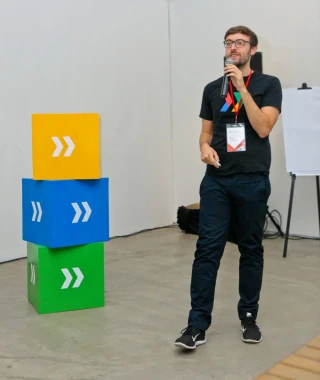
Hi, I'm Giles Thomas.
Founder of AcquireConvert, the place where ecommerce entrepreneurs & marketers go to learn growth. I'm also the founder of Shopify agency Whole Design Studios.