How to Hire a Skincare Photographer (2026)

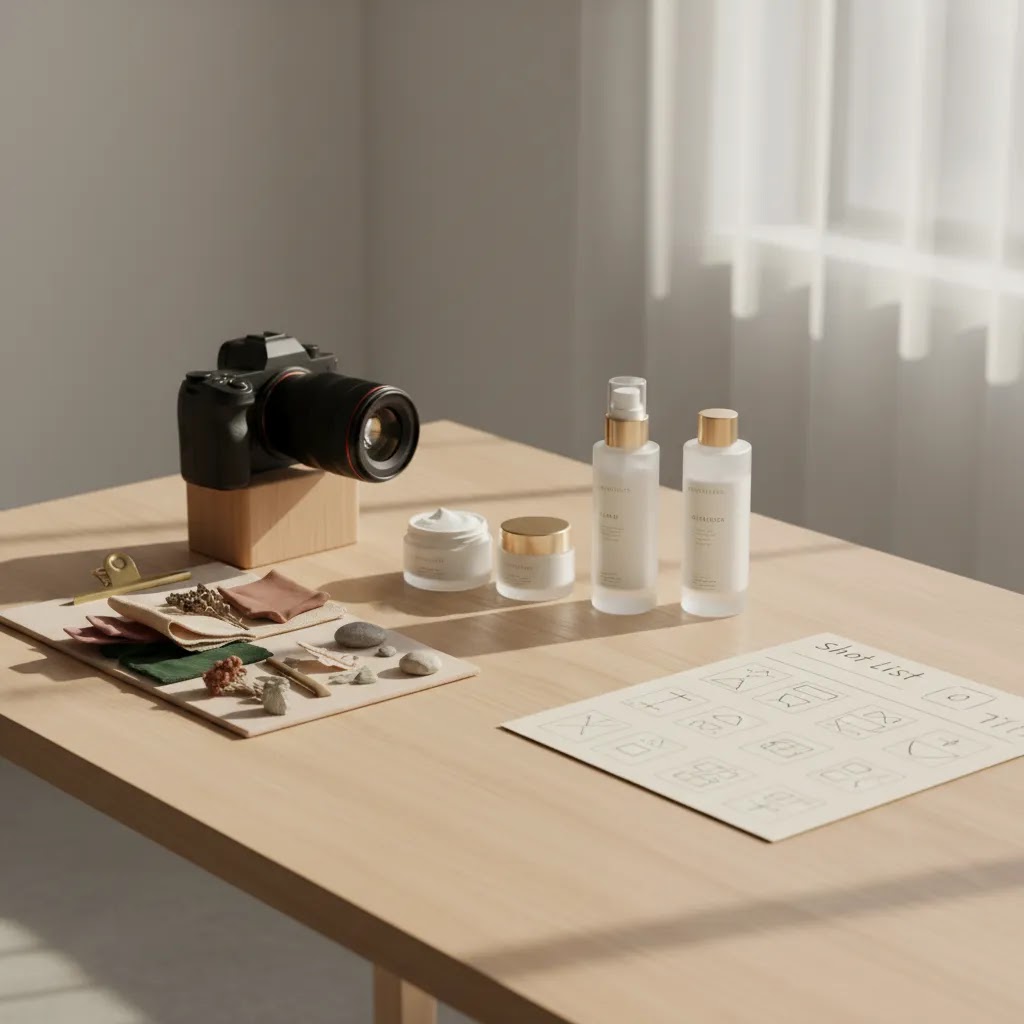
If you sell skincare online, your product images do a lot of the persuasion before your copy ever gets read. Texture, packaging finish, ingredient story, and brand positioning all need to come through fast. That is why hiring the right skincare photographer matters. A strong fit can help you create images for product pages, paid social, marketplaces, email campaigns, and launch assets without repeated reshoots or unclear creative direction. If you are still shaping your visual direction, it helps to review related examples like this guide to ai makeup generator workflows alongside traditional photography. In this article, you will learn how to assess a skincare photographer, what to ask before signing, where AI-assisted production can help, and how to avoid the most common hiring mistakes ecommerce brands make.
Contents
- What a skincare photographer should actually help you achieve
- What to look for before you hire
- How to vet a skincare photographer in 20 minutes
- The deliverables to agree before production starts
- Skincare shot types to name in your shot list (so you get what you actually need)
- Pros and Cons
- Pricing and budgeting: what skincare photography typically costs (and what drives the quote)
- Who this hiring approach is best for
- AcquireConvert recommendation
- How to choose between freelance, studio, and AI-assisted options
- Frequently Asked Questions
- Key Takeaways
- Conclusion
What a skincare photographer should actually help you achieve
A skincare photographer is not just there to make your products look attractive. For ecommerce, the job is broader. You need images that reduce hesitation, communicate quality, and fit the buying context your customer is in. That usually means clean PDP shots, white background images for marketplaces, cropped social assets, and often a few higher-emotion lifestyle visuals that support paid ads and landing pages.
Skincare is a detail-heavy category. Customers want to see finish, consistency, size, dispensing method, label clarity, and sometimes ingredient cues such as botanicals, glass droppers, or clinical packaging. A capable cosmetics photographer understands how reflective packaging, frosted glass, metallic caps, and translucent serums behave under lighting. That matters because poor lighting can make premium products look flat or low trust.
You should also judge photographers by whether they understand ecommerce usage, not just artistic style. A beautiful hero image is helpful, but you also need files sized and cropped correctly for Shopify themes, ads, email, and collection pages. If you want a broader benchmark for product-specific execution, review examples from skincare product photography and compare them to how adjacent categories approach shine, transparency, and luxury cues.
What to look for before you hire
Start with portfolio fit. Do not hire based on general product work alone. A photographer may be excellent with food, apparel, or electronics and still struggle with skincare packaging. Look for evidence they can handle creams, oils, serums, tubes, pumps, jars, and secondary packaging.
Second, ask how they plan and stage shoots. Good skincare photography rarely happens from improvisation. You want someone who can talk through props, surfaces, lighting references, cropping ratios, retouching standards, and intended usage by channel. If they cannot explain how they would shoot for both product pages and paid media, that is a warning sign.
Third, assess whether they understand brand position. Natural skincare product photography, minimalist skincare product photography, and luxury skincare product photography all call for different choices. A brand selling clean botanical products may want soft, organic textures and daylight cues. A premium anti-aging line may need tighter compositions, stronger contrast, and a more editorial finish.
Fourth, ask about process reliability. Ecommerce teams need timelines, shot lists, and revision boundaries. This is especially important if you are coordinating a launch across email, Shopify collections, and Meta ads at the same time.
How to vet a skincare photographer in 20 minutes
What many store owners overlook is that you can spot most problems quickly if you know what to look for. You are not judging taste, you are judging whether the work will hold up on a Shopify product page, in a Google Shopping thumbnail, and in paid social crops without losing clarity.
Here is a fast way to vet a skincare product photographer’s portfolio and process without overthinking it.
Step 1: Check consistency across sets, not just one hero image
Pick one project and scan the whole set. You are looking for whether the lighting, white balance, and contrast feel consistent across angles, not just whether one image looks great. In ecommerce, inconsistency can make your product page look pieced together, which can reduce trust.
Consider this: if the brand has multiple SKUs, do the bottles and jars look like they belong in one line, or does each product feel like it was shot on a different day with a different setup?
Step 2: Look for label legibility and color fidelity
Zoom in on labels. Are ingredients, product names, and volume markings readable, especially on curved packaging? Many skincare labels have fine type and foil accents, and those can break fast if the photographer does not control reflections.
Then check whether whites are truly white and whether neutrals shift warm or cool. If your packaging color is part of your brand system, color accuracy matters. If you have a hero SKU that drives most revenue, a subtle color shift can create customer confusion when the product arrives.
Step 3: Inspect reflection control on glass, metallics, and glossy labels
Skincare packaging loves to reflect the room. You want to see controlled highlights, not random bright streaks, studio gear reflections, or blown-out hotspots hiding your logo. This is especially important for droppers, glossy caps, aluminum tubes, and metallized cartons.
The way this works in practice is simple: reflections should look intentional and premium, not accidental.
Step 4: Ask one question about usability across crops
Take one image and imagine it in three places: a square Instagram post, a 4:5 ad, and a tight Shopify carousel crop on mobile. Does the composition leave room to crop without cutting off the cap, label, or pump? If every image is framed too tightly, it can look great in a portfolio and still be a pain to use across channels.
Step 5: Confirm process proof points in two minutes
A reliable photographer can describe their workflow clearly. You are listening for operational competence, not fancy language.
- Pre-production: do they build a shot list with you, confirm ratios by channel, and get prop approval before shoot day?
- Testing: will they provide test shots or a lighting proof for sign-off before shooting the full set?
- Delivery: do they deliver sensible file naming, predictable folder structure, and the sizes you need for Shopify and ads?
- Revisions: do they define how many revision rounds are included, what counts as a revision, and how feedback should be provided?
Common red flags to watch for
The reality is that some photographers can produce beautiful images that still fail at ecommerce fundamentals.
- Gorgeous lifestyle shots, but no clean, consistent PDP work, especially white background, label clarity, and angle coverage.
- Generic “beauty” positioning with few examples of real skincare packaging, such as droppers, pumps, frosted glass, or reflective cartons.
- Unclear usage rights language, or no mention of licensing at all, which can turn into friction when you want to use images in paid ads.
The deliverables to agree before production starts
Many hiring problems happen because the brand and photographer never define deliverables tightly enough. Before approving a quote, agree on exactly what you will receive.
- Number of final edited images per SKU
- Image types such as white background, detail shots, group shots, and lifestyle scenes
- Aspect ratios for Shopify product pages, social posts, ads, and email modules
- Retouching scope, including dust cleanup, label straightening, color correction, and reflection control
- Prop sourcing responsibilities and approval process
- Turnaround time for first selects and final delivery
- Usage rights across ecommerce, paid ads, marketplaces, and print if needed
If your brand needs both conversion-focused product images and more atmospheric campaign visuals, mention that early. The workflow for a conversion asset library is different from a brand storytelling shoot. A photographer who excels in one area may outsource or decline the other.
It is also smart to ask whether they work from a dedicated product photography studio or a more flexible home setup. Either can work, but the right choice depends on complexity, prop control, and the consistency you need over time.
Skincare shot types to name in your shot list (so you get what you actually need)
Here is the thing: “product shots” is too vague to get a usable ecommerce library. Skincare photography is full of edge cases, like translucent liquids, glossy labels, and textures that can look artificial if the lighting and retouching go too far.
When you build your shot list, it helps to use a clear menu of shot categories. That makes the brief easier to quote, easier to execute, and easier to approve.
PDP foundation shots (conversion set)
These are the images that typically carry the most weight on Shopify product pages. They are designed to answer questions quickly and reduce hesitation.
- White background hero (front label, straight, clean edges)
- Alternate angles (3/4 view, side, back label, top down for caps)
- Scale cue (in hand, next to a common object, or a clean size comparison setup)
- Packaging detail (cap texture, embossing, foil, pump mechanism, tamper seal)
- Group shot for routines or bundles (2 to 5 items, clear hierarchy)
For most Shopify store owners, these foundation shots should appear first in the media carousel. If your theme shows thumbnails on mobile, lead with the clearest front label image, then follow with angles and details before anything more artistic.
Texture showcase shots (the shots many briefs forget)
Texture is one of the fastest ways to make skincare feel real online, but it is also easy to get wrong. If your product’s feel and finish are key selling points, call out texture shots explicitly.
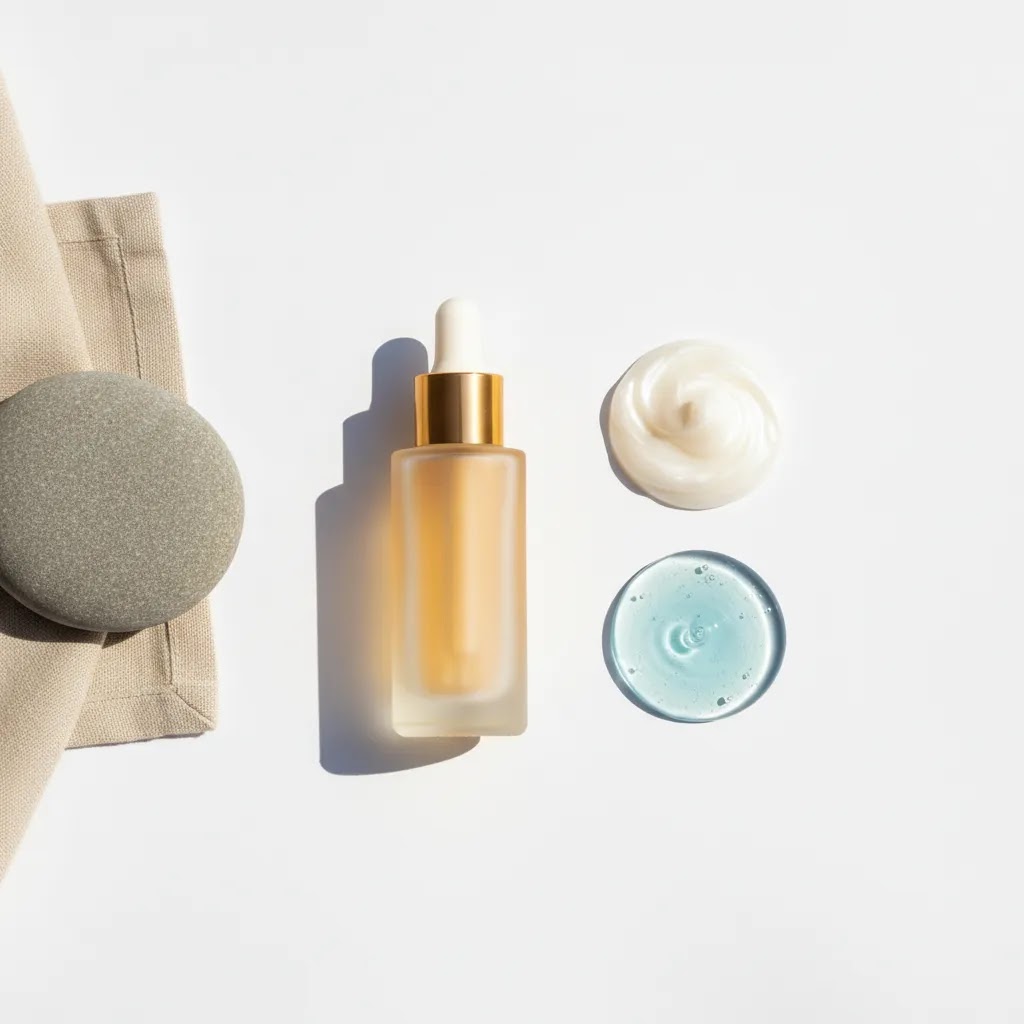
- Macro texture (tight crop showing grain, sheen, or micro-bubbles, depending on product)
- Smear or swatch (cream or gel spread on a surface, spatula, or skin-like prop)
- Droplet shot (serum drop with highlight control so it reads as liquid, not plastic)
- Dispensing shot (pump, dropper, or tube mid-dispense, showing viscosity)
Think of it this way: texture shots are often doing “education” on the PDP. They can also become high-performing hooks for paid social because they stop the scroll, especially when the lighting makes the texture feel tactile.
Product-enhance still life setups (premium without going full lifestyle)
These are controlled studio scenes that elevate the product while keeping the focus on packaging and label clarity. They are useful when you want a more premium feel than a white background image, but you still need clean ecommerce utility.
- Single-product hero on an on-brand surface (stone, acrylic, tile, glass)
- Ingredient cue setups (botanicals, lab glass, water, salts), kept subtle
- Light-and-shadow scenes (hard light beams, gradient backgrounds, clean reflections)
- Seasonal variants (holiday, summer hydration cues) that still read as “catalog”
Now, when it comes to sequencing, these often work well after the PDP foundation shots. On Shopify, they can sit mid-carousel to reinforce positioning once the shopper already understands what the product is.
Lifestyle usage shots (context and story)
Lifestyle shots are about showing the product in a believable world. They support brand storytelling, email launches, and landing pages. They also tend to be the most variable in cost and complexity, because they may involve locations, models, stylists, and more approvals.
- Bathroom counter context (realistic environment, clean styling)
- In-hand application (model hands, product being opened or applied)
- Routine scenes (AM or PM setup, multiple products, towel, mirror cues)
- Before/after storytelling frames (without making claims in the imagery that create compliance risk)
If you plan to use these for paid ads, make sure you confirm current ad platform policies for your category. Policies change, and skincare claims can be sensitive depending on the product.
Common execution pitfalls (and how to prevent them)
Most skincare photography problems are predictable if you plan for them.
- Texture looks “fake”: this often happens when highlights are too sharp, or when retouching smooths out natural variation. Prevent it by agreeing on references for realism and asking for a test shot of the texture setup.
- Over-retouching removes proof: if your product has visible texture cues that build trust, like micro-exfoliant beads or a dewy sheen, do not retouch them away. Define “clean but real” as the standard.
- Reflections obscure labels: glossy cartons and glass droppers need controlled reflections. Prevent it with pre-production packaging notes and by requiring label legibility checks during proofing.
- Packaging inconsistencies show up in macro: fingerprints, dust, crooked labels, and uneven fill lines become obvious in tight shots. Plan extra product samples and allow time for wipe-down and alignment on set.
Pros and Cons
Strengths
- A specialized skincare photographer usually understands how to light glass, glossy labels, liquid textures, and reflective packaging more effectively than a generalist.
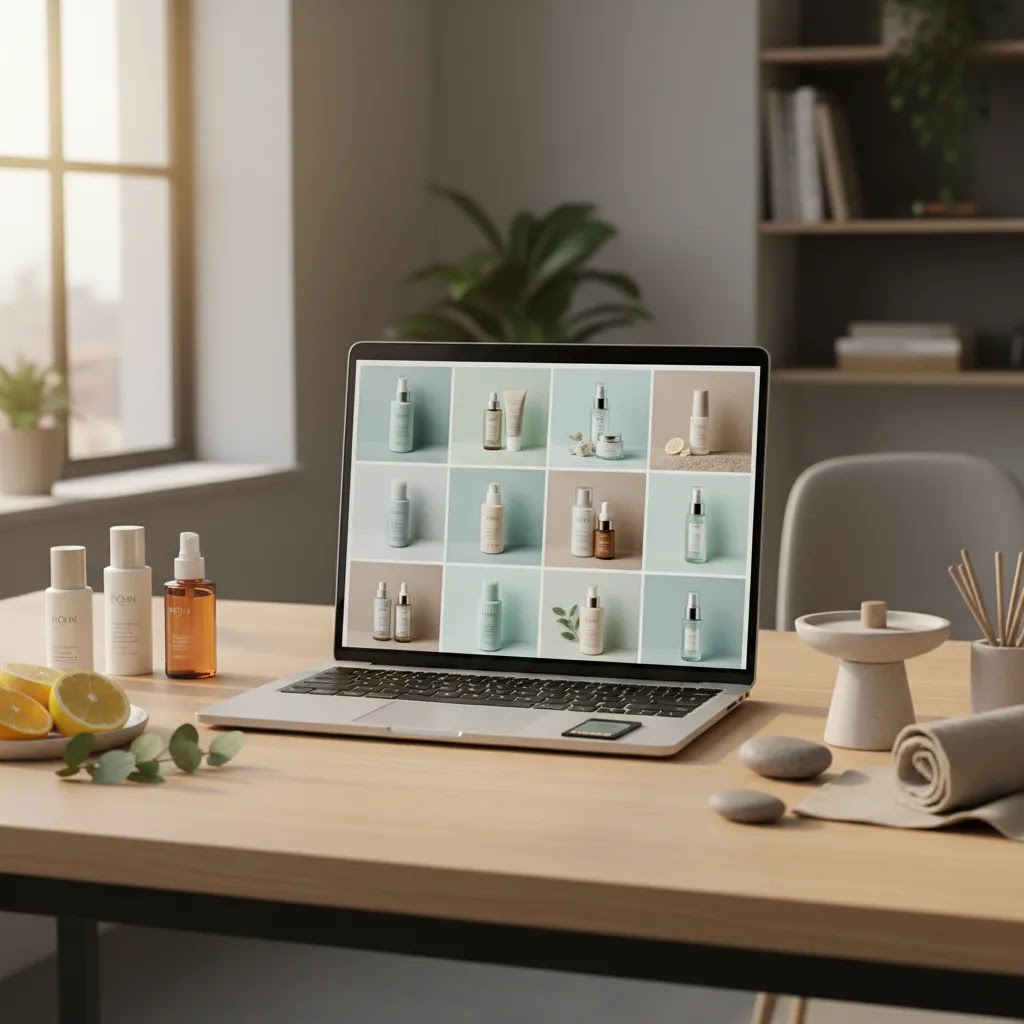
- They can help you create a more consistent image library across Shopify PDPs, bundle pages, collection pages, and paid creative.
- They often spot practical issues before the shoot, such as fingerprint-prone packaging, uneven label application, or ingredient props that distract from the product.
- A good hire may reduce the need for repeated reshoots by planning shot lists, formats, and channel usage in advance.
- They can tailor visuals to your positioning, whether you need natural, clinical, minimalist, or luxury skincare product photography techniques.
Considerations
- Specialists can cost more than general product photographers, especially if styling and advanced retouching are included.
- Some photographers produce beautiful editorial images but do not think enough about ecommerce conversion requirements or multi-channel cropping.
- Shipping products, samples, and props for a remote shoot can add time and coordination overhead.
- Creative misalignment is common if you do not provide clear references, usage goals, and brand guidelines before production.
Pricing and budgeting: what skincare photography typically costs (and what drives the quote)
If you are hiring a skincare photographer for the first time, pricing can feel opaque. That is partly because different photographers quote in different ways, and partly because skincare shoots can swing in complexity fast.
From a practical standpoint, you do not need an exact “standard price” to budget well. You need to understand the cost levers, then decide what you are actually buying: a PDP conversion library, a campaign concept, or a set of marketplace-compliant images.
The most common ways photographers price skincare work
You will usually see one of these cost models:
- Day rate (or half-day rate): you are paying for shoot time, then post-production is often quoted separately.
- Per-image pricing: you are paying for finished, retouched deliverables, sometimes with a minimum image count.
- Project pricing: a bundled quote that includes planning, shooting, and a defined set of deliverables.
All three can be fair. The key is to make sure the deliverables and retouching scope are defined so you are not surprised later.
What drives the quote up quickly (and what to watch for)
Skincare quotes typically change based on complexity, not just image count. Here are the levers that tend to move pricing the most:
- Retouching time per image: glass, metallics, and glossy labels can take longer, especially if reflections need careful control.
- Styling and props: sourced props, custom surfaces, florals, liquids, ice, or ingredient setups add time and coordination.
- Set builds and special effects: splashes, pouring liquids, suspended droplets, and complex texture setups can require multiple attempts and more post-production.
- Usage rights and licensing: broader usage (paid ads, marketplaces, print, long durations) may change the quote depending on the photographer’s licensing terms.
- Rush fees and turnaround expectations: faster delivery often means re-prioritization and more editing hours in a shorter window.
- Volume and SKU complexity: a single hero SKU can be straightforward, a full routine line with multiple sizes and secondary packaging takes more planning and consistency work.
If you are comparing quotes from different providers, make sure you understand whether licensing is included, and whether post-production is included or separate. Unclear licensing language is one of the most common reasons a “good deal” becomes frustrating later.
How to budget based on what your ecommerce store actually needs
It helps to budget in sets, not in abstract “photos.” Most skincare brands need some combination of these:
- PDP conversion set: clean hero, angles, details, scale, and one or two texture shots per core SKU. This is the set that usually supports Shopify conversion best because it reduces uncertainty.
- Campaign or lifestyle set: a smaller number of higher-concept images designed for paid social, landing pages, and email launches. This set tends to be more variable in cost because it can involve more styling, location, or talent.
- Marketplace set: consistent white background images and compliant angles for channels that require specific standards. This set is often less creative, but it demands precision and consistency.
If resources are limited, prioritize the PDP conversion set for your highest-traffic products first. Then add campaign and lifestyle images once your on-site foundations are strong. In many cases, a small number of excellent hero and texture images will do more for clarity than a large number of mediocre variations.
When allocating your spend within a set, think in terms of hierarchy. You usually want to spend more on:
- Hero shots that lead the Shopify carousel and appear on collection pages
- Texture macros or dispensing shots for products where feel and finish are key selling points
- Any image that will be used across paid ads and landing pages, because it will be cropped and reused heavily
How to compare quotes apples-to-apples
Before you approve anything, ask for an estimate that is specific enough to compare across photographers. At minimum, you want clarity on:
- Image count: number of final edited images per SKU and total deliverables
- Retouching scope: what “standard retouching” includes, and what costs extra
- Deliverable formats: file types and sizes, including any Shopify-ready crops or web-optimized versions
- Licensing: duration, channels (ecommerce, paid ads, marketplaces, print), and any restrictions
- Revision rounds: how many rounds are included, and what counts as a revision
- Timeline: when you receive proofs or selects, and when finals are delivered
If a quote is lower than others, it is not automatically a problem. It may simply be quoting fewer deliverables, lighter retouching, or narrower usage rights. You want to know which it is before you commit.
Who this hiring approach is best for
This approach is best for ecommerce brands that have moved beyond improvised in-house images and need assets that support growth. If you sell through Shopify, Amazon, retail wholesale decks, or paid social, you will benefit most from a photographer who thinks in systems rather than one-off images.
It is especially useful for skincare founders launching a new line, rebranding packaging, or refreshing PDP imagery to better reflect price point and product quality. If your products rely on trust cues such as ingredient transparency, texture realism, or premium packaging finishes, specialist skincare photography becomes even more important.
AcquireConvert recommendation
At AcquireConvert, we look at visual content through an ecommerce performance lens, not just a creative one. That means asking whether your photography supports product understanding, paid media efficiency, and on-site conversion flow. Giles Thomas brings that perspective as a Shopify Partner and Google Expert, which is helpful if your image decisions need to work across Shopify storefronts, search visibility, and acquisition channels.
If you are narrowing down options, start with the broader Cosmetics Photography section to compare adjacent content types and creative approaches. If you are evaluating whether traditional photography should be paired with AI-assisted image production, review our second reference to ai makeup generator workflows as part of your shortlist. For brands that may need outside execution support, it is also worth reviewing Product Photography Services to clarify whether you need a freelancer, studio, or hybrid production partner.
How to choose between freelance, studio, and AI-assisted options
Freelance skincare photographers are often a strong fit for emerging brands with a clear brief and a modest SKU count. You may get more direct communication with the person actually shooting and retouching the images. This can work well when you need flexibility and a distinct visual style. The trade-off is bandwidth. If you need rapid rollout across multiple collections or recurring monthly campaigns, a solo operator may become a bottleneck.
Studios usually make sense when you need repeatability, multiple setups, prop styling, higher-volume output, or broader post-production support. This is useful for established skincare brands planning launches, wholesale assets, and multi-channel campaigns. The trade-off is that studios can feel less nimble and may be more process-heavy, which is not always ideal for founder-led brands testing creative direction.
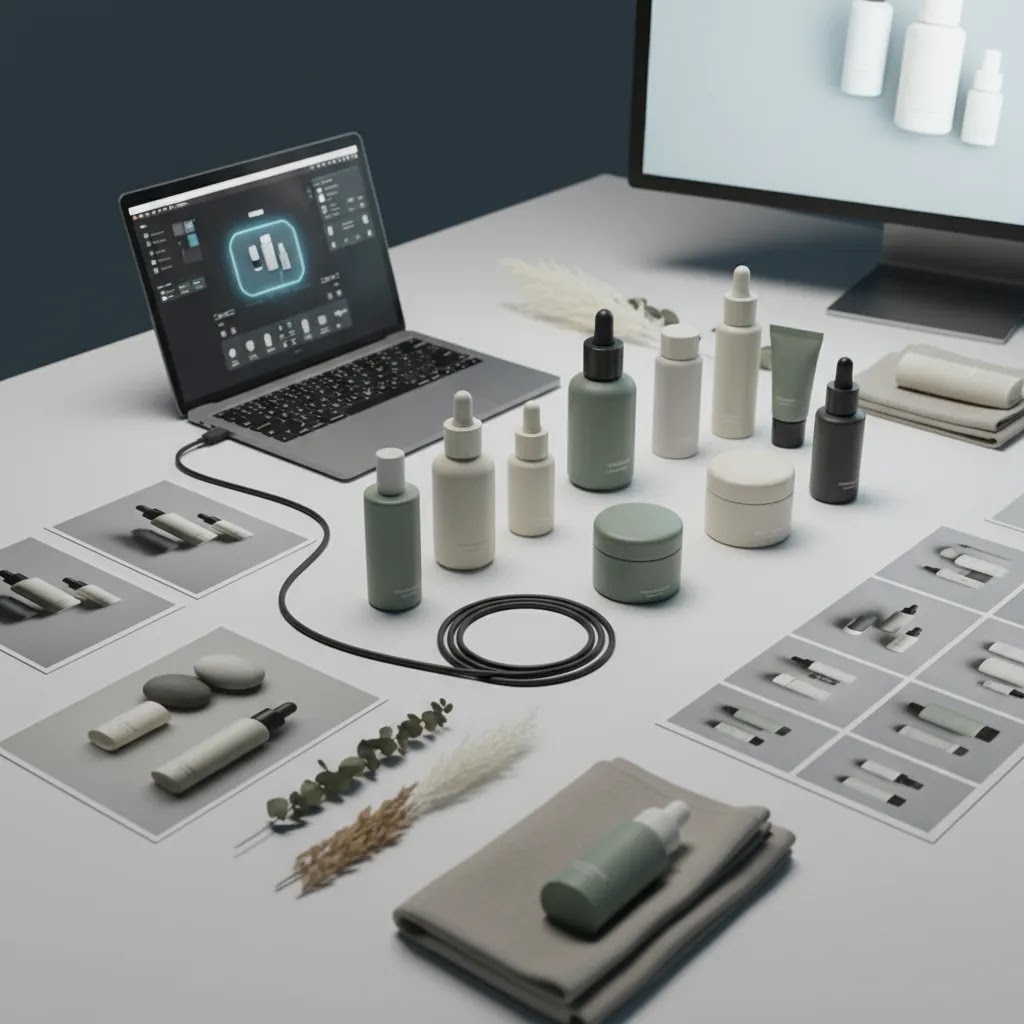
AI-assisted workflows can help in targeted ways, especially for background changes, cleanup, concept mockups, or producing variations after the core product images are captured. From the available product data, AcquireConvert readers can review tools such as AI Background Generator, Free White Background Generator, and Background Swap Editor. These can be useful when your team needs channel-specific variations or cleaner marketplace-ready backgrounds after the main photography has been completed.
Still, AI should usually support a photography workflow, not replace judgment around lighting, packaging realism, and brand consistency. In skincare, customers notice texture and finish. If AI edits distort product shape, gloss, label detail, or color accuracy, trust can drop fast.
As you compare providers, use five criteria:
- Category fit: Ask whether they have real skincare or cosmetics photographer experience, not just generic product shots.
- Ecommerce usefulness: Make sure they understand your Shopify image needs, ad crops, and product page hierarchy.
- Production clarity: Review shot lists, revision rounds, rights, timelines, and retouching standards before approval.
- Scalability: Consider whether they can support future launches, seasonal campaigns, and reformulated packaging without a full restart.
- Hybrid capability: If you expect to use both studio photography and AI enhancements, confirm how they manage that workflow and quality control.
- Hybrid capability: If you expect to use both studio photography and AI enhancements, confirm how they manage that workflow and quality control.
If you also sell adjacent beauty products, looking at another category can sharpen your creative brief. For example, perfume photography often emphasizes reflections, luxury materials, and moody lighting in ways that can influence premium skincare art direction.
Frequently Asked Questions
How much experience should a skincare photographer have?
You do not always need someone with decades of experience, but you should look for proven work in skincare, cosmetics, or adjacent beauty categories. What matters most is whether they understand reflective packaging, liquid textures, retouching restraint, and ecommerce deliverables. Ask to see projects that match your price point and visual style.
What should I ask before hiring a skincare product photographer?
Ask about portfolio relevance, process, turnaround time, retouching standards, usage rights, revision limits, and how they plan for Shopify, ads, and social crops. You should also ask how they handle props, texture shots, and reflective surfaces. A good answer will sound operational, not just creative.
Should I hire a local skincare photographer or work remotely?
Both can work. Local shoots are helpful when you want to attend, make on-set changes, or handle fragile products in person. Remote photographers can still be an excellent fit if they provide a tight pre-production process, clear approvals, and reliable communication. Choose based on workflow confidence, not geography alone.
Can AI replace a skincare photographer?
Usually not fully. AI can help with background changes, cleanup, mockups, and variation generation, but skincare buyers pay attention to realism. Packaging finish, color fidelity, and texture accuracy still matter. In many cases, the strongest setup is a hybrid workflow where real photography provides the base and AI supports efficiency.
What images should an ecommerce skincare brand request first?
Start with the highest-impact essentials: white background hero images, alternate angles, packaging detail shots, scale cues, and a few lifestyle images for ads or landing pages. If texture matters, request close-ups of serum, cream, or gel consistency. Build from your highest-traffic products first before expanding to the full catalog.
How do I know if the photographer understands ecommerce?
Ask how they would structure images for a Shopify PDP, collection page, bundle page, and paid ad set. If they talk about aspect ratios, mobile crops, detail sequencing, and product clarity before artistic flair, that is a strong sign. Ecommerce-aware photographers think about usability as much as aesthetics.
What is the difference between a cosmetics photographer and a skincare photographer?
There is overlap, but skincare often requires more attention to packaging transparency, texture realism, ingredient cues, and trust-building detail. Color cosmetics can lean more heavily on shade payoff, model imagery, or dramatic editorial styling. A photographer may do both well, but you should still check category-specific samples.
How many revisions are reasonable to ask for?
Minor revisions are normal, especially for crop adjustments, dust cleanup, or small color corrections. Large creative changes after the shoot usually create delays and extra cost. It is better to define references, styling direction, and must-have shots upfront so revisions stay focused and manageable.
Do I need both studio and lifestyle skincare photography?
Most brands benefit from both, but not always at the same time. Studio images are the foundation for product pages, marketplaces, and consistent catalog presentation. Lifestyle images add context and emotion for ads, landing pages, and email. If resources are limited, get the core conversion assets first and expand later.
How much does a skincare product photographer cost?
Pricing varies based on image count, styling complexity, retouching needs, and usage rights. You will typically see day rates, per-image pricing, or a bundled project quote. The most useful way to budget is to decide whether you need a PDP conversion set, a campaign or lifestyle set, or marketplace-ready images, then request an estimate that spells out what is included.
What factors affect the cost of skincare product photography?
The biggest cost drivers are usually retouching time, reflection control for glass and metallic packaging, prop and styling needs, set complexity for texture or liquid shots, licensing terms for where and how long you will use the images, and turnaround time. More complex setups typically require more shoot time and more post-production.
How much money do product photographers make?
It depends on their experience level, location, specialization, and whether they are freelance or part of a studio. Some photographers earn mostly from shooting day rates, others from per-image licensing and retouching, and many have a mix. For you as a brand, the more practical point is to focus on total project value, meaning how consistently the photographer can produce usable ecommerce assets and how clearly the rights and deliverables are defined.
What is the 80/20 rule in photography?
In ecommerce photography, the 80/20 idea usually means a small number of images do most of the work. For many Shopify product pages, your hero image and the next few supporting shots (angle, label detail, scale, and texture) will drive most customer understanding. That is why it is often smarter to invest in getting those core images right for your top products before expanding into a larger library of variations.
Key Takeaways
- Hire for skincare-specific category fit, not generic product photography talent alone.
- Define deliverables in detail before approving a quote, especially formats, rights, and retouching scope.
- Judge photographers by ecommerce usefulness as well as visual style.
- Use AI-assisted editing selectively to extend a real photography workflow, not as a blind substitute.
- Choose a freelancer, studio, or hybrid model based on volume, repeatability, and channel needs.
Conclusion
Hiring the right skincare photographer is really about finding a partner who understands how beauty imagery works in ecommerce. You need more than attractive photos. You need assets that fit your brand, support product understanding, and work across Shopify pages, ads, email, and marketplaces. The best choice depends on your SKU count, launch pace, visual positioning, and how much creative direction you can provide internally. If you want more practical guidance, explore AcquireConvert’s cosmetics and photography resources, including our coverage of skincare product imagery, AI-assisted beauty workflows, and product photography setup. Giles Thomas’s Shopify Partner and Google Expert perspective keeps the advice grounded in what actually helps online stores operate and grow.
This article is editorial content for educational purposes and is not a paid endorsement unless explicitly stated otherwise. Pricing, service scope, and tool availability are subject to change, so verify current details directly with the provider. Any references to workflow or conversion impact are general guidance only and do not guarantee business results.
Hi, I'm Giles Thomas.
Founder of AcquireConvert, the place where ecommerce entrepreneurs & marketers go to learn growth. I'm also the founder of Shopify agency Whole Design Studios.