Lifestyle Photography for Ecommerce (2026 Guide)

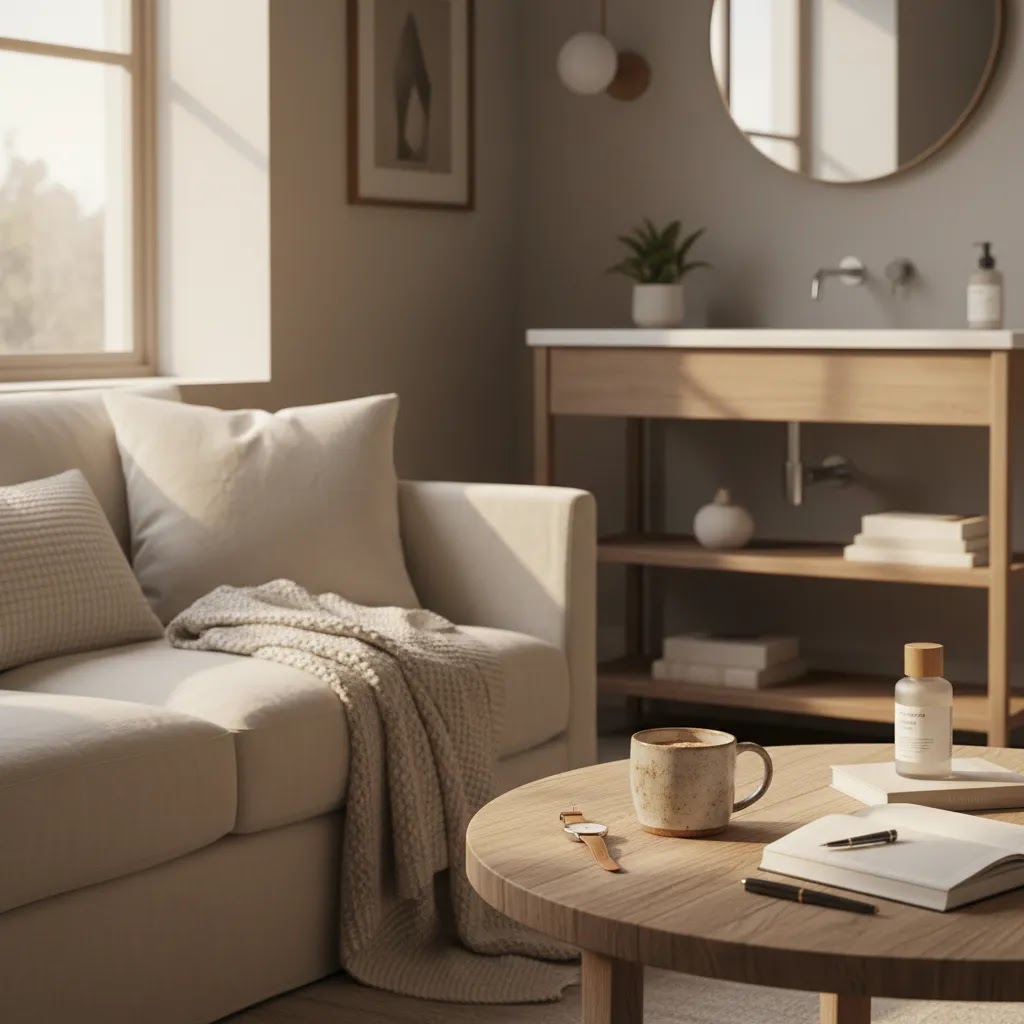
If you sell physical products online, lifestyle photography can do a job that plain packshots often cannot. It helps shoppers picture the product in a real setting, with real scale, real context, and a clearer sense of how it fits into everyday life. For Shopify merchants, Amazon sellers, and growing ecommerce brands, that matters because buying decisions are often emotional before they are rational. This guide explains the definition of lifestyle photography, the main styles, how it differs from standard product shots, what pricing usually depends on, and where AI can help. If you want a wider foundation first, browse AcquireConvert's Lifestyle Product Photography resources for more product-specific visual strategy advice.
Contents
What lifestyle photography means for ecommerce
The simplest lifestyle photography meaning is this: product imagery that shows an item being used, worn, held, or placed in a believable real-world setting. Instead of isolating a product on a plain background, lifestyle photography adds context. That context may come from a room, a person, props, lighting, or a scene that reflects the buyer's aspirations.
For ecommerce, this is not just about making a gallery look better. It can improve how clearly a product is understood. A shopper may better judge scale, purpose, material quality, and fit if they see the product in use. This is especially true for apparel, home goods, beauty, watches, kitchenware, gifts, and premium consumer products.
Strong lifestyle product photography usually supports, rather than replaces, clean product-page essentials. Most stores still need white background shots, close-ups, and detail images. The lifestyle set adds the emotional layer that helps the customer imagine ownership.
That is why experienced store owners tend to think in image systems, not single hero shots. They use lifestyle images for collection pages, PDP galleries, ads, landing pages, and social creatives, while keeping standard product photography for accuracy and consistency. If you are building a complete visual merchandising strategy, AcquireConvert's E Commerce Product Photography category is a useful next step.
What lifestyle photography is not (common misconceptions)
Here is the thing, a lot of ecommerce teams use the word “lifestyle” as a catch-all for anything that is not a white background packshot. In practice, that creates confusion and it can lead to galleries full of images that look premium but do not help shoppers make a decision.
Lifestyle is not the same as portrait photography, even though lifestyle shoots often include models. In ecommerce, the product should still be the hero. A great portrait can be a weak lifestyle image if it does not show the product clearly, show how it is used, or communicate scale.
Lifestyle is not the same as editorial photography. Editorial imagery can be stylized, artistic, or concept-driven, and it may intentionally obscure details for mood. That can be fine for a lookbook or brand campaign, but on a PDP it can backfire if shoppers cannot see what they are buying.
Lifestyle is not documentary photography either. Documentary images are usually about capturing real moments with minimal staging. Lifestyle for ecommerce can be candid in tone, but it is still planned. You are arranging lighting, styling, and composition to support merchandising.
Now, when it comes to common “looks like lifestyle” mistakes, these are the ones that show up most often on Shopify product pages and in ad creative:
From a practical standpoint, ask a quick set of questions before you approve an image as “lifestyle” for ecommerce:
If you can answer yes to most of those, you are usually looking at a lifestyle photo that does lifestyle’s core job, while still supporting conversion.
Types of lifestyle photography
There is no single format that fits every catalog. The right style depends on product type, brand positioning, channel requirements, and production budget.
1. In-use human lifestyle photography
This is the most familiar format. A model uses or wears the product in a believable environment. Think skincare in a bathroom scene, a watch on a wrist, or a throw blanket on a sofa with a person nearby. This works well for brands that need emotion, scale, and relatability.
2. Styled still-life lifestyle photography
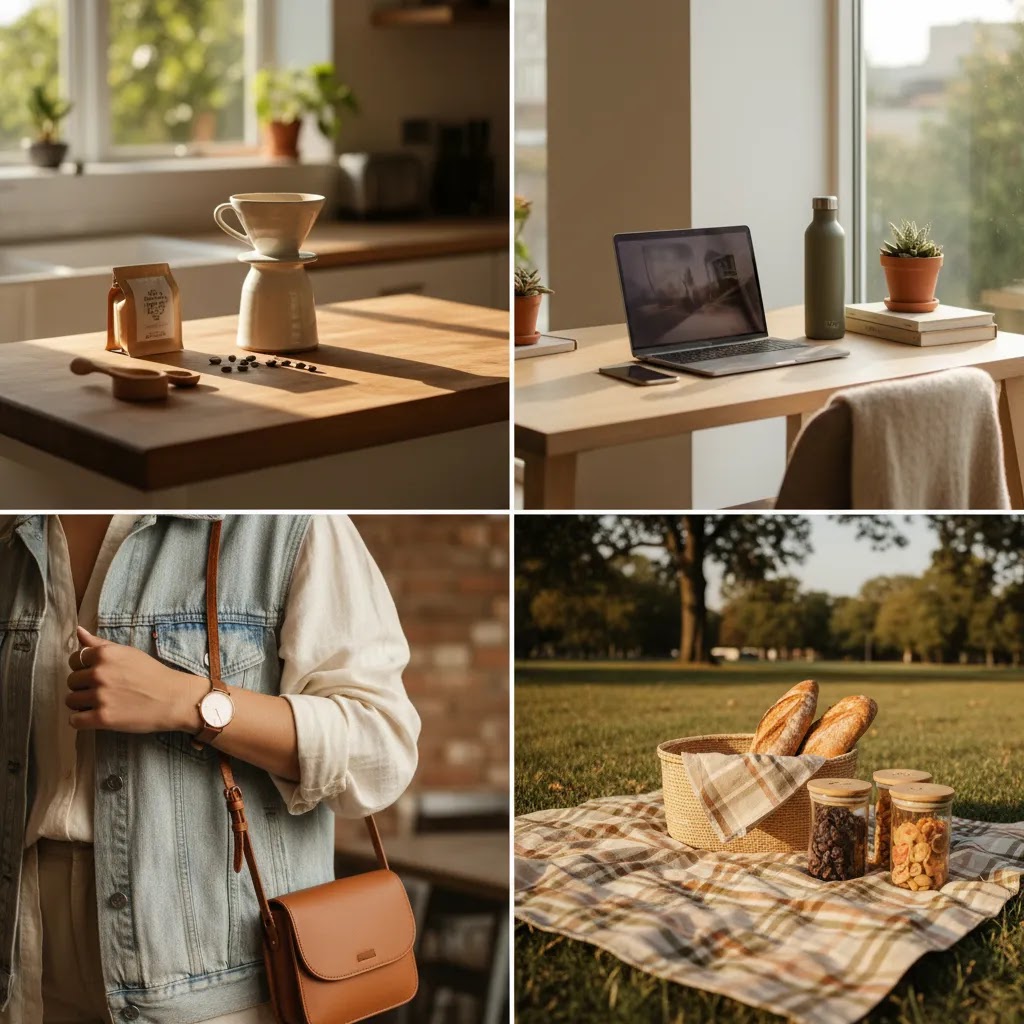
Not every brand needs people. Styled still-life imagery uses props, surfaces, and composition to place the product in a living context. It is common in beauty, food, candles, stationery, and home decor. If you are planning prop-led sets, this guide to scene background choices can help you avoid cluttered compositions.
3. Environmental product photography
Here the product sits naturally in its intended environment, such as furniture in a room, kitchen tools on a counter, or luggage near a doorway. It is especially useful for larger items where scale is difficult to communicate in a studio.
4. Brand lifestyle photography
Brand lifestyle photography is broader than one SKU. It shows the world your brand belongs in. The mood, styling, model casting, locations, and color palette all support a bigger brand story. If your goal is cohesive visual positioning across your store and ads, read more about branding photography as a connected discipline.
5. Marketplace-focused lifestyle photography
Amazon lifestyle photography is usually more constrained. It still needs realism and clarity, but the scene must stay simple, compliant, and product-led. On marketplaces, visual storytelling matters, but clarity often matters more.
Examples and ideas for ecommerce lifestyle photoshoots
Most store owners do not need “more lifestyle,” they need repeatable shoot concepts that produce assets they can actually use across PDPs, collection pages, ads, and email. Consider this, if your team struggles to plan lifestyle images, start with scenes that match how shoppers already imagine the product being used.
Category-based shoot concepts that tend to work
Apparel and accessories: Show the product at the moment it matters. A jacket being zipped, a bag being carried while walking out the door, sunglasses being put on, a hat worn in full-body and close-up crops. For sizing and fit, include a straightforward front, side, and back view in a real setting, not just “model laughing at coffee.”
Beauty and skincare: Routine beats glamour. A cleanser at the sink, moisturizer being applied with a clear texture shot, serum dropper used above the hand, a vanity setup with minimal props. If you sell complexion products, be careful with lighting and editing so the shade does not drift. The goal is believability, not perfection.
Home and decor: Show the item in a normal room context first, then go tighter. A candle on a coffee table at “real” distance, then a close-up showing label and wax texture. A throw blanket draped on a sofa with a person nearby for scale, then detail of weave. What many store owners overlook is that wide room shots are often less about beauty and more about answering, “How big is this, really?”
Kitchenware: Action sells. A pan on a stove mid-cook, a knife in a hand (with safe, correct grip), a storage container being closed, a scale with ingredients on it. Include one clean shot that shows the product alone in the kitchen environment, then one that shows it being used so the use-case is undeniable.
Gifts and premium items: Capture giving moments without getting cheesy. A gift set on a table with a card, a ribbon, and hands wrapping, or the product next to a laptop bag and keys for “ready to gift” context. If the product is small, use hand shots and simple props to communicate scale quickly.
Repeatable scene formulas you can run every season
If you want a system, build a small library of scenes you can reuse across launches and seasonal campaigns. These tend to translate well to Shopify and paid ads:
How to keep scenes believable and conversion-friendly
The way this works in practice is simple. Your lifestyle photos have to be attractive, but they also have to behave like ecommerce assets. Keep props limited and on-brand. Use consistent lighting so images sit together in a PDP gallery. Compose product-first, which usually means the SKU gets the sharpest focus and the clearest placement. If you are shooting for multiple Shopify placements, plan for crops upfront, such as a wider frame for banners and a tighter, product-dominant frame for collection tiles.
One more practical tip: when you shoot, capture a few “utility variations” per setup. That could be a version with hands, a version without hands, one clean label-facing angle, and one detail crop. Those small variations make it much easier to build galleries that feel rich without padding your store with near-duplicate images.
Lifestyle photography vs product photography
A lot of merchants ask what is considered lifestyle photography versus standard product photography. The easiest way to separate them is by job to be done.
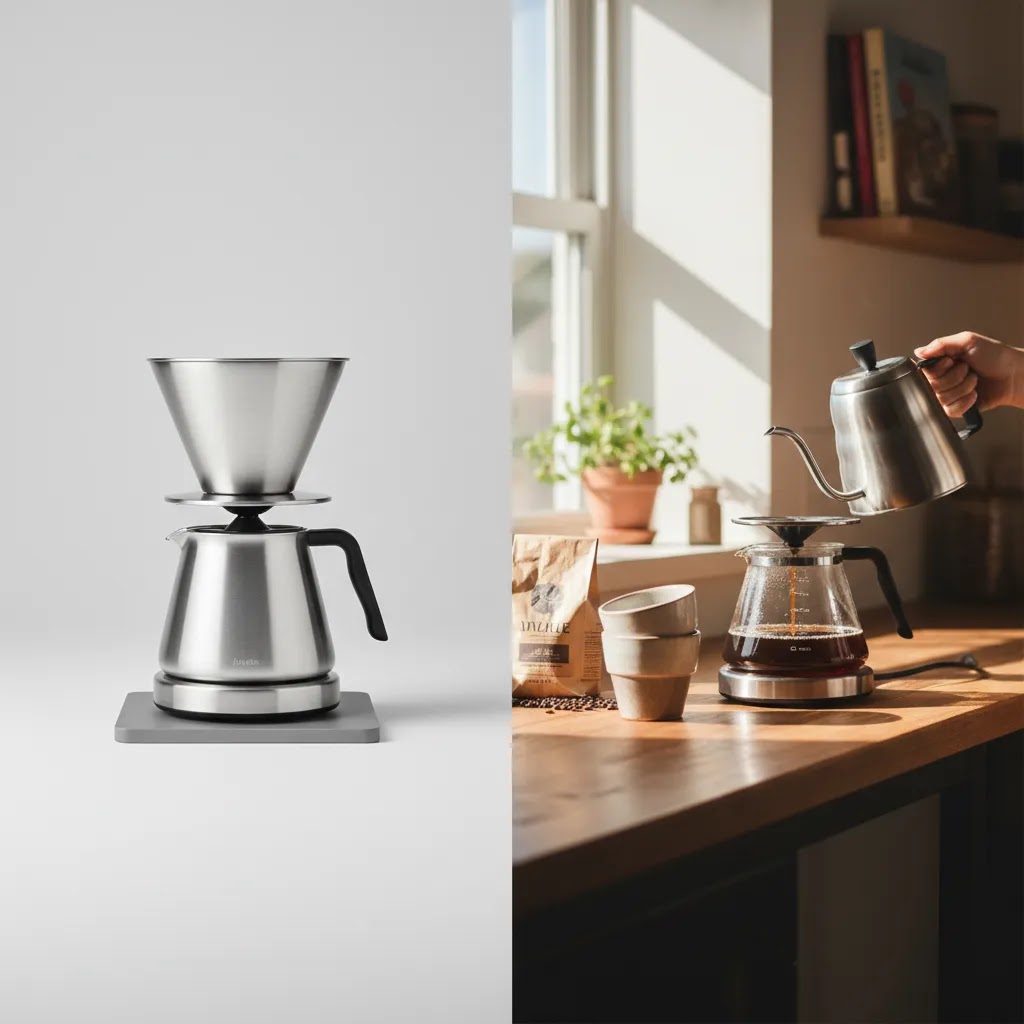
Product photography is mainly descriptive. It answers questions like: What does it look like? What color is it? What texture or detail am I getting? These shots are often taken on white, transparent, or neutral backgrounds.
Lifestyle photography is mainly interpretive. It answers: How does this fit into my life? How large is it in context? What does it feel like to own or use? What kind of person is this for?
On a high-performing PDP, both are useful. White background shots help accuracy. Lifestyle photos help desirability. A merchant selling watches, for example, may use clean front-and-side packshots for detail, then add watch lifestyle photography on wrist, desk, or outdoor scenes for emotional pull.
If your current image set feels too flat, compare it to your broader gallery strategy. You may simply need a better mix of technical product shots and aspirational lifestyle photos, not a complete reshoot.
Lifestyle photography vs portrait photography (and where they overlap)
Lifestyle photography and portrait photography overlap a lot when models are involved. The difference is what the image is for.
Portrait photography is typically about the person. It sells a feeling, an identity, or a moment centered on the subject. Lifestyle photography for ecommerce is usually about the product, even if a person is in the frame. The model is there to show fit, scale, use, and aspiration. Think of it this way, the person is the context, not the catalog.
This matters because a “great portrait” can fail the ecommerce job if it hides the SKU. Hair covering an earring, a hand blocking a logo, a pose that bunches fabric in a way the garment would not normally sit, or wardrobe styling that steals attention from the product are all common issues.
How to brief a photographer so portraits do not overpower the SKU
If you are hiring a photographer who comes from portraits or editorial work, your brief needs to be very explicit about merchandising priorities. Ask for:
Where the overlap matters most in ecommerce assets
For most Shopify store owners, you feel this problem in three places. First is the PDP gallery order. If the first image is effectively a portrait, shoppers may not immediately understand what they are buying. Second is ads, where product clarity can be the difference between a scroll and a click. Third is email headers and collection tiles, where small crops can turn a product into a vague “vibe” image if you did not plan compositions for tight formats.
The practical fix is usually not avoiding models. It is planning model-based lifestyle images like merchandising assets, not like magazine photos.
What affects lifestyle photography pricing
Lifestyle photography pricing varies widely because the production variables vary widely. A simple tabletop setup for five products is very different from a location shoot with models, props, stylists, and post-production.
The main cost drivers are:
For many small and mid-sized ecommerce brands, the smart move is not asking for one universal rate. Ask for a production scope. Define how many images per SKU, which channels they are for, and whether you need people, props, or room scenes.
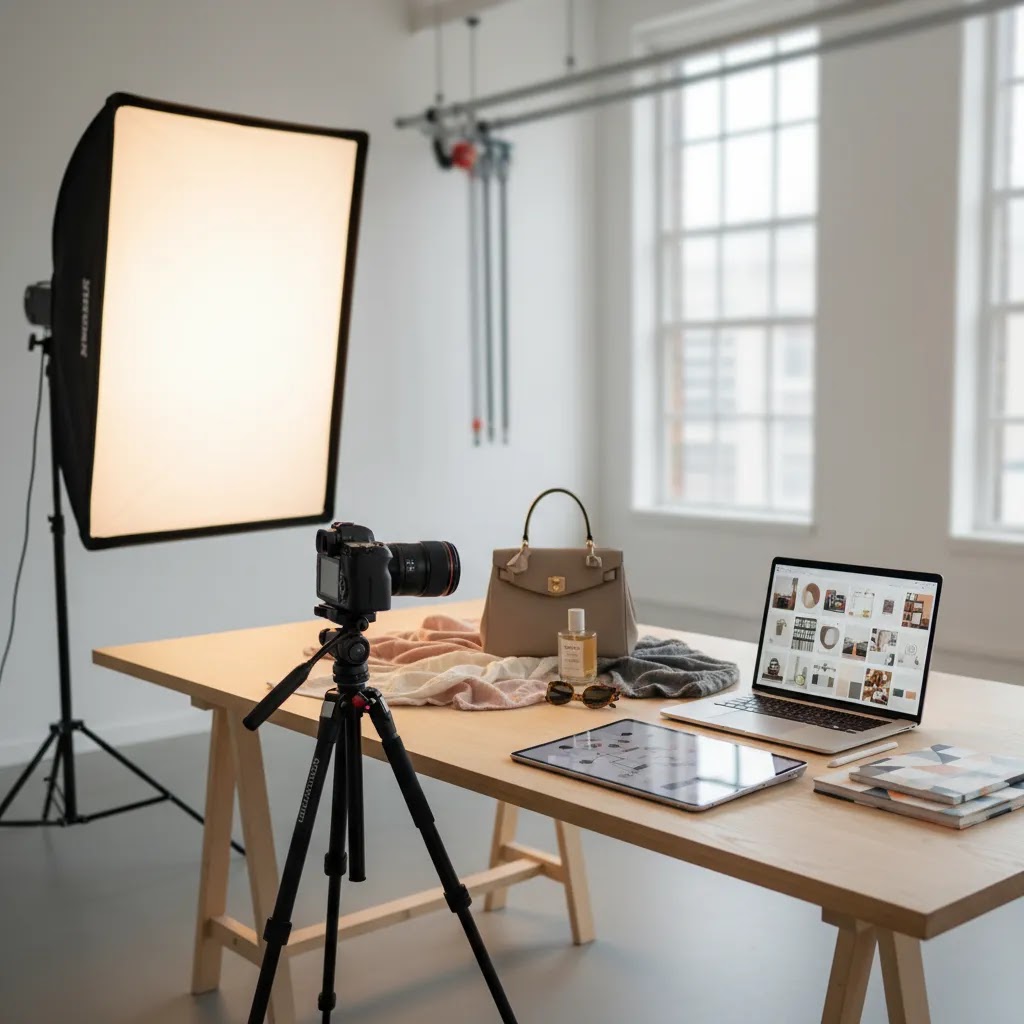
If you are deciding between in-house production and outsourcing, it helps to compare that against what a product photography studio can handle more consistently, especially for larger catalogs.
Where AI fits into lifestyle photography workflows
AI can help, but it should be used with clear expectations. For ecommerce merchants, AI is often most useful as a production support layer rather than a total replacement for photography.
For example, if you already have a clean product cutout, you may be able to create scene variations faster with tools such as Background Swap Editor or experiment with broader visual concepts in Creator Studio. If you need simpler image prep before lifestyle compositing, tools like AI Background Generator and Free White Background Generator may help with iteration.
That said, AI furniture lifestyle photography, outdoor lifestyle photography AI scenes, and beauty imagery all need careful review. Look closely at shadows, perspective, material realism, and brand consistency. In regulated or appearance-sensitive categories, you need extra caution. Beauty sellers exploring concept imagery should also understand how adjacent tools such as an ai makeup generator fit within broader cosmetic merchandising workflows.
The practical rule is simple: use AI where it saves production time, expands testing options, or fills secondary asset needs. Use traditional photography where realism, trust, and product accuracy carry more weight.
Pros and Cons
Strengths
Considerations
Who should invest in lifestyle photography
Lifestyle photography is a strong fit for brands where visual context influences purchase decisions. That includes fashion, beauty, home decor, furniture, accessories, food, gifts, pet products, and premium everyday goods. It is especially valuable for Shopify stores trying to raise perceived quality without rewriting their entire site.
It is less urgent if your catalog is highly technical, heavily commoditized, or purchased mainly on specification. In those cases, clean and descriptive imagery may do more of the heavy lifting.
For growth-stage merchants, the sweet spot is often a hybrid workflow. Use a core set of accurate product images for every SKU, then create lifestyle imagery for hero products, paid campaigns, seasonal launches, and bestsellers.
How to choose the right lifestyle photography approach
If you are deciding what to invest in next, focus on these five criteria.
1. Match the image style to the product's buying context
A candle needs mood. A watch needs detail plus status cues. Furniture needs room context. Skincare needs texture and routine cues. Start with how the product is actually chosen, not what looks trendy on Instagram.
2. Build for the channel, not just the photoshoot
Your PDP, collection pages, Meta ads, Google Shopping landing pages, and Amazon listings all have different needs. A strong shoot plan maps assets to channels before production begins.
3. Decide what must be real and what can be assisted by AI
Many merchants now shoot key hero assets traditionally, then use AI for background variations, cropping, cleanup, and concept testing. This keeps the product realistic while lowering the cost of secondary creative production.
4. Protect accuracy
Color fidelity, scale, texture, and true product construction matter. If lifestyle imagery makes the product look materially different from what arrives in the box, returns and dissatisfaction may increase. This is where experienced merchandising judgment matters more than visual flair.
5. Create a repeatable system
The best approach is the one you can sustain as your catalog grows. That may mean fixed lighting setups, repeatable prop kits, approved AI prompts, or a stable set of scene templates. Document your standards so every future launch does not start from zero.
AcquireConvert generally recommends treating lifestyle imagery as part of your wider visual conversion system, not a one-off creative exercise. Giles Thomas's work as a Shopify Partner and Google Expert reflects this practical view: images should support merchandising, acquisition efficiency, and clearer buying decisions. If you are refining your visual strategy, compare this article with our guidance on lifestyle product photography and supporting scene planning resources before commissioning your next shoot.
Frequently Asked Questions
What is considered lifestyle photography for ecommerce?
Lifestyle photography shows a product in a believable real-world setting rather than isolated on a plain background. That can include models using the product, props that suggest context, or environmental scenes such as kitchens, bedrooms, desks, or outdoor spaces. For ecommerce, the goal is usually to help shoppers imagine ownership while still keeping the product itself clearly visible.
What is the definition of lifestyle photography compared with product photography?
Product photography is usually descriptive and detail-focused. Lifestyle photography is more contextual and emotional. A good ecommerce image strategy uses both. Product shots communicate accuracy, while lifestyle shots add story, scale, and use-case clarity. The best mix depends on the product category, price point, and where shoppers first encounter the item.
Does lifestyle photography help Shopify product pages?
It often can, especially for products where context affects perceived value. On Shopify PDPs, lifestyle images may help customers understand fit, scale, texture, and intended use more quickly. They are particularly useful for apparel, beauty, home goods, and giftable products. Still, they work best alongside clear technical product photos, not as a replacement for them.
How much does lifestyle photography usually cost?
There is no single standard rate because pricing depends on the number of products, images required, retouching needs, model usage, props, location, and creative complexity. A styled tabletop session may be relatively simple, while a multi-person location shoot can be much more involved. Always request a scope-based quote and confirm licensing and deliverables before production begins.
What are the main types of lifestyle photography?
The main categories are in-use human photography, styled still-life scenes, environmental room or outdoor setups, and broader brand lifestyle campaigns. Each serves a different merchandising purpose. Human shots add relatability, still-life scenes create mood, environmental setups show scale, and brand lifestyle campaigns help define a larger visual identity across channels.
Is Amazon lifestyle photography different from DTC lifestyle photography?
Yes, usually. Amazon lifestyle photography tends to be simpler, more product-centered, and more constrained by marketplace expectations. DTC brands on Shopify often have more room for editorial styling and brand expression. If you sell on both channels, it is smart to plan separate image outputs so your marketplace assets stay clear and compliant while your store imagery stays more expressive.
Can AI replace lifestyle photography completely?
For most established brands, not fully. AI can be very useful for ideation, background generation, concept testing, and lower-priority asset creation. But hero visuals still need careful review for realism and accuracy. In categories where trust, material quality, or fit matter a lot, traditional photography or hybrid workflows often remain the safer choice.
What products benefit most from lifestyle photography?
Products that are emotional, visual, wearable, decorative, or space-dependent usually benefit the most. That includes apparel, beauty, watches, furniture, kitchenware, home decor, accessories, and gift products. The more shoppers need to imagine the item in real life, the more helpful lifestyle photography tends to be.
What is an example of a lifestyle photoshoot?
A common ecommerce example is a skincare shoot built around a morning routine: the cleanser at the sink, the serum dropper above the hand, moisturizer being applied, and the product lineup on a simple vanity. Each image still keeps the product readable, but the scene helps shoppers understand how it fits into daily use.
What is considered lifestyle photography (outside of ecommerce)?
Outside of ecommerce, lifestyle photography often means images of people and families in real or realistic moments, such as at home, at the beach, or in a neighborhood, with a candid feel. The focus is usually the person and the emotion of the moment. In ecommerce, the same visual style can apply, but the goal is typically to support a product story and buying decision.
Lifestyle photography vs portrait photography: what is the difference?
Portrait photography is primarily about the person, their expression, and their identity. Lifestyle photography is about a story and context, which can include a person, but for ecommerce the product should stay central. If the image could work without the product, it is usually closer to portrait than lifestyle merchandising.
What are some examples of lifestyle photography?
Examples include a watch photographed on a wrist while holding a coffee cup, a throw blanket on a couch in a real living room, a water bottle clipped to a gym bag, or a cutting board being used on a kitchen counter. The common thread is that the product is shown in a believable setting that clarifies use and scale while still keeping the item easy to see.
Key Takeaways
Conclusion
Lifestyle photography works best when you treat it as a merchandising tool, not just a creative upgrade. It helps customers picture your product in real life, supports stronger brand storytelling, and gives you more flexible assets for product pages and campaigns. But it should be planned carefully, with the right balance between inspiration and accuracy. AcquireConvert covers this topic from a practical ecommerce operator's perspective, shaped by Giles Thomas's experience as a Shopify Partner and Google Expert. If you are mapping out your next shoot, explore our related guides on branding photography, scene planning, and lifestyle product photography so you can build an image system that fits your store, your catalog, and your growth stage.
This content is editorial and for educational purposes only. It is not a paid endorsement unless explicitly stated otherwise. Pricing and tool availability are subject to change, so verify current details directly with the provider. Any performance outcomes discussed are illustrative only and are not guaranteed.
Hi, I'm Giles Thomas.
Founder of AcquireConvert, the place where ecommerce entrepreneurs & marketers go to learn growth. I'm also the founder of Shopify agency Whole Design Studios.