Candle Product Photography Tips for Stores (2026)

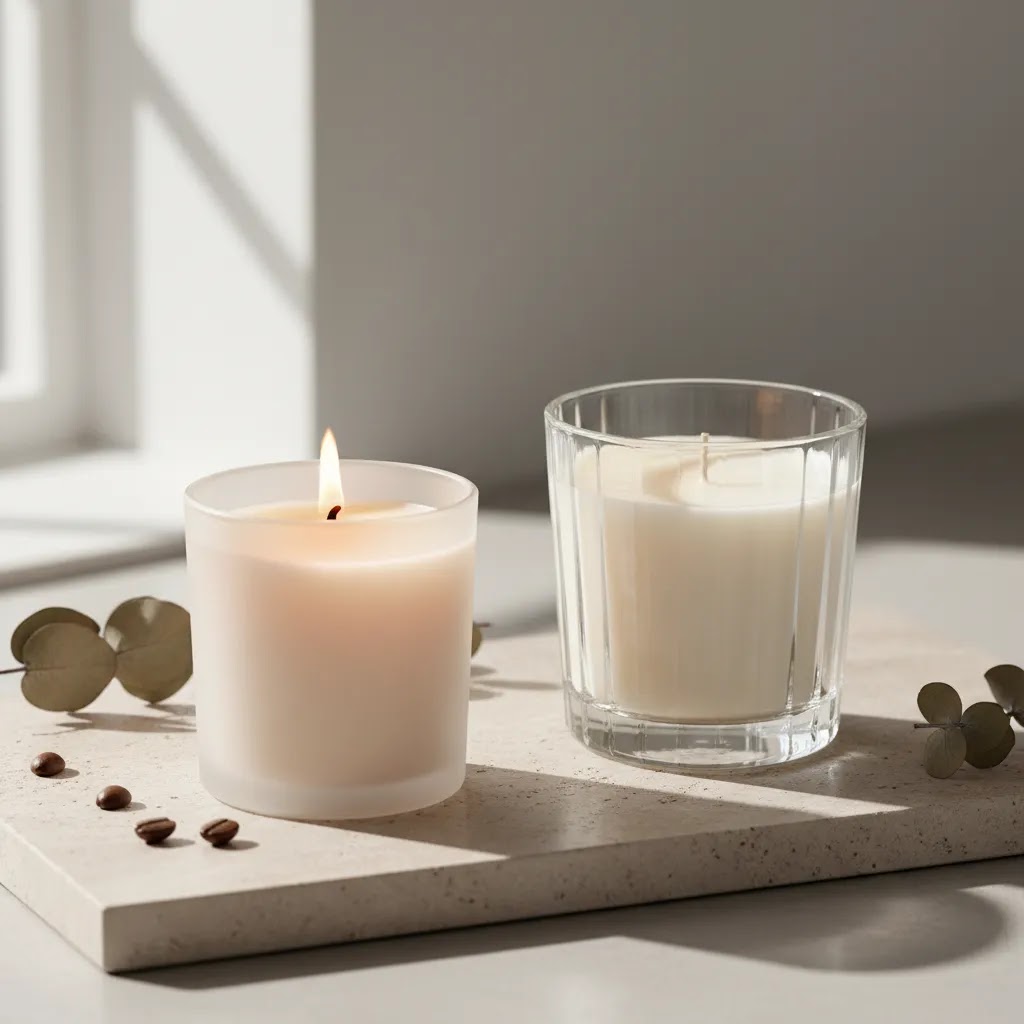
Candle product photography needs to do more than show a jar on a white background. It has to communicate glow, wax texture, vessel quality, label detail, and the mood a buyer expects when the candle arrives. For ecommerce brands, that matters because candles are sensory products sold through a visual storefront. The strongest approach is usually a mix of clean catalog images and styled lifestyle shots that show the candle in context. If you run a Shopify store, this is one of those areas where better images can improve first impressions, product page clarity, and perceived value. This guide explains how to photograph candles well, what gear and setup actually help, where AI image tools may fit, and when to use a studio-style shot versus a more atmospheric scene. For broader visual strategy, start with lifestyle photography.
Contents
- What makes candle photography different
- The 5 must-have candle photos (and where to use them)
- Best setup, lighting, and shot types
- How to photograph lit candles (flame, glow, and exposure control)
- Candle photography props and backdrops that match the scent story
- Tools, production options, and costs
- Pros and Cons of DIY vs assisted workflows
- Frequently Asked Questions
What Makes Candle Product Photography Different
Candles are harder to photograph than many ecommerce products because they combine reflective surfaces, subtle textures, and a light source that can easily blow out highlights. A matte ceramic vessel behaves differently from amber glass. A white wax candle can lose shape if the lighting is too flat, while a lit wick can create strong contrast that hides label details.
For most stores, the goal is not just technical accuracy. It is commercial clarity. Shoppers want to judge scent positioning, craftsmanship, and how the candle might look in their home. That means your product photography set up should support two jobs: clean conversion-focused images for the product page and styled images for brand storytelling, ads, and social use.
A practical candle image set usually includes a front-on hero shot, angled vessel shot, close-up of wax texture, lit lifestyle image, packaging shot, and scale reference. If your brand relies heavily on mood, pairing candle photography with stronger branding photography can help create consistency across collection pages, email campaigns, and paid creative.
Giles Thomas’s approach at AcquireConvert is to assess content through the lens of conversion and merchandising, not just aesthetics. For Shopify merchants, that usually means balancing emotion with clear image utility.
The 5 Must-Have Candle Photos (And Where to Use Them)
Here’s the thing, most candle brands do not need 20 photos per SKU. They need the right five, shot consistently, so shoppers can scan, compare, and buy without second guessing. If you build a repeatable “required shot list,” you also make your Shopify product pages easier to manage across scent variants and seasonal drops.
Consider this a practical checklist you can use for every candle, then add extras only when a specific SKU needs it.
- Hero on white (front-on, label readable)
- Unlit detail (angle plus macro texture)
- Lit mood shot (glow and atmosphere)
- Packaging or gifting shot (box, dust bag, inserts, or set)
- Scale reference (in-hand or in-scene size cue)
Now, when it comes to where these should show up, placement matters as much as the shot itself.
- Hero on white: Use as the first image in your Shopify product page gallery, collection thumbnails, and anywhere shoppers are comparing variants quickly.
- Unlit detail: Use early in the product page gallery, typically in positions two to four, so buyers can verify label finish, wax color, vessel texture, and any premium cues like embossing.
- Lit mood shot: Use mid-gallery and in marketing placements like email headers, social posts, and ad creative where emotion does the selling. This is often the image that makes your candle feel “worth it.”
- Packaging or gifting shot: Use whenever gifting is part of the offer, especially around holidays, and keep it visible on the product page if packaging is a key differentiator.
- Scale reference: Use on the product page near the end of the gallery, or alongside close-ups, so the customer can reconcile details with overall size.
What many store owners overlook is how easily these core shots can get undermined by small mistakes.
- Hero on white mistake: Cropping too tight and cutting off the vessel base or label edges, which makes the product look cheaper and harder to trust.
- Unlit detail mistake: Shooting too wide and losing the very texture you want shoppers to notice.
- Lit mood shot mistake: Overstyling so the candle becomes a background prop, or shooting so dark that the label disappears and the SKU feels ambiguous.
- Packaging shot mistake: Showing packaging that does not match what ships today, especially if you have changed boxes or label versions.
- Scale reference mistake: Inconsistent angles across scent variants, which makes comparison harder and can make some SKUs look larger or smaller than they really are.
From a practical standpoint, if you have multiple scents in the same vessel, shoot them with the same camera height, distance, and label alignment. That consistency is one of the simplest ways to make your collection page feel more premium without changing anything else.
Best Setup, Lighting, and Shot Types
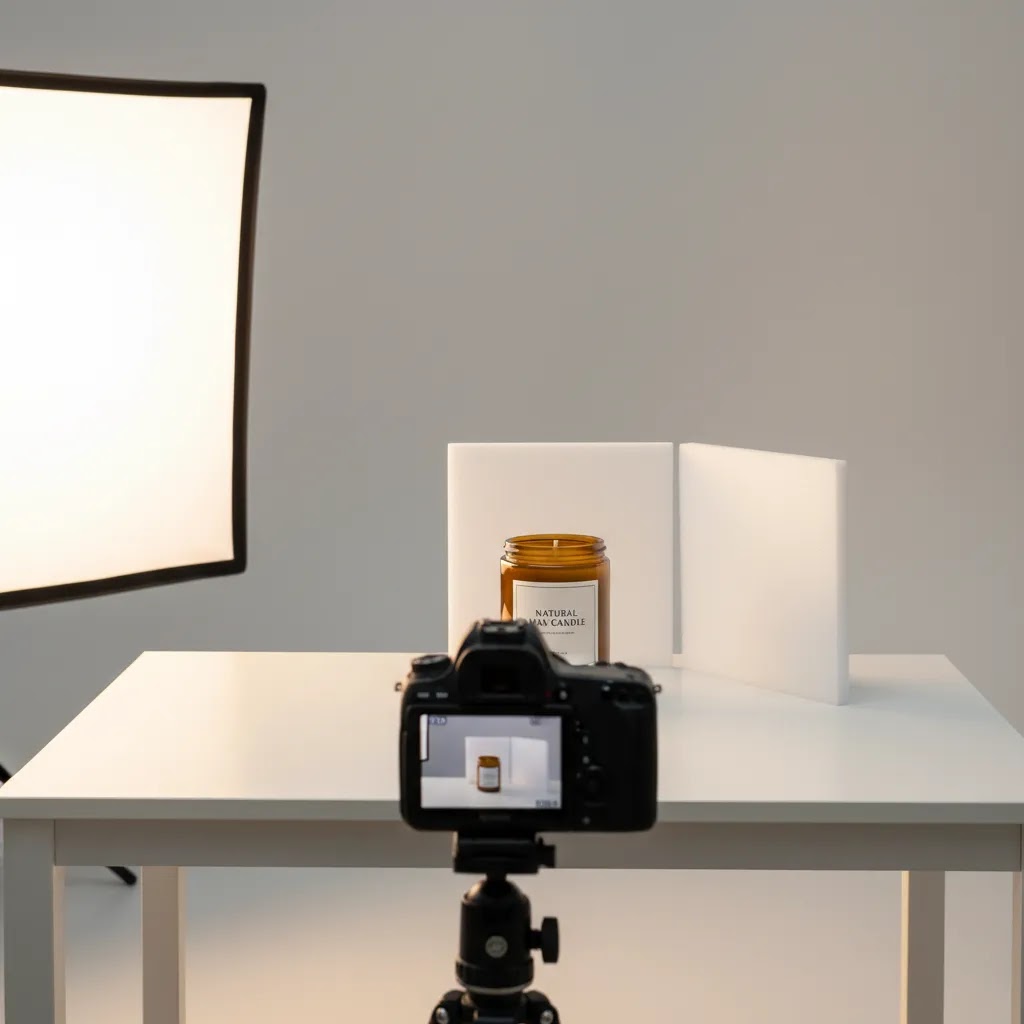
The most reliable candle setup starts with controlled light. Natural window light can work well for beginners, especially for unl it candles and soft lifestyle scenes. Place the product near a window, diffuse harsh sunlight with a sheer curtain, and use white foam board opposite the light source to lift shadows. If you need consistency across a full catalog, a basic studio setup with continuous lights or strobes is usually the better long-term option. This is where planning your product photography studio matters.
Your product photography camera does not need to be high end to produce strong results. A recent smartphone can work for phone product photography if you stabilize it on a tripod and shoot in consistent light. A dedicated camera gives you more control over exposure and color, which helps with wax tone, flame detail, and reflective jars. A standard 50mm or short telephoto lens is often enough for hero shots, while macro product photography helps capture wax texture, wick detail, embossing, or label finish.
Background choice matters more with candles than many founders expect. A pure white background is useful for marketplace listings and clean product pages, but a warmer environment often sells the mood better. Your scene background should support the scent story. Think linen, wood, stone, books, bath accessories, or seasonal props, used sparingly so the product stays dominant.
AI-assisted image tools can also help after the shoot. Based on current tool data, AcquireConvert has visibility into visual editing tools such as AI Background Generator, Free White Background Generator, Increase Image Resolution, and Background Swap Editor. These can be useful for testing alternate looks, extending a campaign, or cleaning up assets when a full reshoot is not practical. If you are considering AI-generated scenes specifically, see this guide to ai scene generator workflows.
The key point is this: AI can support candle photography, but it does not replace the need for believable source images, accurate labeling, and realistic flame behavior.
How to Photograph Lit Candles (Flame, Glow, and Exposure Control)
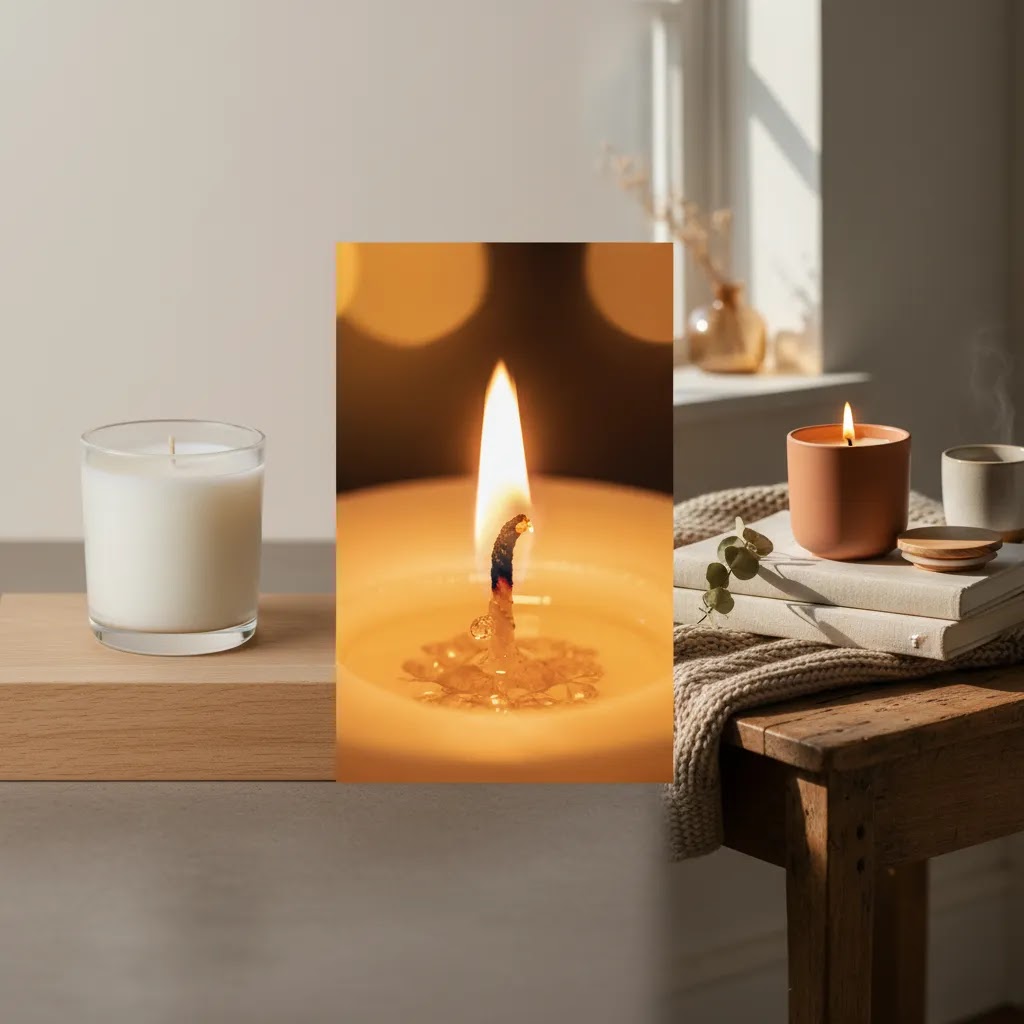
Lit candle photos are where many ecommerce shoots fall apart. The flame is a small, bright light source, and most cameras will either blow it out into a white blob or expose for the jar and turn the flame into an overbright distraction. You want a flame that looks real and a label that stays readable.
The way this works in practice is you expose for the flame first, then build the rest of the image around it.
- Start with your base exposure aimed at protecting highlights, so the flame has shape and is not clipped.
- Once the flame looks controlled, add fill light to bring the label and vessel back up. A simple white foam board placed opposite your main light often does the job.
- If your camera or phone app allows it, pull down highlights slightly and lift shadows a touch, then re-check label readability.
- If the flame still forces compromises, bracket a couple exposures (one for flame, one for label) so you have options in editing. For ecommerce, keep edits realistic so the candle still looks believable.
Glass jars and glossy labels bring another problem, harsh reflections. Small changes in light position can make a huge difference.
- Diffuse the light more than you think you need. A softbox, a scrim, or even a sheer curtain can smooth highlight roll-off on glass.
- Use flagging to cut unwanted reflections. A piece of black foam board placed just out of frame can reduce glare and restore jar shape.
- Reposition the candle relative to the light, not just the camera. Turning the jar a few degrees can remove a hot spot without changing the angle shoppers see.
- If you are shooting with a dedicated camera, a circular polarizer can sometimes reduce glare on labels and glass, although it will not fix every reflection. It also reduces overall light, so you may need a tripod and a slower shutter speed.
Safety and consistency matter too, especially if you are photographing multiple scents in one session.
- Trim the wick consistently before each set. A long wick can produce a larger, smokier flame that changes the look and can dirty the jar.
- Standardize burn time before shooting. Many candles look best after the melt pool settles, but if you let one burn for 5 minutes and the next for 45, the wax surface and jar marks will not match across SKUs.
- Keep the wax surface clean between takes. Dust and small bits of wick show up fast in macro shots and can add editing time.
- Ventilate your space and keep a heat-safe surface under the candle. If you are styling near fabric props, keep them away from the flame and do not leave a lit candle unattended.
For most Shopify store owners, the goal is not a dramatic, dark “cinematic” image. It is a controlled, repeatable lit shot you can produce for every SKU so your product pages stay consistent.
Candle Photography Props and Backdrops That Match the Scent Story
Props and backdrops are where lifestyle candle product photography either becomes a conversion asset or a distraction. The candle has to stay dominant. Your job is to suggest the scent and setting without creating a scene where the shopper remembers the book and forgets the product.
Think of props in a few simple categories that tend to work well for candles.
- Texture props: linen, cotton, wood, stone, ceramic trays, and matte paper. These add depth without pulling focus.
- Home cues: bedside tables, bath accessories, shelves, and coffee tables. These help shoppers visualize placement.
- Seasonal touches: evergreen, citrus, dried florals, or warm-toned textiles. Use them sparingly so the scene still looks like a product photo, not a craft project.
- Gifting cues: ribbon, tissue paper, a simple gift tag, or a clean box stack. This is especially useful for sets and premium positioning.
Backdrop choice becomes more important when you sell multiple vessel types or label colors. A white label on a light backdrop can disappear. An amber jar on a dark wood backdrop can turn into a brown blob if the lighting is too flat.
- If the label is light, add contrast with mid-tone surfaces like warm wood, neutral stone, or soft gray paper.
- If the label is dark, watch for reflections and edge loss on dark backdrops. A lighter background or a subtle gradient can make the vessel outline clearer.
- For glass jars, aim for larger, softer light sources and keep bright objects out of the reflection zone. Even a white wall can become a distracting stripe if the angle is wrong.
- If you are aiming for “white” backdrops, keep them truly neutral. Mixed lighting can push whites blue or yellow, which makes wax color inconsistent across your catalog.
A simple way to choose a scene without overcomplicating it is to tie the set to scent families. This keeps your lifestyle images aligned with merchandising rather than random styling.
- Fresh scents: bright surfaces, clean lines, bathroom or kitchen cues, and props like towels, citrus, or glassware.
- Floral scents: softer fabrics, gentle color accents, and restrained botanicals. Keep flowers minimal so the candle is still the hero.
- Gourmand scents: warmer tones, wood surfaces, and subtle food-adjacent cues like a spoon, a neutral mug, or folded napkins. Avoid making it look like the candle is edible.
- Woody or smoky scents: darker textures, stone, leather, books, and low-key lighting. Make sure the label still reads clearly.
From a practical standpoint, if you are building a Shopify collection with multiple scents, reuse the same prop “language” across the set. It helps your store look cohesive, and it makes it easier to create ads and emails that feel like part of the same brand story.
Tools, Production Options, and Costs
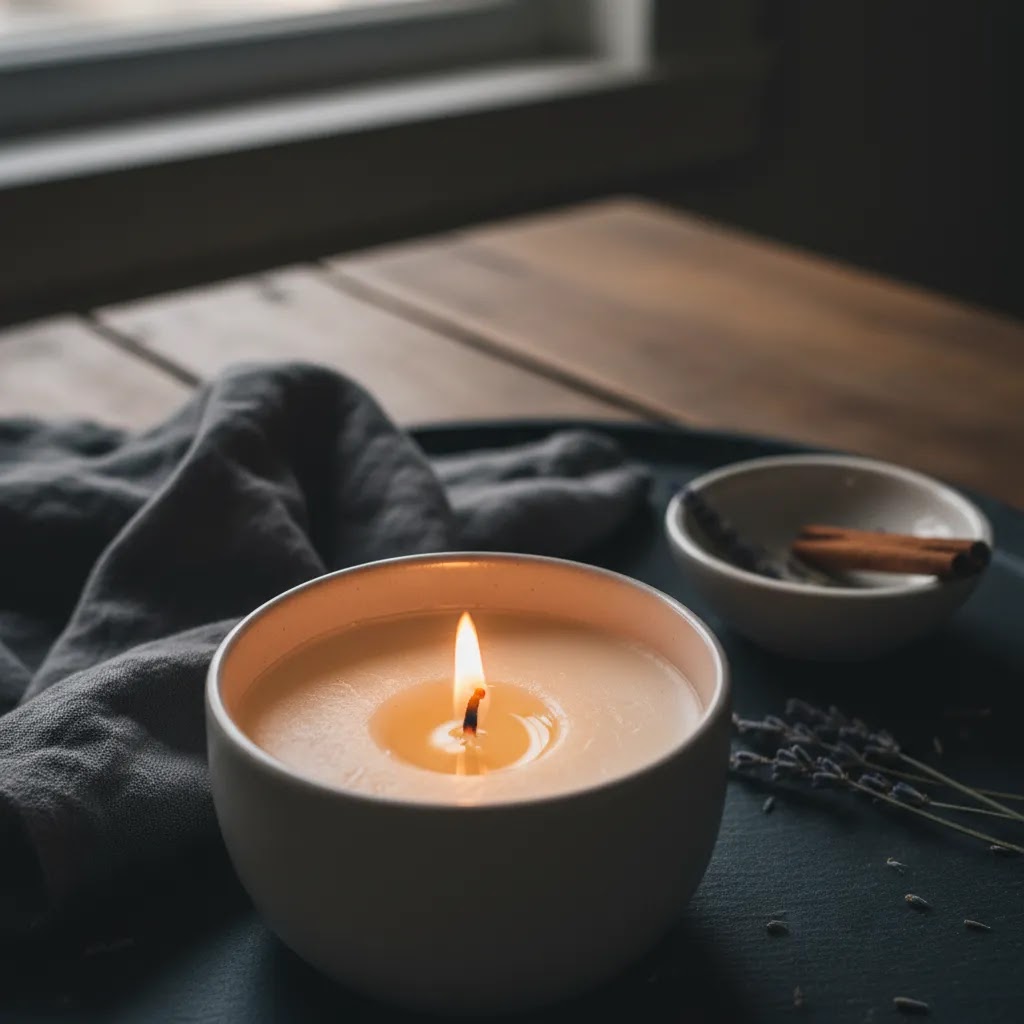
Candle brands have a few realistic production paths, and the right one depends on catalog size, margin, and how often you launch new scents or seasonal collections.
If you shoot in-house, your main costs are camera or phone gear, tripod, light modifiers, surfaces, and editing time. This route gives you control and can work well for small catalogs. The tradeoff is consistency. Candle photography is detail-sensitive, so the learning curve is real.
If you outsource, professional product photography agencies or niche photographers may charge by image, SKU, or day rate. This can make sense if your candles are premium-priced and your store relies on polished creative. For ecommerce founders comparing service quality, category resources such as Lifestyle Product Photography and Product Photography Fundamentals are useful starting points.
For post-production, the live tool data available here includes external image tools but not full pricing details for each one. Because of that, it would be misleading to invent plan costs. What we can say confidently is that tools for white background generation, background changes, resolution improvement, and AI editing may reduce manual retouching time for some stores, especially when repurposing existing product shots. Results vary based on source image quality.
For most candle brands, the most cost-effective mix is often one professional-style hero image set plus lower-cost iterative edits for campaigns, seasonal scenes, and ad variants.
Pros and Cons
Strengths
- Candle photography can raise perceived product quality because vessel materials, labels, and wax finish are highly visual buying cues.
- A strong mix of white background and lifestyle images supports both conversion-focused product pages and advertising product photography.
- Phone product photography can be good enough for some brands if lighting, stabilization, and composition are handled well.
- Macro close-ups are especially useful for candle products because they show craftsmanship and texture that generic shots miss.
- AI editing tools may help extend shoots into multiple formats without restaging every scene from scratch.
Considerations
- Lit candles are technically difficult to expose correctly, and flame highlights can easily overpower label readability.
- Reflective glass and glossy packaging often need more retouching than founders expect.
- Overstyled scenes can weaken conversion if the product itself becomes secondary to props and mood.
- AI-generated or heavily edited scenes can create trust issues if the product appears different from what customers receive.
- DIY production may save cash upfront but can cost time, especially for brands with multiple scent variants and frequent launches.
Frequently Asked Questions
What is the best lighting for candle product photography?
Soft directional light is usually best. A diffused window or a softbox helps preserve jar shape, wax detail, and label readability. If you photograph a lit candle, expose for the flame first, then adjust fill light so the vessel does not disappear into shadow. Consistency matters more than intensity for ecommerce use.
Can I use my phone for candle photography?
Yes, in many cases you can. A modern smartphone paired with a tripod, clean lens, and controlled lighting can produce usable ecommerce images. The limits usually show up in close-up detail, dynamic range, and color consistency across a full catalog. For a small Shopify store, phone product photography is a valid starting point.
What shots should every candle product page include?
A strong product page usually needs a hero shot on white, an angled product view, a close-up of wax or label texture, a lit lifestyle image, and a packaging shot if packaging affects gifting appeal. If size is not obvious, include a scale cue. This reduces uncertainty and may improve purchase confidence.
Is white background photography enough for candles?
Usually not on its own. White background images are useful for clarity, search results, and clean merchandising, but candles are mood-driven products. A few believable lifestyle images often do more to communicate ambiance, premium positioning, and scent story. The best-performing stores tend to use both formats together.
How much retouching do candle images need?
Most candle images need at least light retouching. Common edits include dust cleanup, label straightening, color correction, flame control, and reflection management. Product photography retouching should improve clarity without changing the product so much that customer expectations become inaccurate. The safest edits preserve realism.
Can AI help create lifestyle candle product photography?
AI can help with background replacement, scene ideation, and image cleanup. It can be useful for testing campaign concepts before investing in a full shoot. Still, believable source photography matters. For ecommerce, AI-assisted images should stay close to the real product in shape, material, color, and branding to protect trust.
Should candle brands hire a professional photographer?
If your brand is premium, gift-focused, or visually differentiated, hiring help often makes sense. A professional can usually deliver better consistency, flame handling, and post-production quality than a first-time DIY workflow. Smaller brands can start in-house, then outsource hero images once the catalog and margins justify it.
What is the 84 rule for candles?
The “84 rule” is usually a retail shorthand used in some candle-making circles to reference a common burn rate expectation, often described as around 8 hours of burn time per ounce for certain wax types and jar sizes. The reality is burn time varies based on wax blend, wick, fragrance load, vessel shape, and room conditions. From a product photography standpoint, the main takeaway is not the number itself. It is that burn behavior is part of customer expectation, so your lit photos should look realistic for how your candle actually burns.
What is the 3 hour rule for candles?
The “3 hour rule” is a common usage guideline that suggests burning a candle long enough to form an even melt pool, often up to around 3 hours, but not so long that the vessel overheats. Exact guidance depends on the candle and the manufacturer’s instructions. For photography, this matters because wax appearance changes over time. If you photograph lit candles, keep burn time consistent between products so the wax level and melt pool look similar across your catalog.
What is the 8 10 rule for candles?
The “8/10 rule” is typically mentioned as a safety and performance guideline, often interpreted as not burning a candle for more than 3 to 4 hours at a time and discontinuing use when around 1/2 inch of wax remains, although phrasing varies by brand and maker. Always follow your specific candle’s care instructions. For ecommerce photography, the practical point is to avoid shooting candles that look near-empty or overheated unless you are intentionally creating a “well-loved” lifestyle image, which is rarely a good fit for a product page.
How do you photograph candles at home (simple setup)?
Set a small table near a window, hang a sheer curtain to diffuse the light, and place the candle on a clean surface like white foam board, wood, or stone. Put a second piece of white foam board opposite the window as fill. Use a tripod, clean your lens, and shoot straight-on for your hero image, then take a 45-degree angle and one close-up. If you photograph the candle lit, expose for the flame first and then add fill with the foam board so the label stays readable.
Key Takeaways
- Candle product photography should show both product accuracy and emotional atmosphere.
- The best ecommerce image sets combine white background shots with selective lifestyle scenes.
- Soft controlled light is more important than expensive gear for most stores.
- Macro detail helps communicate texture, quality, and craftsmanship.
- AI tools are most useful as support tools, not as a replacement for credible product imagery.
Conclusion
Candle product photography works best when it balances mood with merchandising discipline. Your shoppers need to feel the atmosphere of the product, but they also need to see the jar, label, wax, and finish clearly enough to buy with confidence. For most ecommerce brands, that means building a repeatable setup, capturing a few essential angles well, and using editing tools carefully rather than relying on heavy visual shortcuts. If you are improving a Shopify store, start with your best-selling SKU, create one clean hero set and one styled set, then compare how those assets perform across product pages, ads, and email. That gives you a practical baseline before investing further in gear, retouching, or outsourced production.
Disclosure: AcquireConvert may receive affiliate compensation from some third-party links referenced in this article. Any views expressed are editorial and based on practical ecommerce evaluation. Results from photography improvements or AI-assisted editing vary by product quality, store positioning, traffic levels, niche, and implementation. No specific commercial outcome is guaranteed.

Hi, I'm Giles Thomas.
Founder of AcquireConvert, the place where ecommerce entrepreneurs & marketers go to learn growth. I'm also the founder of Shopify agency Whole Design Studios.