Lifestyle Commercial Photography (2026 Guide)

Lifestyle commercial photography puts your product into a believable, usable setting so shoppers can picture it in their own lives. For ecommerce brands, that matters because a clean packshot tells people what the product looks like, while a lifestyle image helps explain context, scale, mood, and use case. If you sell on Shopify, Amazon, or your own store, these images can support stronger product storytelling across landing pages, ads, email, and social content. This guide explains what lifestyle commercial photography means, where it works best, and how to evaluate whether a styled scene, model-led image, or AI-assisted workflow fits your brand. If you want the broader foundation first, start with our guide to lifestyle photography.
Contents
- What lifestyle commercial photography is
- Key features of strong product-in-scene images
- Types of lifestyle commercial photography (and when to use each)
- Pros and Cons
- Who it is for
- Lifestyle commercial photography examples (by ecommerce category)
- AcquireConvert recommendation
- How to choose the right approach
- Planning a commercial lifestyle shoot (shot list, props, locations, and deliverables)
- Frequently Asked Questions
- Key Takeaways
- Conclusion
What lifestyle commercial photography is
Lifestyle commercial photography is product-focused photography that places items in a realistic or aspirational scene. The goal is not simply to make the image look attractive. It is to help shoppers understand how the product fits into a moment, routine, or identity.
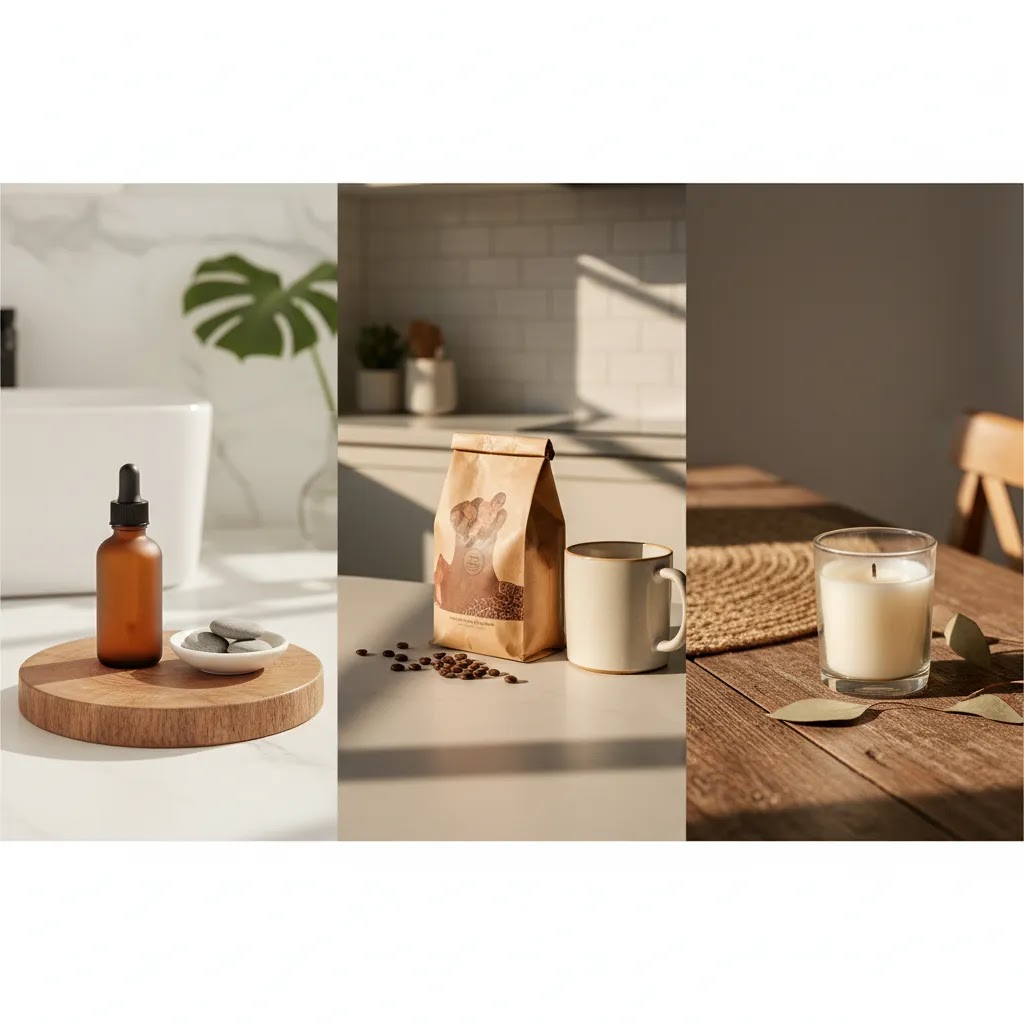
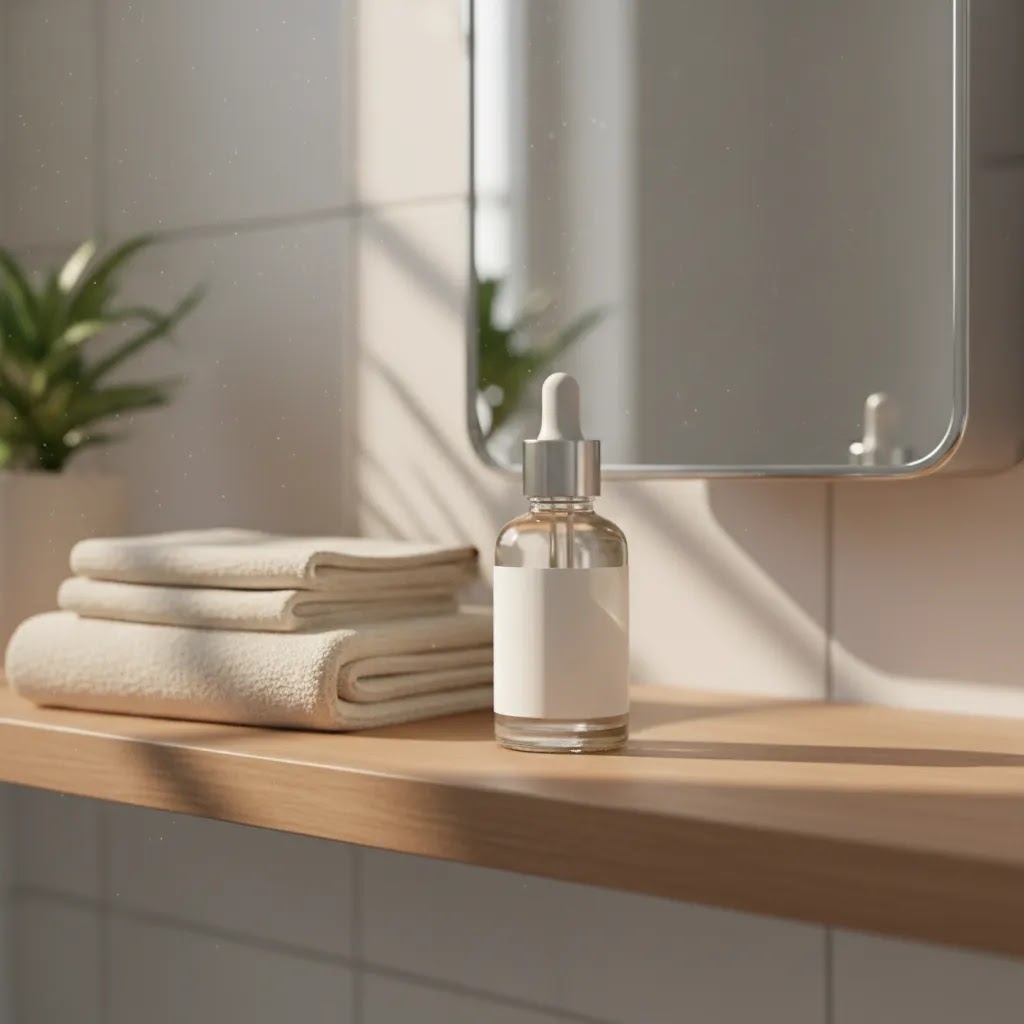
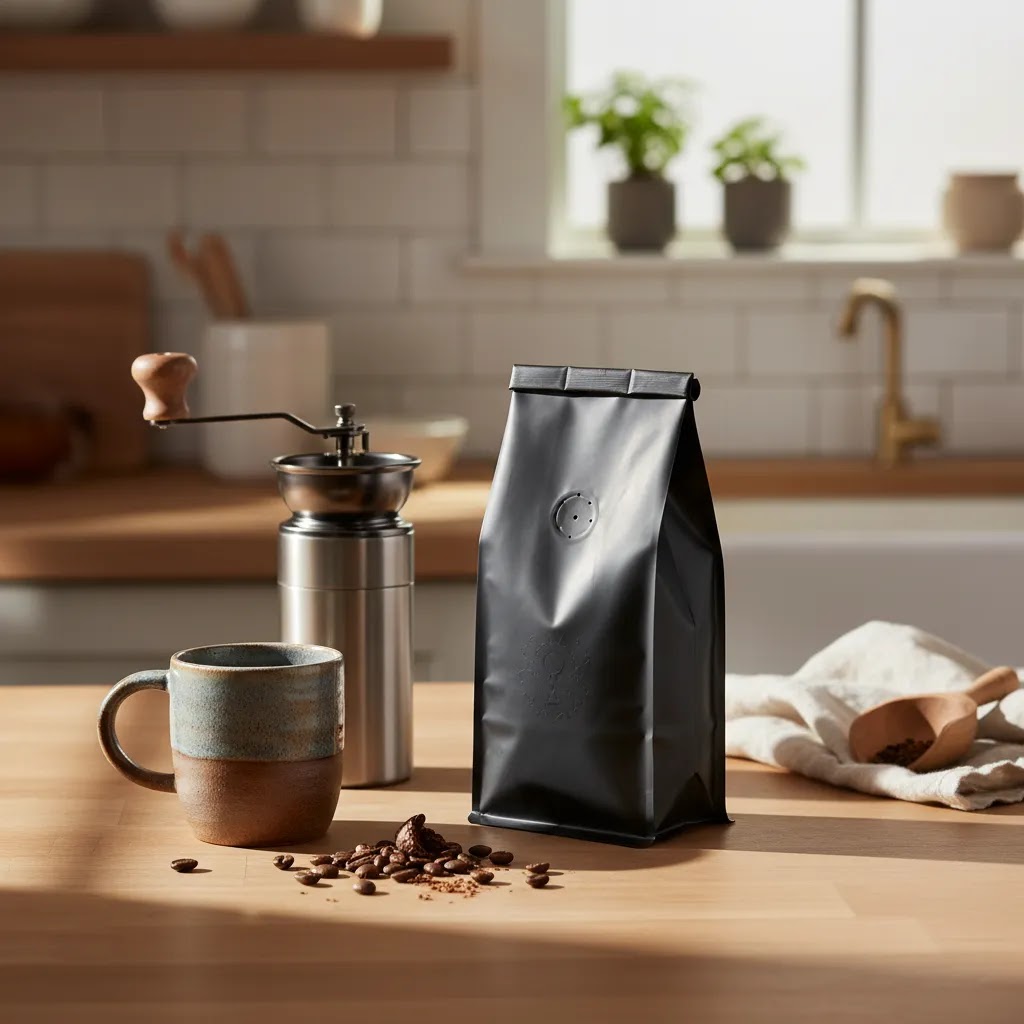
For ecommerce, that usually means showing the product in use, near complementary objects, or inside a setting that matches the target buyer. A skincare brand might show a serum on a bathroom shelf with soft morning light. A coffee brand might show a bag of beans on a kitchen counter beside a grinder and mug. A home goods brand might stage candles on a dining table during an evening meal.
This is different from a plain white-background product photo. Both image types matter. Your clean studio shots support clarity, compliance, and consistency. Your lifestyle images support emotion, context, and merchandising. Many brands need both, especially if they sell through multiple channels. If you are balancing scene work with brand positioning, it also helps to review how branding photography shapes the broader visual identity of your store.
For Shopify merchants, lifestyle commercial photography often performs best on product pages, collection headers, homepage banners, paid social ads, and email campaigns where the image needs to do more than document the item. It needs to communicate why someone wants it.
Key features of strong product-in-scene images
Not every styled photo is useful for selling. The best lifestyle commercial photography still keeps the product at the center. If the scene is memorable but the item gets lost, the image may create interest without helping conversion.
Here are the features that matter most:
- Clear product visibility: The item should still be recognizable at a glance. Props and people support the product, not compete with it.
- Context that answers buyer questions: A scene should reveal scale, use case, texture, or routine. This reduces uncertainty for online shoppers.
- Brand-fit styling: The set, colors, lighting, and props should match your store positioning. Minimal premium brands and playful mass-market brands need different visual signals.
- Platform flexibility: Good assets can often be cropped for PDP galleries, ads, email banners, and social posts without losing meaning.
- Intentional scene design: The background, props, and composition should reinforce the product story. If you are planning sets, our guide on choosing the right scene background can help you avoid visual clutter.
Some merchants now test AI-assisted scene creation before booking a full shoot. That can be useful for concepting, seasonal mockups, or expanding creative variations. ProductAI Photo offers tools such as AI Background Generator, Background Swap Editor, and Place in Hands for generating or editing product scenes. These can be practical for testing concepts, though many brands will still want human-shot photography for hero campaigns, strict brand control, or regulated categories.
For stores that need clean catalog consistency alongside scene-based imagery, a hybrid workflow often works best. Shoot core SKUs in a product photography studio setup first, then add selected lifestyle images for the highest-impact products and channels.
Types of lifestyle commercial photography (and when to use each)
Here’s the thing: “lifestyle photography” is a broad label. In practice, shoppers tend to see a few repeatable formats. Picking the right one upfront makes your shoot simpler, and it also makes the images more usable across your Shopify product pages and marketing channels.
Candid action, in-use scenes
This is the classic lifestyle look: the product is actively being used in a routine. Think a moisturizer being applied, a pan on a stove, a water bottle being carried on a walk.
Best for product pages (to clarify use), paid social (to show benefit quickly), and email (to reinforce routine and habit).
What tends to go wrong is the product gets blocked by hands, hair, or motion blur, so it is hard to identify at a glance in a small mobile crop.
Styled still life (product with props)
This is a “set design” approach. The product is the hero, but it sits inside a scene built with props that imply a lifestyle: ingredients, textures, surfaces, and complementary objects.
Best for collection headers, homepage hero banners, and PDP galleries where you want mood without the complexity of full model direction.
What many store owners overlook is prop choice can accidentally change what you are selling. If the props imply a different audience, price point, or use case, conversion can suffer even if the photo looks great.
Model-led portraits (on-body, worn, or held)
Model-led lifestyle is ideal when fit, scale, or identity is a major buying trigger. It often matters for accessories, apparel add-ons, wellness products used on the body, and anything that needs “human scale” to make sense.
Best for paid social, PDP image slots that need scale, and anywhere you need immediate audience signaling.
What tends to go wrong is inconsistent lighting and styling across products, so the catalog starts to feel like a patchwork. Another common issue is the product becomes secondary to the face or the pose, which can be a problem on product pages where clarity should lead.
Brand documentary (behind-the-scenes, founder, process)
This is lifestyle that leans into story and credibility: hands making the product, packing orders, sourcing, studio moments, founder imagery, or process details.
Best for about pages, brand landing pages, email nurture sequences, and ads where trust is the main job.
What tends to go wrong is the images feel disconnected from the product pages. If you do documentary, it still helps to plan how those images will sit alongside your product-in-scene assets so the brand world feels consistent.
A fast decision shortcut (utility vs identity)
From a practical standpoint, you can choose a format quickly by asking one question: do people buy this mostly for utility, or mostly for identity?
If the buying trigger is utility, like “this solves a problem,” candid in-use and styled still life usually do the best job because they explain routine, steps, and results.
If the buying trigger is identity, like “this is who I am,” model-led portraits and brand documentary often matter more because the customer is buying a look, a vibe, or a set of values.
Most Shopify stores end up mixing formats, but it helps to pick one primary format per product category, then add a secondary format only where it supports a specific conversion job.
Pros and Cons
Strengths
- Helps shoppers visualize real-world use, which may improve confidence before purchase.
- Supports brand storytelling better than plain packshots alone.
- Can communicate scale, texture, routine, and audience fit in a single image.
- Gives marketing teams more flexible creative for ads, email, social, and landing pages.
- Often makes products feel more premium, giftable, or desirable when styling is done well.
- Works especially well for beauty, food, home, fashion accessories, wellness, and gifting brands.
Considerations
- Production can be more expensive and time-consuming than plain background photography.
- Poor styling may confuse shoppers if props overpower the product or suggest the wrong use case.
- Overly artistic scenes do not always convert better, especially for straightforward functional products.
- Image consistency can be harder to maintain across a large SKU catalog.
- AI-generated scenes may save time for testing, but they still need human review for realism, compliance, and brand accuracy.
Who it is for
Lifestyle commercial photography is a strong fit for ecommerce brands that sell with emotion, identity, or routine, not just specifications. That includes DTC brands on Shopify, growth-stage stores investing in paid social, and merchants trying to improve merchandising on high-margin products.
It is especially useful if your customer needs help picturing the item in context. Think apparel accessories, beauty, food and beverage, home goods, wellness, and gifting. It can also help if your store visuals feel generic and you need a more recognizable brand presentation.
If you sell highly technical, commodity, or compliance-heavy products, lifestyle imagery can still help, but it usually works best as a supplement rather than the primary image type.
Lifestyle commercial photography examples (by ecommerce category)
Consider this: most store owners do not need more “inspiration.” They need examples they can copy and adapt without turning their shoot into a generic stock photo set. The goal is usually the same across categories, show the product clearly, show how it is used, and make the moment feel believable.
Beauty and skincare: the bathroom routine
A strong beauty lifestyle scene usually shows sequence and texture. A common setup is a sink counter with morning light, a towel, and simple routine cues like a mirror or cotton pads.
To support conversion, include a packaging versus product cue, a quick texture close-up in the same lighting, and at least one image where the product is being applied so shoppers can read scale and viscosity.
Food and beverage: kitchen prep and serving
Food lifestyle photography often works best when it shows preparation, not just a styled final shot. A bag of coffee next to a grinder and mug is a good start, but adding a “making it” moment can reduce uncertainty for new customers.
To support conversion, show one step of the routine, show the package clearly, and add one close-up that makes quality tangible, like beans, texture, steam, or ingredient detail. Keep it real enough that it feels like someone’s kitchen, not a set.
Home goods: the tablescape or shelf moment
For candles, tableware, linens, or decor, the job is usually scale and styling context. A tablescape, shelf, or side-table scene can show how the product sits next to other objects shoppers already own.
To support conversion, include a recognizable scale reference, like a standard plate size, a book, or a human hand. Include one detail close-up that shows material, finish, or weave inside the same scene so the product feels premium without looking artificial.
Wellness: the morning ritual
Wellness products sell through routine and identity. A believable scene might be a supplement next to water and a simple morning setup, or a topical product placed near a gym bag and towel.
To support conversion, show the product in the routine rather than next to a random prop. One image should clarify “when” and “how” it is used. Another should show key packaging elements clearly, since many shoppers want to double-check ingredients, dosage style, or format even if they are not reading every label.
Accessories: on-body scale cues
Accessories often need on-body scale more than they need a complex scene. A watch, bag, hat, or jewelry usually converts better when shoppers can see proportions on a real person.
To support conversion, capture a straightforward “fit” angle, a lifestyle angle that signals audience and setting, and a detail close-up for material and hardware. If you are using full model shots, it helps to keep the product close to the center of frame so it still works when Shopify themes crop for collection grids.
The reality is aspiration only works if it is believable. If your images look like they belong to every brand in your category, you lose the advantage. Small details, like consistent surfaces, repeated props, and your real packaging, often matter more than building a perfect set.
AcquireConvert recommendation
If you are evaluating whether lifestyle photography is worth adding to your content mix, treat it as part of your conversion system rather than a standalone creative task. Giles Thomas, through AcquireConvert’s Shopify and ecommerce focus, consistently approaches visuals from the angle that matters most to merchants: does this asset help shoppers understand the product and move toward purchase?
For most stores, the practical starting point is a blend of clean ecommerce photography and a smaller set of high-intent lifestyle images for best sellers, bundles, seasonal pushes, and paid traffic landing pages. If you are still planning your workflow, explore the AcquireConvert Lifestyle Product Photography category for related guidance. If you are testing AI-assisted concepts before a full production shoot, our guide to an ai scene generator is a useful next step.
How to choose the right approach
There is no single best format for every product. The right lifestyle commercial photography setup depends on what you sell, where you sell it, and how shoppers make decisions in your category.
1. Start with the product’s buying triggers
If customers buy based on look, aspiration, or self-expression, lifestyle imagery should play a larger role. If they buy mainly on technical specs or price comparison, use it more selectively. Your product page should still answer practical questions first.
2. Match the scene to your traffic source
For paid social, bolder and more emotive scenes may work because the image needs to stop the scroll. For organic search or marketplace traffic, shoppers often need cleaner, clearer visuals after they click. Think channel by channel, not just brand-wide.
3. Decide whether you need human-shot, AI-assisted, or hybrid production
Human-shot photography is usually stronger for flagship products, campaign launches, and high-trust categories. AI-assisted visuals can help with mockups, concept testing, or lower-cost content expansion. ProductAI Photo’s Magic Photo Editor and Creator Studio may be useful if you want to explore scene variations quickly before committing to a larger shoot.
4. Keep ecommerce usability in view
Ask whether the image will still work on mobile, inside a gallery carousel, in a collection tile, and in ad crops. A beautiful horizontal image that fails in square or vertical placements may create extra production work.
5. Build a repeatable visual system
One strong photo is not enough. The stores that get real value from lifestyle imagery usually define art direction, prop rules, color palettes, cropping styles, and shot priorities in advance. That keeps the catalog cohesive over time.
If you also need the broader fundamentals behind clean store imagery, the E Commerce Product Photography category is worth reviewing alongside your lifestyle planning.
Planning a commercial lifestyle shoot (shot list, props, locations, and deliverables)
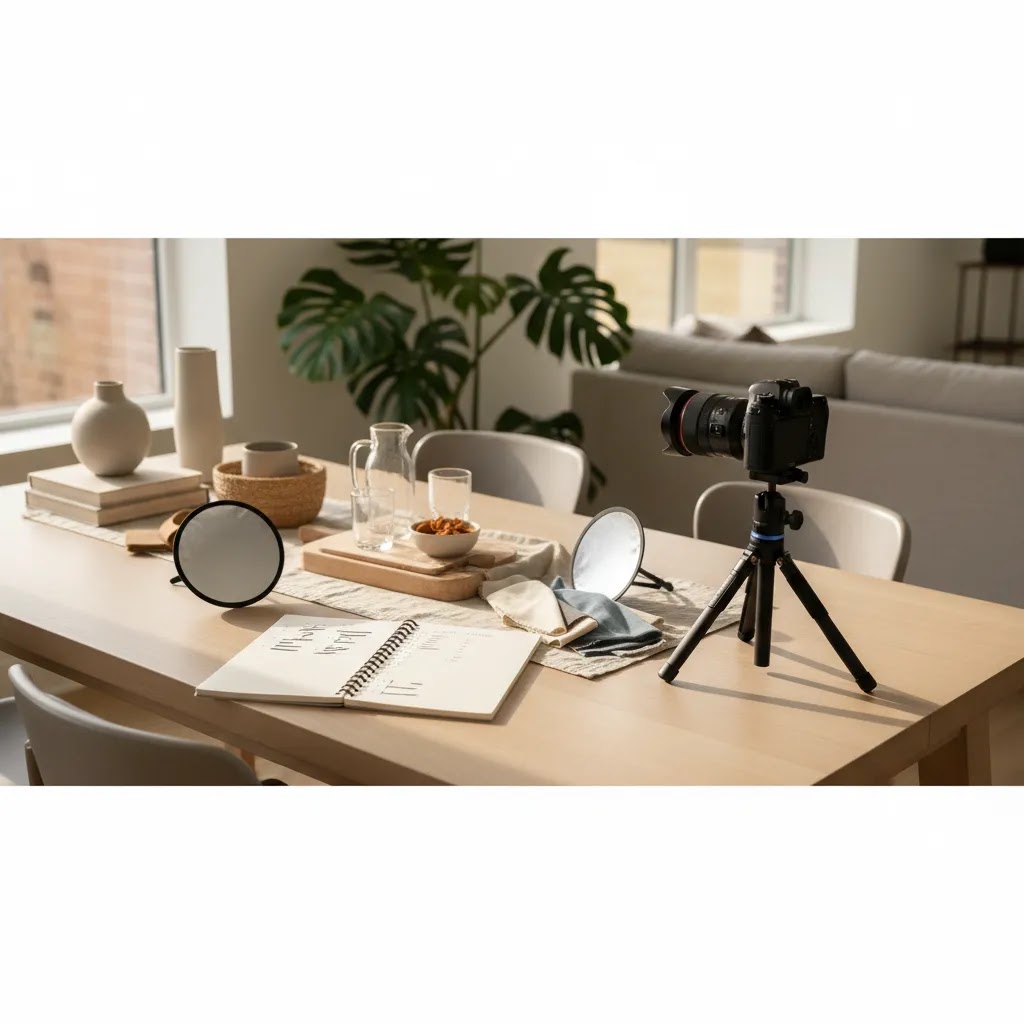
What many store owners overlook is that lifestyle shoots fail more often in planning than in photography. The photos look “nice,” but they do not fit the actual placements you need on Shopify, Meta ads, or email templates. A little pre-production makes the final images far more useful.
Pre-production details that save you later
Before you think about props, get clear on deliverables. Specifically, decide where these images will live and how they will be cropped.
At minimum, plan for common channel crops: square (1:1), vertical (4:5), and full vertical (9:16). You will also want a few frames with negative space so you can add ad text overlays without covering the product. Even if you do not add text today, your future self will thank you when you need a new ad quickly.
Consistency matters too. If you want your product page galleries to feel cohesive, pick a small set of repeatable angles per SKU and stick to them. This is especially important if you shoot across multiple days, because lighting drift and angle drift are what make a catalog feel messy.
Build a shot list that answers ecommerce questions
A useful lifestyle shot list is not “three pretty scenes.” It is a set of images that answers the questions a shopper would ask right before buying.
Common questions to build shots around include scale, texture, and routine. If the product is used in steps, capture a step-in-progress. If it is giftable, capture gifting context, like a simple wrap moment or the product placed with a card, but keep it subtle so it still reads as your product, not a generic holiday photo. If you sell bundles, include at least one image that shows the bundle together in a way that makes it obvious what is included.
For most Shopify stores, a practical split is a few hero images per top SKU, plus supporting images that can be reused across collection pages and campaigns. Your hero images do the heavy lifting on product pages and ads. Your supporting images help keep your marketing consistent without requiring a new shoot every month.
Props, locations, and talent choices that keep the brand consistent
Props should be treated like brand assets. Pick a small prop library that matches your color palette and price point, then reuse it. Random props are one of the fastest ways to end up with images that look like they came from different brands.
Location is similar. A real home can feel authentic and often works well for DTC brands, but you need control. Check the available light at the time of day you plan to shoot, and keep surfaces and wall colors consistent across setups. A studio set can give you more control, but it can also look artificial if you over-style it.
Talent does not have to mean full model shoots. Hands-only can be a strong middle ground, it shows use and scale without introducing face, wardrobe, and casting complexity. Full model is worth it when identity and fit are major buying triggers, but plan wardrobe and grooming like part of your brand system, not an afterthought.
If you are shooting across multiple days, document your setup. Keep notes on lighting direction, color temperature, lens choice, and surface materials so you can recreate the look. That is how you avoid a Shopify product page where half the lifestyle images are warm and the other half are cool, even when the products are the same.
Frequently Asked Questions
What is lifestyle photography in ecommerce?
In ecommerce, lifestyle photography shows a product in a realistic or aspirational setting rather than isolated on a plain background. It helps shoppers picture how the item looks, feels, or fits into daily life. For most online stores, it works best alongside standard product photos rather than replacing them completely.
What is the difference between lifestyle photography and commercial product photography?
Lifestyle photography is one branch of commercial product photography. Commercial photography covers images created to help market or sell a product. Lifestyle photography does that through scenes, usage, and emotion. Standard commercial packshots focus more on clean documentation, consistency, and clarity for ecommerce listings and marketplaces.
Do Shopify stores need lifestyle commercial photography?
Not every Shopify store needs it for every SKU, but many benefit from it on hero products, homepage placements, ads, and email campaigns. If your product story depends on mood, routine, gifting, or personal identity, lifestyle imagery can be especially useful. Functional products may need fewer lifestyle images and more explanatory visuals.
Can AI lifestyle photography replace a real photoshoot?
AI tools can be useful for concepting, testing creative directions, or generating additional scene variations. They may save time in some workflows. Still, they do not automatically replace real photography for every brand. Human review is important for realism, brand fit, and any category where trust and visual accuracy matter.
What makes a lifestyle product photo convert better?
A useful lifestyle product image usually keeps the item visible, shows believable context, and reinforces the buying decision. It should answer a question the shopper has, such as scale, usage, or fit within a routine. Strong styling helps, but relevance matters more than visual complexity.
Are lifestyle photos better than white background images?
They serve different jobs. White background images are often better for catalog consistency, marketplaces, zoom detail, and compliance. Lifestyle photos are better for storytelling and context. Most ecommerce brands get the best results from using both, with each image type assigned a clear role in the customer journey.
How many lifestyle images should a product page have?
There is no universal number, but many stores benefit from adding one to three strong lifestyle images per key product page. The right amount depends on the product, page length, and how much context shoppers need. Too many similar shots can create clutter without adding clarity.
What products benefit most from lifestyle commercial photography?
Beauty, home goods, fashion accessories, food, beverage, wellness, and gifting products often benefit most because shoppers respond to context and mood. Products with a strong visual identity or use-case story also tend to gain more from lifestyle imagery than purely technical or commodity products.
How should I brief a commercial lifestyle photographer?
Start with product priorities, target customer, channel requirements, and the specific questions each image should answer. Share your brand colors, prop boundaries, reference images, crop ratios, and the pages where the assets will appear. A clear brief usually prevents expensive reshoots and inconsistent creative.
What is commercial lifestyle photography?
Commercial lifestyle photography is lifestyle photography created for marketing and sales. It uses real-world scenes, styling, and sometimes models to show a product in context, with the goal of supporting ecommerce performance across product pages, ads, and brand campaigns. The “commercial” part is the intent, you are designing the images to help a shopper understand and want the product, not just to create a nice photo.
What is considered a lifestyle photographer?
A lifestyle photographer creates images that feel like real life: people using products, routines happening, and settings that look lived-in rather than like a pure studio catalog shot. In commercial work, a lifestyle photographer typically combines photography skills with art direction, like guiding props, wardrobe, lighting, and composition so the scene supports a brand and a product story.
What is the 20 60 20 rule in photography?
The “20 60 20” rule is a rule-of-thumb some photographers use for planning variety in a shoot. The exact meaning can vary, but a common interpretation is 20% safe, must-get images, 60% core images that follow the main concept, and 20% experimental images that test something new. For ecommerce, the safest way to apply it is to make sure your “must-get” images cover your product page needs first, then use the final portion to test bolder props, wider scenes, or new angles for ads.
How many photographers are making over $300,000 a year?
There is no single reliable number that applies across the whole industry, because photography income varies widely by market, specialty, pricing model, and team size. Some commercial photographers and studios can reach that level, especially with consistent brand contracts and higher-volume production work, but it is not typical for most photographers. If you are hiring, it is more useful to focus on whether a photographer can deliver ecommerce-ready assets, consistent art direction, and the usage rights you need, rather than trying to benchmark their income.
Key Takeaways
- Lifestyle commercial photography works best when it adds product context, not just decoration.
- Most ecommerce brands should pair lifestyle images with clean studio product photography.
- Scene design, props, and lighting should support the product story and brand position.
- AI-assisted tools may help with concept testing and creative expansion, but they still need review.
- Prioritize lifestyle shoots for best sellers, high-margin products, and channels where visual storytelling matters most.
Conclusion
Lifestyle commercial photography is most valuable when it helps a shopper understand why a product belongs in their life. That is the real test. If your images add context, support your brand, and fit how customers browse on mobile, ads, and product pages, they can become a meaningful part of your ecommerce merchandising strategy. If they are only decorative, they are unlikely to earn their place.
AcquireConvert focuses on this practical middle ground that store owners actually need. You can keep exploring with our guides on lifestyle photography, scene planning, branding visuals, and AI-assisted image workflows to decide what fits your store now. If you are refining your Shopify product imagery strategy, those resources will help you make sharper creative decisions with less guesswork.
This article is editorial content published by AcquireConvert for educational purposes. It is not a paid endorsement unless explicitly stated otherwise. Pricing, product features, and tool availability are subject to change and should be verified directly with the provider. Any references to outcomes are illustrative only and do not guarantee specific conversion or revenue results.

Hi, I'm Giles Thomas.
Founder of AcquireConvert, the place where ecommerce entrepreneurs & marketers go to learn growth. I'm also the founder of Shopify agency Whole Design Studios.