Product Photographer New York (2026 Guide)

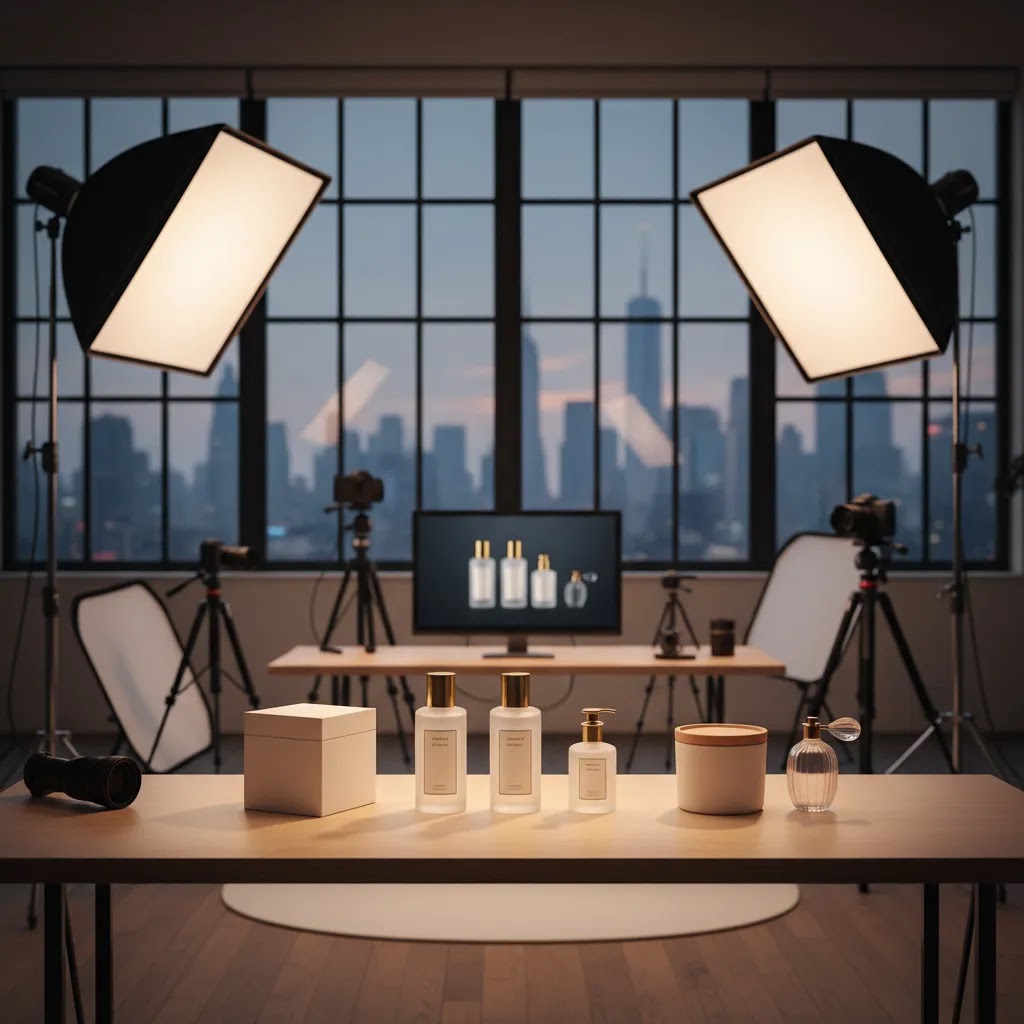
You finally have your product ready to sell. The packaging looks good, your Shopify store is nearly live, and now you need photos that make people trust what they see. Then reality hits. One New York studio quotes $350 for a simple tabletop setup, another starts at $2,500 a day, and a freelancer gives you a message that says, “It depends.” If you are trying to choose the right product photographer in New York, that answer is frustrating, but it is also accurate.
The truth is that product photography pricing in New York varies because the job varies. A cosmetics brand needs different images than a furniture seller. Amazon listing shots are priced differently from styled lifestyle campaigns. 360 product photography, retouching depth, model usage, and licensing all affect the final number. This guide will help you make sense of rates, studio types, and the questions that matter before you book. If you are comparing cities too, it helps to see how pricing and studio options differ in markets like product photography Austin.
Contents
- Why New York product photography rates vary so much
- Typical rate structures you will see in New York
- What’s included in a New York product photography quote
- Should you hire a studio or a freelancer?
- Portfolio and specialization, how to tell if a photographer is right for your category
- What to ask before you book a photographer
- Crew roles and on-set workflow, so you know what you’re paying for
- Match the photo style to where you sell
- Where AI can reduce time to market
- How to choose the right New York product photographer
- Frequently Asked Questions
Why New York product photography rates vary so much
If you search for product photography New York, you will see a huge spread in pricing. That is normal. New York has solo shooters working from home studios, specialized ecommerce teams, high-end commercial studios in Manhattan or Brooklyn, and full-service production houses with stylists, producers, and retouchers.
From a practical standpoint, you are not only paying for someone to click a shutter. You are paying for prep time, lighting expertise, set building, file handling, retouching standards, licensing, and the photographer’s ability to produce images that fit your sales channel.
Consider this, a DTC skincare brand launching 12 SKUs might need white background images, group shots, ingredient texture shots, and social-first lifestyle scenes. That is a very different scope from a wholesaler that only needs three clean catalog images per SKU. The product itself also changes complexity. Reflective items, glass, chrome, apparel on model, and food all require more technical control.
What many store owners overlook is that New York pricing also reflects speed and reliability. If you need a fast turnaround, art direction, same-week reshoots, or a studio that already understands ecommerce deliverables, you will usually pay more, but that extra cost may save time and launch delays.
Typical rate structures you will see in New York
A new york product photographer may quote in one of four ways: per image, per product, half day or full day, or custom project pricing. None is inherently better. The right model depends on how consistent your shot list is.
Per-image pricing
This is common for ecommerce catalog work. Basic white background shots may start around $25 to $100 per final image for simple items, but rates can move much higher for difficult products or advanced retouching. If your products are similar and your shot list is standardized, this structure can be predictable.
Per-product pricing
Some photographers quote per SKU, for example one hero image, two angles, and one detail shot for a fixed fee. This can work well if your catalog has a repeatable format. Make sure you clarify how many final files are included and whether variants count as separate products.
Day rates
Many New York studios and commercial photographers charge $800 to $3,000 or more per day, depending on experience, location, crew, and equipment. Once you add a digital tech, stylist, assistants, talent, and post-production, a shoot can climb quickly. For larger campaigns, though, a day rate may be more efficient than piecemeal pricing.
Custom project pricing
This is common when the brief includes creative concepting, props, set design, or mixed deliverables like stills plus video. If you are considering a product photography studio for a broader campaign, expect a custom estimate rather than a simple menu of rates.
Always ask whether the quote includes retouching, cropping, color matching, file exports, and usage rights. Those details often explain why one bid looks much lower than another.
What’s included in a New York product photography quote
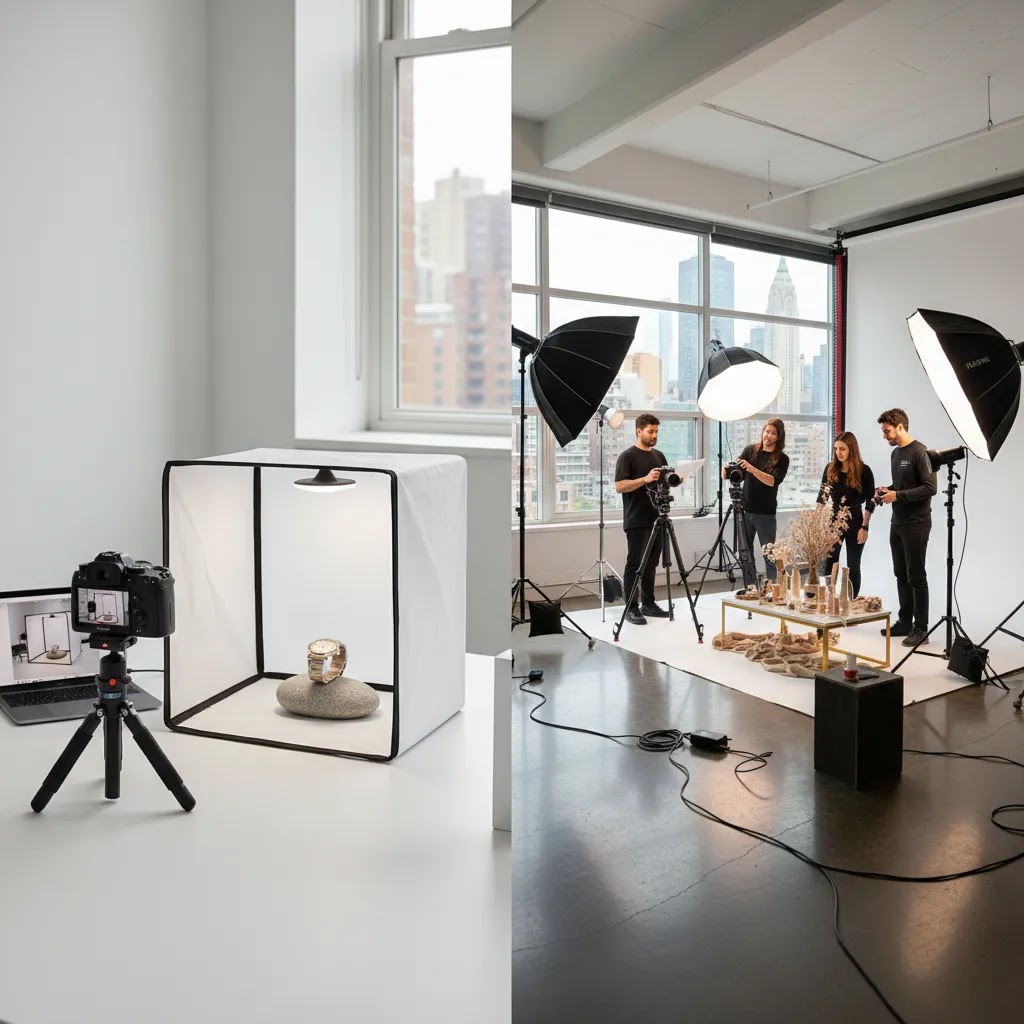
Here’s the thing, two quotes can look wildly different while describing what sounds like the same shoot. The fastest way to understand pricing is to ask for an itemized breakdown. You do not need every line item to be separate, but you do need clarity on what is included versus what will show up later.
In many New York product photography quotes, the cost typically comes from a mix of production time, people, and post-production. Common line items include studio time or location fees, pre-production and planning, styling and props, assistants or a digital tech, tethering and capture workflow, post-production retouching, and file delivery and archiving.
From a practical standpoint, these details drive most of the price differences you see. A “simple tabletop setup” might be one light and basic cleanup, or it might include color-matched retouching for packaging, consistent shadows across every SKU, and a repeatable lighting recipe that protects you from reshoots when you restock.
What many store owners overlook are the quote “gotchas” that make a bid look cheaper than it really is. Minimums are a big one, for example a per-image rate that only applies after you commit to a certain number of images or products. Another is per-SKU versus per-image confusion, especially when your Shopify catalog has variants and you need consistency across shades, sizes, or scents. Revision rounds also matter. If the quote includes one round of revisions but your team needs multiple feedback cycles, the real total can climb fast.
Watch for rush fees and for extra exports and crops. Many stores need more than one format, such as square crops for collection pages, vertical crops for ads, and tighter detail crops for PDP zoom. If those are billed after the fact, you can end up paying twice for work you assumed was part of “delivery.”
If you want apples-to-apples bids, request the same shot list from each photographer and ask them to quote it the same way. Specify the number of SKUs, the number of final images per SKU, the background style, the retouching level, the number of revision rounds, turnaround time, and the exact file specs you need for Shopify and any marketplaces. Then ask them to label anything optional as optional. That is usually the cleanest way to make pricing comparable without turning the process into a negotiation.
Should you hire a studio or a freelancer?
This is usually the first real decision. If your store is small, your launch is lean, and your needs are straightforward, independent freelance photographers can be a strong fit. You may get more flexibility, direct communication, and lower overhead.
Studios tend to make sense when volume, consistency, or creative complexity goes up. If you have dozens of SKUs, need repeat shoots every month, or require a team that can handle props, casting, and advanced retouching, a studio may reduce coordination headaches.
When a freelancer is often the better fit
- You need basic ecommerce images for a smaller catalog
- You want direct access to the person shooting your products
- Your shot list is simple and repeatable
- You are testing a new product line before scaling production
When a studio is often the better fit
- You need consistent output across many SKUs
- You need lifestyle scenes, video, or 360 product photography New York services
- You want faster workflows with dedicated post-production support
- You have channel-specific requirements across Shopify, Amazon, wholesale, and paid ads
The reality is that neither option is automatically better. The right choice depends on your workflow, not just the headline price. For category-heavy brands, browsing the broader Product Photography Services hub can help you compare service types before you request quotes.
Portfolio and specialization, how to tell if a photographer is right for your category
A portfolio can be misleading if you only judge it on “vibe.” Beautiful images are not automatically ecommerce-ready. Now, when it comes to hiring a product photographer New York has no shortage of talent, but you want the kind of talent that produces consistency across a catalog, not just one hero shot.
Start by looking for consistency across similar SKUs. If they show a set of 10 to 30 products, do the angles match? Is the shadow style consistent? Does the product sit in the same position from shot to shot? For Shopify, that repeatability is what makes collection pages, variant switching, and onsite merchandising feel trustworthy.
Color accuracy is another tell. Packaging, textiles, and cosmetics shades are where small color shifts create big returns and support tickets. A strong portfolio often shows neutral whites, believable materials, and labels that look clean without looking fake. If the images are heavily stylized, ask whether they can also produce clean commerce files, not just editorial-style work.
Category experience matters more than most brands expect because it changes the technical setup and the retouching needs. Still life catalog work is different from food. Jewelry and watches often require tight control of reflections and dust. Health and beauty packaging usually needs label retouching that keeps typography crisp. Transparent products like bottles and jars can be a whole specialty on their own.
Think of it this way, specialization usually means fewer surprises. Someone who shoots reflective or transparent products every week will often have a faster lighting process and a more predictable retouching workflow. That can reduce back-and-forth, and in many cases it lowers your reshoot risk because they know what commonly goes wrong.
When you want to validate category fit, ask practical questions like: Have you shot this material before? How do you control glare and reflections for this kind of product? What is your typical retouching approach for labels and packaging, and how do you handle color matching to a physical sample? Their answers should describe a process, not just confidence.
What to ask before you book a photographer
Here is where many ecommerce brands protect themselves from wasted spend. Before hiring a product photographer new york provider, ask questions that reveal process, not just talent.
Ask for channel-specific examples
If you sell on Amazon, ask to see amazon product photography new york examples. Amazon image compliance is strict. A beautiful image that breaks listing requirements is still a problem. If you sell DTC on Shopify, ask for examples that show how the photographer handles hero images, close-ups, scale cues, and variant consistency.
Clarify usage rights
Some quotes include unlimited ecommerce usage. Others separate web, paid ads, print, packaging, or out-of-home usage. If you plan to use the same images in Meta ads, Google Shopping, retail decks, and packaging, confirm this up front.
Confirm retouching standards
“Retouched” can mean dust cleanup, or it can mean advanced compositing and label correction. Ask what level is included, how many revision rounds are allowed, and whether color accuracy is handled against physical samples.
Discuss logistics
Ask how products should be shipped, how returns are handled, who is liable for damage, and what happens if products arrive wrinkled, broken, or missing parts. These details matter more than most brands expect.
Get a written shot list
A clear shot list is one of the easiest ways to control cost. List the angles, crops, orientations, aspect ratios, and output specs you need. If your designer or ecommerce manager needs square, portrait, and banner crops, say that before the shoot, not after the invoice.
Crew roles and on-set workflow, so you know what you’re paying for
If you have only worked with a solo freelancer before, a New York set can feel like overkill. The reality is that crew roles exist for a reason. They protect consistency, speed, and quality, especially when you are shooting volume or anything technically difficult.
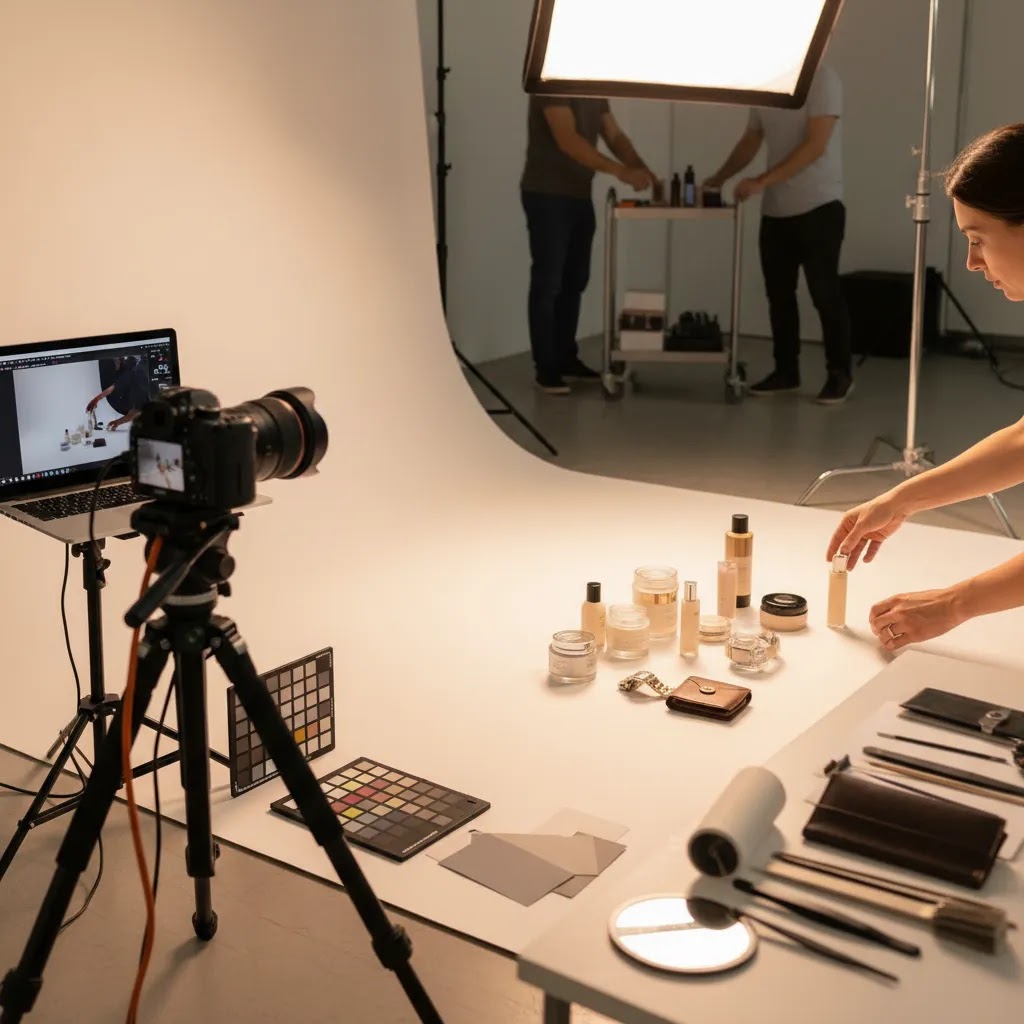
A typical crew can include a photographer, a producer, a stylist, an assistant, a digital tech, a retoucher, and sometimes talent. Not every shoot needs all of those roles, but it helps to understand what you are buying when a quote includes them.
The photographer handles lighting, composition, and the overall image standard. A producer keeps the project on schedule, manages call times, coordinates shipping and product intake, and makes sure the shot list is executed. A stylist handles wardrobe for apparel, or prop styling and set dressing for lifestyle scenes. An assistant helps build and reset sets, manage lights, and keep the shoot moving. A digital tech runs tethered capture, monitors focus and exposure on a calibrated display, manages file naming and backups, and often prepares selects for review. A retoucher may be on set or off site, and handles cleanup and finishing. Talent can include models or hands, which changes usage rights and adds coordination.
How these roles are staffed affects both cost and outcomes. A lean setup can be enough for straightforward Shopify catalog work, especially when your products are small, consistent, and shot on white with a repeatable lighting recipe. You may not need a producer or stylist for that. On the other hand, if you are shooting reflective packaging, liquids, food, or a lifestyle scene with multiple setups, the extra support can keep you from losing hours to bottlenecks, missed details, or inconsistent angles across SKUs.
Approvals are another part of the workflow that affects cost. In practice, you will usually see proofs, selects, retouch rounds, and a final sign-off. Proofs are the first pass from the shoot, often lightly processed, to confirm angles and lighting. Selects are the chosen frames per product. Retouch rounds are where you review the finished edits and request changes within the agreed revision policy. If you want fewer surprises, align on who approves what and when. One clear decision maker on your side typically reduces the feedback loop and helps avoid paying for extra revisions that come from internal disagreement.
Match the photo style to where you sell
Not every image needs to do the same job. Your new york product photography plan should reflect the channels that drive revenue.
Shopify product pages
For most Shopify stores, the goal is trust and clarity. Shoppers want to understand size, material, color, and quality fast. That usually means a clean hero image, multiple angles, scale references, texture close-ups, and at least one lifestyle image showing use in context.
Amazon listings
Amazon prioritizes compliance and clarity. Your main image usually needs a pure white background and product-only framing. Secondary images can explain features, dimensions, and use cases. If your growth plan includes both DTC and marketplace sales, say so early because the same studio can often produce both sets more efficiently.
Paid ads and social
Ad creatives often need a different pace and style. Crops are tighter, messaging is faster, and images may need more emotional pull. If your brand also sells in another major market, comparing regional creative styles can help. For example, some teams reviewing product photography Los Angeles options notice a stronger bias toward lifestyle-heavy visuals, while New York studios may lean more editorial or commerce-first depending on the niche.
If you sell a large catalog, it is also worth exploring the broader Catalog Photography category, because catalog workflows focus on consistency, throughput, and file organization just as much as aesthetics.
Where AI can reduce time to market
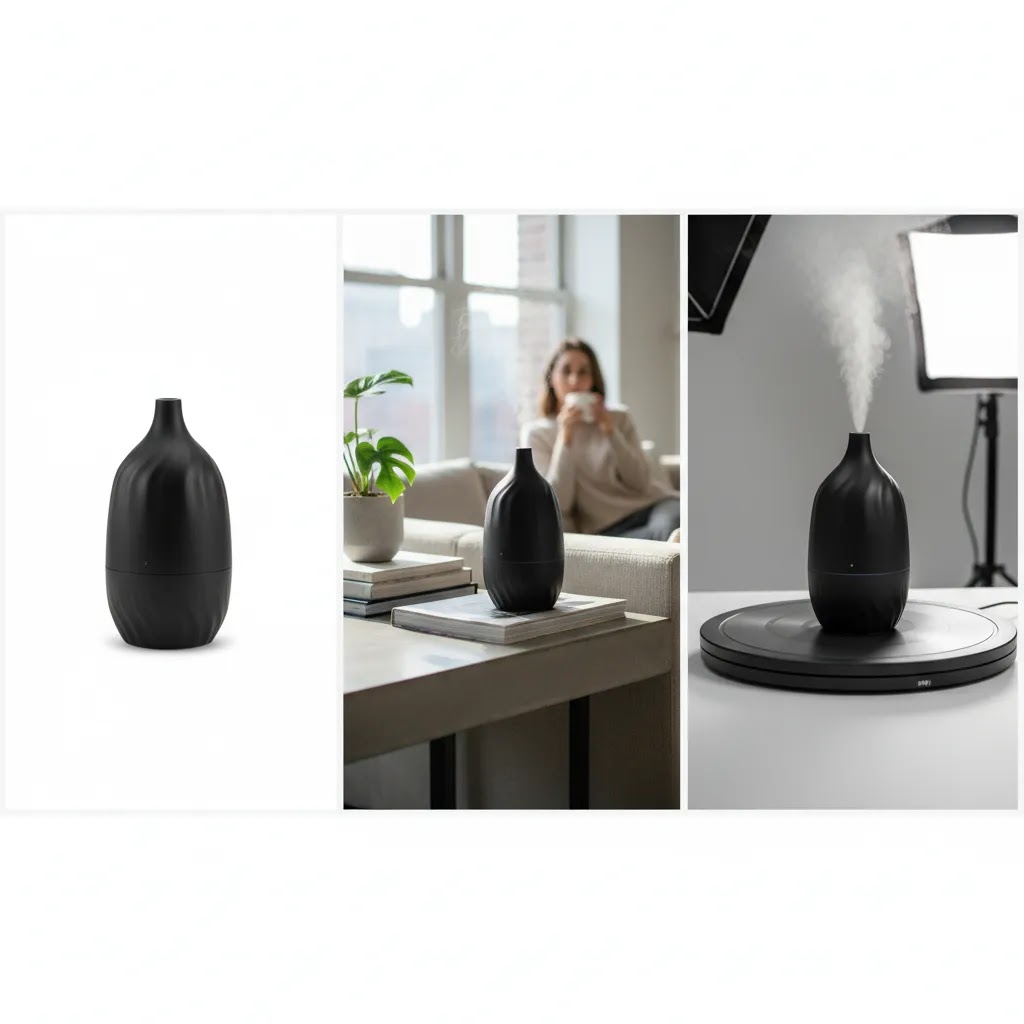
AI will not replace skilled product photography for every store. But it can reduce production time in specific parts of your workflow. That matters if your team is launching products quickly, testing packaging variations, or creating supporting creative for ads and collection pages.
For example, once you have strong base photos, AI tools can help you generate alternate backgrounds, upscale images, or adapt assets for different placements. AcquireConvert often covers this intersection of ecommerce operations and image workflow because Giles Thomas brings both Shopify and AI tool experience to the conversation. The useful question is not “Can AI do everything?” It is “Where can AI save your team time without hurting trust?”
In practice, this means using AI for lower-risk tasks first, such as background cleanup, draft concepts, or channel variants. ProductAI offers tools like AI Background Generator, Free White Background Generator, and Increase Image Resolution. Features and outputs can change, so verify current capabilities directly with the provider before using them in your production workflow.
AI works best as an acceleration layer, not a substitute for a weak source image. If your hero shots are badly lit or inaccurate in color, no tool will fully solve that.
How to choose the right New York product photographer
If you are narrowing down vendors, use a simple evaluation framework. It will keep you focused on commercial fit rather than just portfolio style.
- Fit for your product category: Ask whether they have shot similar materials, shapes, and surfaces before.
- Fit for your sales channel: Shopify, Amazon, wholesale decks, ads, and social each need different deliverables.
- Process quality: Review timelines, briefing process, revision policy, and file delivery standards.
- Pricing transparency: Make sure props, retouching, usage, and reshoots are clearly itemized.
- Scalability: If your catalog doubles in six months, can they still support you?
Think of it this way, a photographer is not just a creative vendor. They are part of your conversion system. Better images can improve click-through, reduce hesitation, and help shoppers understand your product faster, but only if the work is aligned with how you actually sell.
AcquireConvert is one useful resource if you want to compare service types, studio setups, and ecommerce image workflows before you commit. The site tends to approach these topics from the store owner’s side, which is helpful when the real goal is not just nicer photos, but stronger product presentation across your store.
The strategies and tools discussed in this article are based on current ecommerce best practices and publicly available information. Results will vary depending on your store, niche, and implementation. Always verify tool pricing, features, and platform compatibility directly with the relevant provider before making purchasing decisions.
Frequently Asked Questions
How much does a product photographer in New York usually cost?
Rates vary widely based on complexity, output, and whether you hire a freelancer or a studio. Simple white background ecommerce shots may be quoted per image or per SKU, while lifestyle work, advanced retouching, or 360 sets often move into custom pricing. In New York, overhead and specialization can push rates higher than smaller markets. The useful move is to compare quotes based on scope, not just the total price. Make sure each quote defines the number of final images, retouching level, turnaround time, and usage rights.
Is a product photography studio in New York better than a freelancer?
It depends on your volume and workflow. A freelancer may be ideal for a smaller Shopify catalog with straightforward needs and close collaboration. A studio may be better if you need consistency across many SKUs, multiple creative setups, or support with styling and post-production. What matters most is whether the provider can handle your product type and delivery requirements. If you are still weighing the difference, comparing studios with independent freelance photographers can make the trade-offs much clearer.
What should I include in a product photography brief?
Your brief should include the product list, number of images per SKU, required angles, reference examples, background style, aspect ratios, intended sales channels, and deadlines. Include technical notes too, such as whether labels must be color accurate or whether reflective surfaces need special handling. If you sell on Shopify and Amazon, specify both because the image requirements are different. A clear brief reduces revision costs and misalignment. Many delays happen because brands approve a quote before defining what the final deliverables actually need to be.
Do I need different photos for Shopify and Amazon?
In many cases, yes. Shopify product pages usually benefit from a richer mix of visual content, including close-ups, scale cues, lifestyle context, and sometimes collection banner variations. Amazon listings often require a strict main image format and more compliance-focused secondary images. You may be able to capture both from the same shoot if you plan the shot list carefully. That approach is often more efficient than running separate shoots later. If marketplace growth is part of your plan, make sure your photographer has delivered Amazon-ready files before.
Is 360 product photography New York worth paying for?
It can be worth it for products where shoppers need spatial confidence before buying, such as footwear, accessories, furniture details, or premium packaged goods. For simple low-cost items, the extra production work may not add enough value. The key is whether interactive viewing helps answer objections that static images cannot. Ask how the deliverables will be hosted and implemented on your store before you commit. Production, post-processing, and integration can all affect cost, and the impact depends heavily on your audience and product category.
How long does a typical New York product photo project take?
Small ecommerce shoots may turn around in a few business days, while larger commercial projects can take several weeks once scheduling, shipping, prep, retouching, and approvals are factored in. Urgent timelines may be possible, but rush work often increases cost. If your launch calendar matters, ask for a timeline that covers every stage, including product intake, proof review, revisions, and final delivery. Stores that plan one or two weeks earlier than they think they need often avoid the most expensive timing problems.
Can AI replace a product photographer for ecommerce?
Sometimes AI can handle part of the workflow, but not always the whole job. If you already have solid source images, AI may help with background changes, alternate scene creation, or image cleanup. It is less reliable when your base photography is weak or when color accuracy and material realism are critical. For many stores, the best result comes from combining strong photography with selective AI editing. AcquireConvert covers this practical middle ground often, especially where speed and merchandising needs overlap with visual production choices.
Should I hire locally in New York if I run a Shopify store elsewhere?
You do not always need a local partner, but New York can make sense if you want access to experienced commercial teams, specialized stylists, and faster coordination for complex shoots. If your products are easy to ship and your brief is clear, remote production can work well. The question is whether the provider understands ecommerce deliverables, not whether they are in your ZIP code. Comparing regions, including options like product photography Los Angeles, may help if style or price is part of your decision.
What rights should I ask for when booking a photographer?
At minimum, ask whether the quoted fee includes ecommerce website use, marketplace listings, email, organic social, paid social, display ads, print collateral, and packaging. Some photographers bundle broad digital usage, while others separate rights by channel or campaign size. If you plan to reuse assets heavily, a low quote with limited licensing can become expensive later. Get the terms in writing and ask whether edited source files or layered working files are included. Usage rights are one of the most common hidden cost areas in commercial photography.
What is the best way to compare product photography quotes?
Use a side-by-side spreadsheet and compare scope line by line. Include number of products, final images, retouching depth, styling support, props, revisions, delivery timeline, shipping handling, and usage rights. The lowest quote is not always the best value if key items are excluded. If you are unsure what kind of setup your catalog requires, reviewing different product photography studio models can help you understand why quotes are structured so differently across vendors.
How much do product photographers make in NYC?
It varies a lot because “product photographer” can mean anything from a solo freelancer doing high-volume catalog shoots to a commercial photographer running larger productions with a crew. Many photographers quote in day rates or per-image pricing, but that is revenue, not take-home pay. Expenses like studio rent, insurance, equipment, software, assistants, taxes, and downtime between projects can be significant in New York. If you are trying to judge whether a quote is fair, focus less on what you think the photographer “makes” and more on what your scope requires and what is included in the bid.
What is the 20 60 20 rule in photography?
You will hear different versions, but in production conversations it is often used as a simple quality control idea: roughly 20% of the work is getting a strong base capture, 60% is consistency and process across the full set, and the last 20% is the finishing that makes images look polished. For ecommerce, that middle 60% is where many shoots succeed or fail. You can have a great first frame, but if the angles drift, the color shifts, or the crops vary across SKUs, the catalog feels messy on Shopify and shoppers lose confidence.
How many photographers are making over $300,000 a year?
There is no reliable single number because photography income is not reported as one clean category, and “making” can mean gross revenue or personal income. A small percentage of commercial photographers and studio owners may reach that level in strong years, typically by running high-volume production, higher-budget campaigns, or a mix of stills and motion with repeat clients. For store owners, the useful takeaway is not the number. It is that higher quotes often reflect a more scalable operation, with staff and workflow designed to deliver consistent results under deadline.
Key Takeaways
- Product photographer New York pricing varies because scope, retouching, usage rights, and channel requirements vary.
- A freelancer may suit smaller, straightforward Shopify catalogs, while a studio often fits higher volume or more complex campaigns.
- Your quote should clearly define final image count, revisions, turnaround, file specs, and licensing terms.
- Shopify, Amazon, paid ads, and social often need different image types, so plan your shot list by channel.
- AI can shorten production time for supporting tasks, but strong source photography still matters most.
Conclusion
Choosing the right product photographer in New York is less about finding a single “best” option and more about finding the right fit for your store, your product, and your selling channels. A clean catalog shoot, a creative lifestyle campaign, and a high-volume Amazon rollout all require different skills, processes, and price structures. If you ask the right questions early, you can avoid vague quotes, mismatched expectations, and expensive reshoots.
Your next step is simple. Build a shot list, define where the images will be used, and request quotes from photographers or studios that have real experience with your product category. If you want more context before making that call, explore AcquireConvert’s related guides on Product Photography Services and studio workflows. A little planning here can make your launch smoother and your product pages much more convincing.
Results from ecommerce strategies vary depending on store type, niche, audience, budget, and execution. Nothing in this article constitutes a guarantee of specific outcomes. Third-party tool features and pricing are subject to change: verify current details directly with each provider.
Hi, I'm Giles Thomas.
Founder of AcquireConvert, the place where ecommerce entrepreneurs & marketers go to learn growth. I'm also the founder of Shopify agency Whole Design Studios.