Product Photography Los Angeles: What to Expect (2026)

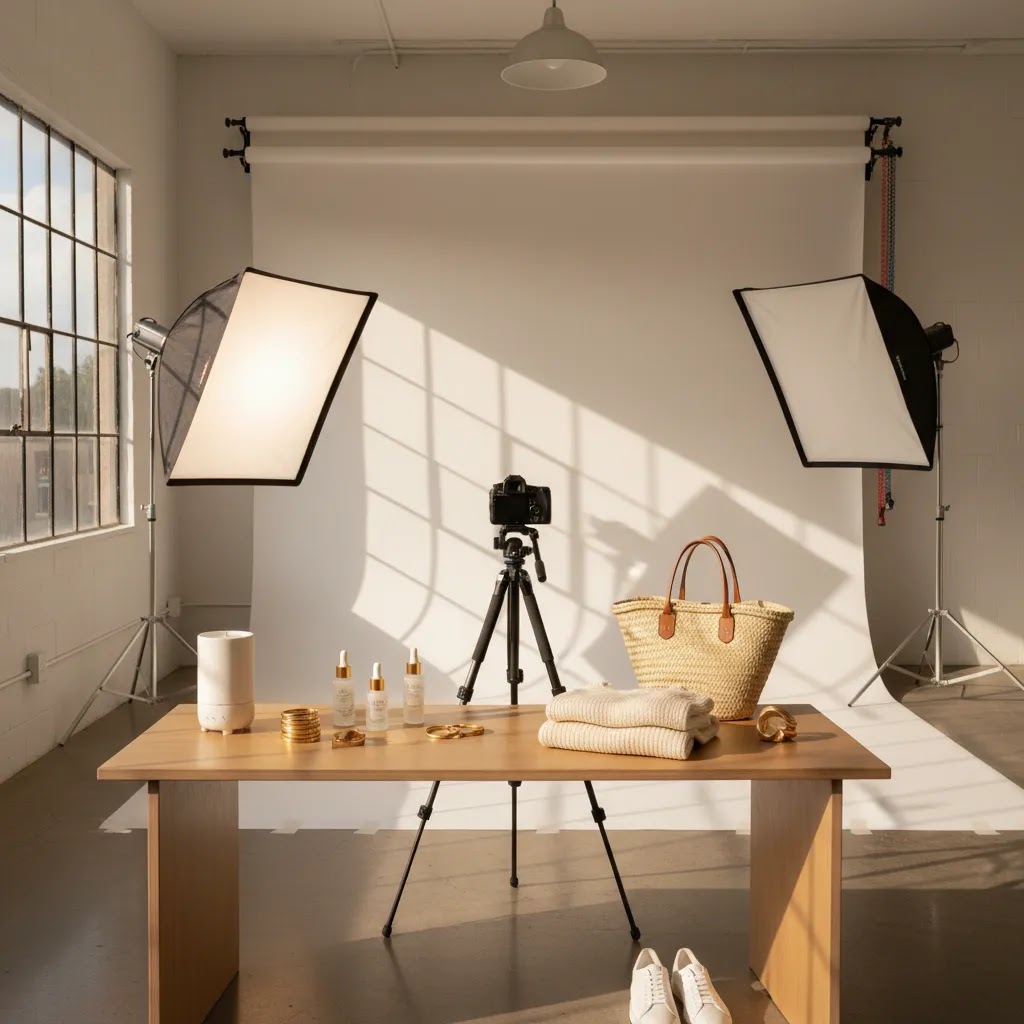
For ecommerce brands, product photography in Los Angeles can be a strong fit if you need polished visuals, access to creative talent, and flexible options across studio, lifestyle, beauty, apparel, and fashion shoots. The upside is range. You can usually find specialists for everything from clean white-background catalog images to campaign-ready lifestyle content. The tradeoff is that pricing, scheduling, and production scope can vary widely between providers. If you run a Shopify store, the right Los Angeles product photographer can help you improve first impressions, support paid ads, and strengthen product page conversion rate optimization. This guide covers what to expect on cost, turnaround times, studio types, and how to judge whether a local studio or freelancer is the better fit for your brand.
Contents
- Overview
- What Services Are Common in Los Angeles
- Pricing and Costs
- Pricing Benchmarks: Per-Photo vs. Day Rate vs. Package Quotes
- Trust and Credibility
- Turnaround Times and Workflow: A Realistic LA Production Timeline
- What to Look for Before You Book
- Pros and Cons
- Who Los Angeles Product Photography Is Best For
- How to Get Started
- Preparing Products for a Shoot (What to Ship, Label, and Quality-Check)
- Frequently Asked Questions
- Key Takeaways
Overview
Los Angeles is one of the deeper markets in the U.S. for product photography, which matters if your ecommerce brand needs more than basic packshots. Local providers often support beauty, apparel, wellness, accessories, home goods, and DTC launches that need retail-ready content across several channels. That may include marketplace images, Shopify product page galleries, paid social creative, email campaign assets, and short-form content for testing.
Compared with smaller markets, Los Angeles product photography usually gives you more specialization. You are more likely to find a team focused on beauty texture shots, a product photography studio built for catalog consistency, or a fashion-led setup that handles styling and on-model direction. If you are comparing cities, it can help to benchmark expectations against other service pages such as product photography austin or product photography houston.
At AcquireConvert, we evaluate service decisions through the lens of store performance. Giles Thomas, a Shopify Partner and Google Expert, focuses on what actually helps merchants sell better online, not just what looks creative in a portfolio. That is especially relevant if your goal is not only nicer photos, but stronger product page clarity and more effective acquisition creative.
What Services Are Common in Los Angeles
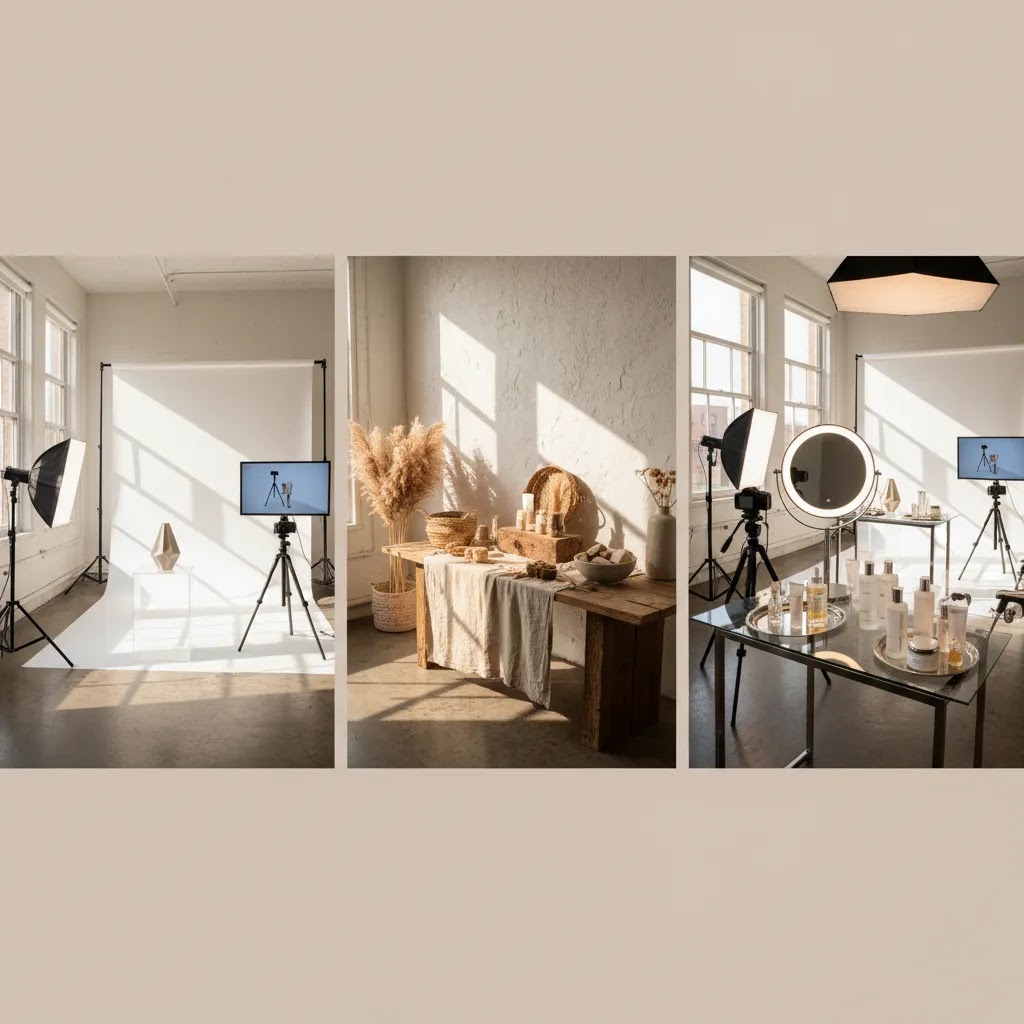
Most Los Angeles product photographers fall into a few broad categories. The first is studio catalog work. This usually covers white background images, angled product sets, detail shots, and consistent lighting for collections. It is the safest option if your main priority is clean ecommerce presentation.
The second is lifestyle product photography. This is common for skincare, candles, supplements, kitchenware, and premium consumer goods. These shoots often use sets, props, or location environments to show the product in context. If that is what you need, browsing AcquireConvert’s Lifestyle Product Photography resources can help you define the style before briefing a local provider.
The third is fashion and apparel work, including flat lays, ghost mannequin, on-model imagery, and campaign content. Clothing photography in Los Angeles often overlaps with fashion editorial talent, which can raise quality but also increase production complexity. Beauty brands also have a strong local fit, especially if you need texture, reflective packaging control, swatches, or expert beauty product photography Los Angeles studios are known for.
You will also see demand for 360 product photography, short product clips, and hybrid photo-video packages. These can be useful for premium products, but they are not necessary for every store. Many smaller Shopify brands do better by first getting their core product page image set right before expanding into more advanced formats.
Pricing and Costs
Product photography pricing in Los Angeles varies more by production complexity than by the city name alone. A simple white background catalog shoot is usually priced very differently from a lifestyle or beauty campaign that needs retouching, props, set design, hand models, or art direction.
In practical terms, you should expect pricing to reflect five things: number of SKUs, number of final images per SKU, styling complexity, retouching standards, and whether the photographer is working solo or through a studio team. A beauty product photography Los Angeles studio may charge more than a generalist because reflective surfaces, texture shots, and shade consistency often take more time in both capture and post-production.
Store owners should also clarify what is actually included. Ask whether the quote covers pre-production planning, shot list development, color correction, advanced retouching, prop sourcing, model fees, studio rental, and commercial usage rights. Those line items can materially change your real cost. If you are still weighing formats, AcquireConvert’s Product Photography Services category is useful for comparing service types before you commit.
For lean brands, the most cost-effective route is often a tightly scoped brief with priority SKUs first. That lets you validate image style and conversion impact before expanding the project. If you need lower overhead and more flexibility, working with freelance photographers can make sense, though the process may require more hands-on management from your side.
Pricing Benchmarks: Per-Photo vs. Day Rate vs. Package Quotes
Here is the thing with product photography pricing in Los Angeles: you will see very different quote formats, and the format alone can make one offer look “cheaper” than another even when the real cost is similar. For most Shopify store owners, the goal is not to find the lowest headline number. It is to understand what you are actually buying, and whether the model matches your catalog and launch cadence.
Per-photo pricing is common for simple catalog work where the process is repeatable. You will sometimes see starting points in the $25 to $75 per final image range for straightforward white background work, but that number typically changes once you add complex products, multiple angles, heavy cleanup, or strict color matching. Per-photo pricing can make sense when you have a predictable shot list and you want a clear cost per deliverable.
Per-SKU bundles are a practical middle ground, for example a set number of angles per product. A common pattern is “X finals per SKU,” which can be easier to manage when you are building consistent Shopify product page galleries. The catch is that bundles vary a lot in what counts as a “final.” Some include simple cropping only, others include more advanced retouching.
Half-day or day rates are common for lifestyle and fashion production, or any project where setup time is a major part of the work. In Los Angeles, day rates can span widely depending on experience and production level. From a practical standpoint, day rates tend to fit when you need a lot of variation, multiple set changes, or you are trying to create a mix of assets for PDPs and ads in one shoot day.
Packages are often used by studios that want to standardize scope, for example “10 SKUs, 3 angles each,” or “one hero lifestyle setup plus catalog coverage.” Packages can be efficient if they match your exact needs, but they can also include extras you do not value yet. If you are early stage, compare the package deliverables to your actual Shopify requirements, not the studio’s ideal production menu.
Monthly retainers can be useful for brands with steady product drops, seasonal launches, or constant creative testing for Meta ads. The value is consistency and priority scheduling. The risk is paying for capacity you do not use. Retainers usually make sense once you already know the style that converts, and you are mainly keeping the content machine running.
What many store owners overlook is how a quote can swing when you add specific production variables. If you want apples-to-apples comparisons, ask each provider to call these out explicitly:
- Set build and prop sourcing: a “simple lifestyle” concept can stay simple, or it can become a half-day of shopping and styling.
- Talent: hand models, on-model apparel, hair and makeup, and styling fees can add real cost and scheduling complexity.
- Advanced retouching: removing scratches, controlling reflections, composite work, label cleanup, and shade matching typically take longer than basic color correction.
- Usage scope: most ecommerce photography is priced with typical commercial usage in mind, but confirm what is included if you are planning broader campaigns. Terms vary by provider.
- Deliverable variants: crops for Shopify PDP, square for social, and 4:5 for Meta ads are not always included by default.
Consider using a simple quote checklist so you can compare scope, not vibes:
- How many final images are included per SKU, and what angles are assumed?
- What level of retouching is included, and what counts as “advanced” retouching?
- How many revision rounds are included, and what is the approval process for selects?
- What is the turnaround time for proofs, finals, and revisions?
- What file formats and sizes are delivered, and are Shopify-ready crops included?
- What is included in pre-production (shot list, references, test frames), and what is billed separately?
If you can get these details in writing, you will usually make a better decision even if the headline price is higher. Clarity tends to reduce reshoots, delays, and surprise line items.
Trust and Credibility
Choosing a Los Angeles product photographer should be based on proof, not just portfolio aesthetics. A polished Instagram feed is not enough. For ecommerce work, trust comes from consistency, process clarity, and understanding how images will actually be used on storefronts, ads, marketplaces, and email campaigns.
Ask to see complete product sets, not just hero shots. A photographer may show one excellent lifestyle image, but your store needs a repeatable system for front, side, detail, scale, texture, and packaging views. You should also ask how files are delivered, what resolution is included, whether cropping variants are available, and how they handle color accuracy across product lines.
This is where ecommerce expertise matters. As a Shopify Partner, Giles Thomas approaches visual decisions from a conversion perspective. Images need to reduce hesitation, support mobile browsing, and fit your theme layout without slowing pages or creating visual inconsistency. That makes the briefing stage just as important as the actual shoot.
Credible providers should also be transparent about timelines, revisions, usage rights, and post-production scope. If those points are vague before the shoot, expect friction later.
Turnaround Times and Workflow: A Realistic LA Production Timeline
Turnaround time is one of the first questions Shopify store owners ask, and for good reason. You may be coordinating inventory, launch dates, paid ads, and email campaigns. The reality is that “turnaround” is not just the retouching window. It is the full workflow from brief to delivery, and delays often happen before the camera ever comes out.
Here is how a typical Los Angeles product photography workflow often looks in practice:
- Inquiry and scoping: you share SKUs, references, channels (Shopify PDP, ads, email), and timing.
- Brief and shot list: angles per SKU, background rules, consistency notes, and any “must match” brand references.
- Product intake: drop-off or shipping, plus inventory check and confirmation that all variants and props arrived.
- Test shots: many teams will send a few sample frames to confirm lighting, crop, and retouching direction.
- Shoot day: capture according to shot list, with on-set approvals if you are attending.
- Selects: you approve favorites from proofs, especially for lifestyle, fashion, and beauty.
- Retouching: cleanup, color correction, background consistency, and any advanced work.
- Revisions: small adjustments after the first delivery, within the agreed revision policy.
- Final delivery: final files, sometimes with multiple crops or sizes if included in scope.
For a smaller white background catalog shoot, a common timeline might be one to two weeks from product receipt to finals, depending on backlog and how quickly selects are approved. For lifestyle, fashion, or set-based production, two to four weeks is often more realistic once you factor in pre-production, talent scheduling, and heavier post-production. Some providers do offer rush timelines, but you should treat “rush” as a production decision, not a promise.
Delays typically come from a few predictable places:
- Shipping and intake issues: missing variants, damaged packaging, or the wrong product version compared to what is live on Shopify.
- Approval bottlenecks: proofs sit waiting while your team is busy with a launch.
- Retouching backlog: especially around seasonal peaks when studios are booked solid.
- Talent scheduling: models, HMU, and stylists are hard to align on short notice.
What you can do to keep the project moving is mostly operational. Provide a complete shot list up front, respond quickly during selects and test shots, and confirm who on your team has final approval. If you have strict launch dates, share them early so the photographer can tell you what is feasible.
Now, when it comes to “rush” delivery, it usually means one of three things: longer crew hours, less time for set changes, or fewer revision cycles. In many cases, a rush timeline is possible if the scope is tight and approvals are fast, but it may cost more and it may reduce flexibility. Always confirm what “rush” includes so you do not end up with fast files that are not quite right for your product pages.
What to Look for Before You Book
Style fit is the first filter. If you sell cosmetics, you need someone comfortable with reflective packaging, texture, and clean retouching. If you sell apparel, you need evidence of garment handling, color consistency, and either ghost mannequin or on-model direction. If you sell premium home goods, composition and material detail tend to matter more than dramatic creative concepts.
Ecommerce awareness is the second filter. Your photographer should understand the difference between images for a Shopify PDP, a Meta ad, an email hero, and an Amazon listing. The same shoot can serve all of them, but only if planned properly. That means knowing aspect ratios, whitespace needs, mobile crop safety, and how visual sequencing affects buying confidence.
Production process is the third. Ask whether they create shot lists, mood boards, sample frames, and approval checkpoints. Good process usually saves money because it reduces reshoots and revision rounds. This matters even more if you are shipping products in from outside Los Angeles and cannot attend live.
Retouching quality is fourth. Many ecommerce brands underestimate how much post-production affects the final result. Dust cleanup, label straightening, glass reflection control, color consistency, and cutout precision all shape whether an image feels premium. If your store depends on clean comparison and swatch clarity, this should be part of the selection criteria.
Last, ask whether the provider can support broader content needs over time. A one-off shoot is useful, but a reliable partner who can handle seasonal launches, bundle updates, and campaign refreshes may be more valuable as your catalog grows.
Pros and Cons
Strengths
- Los Angeles offers deep specialization across beauty, apparel, fashion, and lifestyle product photography.
- You can usually find both studio-based and freelance options depending on your project scope and brand stage.
- Strong local creative talent can support richer campaigns, not just basic ecommerce catalog images.
- Brands needing beauty or fashion content often benefit from access to stylists, models, and art direction in one market.
- For multi-channel ecommerce brands, local teams may be able to produce assets for Shopify, paid social, and email in one shoot.
Considerations
- Pricing can rise quickly once you add advanced retouching, props, models, or location shooting.
- Not every visually impressive photographer understands ecommerce conversion needs or Shopify image requirements.
- Scheduling can be slower for in-demand studios, especially around launch seasons and holiday campaigns.
- Smaller brands may overbuy creative production before they have validated their core product page image needs.
Who Los Angeles Product Photography Is Best For
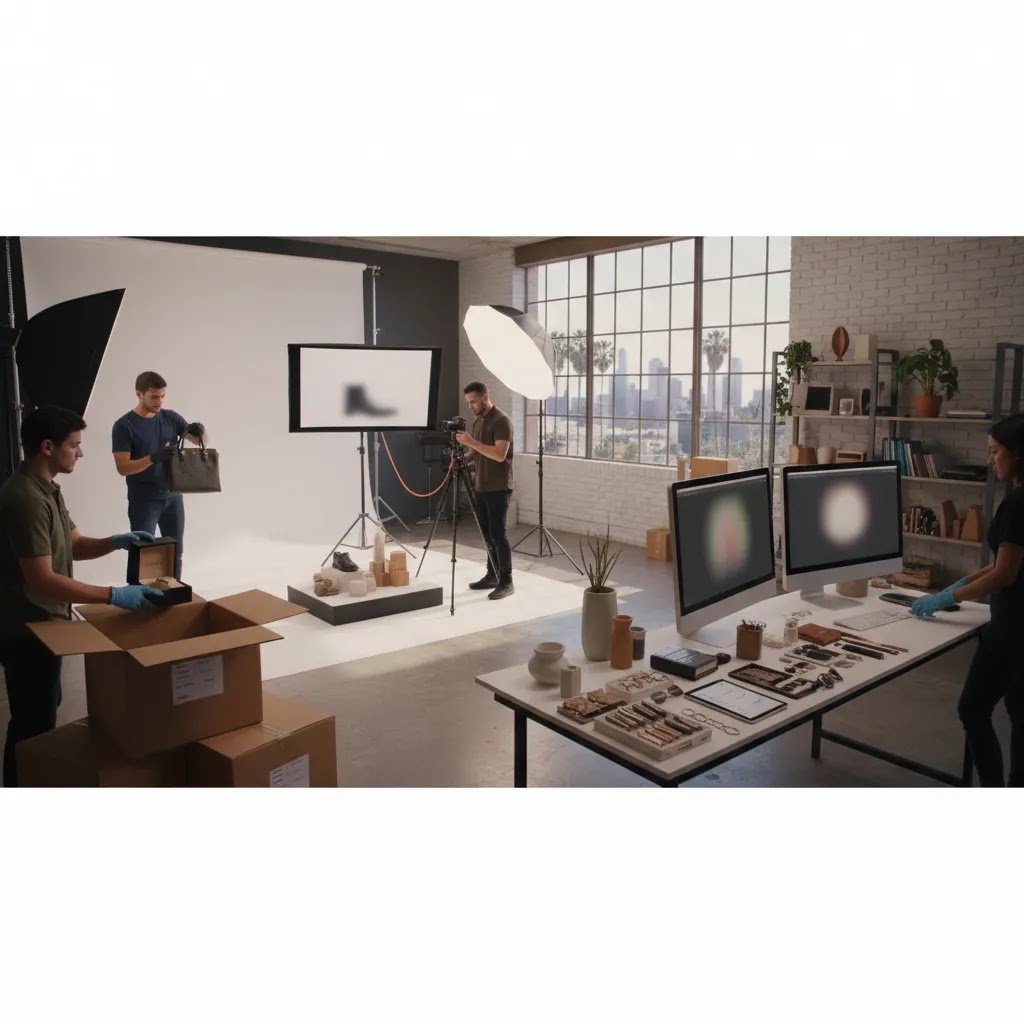
Los Angeles product photography is usually best for brands that care about both ecommerce performance and visual brand positioning. That includes beauty, skincare, fashion, accessories, wellness, and premium consumer products where imagery has a direct effect on perceived value. It can also suit funded DTC brands and growing Shopify stores that need more than simple cutouts.
It may be less efficient for very early-stage stores with a small catalog and limited testing data. In that situation, start with a tighter brief and focus on the images most likely to improve product page clarity first. Then scale into lifestyle or campaign work once you know which products and channels deserve more investment.
How to Get Started
Start by defining the commercial goal of the shoot. Do you need cleaner PDP images, better ad creative, improved launch assets, or a full visual refresh? That answer determines whether you need a studio specialist, a fashion-led team, or a broader Los Angeles product and fashion photography provider.
Next, build a short shot list by SKU. Include must-have angles, detail requirements, dimensions, orientation, and where each image will be used. If you need structured help, compare service formats and studio expectations before sending inquiries.
Then request quotes from two to four providers. Ask for a breakdown of deliverables, retouching, revisions, usage rights, and turnaround times. If you are unsure whether studio or remote talent is the better fit, review the tradeoffs between local providers and freelance photographers before choosing.
Finally, test with a smaller batch first. For most Shopify brands, a pilot on priority SKUs is the safest way to confirm fit before committing to a full catalog rollout.
Preparing Products for a Shoot (What to Ship, Label, and Quality-Check)
Good photography can be slowed down, or made more expensive, by basic product prep issues. From a practical standpoint, the fastest way to protect your timeline is to make product intake boring. Everything should arrive clean, complete, labeled, and matched to what you are actually selling on Shopify.
Start with a simple quality check on each SKU before it leaves your warehouse:
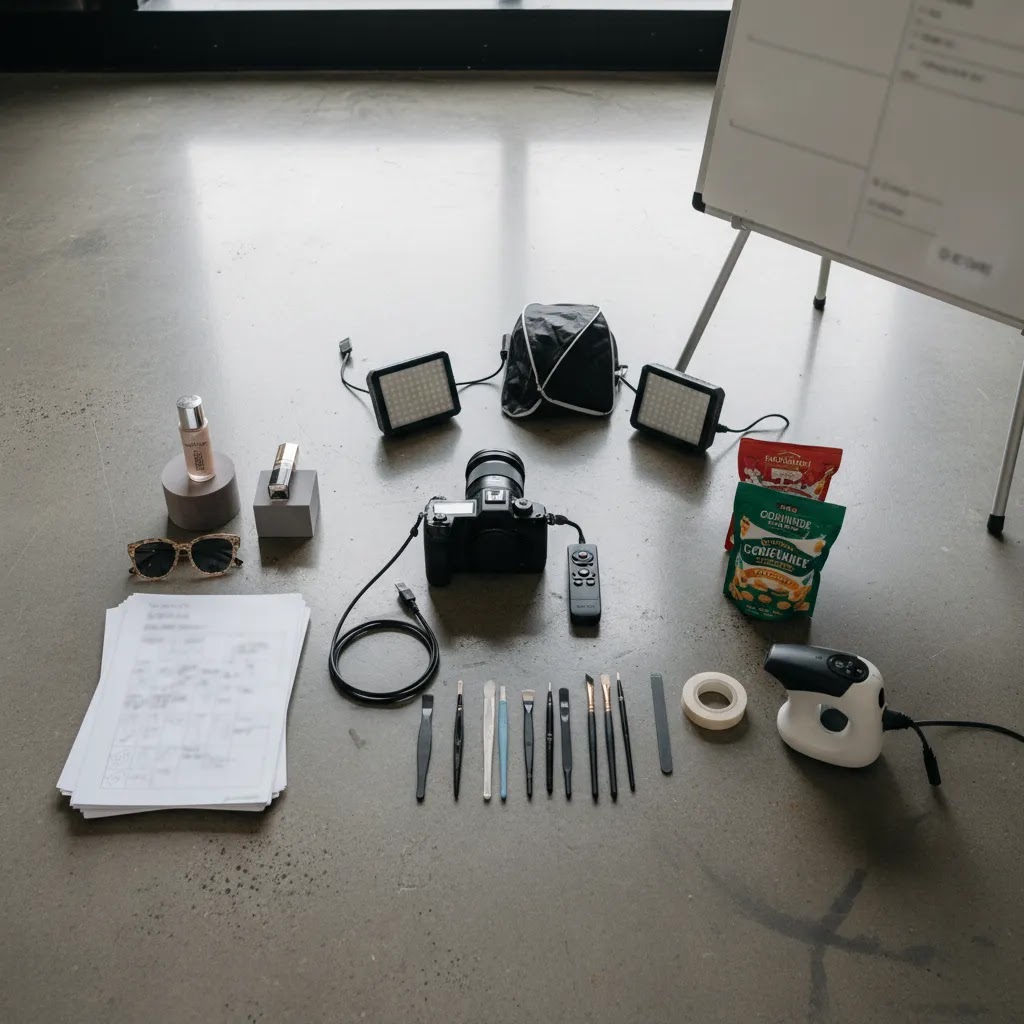
- Cleanliness and surface condition: wipe packaging, remove stickers you do not want photographed, and check for scratches, dents, dust, and fingerprints.
- Apparel prep: steam or press garments, check seams and tags, and ship on hangers where appropriate so items do not arrive wrinkled beyond repair.
- Spare units: send backups for anything that can scuff, spill, crease, or break. Beauty, glass, and glossy packaging are common offenders.
- Packaging condition: if you want packaging shown, ship pristine units. If you do not, make that clear in the shot list so the photographer does not waste time trying to “save” imperfect boxes.
Variant and shade labeling is where a lot of ecommerce shoots get messy. If you sell colors, scents, sizes, or bundles, label every unit clearly and match those labels to your Shopify product names and variant titles. If a photographer shoots the wrong shade or the wrong packaging version, you may end up with a mismatch between your product page and what ships to customers. That can create returns and support tickets even if the photos look great.
If you are shipping products into Los Angeles from out of state, treat the shipment like a mini production kit:
- Inventory checklist: include a printed list in the box, and share the same list digitally so intake can be confirmed quickly.
- Return shipping plan: include return labels or confirm who pays return shipping, and whether products will be stored between shoot days.
- Small parts and inserts: lids, droppers, charging cables, instructions, and accessories should be bagged and labeled per SKU. Missing pieces can derail a shot list fast.
For catalogs, consistency is the real goal. Ask your photographer to confirm what will stay consistent across the full SKU set, including camera angle, crop, scale, lighting direction, and background tone. That is what keeps your Shopify collection pages and PDP galleries looking cohesive, especially when customers compare similar products side by side.
Frequently Asked Questions
How much does product photography cost in Los Angeles?
There is no single standard rate because pricing depends on the number of SKUs, final images, styling, retouching, and production support. A simple white background shoot usually costs less than lifestyle, beauty, or fashion work. Ask for itemized quotes so you can compare real scope rather than headline pricing alone.
Is a Los Angeles product photography studio better than a freelancer?
A studio can be the better choice for larger shoots, stricter consistency, or projects needing art direction, retouching, and production support. A freelancer may work well for smaller brands that want more flexibility and lower coordination overhead. The right choice depends on your timeline, shot complexity, and how much internal management capacity you have.
What should Shopify store owners ask before booking?
Ask to see full product sets, not just selected portfolio images. Confirm deliverables, retouching level, turnaround time, file dimensions, revision policy, and usage rights. You should also ask whether the photographer understands Shopify image requirements and can prepare assets for product pages, collections, ads, and email.
Can Los Angeles photographers handle beauty and skincare products well?
Many can, and Los Angeles is a strong market for beauty photography. That said, beauty work is specialized. Look for proof of reflective packaging control, texture detail, clean labeling, shade accuracy, and polished retouching. If those examples are missing from the portfolio, keep looking.
Do I need lifestyle images or just white background photos?
Most stores need both eventually, but not always at the same time. White background images are often the first priority because they support clarity and consistency on product pages. Lifestyle imagery becomes more useful once your core PDP assets are covered and you need stronger brand storytelling for ads and campaigns.
How long does a typical product photography project take?
Timelines vary based on scope, approvals, and retouching needs. Smaller catalog shoots may move faster than campaign-style work with props, sets, or talent. In most cases, the clearest way to reduce delays is to provide a detailed shot list, approved references, and a small pilot batch before the full project.
How much should I pay a photographer for a product shoot?
It depends on what you are trying to produce. For simple ecommerce catalog images, you will often see per-image or per-SKU pricing, and some providers advertise entry-level “starting at” rates. In practice, your real cost is driven by the number of finals you need, the complexity of the products, and the retouching standard. If you are a Shopify brand trying to control spend, a good approach is to price a small pilot batch with a clear shot list, then scale once you know the workflow and quality match what your product pages need.
How much does a product photo shoot cost?
As a ballpark, a small white background batch may land in the hundreds to low thousands depending on SKU count and deliverables, while lifestyle, fashion, and beauty shoots can climb into the mid-thousands or higher once you add sets, props, studio time, and talent. Since quotes vary widely, the best way to compare is to confirm what is included, how many finals you get, what retouching level is covered, how revisions work, and whether you are receiving multiple crops or file sizes for Shopify and ads.
What is the 20 60 20 rule in photography?
The phrase is used in different ways, so it is worth clarifying what someone means. In ecommerce product photography, a practical interpretation is that results tend to come from three buckets: solid capture fundamentals (lighting, exposure, focus), good styling and preparation (clean products, consistent angles), and post-production polish (retouching and color accuracy). The exact percentages are not universal, but the point is useful for Shopify brands: do not spend all your effort on one area, like heavy editing, if the product prep and capture process are not controlled.
How many photographers are making over $300,000 a year?
There is no reliable single number, and it varies by specialty, location, and whether the photographer operates as a solo freelancer or runs a studio with staff and production volume. In Los Angeles, some commercial photographers and studio owners can reach that level, but it is not a typical benchmark for most individuals doing small product shoots. For store owners, the more useful question is whether the provider has a repeatable process, consistent results across full product sets, and pricing that matches your usage and production needs.
Should I compare Los Angeles with other cities before booking?
Yes, especially if your products can be shipped and you are not tied to an in-person local process. Comparing markets can help you benchmark style, process, and cost. Reviewing pages such as product photography houston can help you understand how service expectations differ by market.
Key Takeaways
- Los Angeles is a strong market for ecommerce brands that need specialized beauty, fashion, apparel, or lifestyle product imagery.
- The best provider for your store is not always the most artistic one. Ecommerce understanding matters just as much as visual style.
- Product photography pricing in Los Angeles depends heavily on scope, retouching, and production complexity.
- Most Shopify brands should start with priority SKUs and core product page images before expanding into broader campaign content.
- Shortlisting providers is easier when you compare complete product sets, process clarity, and commercial usage terms, not just portfolio highlights.
Conclusion
For many ecommerce brands, product photography in Los Angeles is worth considering because the market offers real depth across studio, beauty, apparel, and lifestyle formats. That is valuable if your visuals need to do more than fill a product page. Still, the best result usually comes from clear scope, realistic budgeting, and choosing a provider who understands ecommerce requirements, not only creative direction. If you run a Shopify store, start by identifying which images will most improve product clarity and shopper confidence. Then request a tightly defined pilot shoot before scaling. If you need more context on service formats and selection criteria, explore AcquireConvert’s related photography resources to narrow your options with more confidence.
Disclosure: AcquireConvert may receive affiliate compensation from some third-party tools or services mentioned across the site. This article is editorial in nature and intended for informational purposes. Photography costs, timelines, and business results vary based on your niche, product type, traffic, creative brief, and implementation. No specific outcome is guaranteed.
Hi, I'm Giles Thomas.
Founder of AcquireConvert, the place where ecommerce entrepreneurs & marketers go to learn growth. I'm also the founder of Shopify agency Whole Design Studios.