Product Photography Houston: Studios and Rates (2026 Guide)

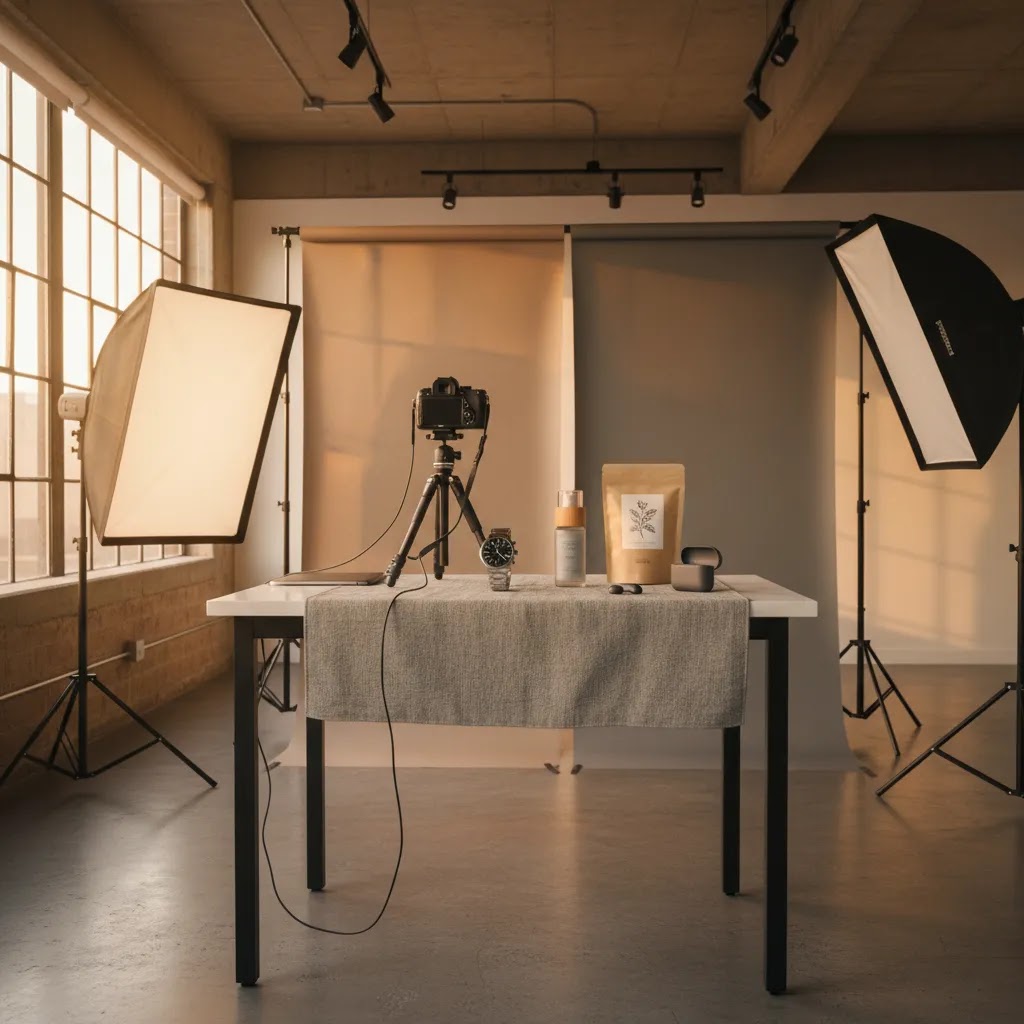
You have products ready to sell, your Shopify store is live, and traffic is starting to come in, but the images still look like they were shot in a hurry under office lighting. That is a common point where growth starts to stall. For many ecommerce brands, especially those selling fashion, beauty, food, watches, or electronics, poor visuals reduce trust long before pricing or copy has a chance to do its job. If you are researching product photography houston, you are likely trying to answer a few practical questions: who should shoot your products, what should it cost, and how do you avoid paying for photos that still do not convert.
This guide is built to help you make that decision with clearer expectations. You will learn how Houston studios typically price shoots, what services matter for ecommerce, and what to ask before signing a proposal. If you are comparing markets, our look at product photography austin can also help you benchmark regional differences. AcquireConvert often covers this topic from a store owner’s perspective, with practical input shaped by Giles Thomas’s experience as a Shopify Partner and Google Expert, so the focus here is not just pretty photos, but images that support sales.
Contents
- Why Houston makes sense for ecommerce product shoots
- What you can expect to pay in Houston
- Turnaround times, reshoots, and what a good process looks like
- Which shoot style fits your products
- What quality means in product photography
- How to compare studios without guessing
- Product photography deliverables: file specs, rights, and Shopify readiness
- Should you hire a studio or a freelancer
- How AI fits into the process
- Frequently Asked Questions
Why Houston makes sense for ecommerce product shoots
Houston is a strong market for ecommerce photography because it combines agency-level creative talent with a wide base of commercial studios and independent specialists. That matters if your catalog is varied. A store selling skincare, packaged food, and accessories may need white background shots for the product page, styled content for paid social, and short-form motion assets for ads.
From a practical standpoint, the city also supports a broad mix of industries, including fashion, energy-adjacent manufacturing, food, health, and consumer goods. That often means local photographers are used to handling everything from reflective packaging to technical electronics product photography. If your products are delicate, glossy, or highly detailed, that experience can be worth paying for.
What many store owners overlook is that location does not just affect price. It affects logistics, revision speed, prop sourcing, model access, and how easily you can reshoot when a new SKU launches. If you expect frequent updates, a well-run local partner can save more time than a lower day rate somewhere harder to coordinate.
What you can expect to pay in Houston
Rates for product photography houston projects vary based on complexity, output count, styling needs, and post-production. You are not really buying “photos.” You are buying a workflow that may include shot planning, prep, lighting, retouching, file delivery, and usage readiness for Shopify, Amazon, ads, and marketplaces.
Typical pricing structures
Most Houston providers use one of four models:
- Per-image pricing, often used for simple product photography on white
- Per-product pricing, where each SKU includes a set number of angles
- Half-day or full-day studio rates for styled or higher-volume shoots
- Custom quotes for food, apparel, ghost mannequin, or campaign content
For straightforward white product photography, you may see pricing start around $25 to $75 per final image for simpler items. Mid-range commercial work often lands higher once prep and retouching are included. Styled product photography, food setups, and product photography watches tend to cost more because they require tighter lighting control, surface styling, and more post-production time.
What usually increases the quote
Consider this: a plain bottle on white and a stainless steel watch on a reflective surface are not remotely the same job. Quotes rise when your products involve:
- Transparent, reflective, or mirrored materials
- Complex surfaces like chrome, glass, or polished plastic
- Ghost product photography or ghost mannequin compositing
- Food styling, fresh ingredients, or time-sensitive melts and pours
- Lifestyle scenes with props, models, or hand interaction
- Heavy retouching, clipping paths, or exact color correction
If a quote feels high, ask what is included before comparing it to another. One studio may include retouching, cropping for product photography websites, and multiple export sizes. Another may charge those separately.
Turnaround times, reshoots, and what a good process looks like
Pricing is only half the decision. The reality is that timelines and revision handling are where many ecommerce shoots either stay smooth or turn into weeks of back-and-forth. If you are planning a Shopify launch, a restock, or an ad push, ask about timing in practical terms, not vague estimates.
Typical turnaround times, and what affects speed
Turnaround varies by studio and season, but many providers offer a standard timeline plus a rush option for an added fee. Speed is usually impacted by how much styling is involved, how heavy the retouching load is, and how many products you are sending at once.
What many store owners overlook is the approval cycle. If you need to review proofs, request changes, and approve finals, that adds time. A provider can shoot quickly, but if you take a week to approve a proof set, your “turnaround time” stretches. A simple way to avoid surprises is to agree on when proofs arrive, how fast you will respond, and how many revision rounds are included.
Reshoots and revisions, what is usually included
Most studios will include a defined amount of retouching and at least one revision round, but the scope matters. Revisions often cover things like minor dust cleanup, small color tweaks, or exposure adjustments. Reshoots are a different category and may be charged if the change requires setting the product back up, re-lighting, or re-photographing because the brief changed.
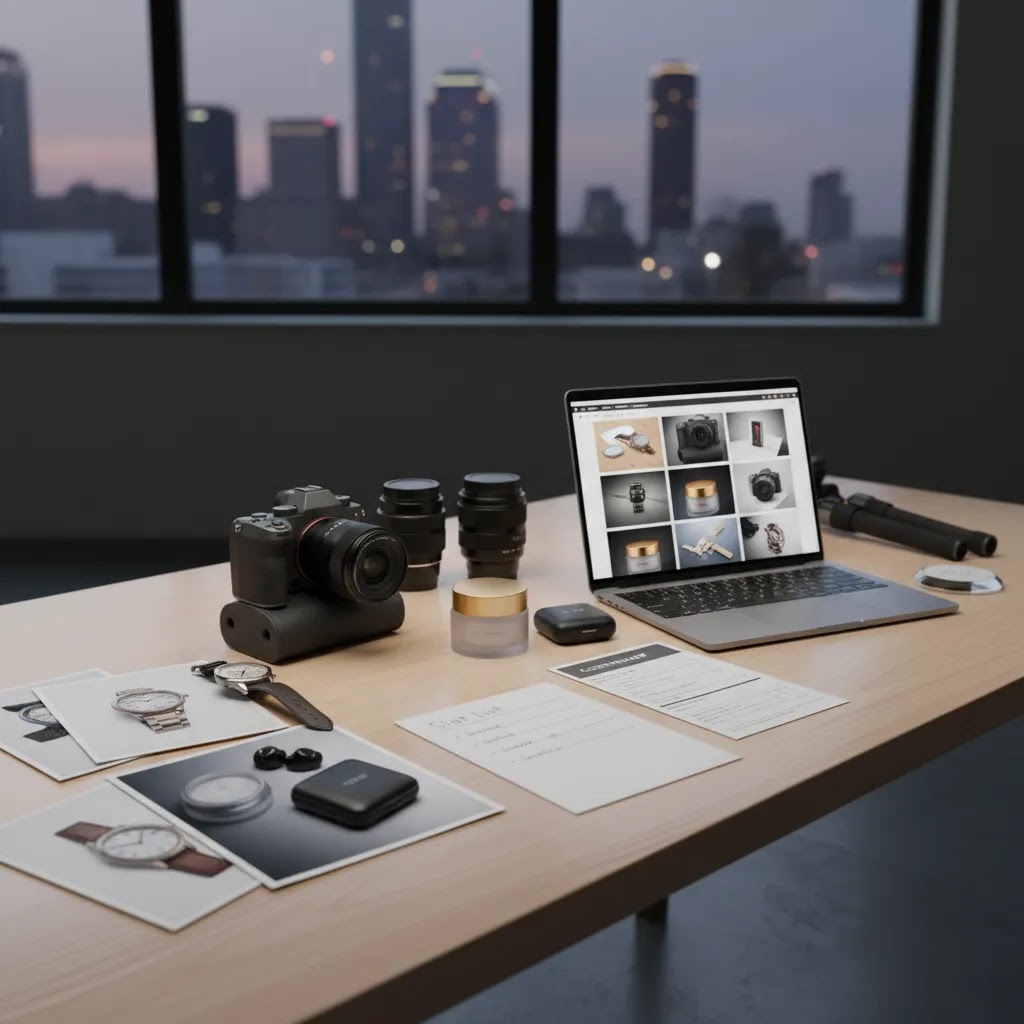
From a practical standpoint, you reduce reshoot risk by providing a tighter shot list and reference images upfront. If you have a “must match” look from existing listings, send a few examples and call out the non-negotiables, like straight-on angles, label legibility, or consistent shadow style.
Logistics that keep projects on track
If you are shipping products to a studio, ask about the operational details that protect your timeline:
- How they receive and check in products, and whether they send check-in photos
- How they store samples during production
- How returns are handled, including packaging, insurance, and who pays return shipping
- What happens if an item arrives damaged, or is damaged during handling
- How proofs are delivered, such as galleries or contact sheets, and how you mark feedback
A clear process here does not just protect your products. It protects your launch calendar and reduces the chance that you are stuck waiting on a missing SKU or a vague “we’ll resend the gallery soon” email.
Which shoot style fits your products
The right style depends on where the image will be used and what your customer needs to feel confident buying. For most Shopify stores, you need at least two layers of imagery: clean ecommerce shots and a second set that helps customers imagine the product in use.
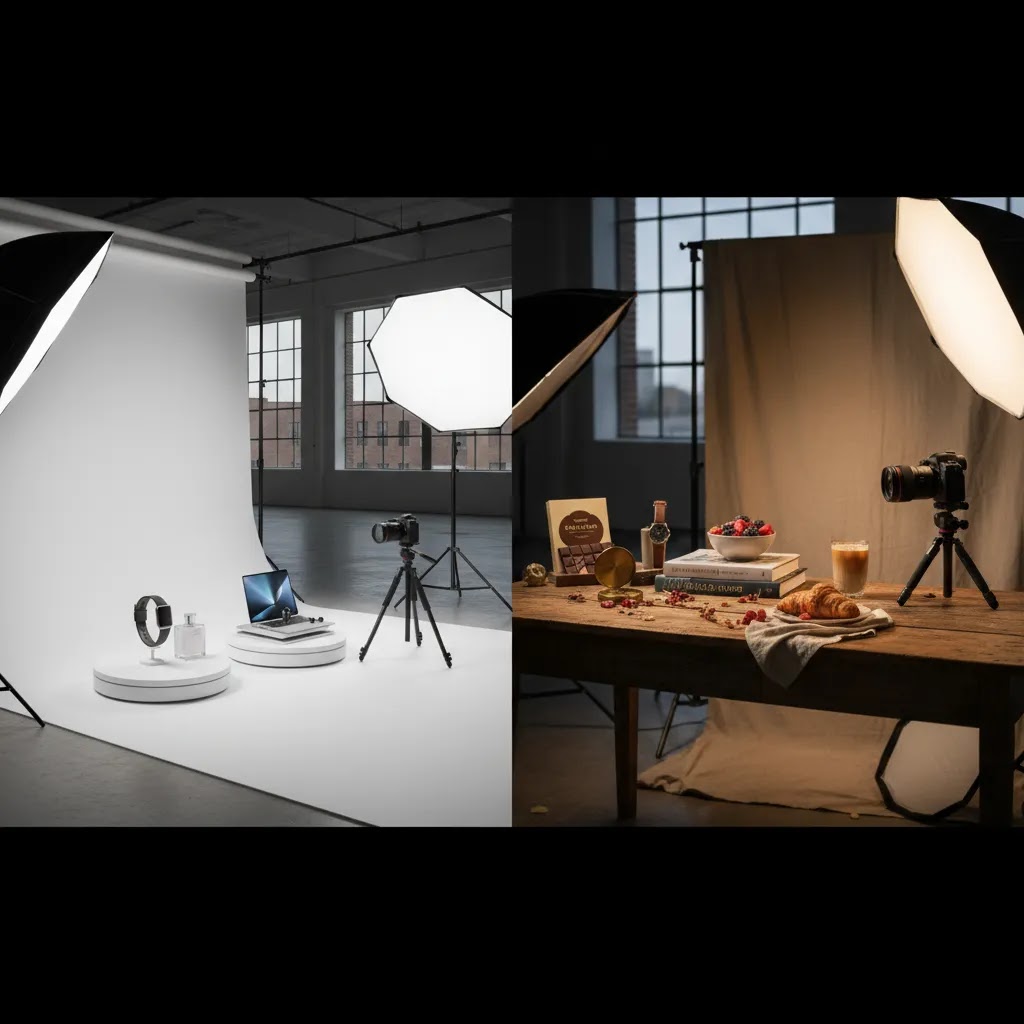
White background shots
White product photography is the baseline for most catalogs. It works well for collection pages, search filters, marketplaces, and comparison shopping feeds. If you are selling across multiple channels, product photography on white keeps your catalog consistent and easier to manage.
This style is especially useful for electronics product photography, cosmetics, supplements, and packaged goods where detail matters more than mood. It can look simple, but good lighting and careful retouching still matter if you want clean edges and accurate color.
Styled and lifestyle photography
Styled product photography adds context. It can show scale, materials, use cases, and brand personality. Think candles on a bathroom shelf, coffee gear in a morning scene, or skincare arranged with texture props and water reflections.
These images often perform well in paid social, email campaigns, and home page banners. They may also improve conversion indirectly by helping your product pages feel more trustworthy and complete.
Ghost and apparel setups
Ghost product photography is common for apparel and wearable products when you want shape without a visible model. It usually involves photographing garments on a mannequin and compositing multiple frames. The result can look polished on collection pages, but the process takes care and usually costs more than flat lays.
Food and watch photography
Product photography food work usually needs stylists, quick setup changes, and tighter scheduling because freshness changes fast. Product photography watches is another specialty entirely. Watches demand detailed macro work, dust control, and meticulous handling of reflections. In both cases, a generic studio may not be your best option.
What quality means in product photography
Style is what you notice first, but quality is what customers feel. For ecommerce, quality typically comes down to accurate color, believable texture, clean edges, and sharp detail where it matters. If those fundamentals are off, you may see more hesitation, more “is this the real color?” questions, and in some cases more returns because expectations were set incorrectly.
Color fidelity, texture, and detail are the real baseline
When you review a portfolio, do not just ask “does this look nice?” Ask whether the images show the product honestly and clearly. That means color that looks consistent from image to image, text that is legible, and materials that look real. For example, fabric should not look smeared by over-smoothing, and brushed metal should still look like brushed metal, not a flat gray surface.
Think of it this way: if you run Google Shopping or Meta ads, your product images are often the first thing people use to decide whether to click. If the product looks inaccurate or low-detail, you can end up paying for traffic that bounces once shoppers reach the product page and realize the visuals do not answer basic questions.
Reflective products and white backgrounds are where problems show up
White background work sounds simple until you have to keep edges clean without cutting into the product, keep whites neutral without color casts, and remove dust without turning everything plastic. With reflective items like chrome, glass, glossy packaging, and watches, quality also shows up in reflection control. You want shape and highlights that define the product, without distracting hotspots or messy reflections of the studio environment.
For many Shopify store owners, this is the point where paying for a specialist is worth it. Reflective and highly detailed products tend to expose weak lighting setups and rushed retouching quickly.
A quick portfolio inspection framework
Before you decide based on a few Instagram posts, inspect the work like an ecommerce operator:
- Zoom in and check sharpness on labels, stitching, and texture, not just the overall composition
- Look at a set, not one hero image, and check that framing and color stay consistent across multiple SKUs
- Watch for over-retouching, such as smeared textures, crunchy halos around edges, or unnaturally uniform surfaces
These checks are not about nitpicking. They are about finding a partner who can produce repeatable assets you can use across product pages, ads, email, and marketplaces without constantly patching quality problems later.
How to compare studios without guessing
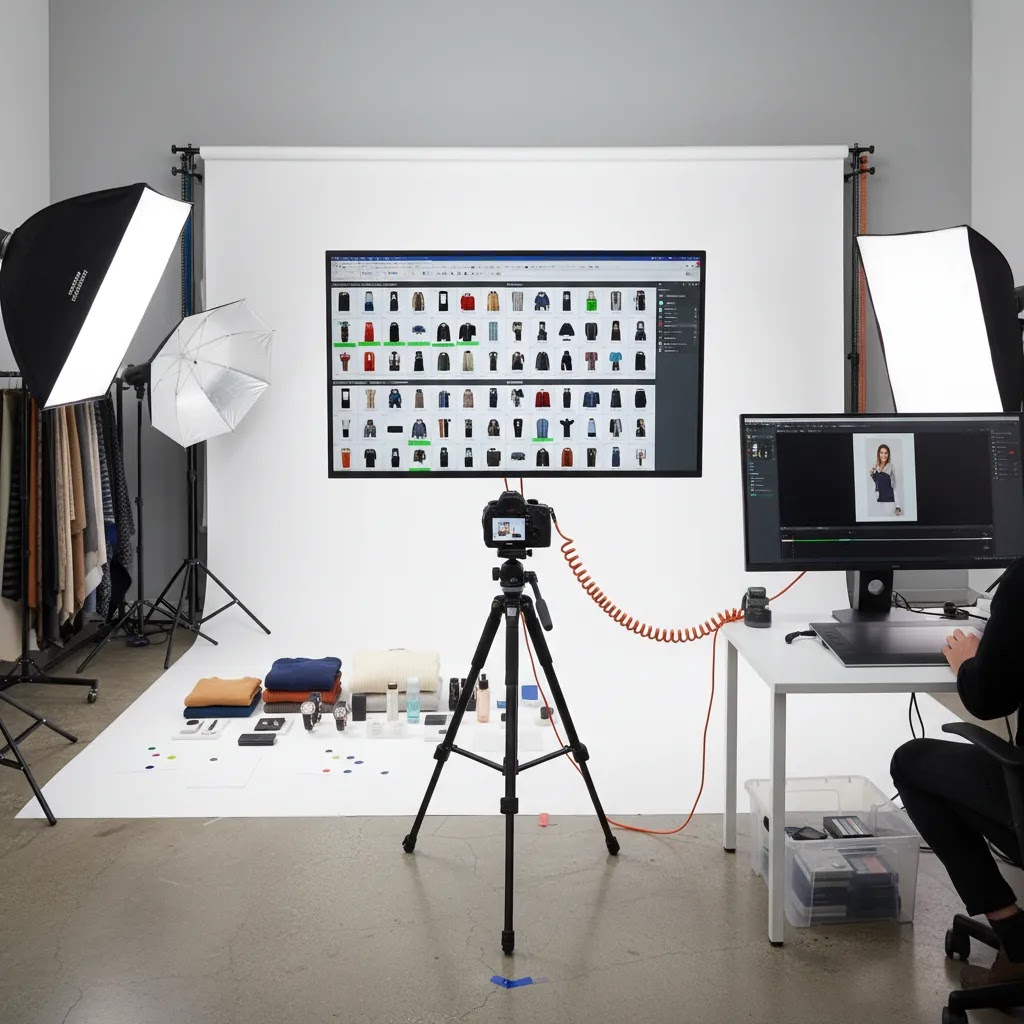
A polished portfolio can be misleading if it only shows a few hero shots. You need to know whether a provider can deliver repeatable catalog work across dozens or hundreds of SKUs. The difference between stores that scale content efficiently and stores that keep reshooting is often the quality of the process, not just the photography.
Ask for the right samples
Request examples that match your category. If you sell packaged electronics, ask for catalog-style sets, not just moody ad images. If you are building a larger library, it also helps to review a full set from one client so you can judge consistency across angles and products.
Review the production workflow
Ask each studio how they handle:
- Shot lists and file naming
- Color consistency between products
- Retouching rounds and revision limits
- Turnaround times
- Cropping for Shopify and marketplaces
- Storage and return shipping
If you need broader reference points, comparing service markets like product photography los angeles can reveal how pricing and specialization differ between larger creative hubs and Houston.
Check for ecommerce awareness, not just creative flair
Here’s the thing: not every talented commercial photographer understands ecommerce constraints. A strong ecommerce partner knows that product page images need consistency, zoom clarity, and formatting that works across storefront templates. AcquireConvert tends to emphasize this distinction because attractive creative that slows decision-making or muddies product details may not help sales.
Product photography deliverables: file specs, rights, and Shopify readiness
If you want to compare studios fairly, you need clarity on what “final images” actually means. Two quotes can look similar on price, but one may include fully usable assets for Shopify and ads, while the other delivers a single set of files that still needs rework before you can publish.
What final ecommerce images should include
For most Shopify stores, you want web-ready files that load fast but still hold up on zoom. Ask what formats you will receive. JPG is common for product pages, PNG may matter if you need transparent backgrounds for design or marketplace needs, and TIFF is sometimes provided for archival or print workflows.
Also ask about color space. For ecommerce, sRGB is typically the safest choice for consistent display across devices. Pixel dimensions matter too. If your theme supports zoom and you want close-up detail, you will usually want larger images, plus consistent aspect ratios across a set so collection pages look clean. A studio does not need to know your exact theme, but they should be able to deliver consistent sizing and framing that is Shopify-ready.
Usage rights, and what to clarify before you pay a deposit
Licensing is one of the most common points of confusion. Some photographers include broad usage rights in their quote. Others charge separately depending on where the images will be used.
If a proposal says “unlimited usage,” ask what that means in writing. In many cases, it refers to unlimited use across your own marketing channels, like your website, email, and ads. It may not automatically include things like reselling images to third parties, transferring rights to another brand, or using the photos for stock licensing. If you plan to use images across marketplaces, paid ads, print inserts, wholesale line sheets, or retail packaging, bring that up before you commit so the agreement matches your actual needs.
Handoff details that save time later
The way files are delivered can either speed up your workflow or create weeks of messy internal cleanup. Ask about file naming conventions and whether they can name images by SKU, color, and angle. Also ask how they organize delivery, for example folders by product, then by angle or usage type.
From a practical standpoint, it often helps to request exports sized for Shopify plus any key marketplaces you sell on, so you are not resizing the same images repeatedly. You do not need to over-specify this if you are not technical. You just want confirmation that the studio is used to delivering organized, ecommerce-ready assets, not a random zip file of unlabeled images.
Should you hire a studio or a freelancer
This decision depends on your volume, complexity, and how much coordination you can manage internally. Neither option is automatically better.
When a studio may be the better fit
A studio is often better for larger SKU counts, recurring shoots, and multi-format content. You are more likely to get a producer, assistant support, retouching help, and a more standardized process. If your store is growing quickly, that infrastructure can matter more than a lower upfront quote.
When a freelancer may be enough
If you have a smaller catalog, a clear brief, and simple white background needs, one of the many talented freelance photographers in the market may be a strong fit. Many independent shooters offer faster communication and more flexible pricing, especially for startups testing a product line.
A good middle ground
Some brands use a hybrid setup. They hire a studio for launch assets and use a freelancer or in-house system for replenishment images. That can work well if you document your style guide carefully and keep lighting, angles, and crop standards consistent.
How AI fits into the process
AI can help, but it does not remove the need for strong source images. For many ecommerce teams, the most useful role of AI is speeding up post-production and content variation, not replacing the core shoot entirely.
Where AI is actually useful
If you already have a solid product cutout or a clean base image, tools can help generate alternate scenes, remove distractions, improve resolution, or test lifestyle directions before committing to a larger campaign. That is particularly helpful if you want more content for ads, landing pages, or seasonal promotions without reshooting every SKU.
AcquireConvert covers this area with a practical lens, especially around ecommerce imagery and implementation quality. If you are building visuals at scale, exploring the site’s Catalog Photography and Product Photography Services resources can help you decide where AI editing fits and where human production still matters more.
Useful AI tools for ecommerce image workflows
- AI Background Generator for testing alternate scenes
- Free White Background Generator for cleaner catalog-ready outputs
- Increase Image Resolution for improving usable detail on existing assets
- Background Swap Editor for generating fast variants for campaigns
Features and availability for third-party tools can change, so verify current details directly with the provider. Results from product photography using AI also vary by product type, source image quality, and how realistic you need the final result to be.
Do not ignore studio fundamentals
If you are still learning the basics, understanding what makes a good product photography studio setup matters more than chasing automation. Good lighting, accurate color, sharp focus, and consistent framing still do the heavy lifting.
The strategies and tools discussed in this article are based on current ecommerce best practices and publicly available information. Results will vary depending on your store, niche, and implementation. Always verify tool pricing, features, and platform compatibility directly with the relevant provider before making purchasing decisions.
Frequently Asked Questions
How much does product photography cost in Houston?
Houston pricing can range from relatively modest per-image fees for simple white background work to much higher custom quotes for styled sets, apparel, food, or reflective products. In many cases, a simple ecommerce catalog shoot may be priced per image or per SKU, while campaign-style work is quoted by half day or full day. The best way to compare quotes is to ask exactly what is included, such as retouching, revisions, cropping, file exports, and return shipping. A lower quote may not stay lower once add-ons are applied.
How much is product photography per photo in Houston?
Per-photo pricing in Houston often shows up for white background catalog work, especially when you want a consistent look across many SKUs. You may see simple items priced in the $25 to $75 per image range, with higher rates for complex products, heavier retouching, or more demanding categories like reflective packaging and product photography watches. The key is to confirm what the per-image price includes, because retouching, revisions, clipping paths, and exports can change the true cost quickly.
How long does product photography take (turnaround time)?
Turnaround time depends on volume, styling complexity, and how many revision rounds you need. Some studios offer rush options for an added fee, while standard timelines are often longer when there is heavy retouching, styling, or compositing involved. Your approval speed also matters. If proofs are delivered quickly but feedback takes days, the calendar stretches. To avoid surprises, ask when you will receive proofs, how finals are scheduled after approval, and what happens if you request changes after the first revision round.
What is included in a product photography quote (retouching, revisions, usage rights)?
In many cases, a quote may include shooting time, basic retouching, and a defined number of final images, but the details vary a lot between providers. You should ask whether the price includes dust cleanup, color correction, cropping and exports for Shopify, revision rounds, and any special work like clipping paths or ghost product photography compositing. Usage rights can be included or listed separately, so clarify where you can use the images, such as your website, ads, marketplaces, and print, and get that confirmed in writing before you put down a deposit.
Do I own the rights to my product photos after I pay?
Not always automatically. Paying an invoice typically gives you the right to use the images as agreed, but ownership and licensing terms depend on the contract. Some photographers grant broad usage rights for ecommerce, ads, and print, while others limit usage by channel, geography, or time period. If you want long-term rights for Shopify, paid ads, marketplaces, email, and print, ask for those terms upfront and make sure the agreement reflects how you will actually use the photos.
What should I ask a Houston product photographer before booking?
Ask for examples in your product category, not just their best-looking hero shots. You should also ask about turnaround time, revision limits, color correction, dust cleanup, file naming, usage rights, and whether they have experience with Shopify or other ecommerce workflows. If your catalog is growing, ask how they handle repeat shoots so your images stay visually consistent over time. A reliable process often matters just as much as creative skill, especially if you need ongoing product launches and updates.
Is white background photography still important for ecommerce?
Yes, for most stores it is still essential. Product photography on white gives you a clean, standardized look for collection pages, marketplaces, paid shopping feeds, and comparison experiences. It also makes it easier for customers to focus on shape, color, and details without distraction. That said, white background images should not be your only asset type. Many stores benefit from pairing them with styled product photography that shows scale, context, and use. The balance depends on your category, traffic sources, and how visual the purchase decision is.
Who needs ghost product photography?
Ghost product photography is most useful for apparel, fashion accessories, and some wearable gear where fit and structure matter but you do not want a live model in every frame. It helps garments look dimensional on collection and product pages, which can improve clarity compared with flat lays alone. The process involves multiple captures and compositing, so it usually costs more than simpler catalog work. If you only need a few SKUs, test the format first and compare it with flat lays or model shots before rolling it out storewide.
What types of products need a specialist photographer?
Reflective, transparent, miniature, and highly textured products often benefit from specialists. Product photography watches, jewelry, glassware, cosmetics with metallic packaging, and electronics product photography all tend to be less forgiving than they look. Small lighting mistakes can create harsh reflections, muddy details, or inaccurate finishes. Food is another specialty because styling and timing matter so much. If your product is difficult to light or retouch, paying for category-specific experience may save you from disappointing results and expensive reshoots.
Should I hire a local Houston studio or ship products elsewhere?
If you expect regular launches, local can be easier. You may find it simpler to manage samples, review early proofs, coordinate reshoots, and build a repeatable relationship with a nearby team. Shipping elsewhere can still make sense if a remote specialist has stronger experience in your exact niche or offers a workflow better suited to your catalog. The right choice depends on complexity, frequency, and communication quality. If you are comparing regions, it can help to review other market guides like product photography austin or product photography los angeles for context.
Can AI replace a professional product photographer?
Usually not on its own, at least not for most serious ecommerce brands. AI can help extend or adapt existing imagery, especially for background changes, creative testing, and faster post-production. But it still relies heavily on the quality of your starting image. If the source photo has poor lighting, distorted color, or weak detail, AI may not fix it convincingly. For stores that need consistent catalog quality, the stronger approach is often a professional base shoot combined with selective AI editing where it saves time and supports your brand style.
How many images do I need per Shopify product page?
For many Shopify stores, five to eight useful images per product is a solid starting point, but the exact number depends on complexity and price point. You typically want a clean hero image, alternate angles, close-up details, scale reference, and at least one context or lifestyle image if the product benefits from it. Apparel and technical goods often need more. Rather than chasing a number, focus on answering buyer questions visually. Every image should reduce uncertainty, show something new, or reinforce trust in the product quality.
What makes product photography convert better?
Photos tend to support conversion better when they reduce doubt. That usually means consistent lighting, accurate color, sharp detail, and a complete visual story across the product page. Customers want to see materials, scale, texture, packaging, and how the item looks in use. They also need consistency across your catalog so the store feels credible. Images alone will not fix weak pricing, confusing product pages, or poor offer structure, but they often play a major role in first impressions and purchase confidence.
How do I prepare products before sending them to a studio?
Prep matters more than many brands expect. Clean every item carefully, inspect packaging, remove stickers unless they are meant to show, and send the best-condition samples you have. Include assembly notes if the product has moving parts, and provide a shot list with priorities for each SKU. If color accuracy is important, call that out early. You should also flag any details you want emphasized, such as texture, connectors, closures, or included accessories. Clear prep reduces retouching time and lowers the chance of missing important angles.
Key Takeaways
- Houston offers a strong mix of commercial studios and freelancers, but the right fit depends on your product type, volume, and need for repeatable ecommerce workflows.
- Always compare quotes based on what is included, not headline price alone. Retouching, revisions, exports, and styling can change the real cost quickly.
- White background images are still essential for most catalogs, while styled and lifestyle content adds context that may help ads and product pages perform better.
- Special categories like watches, food, apparel, and electronics often require more technical skill, so niche experience is worth checking closely.
- AI can speed up editing and content variation, but it works best when built on strong source photography rather than replacing it outright.
Conclusion
Choosing the right Houston product photography partner is less about finding the cheapest quote and more about finding a process you can trust. If your images need to support Shopify product pages, paid ads, marketplace listings, and email campaigns, consistency matters just as much as creativity. A good partner should understand your catalog, your channels, and the practical demands of ecommerce, not just how to produce a nice-looking portfolio piece.
Your next step is simple: shortlist two or three Houston providers, request category-specific samples, and compare quotes line by line. Look closely at retouching, revision policy, turnaround times, and whether they understand the image requirements of your store. If you want broader context before deciding, explore AcquireConvert’s related service guides and photography resources to compare markets, workflows, and shoot styles. A more informed brief usually leads to better photos, fewer revisions, and a store that feels more credible the moment shoppers land on it.
Results from ecommerce strategies vary depending on store type, niche, audience, budget, and execution. Nothing in this article constitutes a guarantee of specific outcomes. Third-party tool features and pricing are subject to change: verify current details directly with each provider.
Hi, I'm Giles Thomas.
Founder of AcquireConvert, the place where ecommerce entrepreneurs & marketers go to learn growth. I'm also the founder of Shopify agency Whole Design Studios.