How to Find a Product Photographer in NYC (2026 Guide)

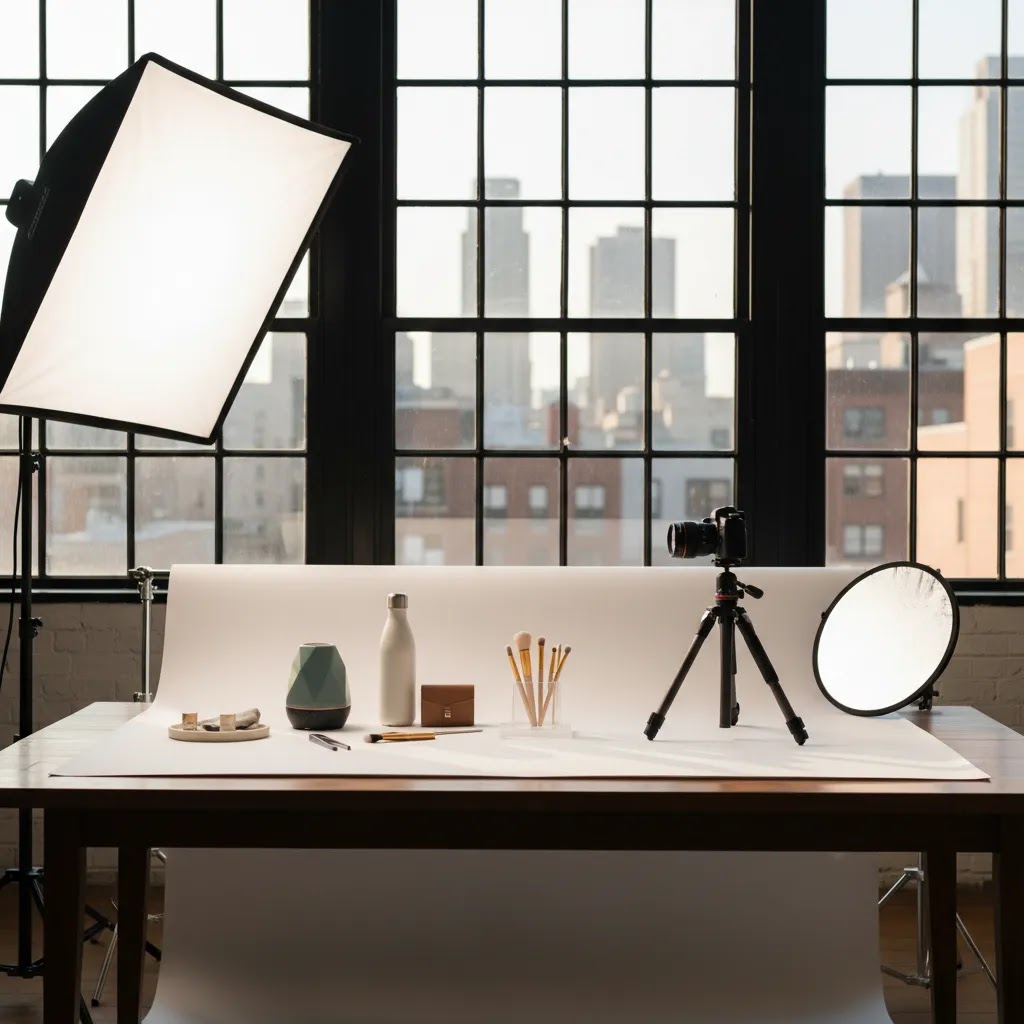
You finally have the products, the Shopify store, and a plan to start selling. Then you look at your images and realize they are not doing the heavy lifting. Your packaging looks flat, the colors feel off, and your product page still does not look like the brands you compete with. That is usually the moment store owners start searching for a product photographer nyc, only to find dozens of portfolios that look polished but reveal very little about pricing, ecommerce experience, or whether the photographer can actually shoot for conversion.
If that sounds familiar, this guide is for you. You will learn how to evaluate photographers in New York City, what questions to ask before signing a quote, what deliverables matter for Shopify and marketplace listings, and how to avoid paying for images that look nice on Instagram but do not help you sell. If you are comparing locations as part of a broader search, AcquireConvert also has location-specific resources such as product photography austin to help you benchmark options across markets.
Contents
- Why NYC can be a smart choice for product photography
- What kind of photographer do you actually need?
- How to find and evaluate NYC studios vs independent photographers
- How to review a portfolio like a store owner
- Questions to ask before you request a quote
- Shipping products to an NYC photographer, logistics checklist
- How pricing usually works in NYC
- Roles and add-on services that affect results
- Red flags that could cost you time and money
- How to brief your photographer for better results
- Frequently Asked Questions
Why NYC can be a smart choice for product photography
New York City gives you access to a very wide range of photographers, stylists, retouchers, and studios. That matters if your store needs more than a basic white background shot. You may need a lifestyle product photographer for social ads, a fashion product photographer for apparel, or a team that can handle both PDP images and campaign visuals.
The real advantage is specialization. In smaller markets, a photographer might shoot weddings, headshots, events, and products all under one website. In NYC, you are more likely to find people who understand ecommerce workflows, retailer image standards, and the difference between a hero image and a conversion-focused gallery set.
Still, more options can make the decision harder. The reality is that a beautiful portfolio alone is not enough. You need to know whether the photographer understands how images function across Shopify themes, marketplaces, paid social, and email campaigns.
What kind of photographer do you actually need?
Before you hire anyone, define the job clearly. Many store owners search for product photographers NYC listings without first deciding what assets they need. That often leads to mismatched quotes and disappointing results.
Catalog shots for product pages
If you sell on Shopify, Amazon, or through wholesale portals, you will usually need clean, consistent product-on-white images first. These are the workhorse assets. They support your product page, variant selection, collection pages, and ad creatives.
If consistency is your priority, review providers who work in a controlled product photography studio environment. Studio-based workflows tend to help with repeatability, especially when you need to add new SKUs later.
Lifestyle images for conversion and ads
A product lifestyle photographer creates scenes that show your item in use. This is especially useful for beauty, home goods, food, wellness, and accessories. These images may increase clarity and perceived value because shoppers can see scale, context, and use case.
Now, when it comes to lifestyle shots, you need to be stricter about brand fit. A portfolio may look stylish but still feel wrong for your audience. Minimal luxury, bright DTC, and editorial fashion all send different signals.
Fashion and apparel content
Apparel brands usually need a mix of flat lays, ghost mannequin, and on-model photography. A fashion product photographer should understand garment fit, texture, drape, and color accuracy. If you sell clothing, do not assume a general product shoot photographer can produce strong apparel imagery without a proven track record.
How to find and evaluate NYC studios vs independent photographers
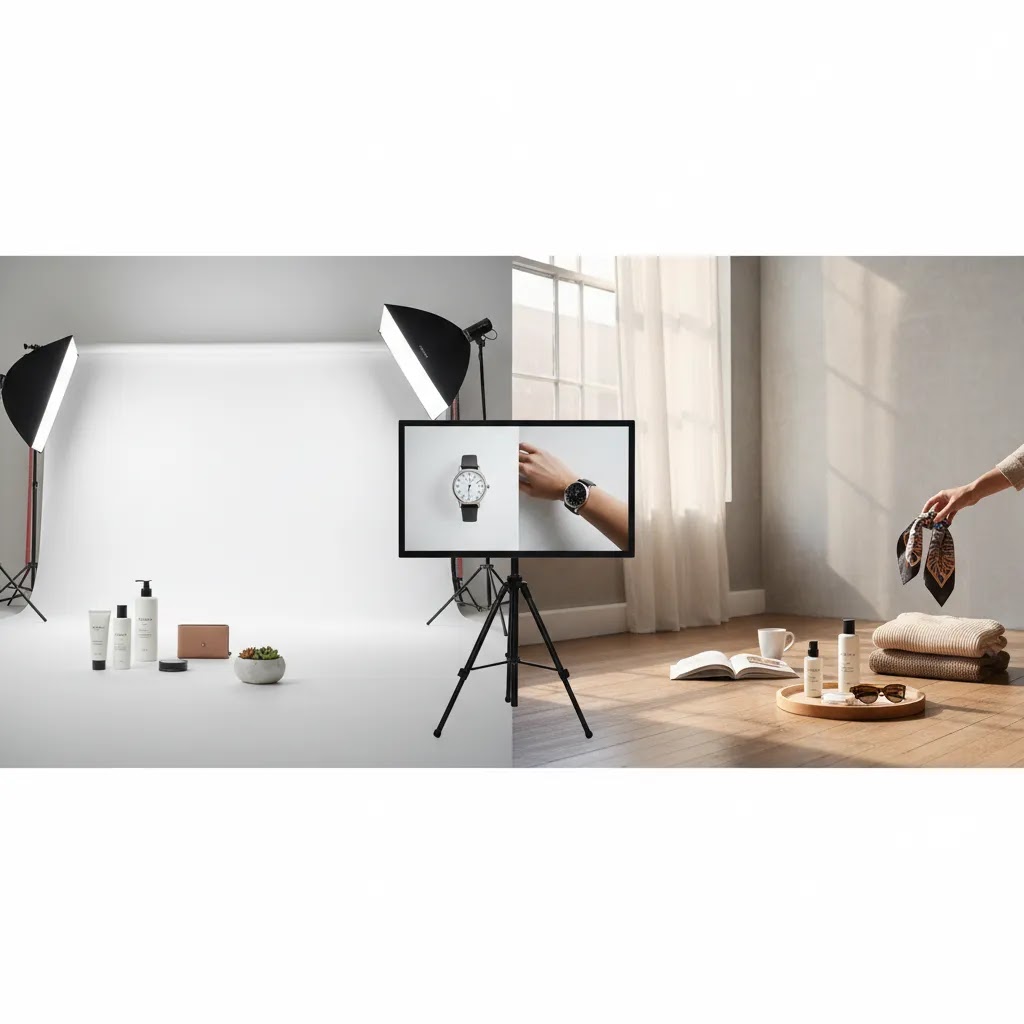
Once you know what you need, the next decision is who should execute it. In NYC, you will typically choose between a studio provider and an independent photographer. Both can produce great work. The difference is usually how the operation runs, and whether that fits your Shopify workflow.
How NYC studios typically work
Many NYC “studio” options are producer-led. That means you may talk to a producer or account manager first, then the shoot is executed by a team with assistants, in-house retouching, and a consistent set of lighting and equipment. For ecommerce brands, that kind of system can be a big advantage when you have lots of SKUs, tight deadlines, or repeat shoots.
Studios tend to be a strong fit when you need consistent catalog output, regular seasonal drops, or ongoing content maintenance where the look has to match year-round. Approvals can also move faster because the studio may have a defined proofing and retouching process.
How independent photographers typically work
Independent photographers usually run a leaner setup. You often communicate directly with the person shooting and retouching, or at least directly with the creative lead. For many founder-led brands, that direct access is valuable because you can dial in the look quickly, make decisions in real time, and keep the creative direction tight.
Freelance operators can be a great fit when you have a smaller SKU count, you are testing a new product line, or you want a specific style that is clearly tied to one person’s eye. The tradeoff is that capacity can be limited. If they get booked, your timeline might slip. If they outsource retouching, consistency depends on their system.
What to ask when the portfolio is a studio collective
What many store owners overlook is that a studio website may show work from multiple shooters. That is not a problem by itself, but you should clarify who is actually shooting your products and who is responsible for the final look.
Ask who the photographer will be on your shoot day, and whether you can keep the same photographer for future launches. If you are building a recognizable visual standard across your Shopify catalog, continuity matters.
Also ask who owns color and retouching consistency. In practice, the retouching lead can influence your final image style as much as the photographer. If you are picky about packaging color, fabric tone, or metal finishes, confirm how they manage color across different batches and seasons.
Decision criteria that matter for Shopify brands
Think of it this way: you are not only buying images, you are buying an operating system for how product imagery gets made.
If you need ongoing catalog maintenance, fast approvals, and repeatable results across hundreds of SKUs, studios often provide the structure to keep things moving.
If you need a very specific aesthetic, have a tight product range, or want direct creative control with fewer layers, an independent photographer can be a better fit.
Consider this as well: if you need prop styling, models, or location work, ask whether the provider handles production or expects you to source everything. Seasonal drops often fail on timing not because the photos look bad, but because the styling, sample handling, and approvals were not planned upfront.
How to review a portfolio like a store owner
Most hiring mistakes happen here. You look at a clean website, see a few impressive shots, and assume the photographer can handle your catalog. What many store owners overlook is that portfolios are often curated to show only the most visually striking work, not the most commercially useful work.
Look for consistency, not just one great image
Ask to see full sets from one brand or one product line. You want to know whether they can maintain angle consistency, lighting control, shadow treatment, and color from shot to shot. For ecommerce, consistency usually matters more than artistic flair.
Check whether the work matches your product type
A strong beauty portfolio does not automatically qualify someone to shoot reflective cookware. Jewelry, glass, cosmetics, apparel, supplements, and furniture all present different technical challenges. Search for examples close to your own materials, packaging, and category.
Ask how the images were used
Here is the thing: a product photograph that worked for an ad campaign may not work for your collection page. Ask whether the images were created for ecommerce, wholesale, marketplaces, or editorial use. A photographer who understands conversion-oriented image requirements will usually speak clearly about aspect ratios, file delivery, background treatment, and retouching standards.
If you are evaluating service providers in multiple cities, compare how specialists position themselves in related markets such as product photography los angeles. It can help you spot whether a local quote reflects actual expertise or just local pricing.
Questions to ask before you request a quote
A vague inquiry usually gets you a vague estimate. If you want useful proposals, send a tighter brief and ask better questions.
Ask about deliverables
Be specific about image count, angles, crops, retouching, and file format. For most Shopify stores, that means asking for high-resolution files, web-ready exports, and clarity on whether background removal is included. If you need marketplace compliance, say so upfront.
Ask about process and turnaround
Find out how products are received, logged, stored, shot, and returned. Ask who handles styling and whether they outsource retouching. Turnaround times in NYC can vary a lot depending on studio size and complexity.
Ask about licensing and usage rights
This part gets missed all the time. Make sure you understand where you can use the images: Shopify store, Amazon, paid social, email, print, marketplaces, or packaging. Do not assume full usage rights are included by default.
Ask about ecommerce experience
From a practical standpoint, you want someone who understands image sets that support sales, not just aesthetics. At AcquireConvert, that acquisition-plus-conversion lens comes up often in our photography and store optimization content because visuals affect both click-through and on-site trust. A photographer who has worked with ecommerce brands should be able to explain how they shoot for product detail, scale, and buyer confidence.

Shipping products to an NYC photographer, logistics checklist
Lots of Shopify teams hire NYC talent without being in NYC. That can work well, but only if you treat it like an operational process, not a casual shipment.
The reality is that many “bad shoot” outcomes are really “bad logistics” outcomes. The wrong SKU arrives, packaging is scuffed, key props are missing, or nobody can approve selects quickly. The camera is not the bottleneck, your prep is.
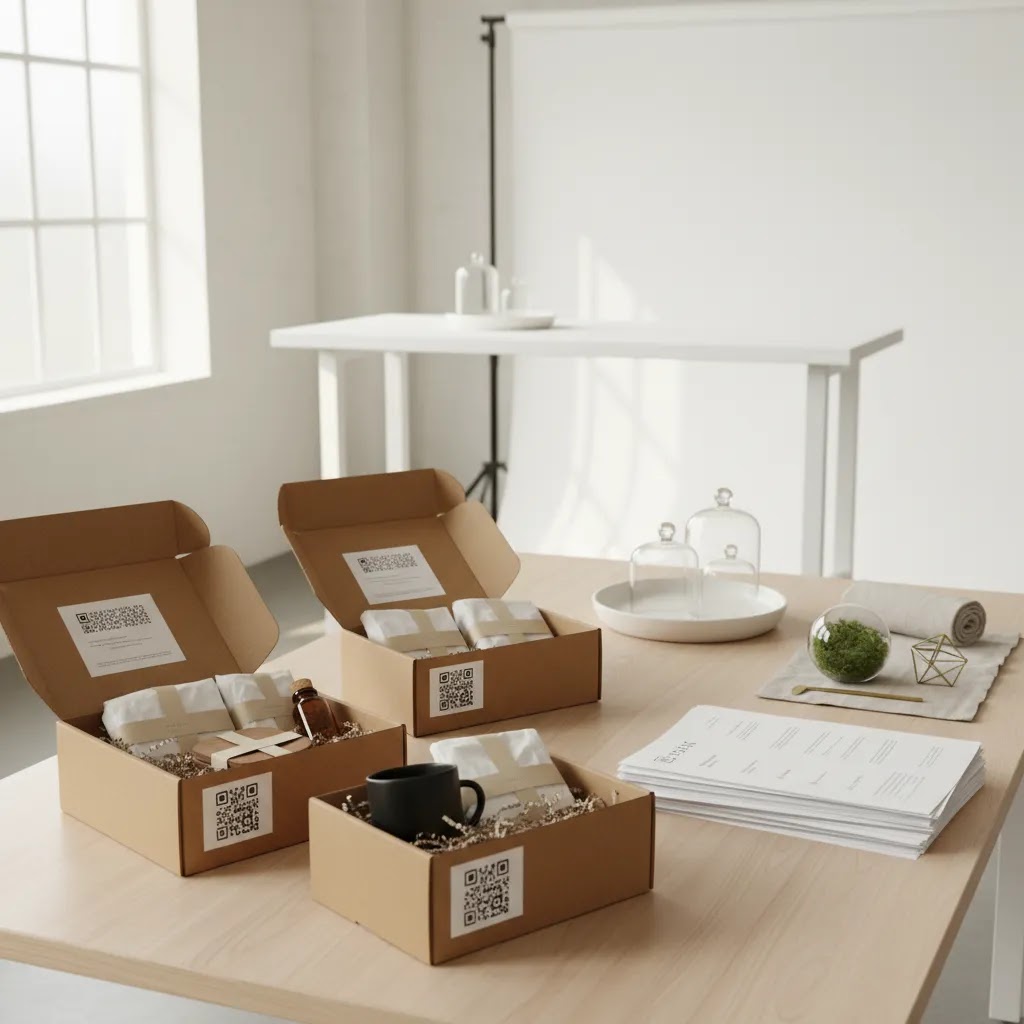
A simple checklist before you ship
Before anything goes out the door, make sure you can answer: what is being shot, how should it be styled, and what does “done” look like for each SKU.
- Label each SKU clearly, and match the label to your shot list naming
- Include a shot list by SKU, with required angles and any do-not-miss details
- Ship extra units for fragile, scratch-prone, or smudge-prone products when possible
- Include return shipping labels, or confirm who is buying the return shipment
- Declare value and insurance for high-value items, and confirm how the studio handles storage
- Plan timeline around launches, including buffer for proofs, retouching, and revision rounds
Fragile, perishable, and regulated products
If you sell glass, liquids, cosmetics, candles, or anything that can leak or melt, confirm the studio can handle the category. Not every setup is prepared for spills, cleanup, or special handling, and not every photographer wants to take on the risk without a clear plan.
For fragile items, pack like the box will be dropped. Use double boxing, strong internal protection, and clearly mark which units are “hero” units for photography. For liquids and cosmetics, confirm whether you want the product photographed sealed, opened, swatched, or dispensed, and who is responsible for cleanup and surface resets.
If your products have compliance constraints, such as cosmetic claims, supplements, or regulated labeling, build that into the brief. Retouching should not introduce misleading visuals. You want your images to look great, but you also want them to reflect what customers receive.
Remote approvals without endless back-and-forth
If you cannot be on set, remote approval becomes your success factor. Ask how proofs are delivered, how you choose selects, and how revisions are managed. If you have multiple stakeholders, decide in advance who gets final sign-off, otherwise approvals can drag for days.
Color is the most common remote pain point. Ask how they manage color consistency across shoots, what your expectations should be for screen-to-screen differences, and whether they can shoot to a physical color reference if your packaging is very specific. The goal is not perfection on every monitor, it is consistent color treatment across your catalog so your Shopify product pages look cohesive.
How pricing usually works in NYC
NYC pricing is rarely simple because the quote may include more than photography. Studio rental, assistants, prop sourcing, model fees, retouching, and licensing can all shape the final number. That is why one quote can look dramatically higher than another even when both mention the same number of images.
Common pricing models
- Per image, often used for simple catalog work
- Half-day or full-day rate, often used for larger shoots
- Project-based pricing, common for mixed deliverables
- Custom estimates for lifestyle or campaign content
What to compare besides the dollar amount
Compare the following before deciding:
- Number of final edited images
- Retouching depth
- Set styling included or not
- Usage rights
- Reshoot policy
- Product return handling
Some stores are better served by experienced freelance photographers, especially for smaller shoots or founder-led brands testing a new concept. Others may need a full studio team. The right choice depends on product complexity, volume, and how much creative direction you can provide.
Roles and add-on services that affect results
Photography quotes can look confusing because you are often hiring more than a photographer. In NYC especially, the team around the camera can be what makes the work consistent, scalable, and on-brand.
Common line items you will see in NYC quotes
Different providers name these differently, but the underlying roles are consistent. You may see some of the following bundled into a day rate or separated as add-ons.
- Prop styling for lifestyle scenes and brand context
- Food styling for edible products and beverage pours
- Grooming for beauty, skincare, and hair products, especially for model work
- Steaming and prep for apparel, plus pinning and fit adjustments on set
- Digital tech for tethered capture, file management, and on-set proofing
- Assistants for lighting setups and consistent throughput
- Retouching, often with different tiers depending on complexity
From a practical standpoint, these roles often affect the final result as much as “camera skill.” If your apparel is wrinkled, your labels are crooked, or your reflective packaging is covered in fingerprints, it does not matter how strong the lighting setup is. The prep work is what makes catalog images look premium and consistent across your Shopify store.
What “retouching” can mean, and why you should define it
Retouching is one of the biggest sources of mismatched expectations. One provider may use “retouching included” to mean basic dust cleanup and minor color correction. Another may mean deeper work like label rebuilds, cap alignment, color matching across variants, and texture cleanup for close-ups.
If you sell products with multiple variants, ask how they handle color consistency across the set. If you sell reflective products, ask how they handle unwanted reflections and edge cleanup. If you sell beauty products, ask how they handle texture, smears, and macro detail. If you sell food, ask whether their workflow includes styling resets so you are not paying for retouching that could have been avoided in-camera.
Whatever you need, define it in the quote. Ask what is included per image, what counts as “advanced” retouching, and what their hourly or per-image rate is for extra revisions.
Set an approval workflow before the shoot starts
Approval workflow is how you avoid slow launches and endless email chains. Ask how you will receive proofs, how you will select favorites, and how many rounds of revisions are included.
In many cases, a clean workflow looks like this: you receive contact sheets or proof galleries, you choose selects by SKU, the team retouches the finals, then you get a defined number of revision rounds. The important part is deciding who signs off for your brand. If three people are giving conflicting feedback, your turnaround will suffer, and you may pay for extra rounds.
Do you need motion or stop motion deliverables?
What many store owners overlook is that “photography” providers sometimes also offer motion deliverables, such as short product clips, stop motion spins, or cinemagraph-style assets. These can be useful for Shopify product pages, paid social, and email, but the workflow is different from stills.
If you are considering motion, ask to see examples that match your category, not just generic clips. Confirm whether the quote includes storyboarding, set continuity, lighting that holds across frames, and editing. Stop motion and spins are especially sensitive to small inconsistencies. If the provider cannot explain their capture and editing process clearly, consider separating stills and motion into different projects.
Red flags that could cost you time and money
A polished product photographer website can hide operational issues. You are not just hiring taste. You are hiring process.
They cannot explain their workflow
If a photographer cannot tell you how products are handled, approved, shot, retouched, and delivered, expect avoidable friction later. Strong operators usually have a straightforward system.
The quote is missing key details
If there is no mention of retouching rounds, styling, file specs, or rights, ask for clarification before paying a deposit. An incomplete quote often becomes an expensive quote once revisions start piling up.
Their portfolio is all style, no commerce
Beautiful editorial work can be useful, but it does not replace practical product imagery. For most Shopify stores, you need a mix of hero shots, detail shots, scale cues, and clean consistency across the catalog.
They promise outcomes they cannot control
Be cautious if anyone implies their images alone will transform sales. Better photography may improve trust and merchandising, but performance still depends on product-market fit, pricing, traffic quality, page layout, reviews, and offer strength.
How to brief your photographer for better results
Even the best photographer can only work with the brief you provide. If you want faster approval and fewer revisions, spend time on the brief before you ship products.
Include these essentials
- Your brand guidelines and target customer
- Links to your current Shopify product pages
- Reference examples you like and dislike
- Required shot list by SKU
- Background preferences, white, transparent, or lifestyle
- Platform requirements, Shopify, Amazon, wholesale, ads
- Crop needs for desktop and mobile
Think beyond one product page
Consider this: the images you commission today may be used in your product page gallery, collection thumbnails, email blocks, paid social ads, and future landing pages. Brief with multi-channel use in mind. That helps you avoid paying for a second shoot just to get new crops or alternate compositions.
Use AI carefully for post-production support
Some merchants supplement professional photography with editing tools for background cleanup or variant testing. If that is part of your workflow, keep quality control high. Tools like AI Background Generator or Free White Background Generator may help for certain tasks, but results vary by product edge detail, shadows, and source image quality. For learning more about image strategy, you can also explore AcquireConvert hubs like E Commerce Product Photography and Product Photography Services.
The strategies and tools discussed in this article are based on current ecommerce best practices and publicly available information. Results will vary depending on your store, niche, and implementation. Always verify tool pricing, features, and platform compatibility directly with the relevant provider before making purchasing decisions.
Frequently Asked Questions
How much does a product photographer NYC businesses hire usually cost?
It depends on the type of shoot. Simple catalog images may be priced per image, while larger lifestyle shoots often use day rates or project pricing. In NYC, costs may also include studio rental, assistants, props, models, retouching, and licensing. The important thing is to compare scope, not just totals. A lower quote may exclude image editing or usage rights. Ask for a clear breakdown so you can compare providers fairly and avoid surprise charges after the shoot.
What is the difference between ecommerce photographer NYC services and editorial photography?
Ecommerce photography is built to help customers evaluate a product and make a purchase decision. That usually means consistent angles, clean lighting, accurate color, detail shots, and image formats that work well on product pages and marketplaces. Editorial photography is more brand-driven and mood-focused. It can be useful for campaigns, but it does not always cover the practical assets your store needs. If you run a Shopify store, ask whether the photographer has created full image sets for product pages, not just hero campaign visuals.
Should I hire a lifestyle product photographer or a studio-only photographer?
For many stores, the answer is both, but not always from the same provider. If your products need clear documentation first, prioritize studio work. If your buyers need context, scale, or emotional cues, add lifestyle imagery. Home goods, beauty, food, and accessories often benefit from both. What matters is sequencing. Start with the product images required for your site and sales channels, then add lifestyle content once your core catalog is covered. That tends to be a more efficient use of time and cash flow.
Can freelance photographers handle ecommerce work as well as bigger studios?
Yes, in many cases they can. The difference usually comes down to volume, speed, and operational support. A skilled freelancer may be an excellent fit if you have a focused SKU range and a clear brief. A larger studio may make more sense if you need high output, multiple sets, or integrated styling and retouching support. If you are considering solo operators, review examples from other freelance photographers and ask how they manage overflow, reshoots, and turnaround during busy periods.
What should I send before a product shoot photographer starts work?
Send a structured brief, not just the products. Include your brand style, target customer, required shot list, image usage, examples you like, and any platform-specific requirements. If you need transparent PNGs, white backgrounds, cropped variants, or marketplace-safe images, spell that out. Also note anything delicate about the product, such as reflective surfaces or assembly needs. The better your prep, the more likely you are to get useful assets back quickly. Good photography starts before the camera comes out.
How do I know whether a photographer understands Shopify needs?
Ask practical questions. Can they deliver square and vertical crops? Do they understand gallery sequencing for product detail? Have they shot images used on collection pages, PDPs, and paid social? Can they maintain consistency across variants and future launches? A photographer does not need to build your store, but they should understand how images behave inside a storefront. AcquireConvert often covers this overlap between visuals and conversion because the strongest product pages rely on both design quality and merchandising clarity.
Do I need a product photography studio if I sell only a few products?
Not always. A studio setup is useful when you need repeatability, precise lighting, and consistency across multiple SKUs or launches. If you only have a few products, a freelancer with a solid controlled setup may be enough. Still, if your category includes glass, metal, cosmetics, or apparel, a dedicated product photography studio may help solve technical issues that are harder to handle in a lighter setup. Match the environment to the product, not to a generic idea of what a professional shoot should look like.
Can AI replace hiring a professional for nyc product photography?
Usually not completely. AI tools can help with editing, background changes, or testing alternate visual treatments, but they still depend heavily on the quality of the source image. If your base photo has poor lighting, incorrect angles, or weak styling, AI editing may only partly improve it. For many ecommerce brands, the strongest approach is hybrid: get a solid original shoot, then use AI selectively for workflow support. This is especially true for stores that need clean catalog images plus fast variations for ads or social.
How many images per product do most ecommerce stores need?
There is no universal number, but many stores benefit from at least five to eight useful images per core product. That often includes a hero shot, alternate angle, close-up detail, scale reference, packaging view, and one or two lifestyle images if relevant. Complex products may need more. The goal is to reduce uncertainty and answer buyer questions visually. If shoppers cannot understand material, size, use case, or what is included, they may leave the page without adding to cart.
Is it worth comparing NYC options with photographers in other cities?
Yes, especially if you can ship products and your shoot does not require you onsite. Comparing NYC providers with markets like product photography los angeles or even your parent hub options can help you understand whether you are paying for specialization, convenience, or simply location. That said, local access can still be valuable if you need frequent shoots, same-day approvals, or close collaboration on styling. The best choice is the one that fits your workflow as much as your visual standards.
How do I find a product photographer near me in NYC, and is local actually necessary if I can ship products?
Start by searching within NYC, but shortlist based on category fit and process, not distance. If you can ship products reliably and your approval workflow is clear, local is not strictly necessary for many ecommerce shoots. The main reasons to prioritize “near me” are if you want to attend the shoot, need same-day selects, have fragile products you do not want to ship, or plan to shoot frequently and want quick drop-offs and pickups. For many Shopify brands, shipping to a strong operator with a proven ecommerce workflow can be a better decision than choosing the closest option with an unclear process.
What should I expect to pay for a professional product photographer in NYC for a full-day shoot?
A full-day shoot can vary widely because the day rate may cover only capture, or it may include a larger team and post-production. In NYC, a “full-day” quote may include assistants, digital tech, studio time, basic retouching, and a defined number of final images, or those items may be separate. Treat the day rate as one line in a bigger scope. Ask how many finished images the day typically produces for your SKU complexity, what level of retouching is included, what the usage rights are, and what happens if you need additional selects or extra revision rounds.
Are there real product photographer NYC jobs or assistants I should look for if I want an in-house option instead of hiring a studio?
Yes, but in-house is usually more than hiring one photographer. If you want an in-house option, you are often looking for a hybrid skill set: someone who can shoot, manage a repeatable lighting setup, do basic retouching, and keep file naming and exports organized for your Shopify workflow. For higher-end results, you may still need freelance support for styling, models, and advanced retouching. If you go this route, define whether the role is focused on consistent catalog maintenance, content for ads, or both, because the day-to-day output expectations are very different.
How do I choose the best product photographer NYC brands use if portfolios all look similar?
When portfolios feel interchangeable, your decision should be driven by proof of repeatability and clarity of process. Ask to see a full gallery set for one product line, not just hero images. Ask who will actually shoot your products, and whether you can keep that same person for future launches. Confirm how they handle retouching and color consistency across variants and seasons. Then evaluate how they respond to your brief. The best operators usually ask smart questions about your SKU count, channel requirements, styling needs, and approval workflow, because they know that is what determines whether the shoot runs smoothly.
Key Takeaways
- Start by defining the type of photography you need, catalog, lifestyle, apparel, or a mix, before requesting quotes.
- Review full image sets and ecommerce use cases, not just highlight-reel portfolio shots.
- Compare pricing based on scope, retouching, licensing, and workflow, not just headline cost.
- A strong brief improves results, reduces revisions, and helps your photographer shoot for Shopify and other channels.
- Professional photography and selective AI editing can work together, but AI is rarely a complete substitute for a well-executed original shoot.
Conclusion
Finding the right product photographer in NYC is less about choosing the most impressive portfolio and more about choosing the best fit for your products, sales channels, and workflow. If you run an ecommerce brand, you need images that do more than look attractive. They need to communicate detail, build trust, and support conversions across your Shopify store, ads, email, and marketplaces.
Your next step is simple. Create a short shot list, gather two or three reference examples, and send a clear brief to a small shortlist of photographers. Then compare their responses for clarity, process, and commercial understanding, not just price. If you want more practical guidance on visual merchandising and store growth, explore AcquireConvert’s related photography and ecommerce resources. Giles Thomas’s perspective as a Shopify Partner and Google Expert is especially useful if you are trying to connect better visuals with stronger acquisition and conversion performance.
Results from ecommerce strategies vary depending on store type, niche, audience, budget, and execution. Nothing in this article constitutes a guarantee of specific outcomes. Third-party tool features and pricing are subject to change: verify current details directly with each provider.
Hi, I'm Giles Thomas.
Founder of AcquireConvert, the place where ecommerce entrepreneurs & marketers go to learn growth. I'm also the founder of Shopify agency Whole Design Studios.