Product Photography Atlanta Local Studios (2026)

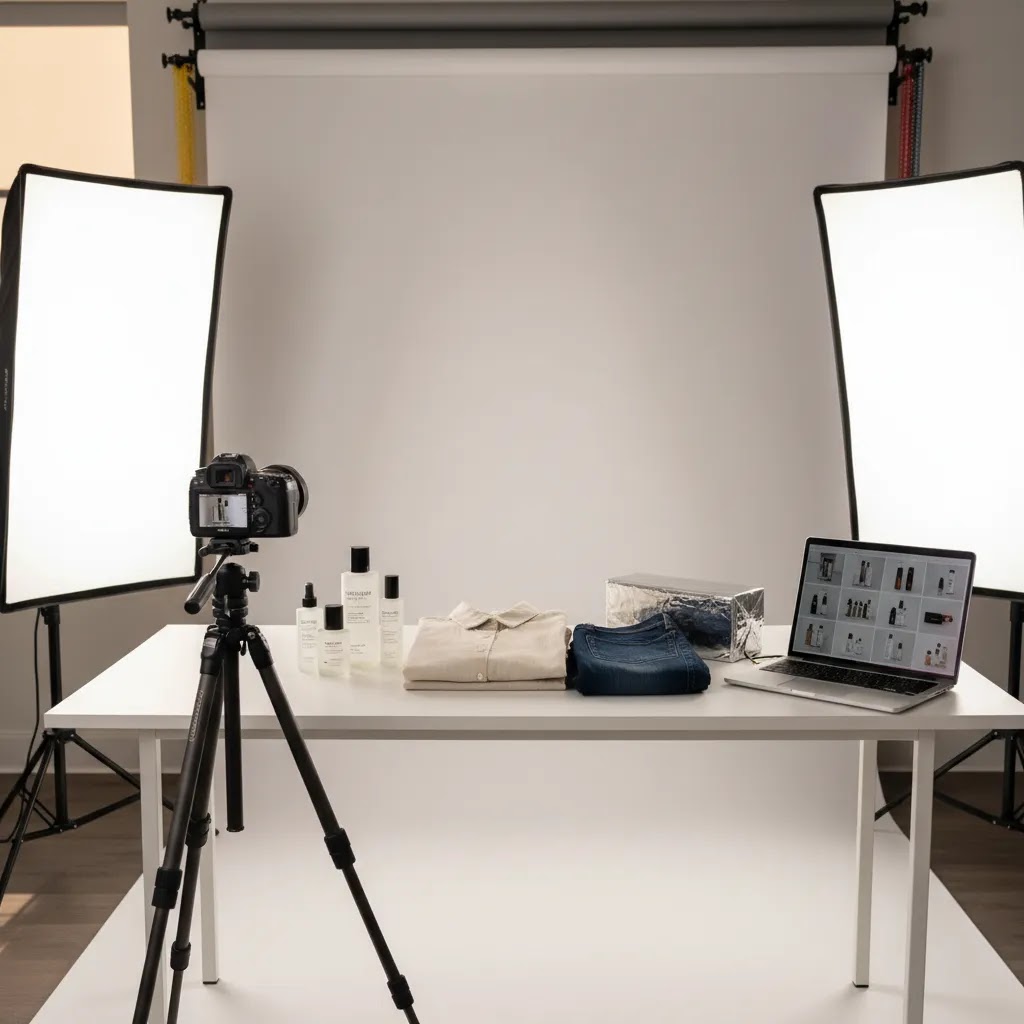
If you are searching for product photography atlanta services, the real decision is not just which local studio to contact. It is whether you need a traditional studio shoot, a specialist freelancer, or an AI-assisted workflow that gives your Shopify store usable product images faster. For Atlanta ecommerce brands selling on Shopify, Amazon, or wholesale catalogs, local studios still make sense for higher-touch shoots such as apparel, cosmetics, food-safe packaging, or complex reflective products. But for many brands, AI tools can now cover white background edits, background swaps, and image cleanup at a lower operating cost. At AcquireConvert, Giles Thomas reviews ecommerce tools through the lens of store performance, and that practical view matters here. The best choice depends on your product type, image volume, and how much creative control you need.
Contents
- Overview
- What Atlanta Store Owners Should Look For
- Category-Specific Studio Capabilities (Jewelry, Apparel, Furniture, Amazon White Background)
- Pricing and Costs
- Atlanta Product Photography Packages and Per-Image Pricing (What You Will Actually See in Quotes)
- Trust and Credibility
- How to Vet a Product Photographer’s Portfolio for Ecommerce (Not Just Pretty Images)
- Who This Approach Is Best For
- How to Get Started
- Pros and Cons
- Frequently Asked Questions
Overview
Atlanta has a strong mix of commercial studios, solo photographers, and ecommerce-focused creative teams, so there is no shortage of options if you need product photography atlanta ga support. The challenge is filtering those options based on ecommerce use, not just visual style. A beautiful portfolio is helpful, but store owners need to know whether a provider can shoot clean product-on-white images, create marketplace-compliant photos, deliver consistent image ratios, and handle retouching at scale.
That is especially important if you are also comparing other city markets such as product photography austin or evaluating larger creative markets like product photography los angeles. Atlanta can be a practical middle ground for brands that want professional image quality without the cost profile of larger coastal production hubs.
There is another angle worth considering. Not every product image needs a full local shoot. The live product data available to AcquireConvert shows several AI image tools that may help ecommerce brands handle post-production or replacement workflows. These include AI Background Generator, Free White Background Generator, Increase Image Resolution, Remove Text From Images, Background Swap Editor, Place in Hands, Magic Photo Editor, and Creator Studio. For brands with straightforward products, these tools may reduce the amount of studio time needed and help you build a more flexible content pipeline.
If you are still narrowing down formats, our guides to Product Photography Services and Catalog Photography can help you compare local service models against ongoing ecommerce image production needs.
What Atlanta Store Owners Should Look For
If you are hiring a local product photographer or studio in Atlanta, focus on deliverables that affect conversion rate optimization rather than just aesthetic preferences. The first requirement is consistency. Product pages work better when every image follows the same crop logic, lighting direction, background treatment, and file dimensions. That matters for Shopify collection pages, paid social ads, and marketplace listings.
Second, ask whether the provider can handle the specific format your catalog needs. Product photography clothing often requires ghost mannequin, flat lay, or on-model shots. Cosmetics product photography usually needs precise lighting control, reflective packaging management, and retouching that still looks realistic. Cannabis product photography may involve compliance-related caution depending on the product category and target channel. Amazon product photography atlanta clients should also check whether the studio understands marketplace image rules for hero shots and alternate images.
Third, review post-production capabilities. Many store owners underestimate how much value sits in retouching, resizing, and background preparation. The product data available for this article points to a practical hybrid workflow. You might shoot originals locally, then use tools such as Free White Background Generator for marketplace-style images, Increase Image Resolution for sharpening lower-quality files, or Background Swap Editor for lifestyle variations. For lean teams, that can be more practical than booking repeat studio sessions for every campaign.
Fourth, ask whether the provider collaborates well with in-house marketers, agencies, or freelance photographers. Many ecommerce brands do not need a full-service agency every month. They need a repeatable system for product launches, seasonal content, and listing refreshes.
Category-Specific Studio Capabilities (Jewelry, Apparel, Furniture, Amazon White Background)
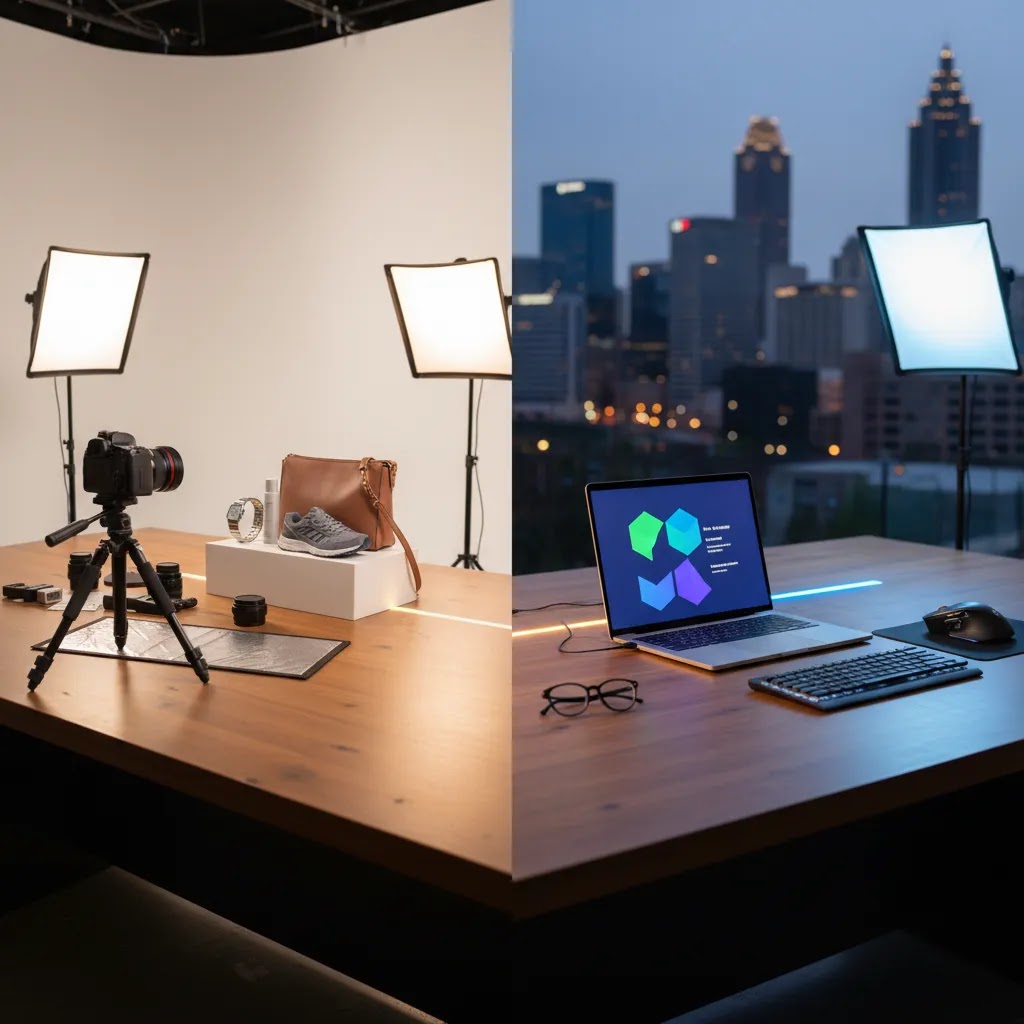
Here is the thing. Most Atlanta studios can produce attractive images. The difference for ecommerce is whether they can repeat that quality across your entire catalog, including the messy edge cases, and whether they understand the channel requirements you actually sell on. If you sell in a specialty category, ask questions that force the studio to explain their process, not just show a few nice frames.
Jewelry and other reflective products (macro, reflections, focus stacking)
Jewelry photography lives and dies by micro detail, clean reflections, and consistent color. A studio that is serious about jewelry should be comfortable with macro lenses, controlled light shaping, and retouching that removes dust and scratches without turning metal into plastic.
From a practical standpoint, ask how they handle reflections and whether they use focus stacking for pieces where depth of field is tight. For Shopify product pages, you also want a repeatable approach to showing scale, for example, consistent earring angles or ring top views that help customers compare across variants.
Prep matters more than most store owners expect. Send pieces cleaned and packaged in a way that prevents movement or scratching in transit. Include a SKU list with finish notes, like polished gold vs matte gold, so the editor does not “correct” the look into the wrong finish.
Apparel (ghost mannequin vs on-model vs flat lay)
Product photography clothing is not one thing. Ghost mannequin is usually best when you want a consistent, catalog-ready look without hiring models. On-model is typically stronger for fit and brand vibe, but it adds scheduling, sizing, and retouching complexity. Flat lays can be great for social and secondary angles, but they can fail on perceived fit if you use them as your only PDP image type.
Ask what the deliverable set looks like per SKU, and how they maintain consistency when sizes and fabrics change. For example, do they standardize the hanger or mannequin height, and do they keep the same crop and shoulder angle across the set? Also ask how they manage color, because apparel returns can spike if the product looks even slightly off compared to reality.
Your prep checklist should include steaming, removing tags or pins you do not want visible, and making sure the correct size is sent for photography. It is also worth bundling each SKU in its own clearly labeled bag, with a printed shot list, so nothing gets mixed mid-shoot.
Furniture and large items (space, logistics, and handling)
Large products add logistical risk. Not every product photography studio atlanta option has the space, backdrops, and moving equipment to handle furniture safely, or the workflow to keep lighting consistent across oversized items.
Ask whether they can shoot large products on white without ugly gradients and corner shadows, and whether they have a plan for damage prevention. If you need lifestyle sets, ask what their set build capability looks like and how they price prop sourcing and studio styling time, because those costs can show up as add-ons later.
For store owners, prep means checking packaging condition before you send it. Dented corners, scuffed legs, or wrinkled upholstery can create retouching work or reshoot delays. If items ship freight, confirm receiving, storage, and return logistics before you approve a schedule.
Amazon “on white” and marketplace-compliant hero images
Amazon product photography atlanta buyers often assume “white background” means “Amazon compliant.” It does not always. Amazon tends to be strict about the main image being on a pure white background, with the product filling most of the frame and no extra text, badges, or props. Policies can change, so you should verify the current requirements for your category before the shoot.
Ask the studio to show examples of compliant hero images and the alternates they typically deliver, such as back-of-pack, label close-ups, in-use photos, and size callouts. Also ask how they ensure consistent crops and aspect ratios so your listing looks coherent across a full SKU family.
One operational detail that prevents delays is SKU organization. Ship products with barcodes visible or include a clear SKU map, and match that map to your shot list. This reduces mix-ups, which are one of the most common reasons you pay for corrections after the shoot.
Pricing and Costs
There is no verified live pricing available from the current tool data for Atlanta studios themselves, so it would be misleading to quote exact local studio rates here. In practice, your cost will usually depend on the number of SKUs, shot complexity, styling needs, retouching depth, and whether you need models, props, or location work. This is why store owners should request a line-item quote rather than comparing headline day rates alone.
What we can verify from the live product data is the availability of AI-supported alternatives and editing tools that may reduce total production cost. The current Products data lists the following solutions, but does not return public pricing tiers for them in the provided feed: AI Background Generator, Free White Background Generator, Increase Image Resolution, Remove Text From Images, Background Swap Editor, Place in Hands, Magic Photo Editor, and Creator Studio. Because pricing was not returned, AcquireConvert cannot state exact costs here.
For practical budgeting, think in three buckets. First, capture costs, which include photography, studio time, prep, and shipping. Second, post-production costs, which include product photography retouching, cropping, exports, and alternate aspect ratios. Third, image reuse costs, which cover updating old images for ads, marketplaces, and seasonal campaigns. If your catalog changes often, a hybrid system of one strong local shoot plus ongoing AI edits may produce a better long-term return than repeated custom sessions.
That is especially true for brands building a reusable product photography studio process rather than treating each photoshoot as a one-off project.
Atlanta Product Photography Packages and Per-Image Pricing (What You Will Actually See in Quotes)
If you request quotes from multiple product photography atlanta providers, you will usually see the same pricing structures show up in different branding. The details matter, because two quotes that look similar at a glance can produce very different final image quality and a very different workload for your team.
Common quote structures (and what they often include or exclude)
Many studios will quote one of these ways. Per-image pricing is common for white background catalogs, especially when the scope is consistent across SKUs. Half-day or full-day rates tend to show up when there is styling, multiple sets, or a mix of products. You may also see “packages” that bundle shooting and editing into a fixed number of final images.
Now, when it comes to what is included, read carefully. A per-image rate might assume one angle only, basic cleanup only, and batch exports only. A day rate might include capture time but treat retouching, clipping paths, and alternate crops as separate line items. A package might cap revisions or deliver only web-sized JPEGs, which can be limiting if you also need marketplace files, ads, and future reuse.
A line-item checklist to request (so you can compare apples to apples)
Before you approve anything, ask for a line-item breakdown that matches how you will actually use the images in Shopify and on marketplaces. The goal is to remove ambiguity and prevent “that is extra” surprises after the shoot.
- Hero on white: background treatment, shadow style (none, natural, or drop shadow), and whether the white is truly clean and consistent
- Angles per SKU: front, back, side, 45-degree, detail close-ups, and any required variant differentiation
- Lifestyle sets: number of sets, prop sourcing, styling time, and whether they deliver multiple crops for ads
- Retouching depth: dust removal, label cleanup, reflection control, texture preservation, and color matching approach
- Clipping paths and cutouts: whether they supply transparent PNGs and how clean the edges will be on tricky shapes
- File formats and exports: JPEG, PNG, TIFF if needed, plus web-optimized sizes and naming conventions
- Aspect ratios and crops: square for collection pages, 4:5 for paid social, and any marketplace-specific sizes you require
- Usage rights: where you can use the images (site, ads, Amazon, wholesale line sheets) and whether there are restrictions
- Revisions: how many rounds are included, what counts as a revision, and turnaround time for changes
If you are building a hybrid workflow, you should also confirm what source files you get. For example, having clean, consistent originals makes it easier to generate derivatives with tools like Free White Background Generator or Background Swap Editor later. You still need to review AI outputs for accuracy, but strong originals give you more options.
What “affordable product photography” can hide
Affordable product photography offers can be real, but they can also hide tradeoffs that show up after you upload images to Shopify. One common tradeoff is aggressive batch retouching. It may keep the rate low, but it can lead to inconsistent lighting across a SKU set, uneven whites, and messy edges around products. Those issues can make collection pages look chaotic, even if individual images look fine.
Another tradeoff is revision limits. If a studio includes very few revisions, your team may end up accepting images that are “close enough,” even when they are not consistent with your existing catalog. Also watch for quotes that exclude exports in the formats you actually need. If you have to pay extra for square crops, 4:5 crops, and Amazon hero versions, the all-in cost can land higher than a more expensive-looking quote that included them upfront.
Think of it this way. For ecommerce, value is not just a low per-image number. It is whether the provider can deliver a repeatable system, so your product pages look consistent, your ads have usable creative, and your team is not stuck doing cleanup work after delivery.
Trust and Credibility
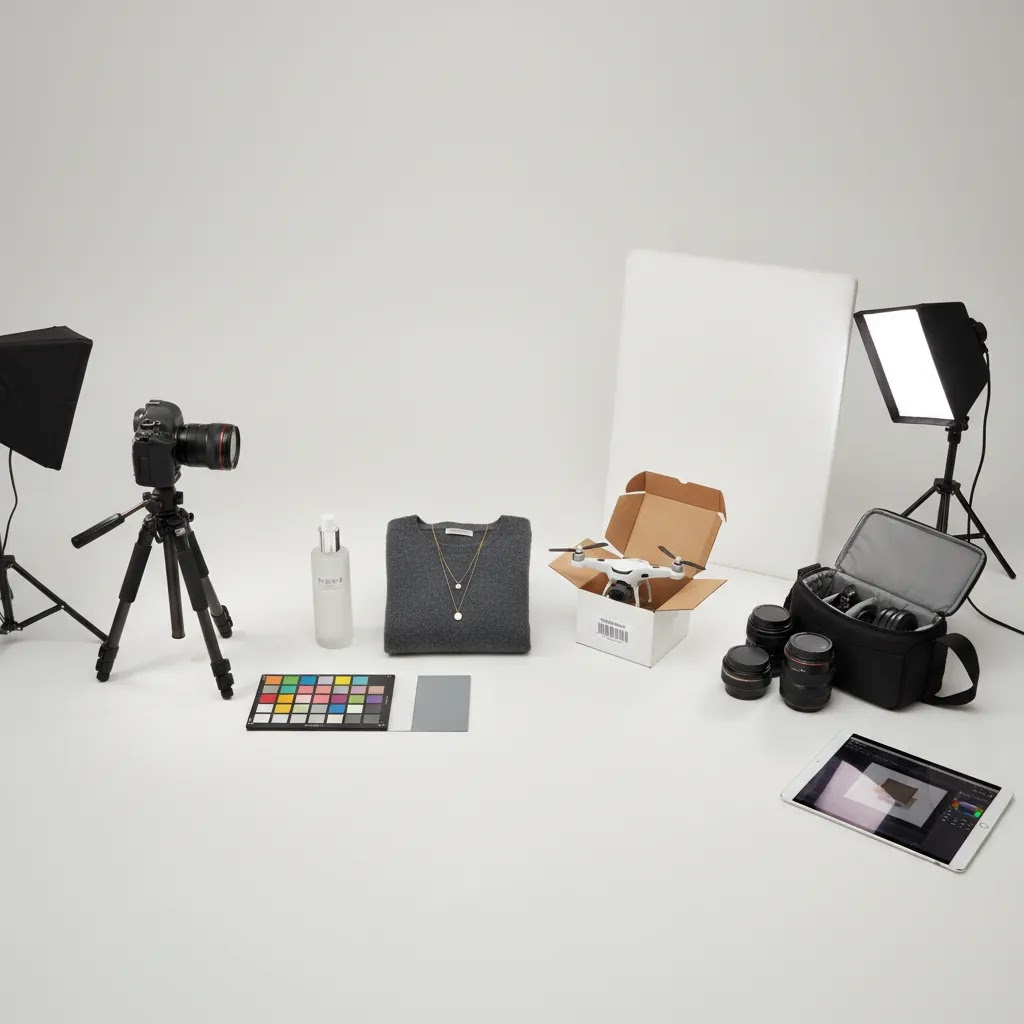
When evaluating any Atlanta product photography provider, trust should come from operational reliability, not just portfolio quality. Ask for examples of ecommerce work that show consistency across multiple SKUs, not a highlight reel of unrelated commercial shoots. A capable studio should explain file naming, image export specs, retouching standards, revision policy, and turnaround times in plain terms.
For Shopify merchants, that operational discipline matters because poor image consistency can weaken collection page merchandising and reduce confidence on product detail pages. Giles Thomas, through AcquireConvert, approaches these decisions from a Shopify Partner perspective, which means looking at whether the image workflow supports faster merchandising and stronger conversion paths, not just creative presentation. The Google Expert angle also matters if those same images will be reused in Shopping ads, Performance Max creative, or social campaigns.
On the AI side, credibility comes from using the tools for the right tasks. A tool like Remove Text From Images may help clean older assets. Magic Photo Editor may help generate alternate versions faster. But AI output still needs human review for color accuracy, packaging details, and brand compliance.
How to Vet a Product Photographer’s Portfolio for Ecommerce (Not Just Pretty Images)
What many store owners overlook is that ecommerce photography is not only about making the product look good. It is about making the product understandable. Your images need to answer buyer questions quickly on a product detail page, and they need to look consistent across a collection grid. A photographer can have a beautiful portfolio and still be the wrong fit for a Shopify catalog.
A quick evaluation framework that maps to Shopify and marketplace needs
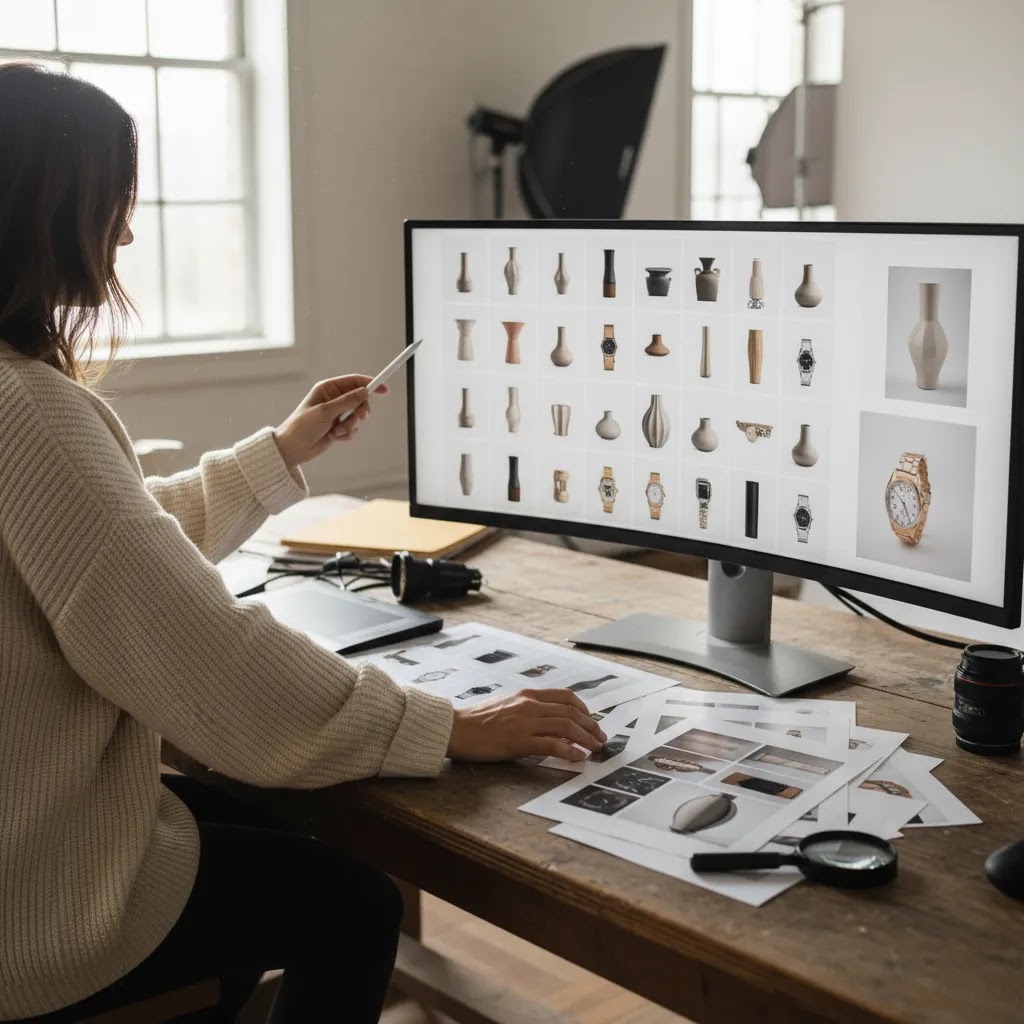
Start by asking to see a full SKU set, not just five favorites. You want to see 10 to 30 images from the same brand shoot, including “boring” items and hard-to-shoot packaging. This is the fastest way to spot whether they can keep lighting and crops consistent across a batch.
Then check the basics that impact conversion. Do the crops match so collection pages look clean? Is color accurate enough that variants are clear, especially for apparel and cosmetics? Are reflections controlled so labels are readable? Are there angles that actually support buying decisions, like texture close-ups, scale cues, and functional details?
Consider this from an ecommerce standpoint. The image set should reduce hesitation. If the photos are all hero shots with no details, you may see more pre-purchase questions and more returns. If the set includes clear detail angles and size context, it can support confidence, especially for higher-AOV products.
Process proof points that matter for high-volume catalogs
Ask how approvals work. Do they use a contact sheet, a proofing gallery, or a simple pick list where you can approve per SKU? Ask whether they build a shot list with you before the shoot and whether they confirm SKUs on intake, so you do not get “mystery images” that are hard to match to products in Shopify.
If you have a large catalog, ask how they keep consistency from month to month. Do they document lighting setups and camera settings? Do they maintain the same background and crop rules? Do they keep naming conventions that match your SKU structure? Those operational details are not glamorous, but they are often the difference between a one-time shoot and a sustainable content pipeline.
Finally, pressure-test how they think about usage. A strong ecommerce provider will ask where the images will live, for example, Shopify PDPs, collection pages, Amazon listings, or ads. That mindset matters because it influences everything from framing to export sizes. It also helps you avoid paying for beautiful images that do not actually fit your selling channels.
Who This Approach Is Best For
A local Atlanta studio is usually the best fit if you sell tactile, detail-heavy, or brand-sensitive products where physical lighting and styling make a clear difference. That includes beauty, apparel, jewelry, premium packaged goods, and products needing macro product photography. It also suits brands launching wholesale lines or retail presentations where image consistency has to hold up across many channels.
A hybrid model works best for lean Shopify teams. In that setup, you use a local photographer for hero assets and then AI tools for derivatives, background swaps, resolution fixes, or campaign variations. If you mainly need simple catalog shots and have a lower creative complexity, phone product photography plus editing tools may be enough for some launches. Just be realistic about where DIY quality starts to limit perceived brand value.
How to Get Started
Start by listing the image types your store actually needs over the next 90 days. Separate hero images, collection images, lifestyle images, marketplace images, and ad creatives. This prevents overbuying a premium shoot package that does not match your sales channels.
Next, shortlist two to four Atlanta providers and ask for quotes using the same brief. Include SKU count, dimensions, styling notes, required angles, and delivery formats. If you are unsure how to structure the service side, review broader benchmarks through our Product Photography Services category.
Then test a hybrid workflow. Capture a few core product images locally and use tools such as AI Background Generator or Creator Studio to produce secondary assets. Compare output for speed, consistency, and how well the images fit your Shopify theme.
Finally, measure business usefulness, not just image aesthetics. Review click-through rate from collection pages, add-to-cart behavior, and ad creative usability. That will tell you whether the studio, the AI workflow, or the combination is giving you the best operational return.
Pros and Cons
Strengths
- Atlanta offers a practical local market for ecommerce brands that want professional product shots without relying on a higher-cost national production hub.
- Local shoots are well suited to complex categories such as cosmetics, apparel, reflective packaging, and macro detail photography.
- A hybrid workflow can reduce repeat studio bookings by combining original photography with AI-based post-production tools.
- Professional product photography can improve visual consistency across Shopify pages, marketplaces, paid ads, and email campaigns.
- Atlanta providers may be easier to coordinate with for reshoots, product handling, and faster feedback cycles than remote national agencies.
Considerations
- There is no verified universal pricing standard for local studios, so quotes can vary widely based on scope and post-production needs.
- Not every commercial photographer understands ecommerce requirements such as Shopify cropping consistency, Amazon hero image rules, or bulk SKU workflows.
- AI tools can help with edits and variations, but they still need human review for color accuracy, packaging detail, and brand control.
- DIY phone product photography may work for some products, but it often falls short once you need repeatable catalog quality at scale.
Frequently Asked Questions
How do I choose between an Atlanta studio and a freelancer?
If your products need advanced lighting, multiple sets, or a larger team for styling and retouching, a studio is often the safer choice. If your needs are smaller, seasonal, or more flexible, experienced freelance photographers may be a better fit. The key is whether they understand ecommerce deliverables, not just photography technique.
Is product photography atlanta a good option for Shopify stores?
Yes, especially if your products benefit from stronger perceived quality through better imagery. For Shopify stores, the most important factors are image consistency, fast loading after optimization, and having the right mix of hero, detail, and lifestyle images. A local provider can help if they understand ecommerce merchandising requirements.
Can AI replace a local product photographer?
Sometimes, but not fully. AI may work well for background changes, cleanup, resolution improvement, or generating supporting creative variations. It is less reliable when physical lighting, true texture, exact color accuracy, or packaging realism are critical. Many stores will get better results from combining a local shoot with selective AI editing.
What products benefit most from a local studio shoot?
Clothing, cosmetics, jewelry, glass, food packaging, and premium branded goods usually benefit the most. These products often need careful lighting and retouching to show texture, finish, and shape accurately. If your brand sells on your own site plus Amazon or retail marketplaces, a professional shoot can also help maintain consistency across channels.
Should I ask about retouching before booking?
Yes. Product photography retouching affects shadows, dust removal, label cleanup, reflections, skin tones for model work, and final polish. Ask how many revisions are included, what level of retouching is standard, and whether exports for Shopify, Amazon, or ads are priced separately. This is where quotes often become less comparable.
Is phone product photography enough for a small ecommerce brand?
It may be enough if you sell simple products, have strong natural light, and mainly need social content or early-stage validation assets. Once your catalog grows or you rely on marketplace listings and paid acquisition, quality and consistency usually become more important. That is often the point where a studio or hybrid workflow makes more sense.
How quickly can I expect usable ecommerce images?
That depends on scheduling, SKU count, and retouching requirements. Many local shoots move faster when your brief is complete and products arrive organized. AI tools may shorten turnaround for alternate versions and background changes, but final timing still depends on review cycles and quality control. Results will vary by provider and project scope.
How much does product photography cost per image in Atlanta?
There is no single standard rate and AcquireConvert does not have verified live pricing for Atlanta studios in the current tool data. In many cases, studios quote per-image pricing for product-on-white work and day rates for more complex shoots, then add editing and exports as separate line items. The practical move is to ask for a line-item quote that spells out angles per SKU, retouching depth, included revisions, and delivery formats so you can compare providers fairly.
Do Atlanta product photographers offer Amazon white background photos and compliant hero images?
Many do, but you should confirm it explicitly and ask to see examples from real marketplace work. Amazon tends to have strict requirements for main images, and policies can change by category, so verify the current rules before you shoot. Ask whether the studio will deliver compliant hero images on pure white, plus alternates like back-of-pack, detail close-ups, and in-use angles.
What is included in a typical product photography package (shooting, editing, retouching, revisions)?
Packages vary by provider, but they often bundle capture plus a defined level of editing. The gaps usually show up in retouching depth, number of included angles, revision limits, and whether you get multiple crops and aspect ratios for Shopify, ads, and marketplaces. Ask for written confirmation of what is included and what counts as an add-on, especially for clipping paths, shadow styles, and additional exports.
Do I need to ship products to the studio, or can they photograph on-site in Atlanta?
Both options exist. Many studios prefer products shipped or dropped off so they can keep the lighting setup controlled and run a predictable workflow. On-site photography can work when products are large, fragile, or difficult to move, but it may add travel time, setup constraints, and variability in the shooting environment. Confirm intake process, handling expectations, and who is responsible for return shipping before you book.
Key Takeaways
- Product photography atlanta services can be a strong fit for Shopify brands that need polished, repeatable ecommerce images.
- The best provider is the one that understands ecommerce deliverables, not just general commercial photography.
- AI tools may reduce total production work for backgrounds, cleanup, and asset variations, but they do not remove the need for quality control.
- For many brands, a hybrid system of local photography plus AI editing is the most practical path.
- Request scope-matched quotes and compare revision policy, retouching depth, and delivery formats before committing.
Conclusion
For ecommerce brands evaluating product photography atlanta options, the smart move is to choose a workflow, not just a photographer. If your products need tactile detail, premium lighting, or marketplace-ready consistency, a local studio can be worth the investment. If your needs are more repetitive and operational, AI-assisted tools may help you stretch each shoot further and reduce repeat production work. AcquireConvert approaches these decisions through real Shopify and ecommerce execution, which means balancing image quality against speed, scale, and cost control. Start by defining the images your store truly needs, test one Atlanta provider with a small batch, and compare the output against a hybrid editing workflow before you commit to a larger production plan.
Disclosure: AcquireConvert may receive affiliate compensation from some third-party tool links referenced in this article. Pricing and feature availability should be confirmed directly with each provider, since the live product data available for this article did not include verified pricing tiers. Any performance impact from new product photography or AI editing tools may vary based on your store, niche, traffic quality, merchandising, and implementation.
Hi, I'm Giles Thomas.
Founder of AcquireConvert, the place where ecommerce entrepreneurs & marketers go to learn growth. I'm also the founder of Shopify agency Whole Design Studios.