Video Advertising for Products (2026 Guide)


If you sell online, video advertising can help bridge the gap between product discovery and purchase. A strong product video gives shoppers context that static images often miss. It can show size, movement, texture, benefits, and use cases in seconds. For Shopify store owners, that matters because buyers usually decide fast. The challenge is not whether to use video. It is choosing the right format, creative approach, and distribution strategy for your store size, margins, and product category. This guide breaks down what actually matters in video advertising for ecommerce brands, from short-form social placements to programmatic video campaigns and AI-assisted production workflows. If you are also exploring creative automation, our guide to ai ad generator tools is a useful next step.
Contents
- What video advertising means for ecommerce
- The main video ad formats to consider
- Video ad placements: pre-roll, in-feed, outstream, and more
- How to build a product video advertising strategy
- Cross-platform video planning and measurement
- What strong ecommerce video creative looks like
- Video ad production realities, budgets, and timelines
- Pros and Cons
- Who video advertising is best for
- AcquireConvert recommendation
- How to choose the right video approach
- Frequently Asked Questions
- Key Takeaways
What video advertising means for ecommerce
For ecommerce brands, video advertising is the use of short or long-form video creative to attract, educate, retarget, and convert shoppers across paid and owned channels. That can include social video ads, YouTube placements, connected TV, on-site product videos, email video embeds, marketplace ads, and programmatic video advertising inventory.
The reason it works well for products is simple. A good advertising video can answer the buyer's unspoken questions before they bounce. How big is it? How does it look in real life? How do you use it? What problem does it solve? Those are conversion questions, not just branding questions.
For Shopify merchants, the most effective setup usually connects video creative with product page experience. If your ad shows one story and your landing page shows another, performance often suffers. That is why strong stores treat video as part of the whole funnel, not a separate campaign asset.
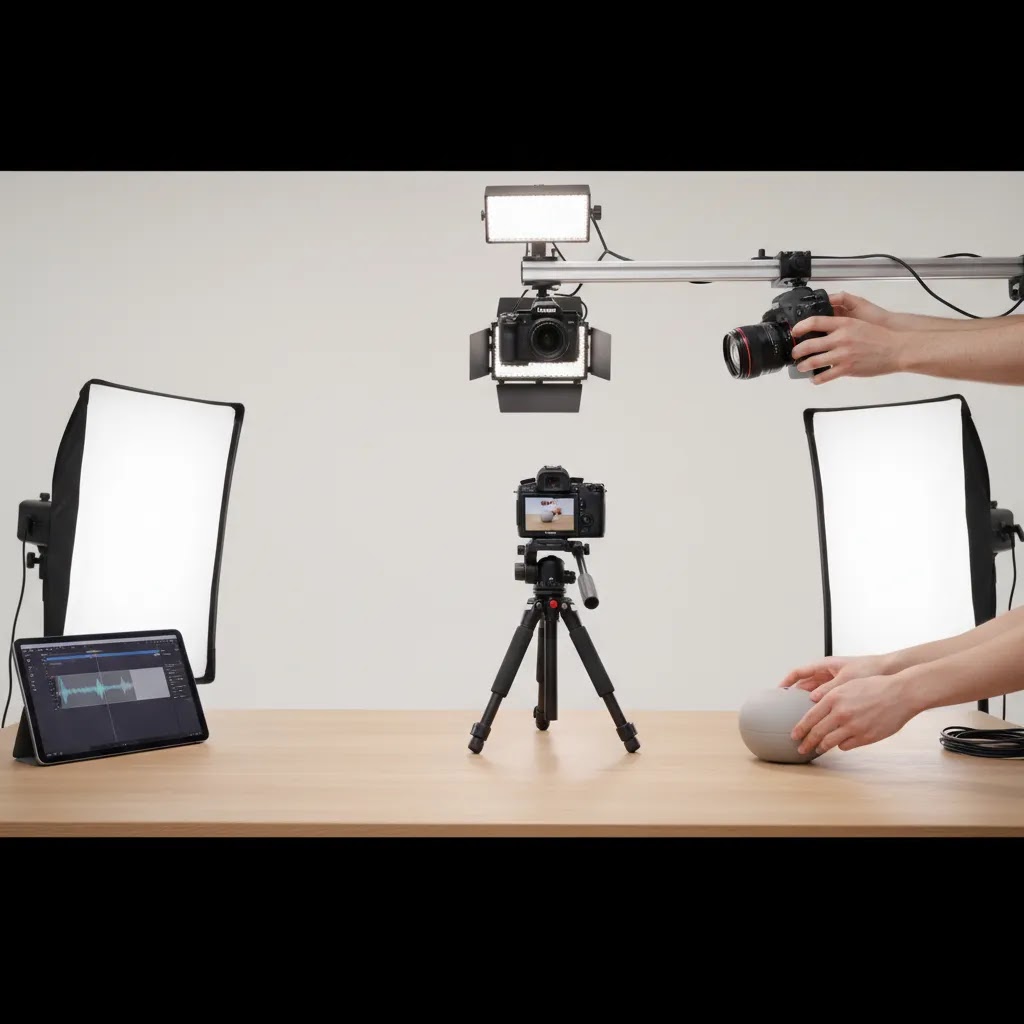
If your product visuals still need work before you turn them into ads, it is worth reviewing broader product video and animation resources alongside image production workflows like building a reliable product photography studio.
The main video ad formats to consider
Not every video ad format suits every store. The right choice depends on your average order value, product complexity, purchase cycle, and creative capacity.
Short-form social video ads
These are usually 6 to 30 seconds and work well for impulse products, problem-solution offers, and lifestyle-led brands. They are often the fastest route into online video advertising because you can test hooks, captions, and offers quickly.
Product demo videos
These focus on use, setup, features, or outcomes. They are especially useful for beauty, gadgets, home products, and any item where function needs to be shown clearly. A demo-led video ad often performs well for retargeting and lower-funnel traffic.
UGC-style ads
User-generated style content can feel more believable than polished brand creative, especially on mobile feeds. AI-assisted workflows are making this category more accessible, but the message still matters more than the tool. If this area interests you, explore the AI UGC content category at https://acquireconvert.com/ai-ugc/.
Programmatic video advertising
This is useful when you want broader reach across websites, apps, or streaming environments. It can support awareness at scale, though it usually requires stronger targeting discipline and clearer measurement expectations than many smaller merchants are ready for.
On-site product videos
These are not always discussed as ads, but they support ad performance directly. If paid traffic lands on a product page with no motion or demonstration, you may be wasting the intent your ads created.
Video ad placements: pre-roll, in-feed, outstream, and more
Formats describe the creative style, but placements describe where that video appears and how people experience it. This matters because attention, intent, and even sound settings change by placement. If you have ever wondered why the same video performs differently across platforms, placement is usually a big part of the answer.
Pre-roll, mid-roll, and post-roll placements
These are the classic “around content” placements, commonly associated with YouTube and streaming environments.
Pre-roll runs before the main content starts. From a practical standpoint, this is often your best shot at getting full attention, but you may have very little patience from the viewer. Your opening has to be direct.
Mid-roll runs during longer content. It can perform well for reach and cost efficiency in some cases, but the context is different. You are interrupting something the viewer chose to watch, so the creative needs to earn the interruption quickly.
Post-roll runs after the content ends. In many cases, it gets less attention because people drop off as soon as the video finishes, but it can still work for simple offers or reminder-style messaging.
In-feed video placements
In-feed is what most Shopify merchants think of when they think “video ads” because it is the default on paid social. The user is scrolling, not searching, and you are competing with other content. In-feed is usually where short-form hooks, UGC-style ads, and quick product demonstrations shine.
When to use in-feed for ecommerce: it is typically a strong choice for discovery and light consideration, especially for products you can understand in a glance. It can also work for retargeting if your creative is specific, for example, a short clip that answers one objection or highlights a bundle.
Outstream video placements
Outstream video is video inventory that appears outside of a dedicated video player, often on websites and in apps, and it may autoplay as the user scrolls. It is common in programmatic buys.
The reality is that outstream attention can be more fragile. Many viewers will see only a second or two as they scroll past. That is not necessarily “bad,” but it changes what “success” looks like. Use outstream when you want efficient reach and quick brand or product exposure, not when you need a detailed explanation to land.
Connected TV and streaming placements
Connected TV, often abbreviated as CTV, usually means your ads show in streaming environments on television screens. It can be great for higher perceived brand trust, but it is often less direct response friendly for smaller merchants unless you have a clear measurement plan and a product that can handle a longer consideration cycle.
For most Shopify store owners, the most practical way to think about CTV is as an awareness layer that should still connect back to ecommerce outcomes, such as branded search lift, assisted conversions, and retargeting pool growth, rather than expecting it to behave like a click-driven social ad.
Creative requirements that change by placement
What many store owners overlook is that placement changes the creative rules. In-feed and outstream should assume sound-off, so captions and visual clarity matter. Pre-roll needs a decisive first two seconds, because skipping behavior is real. For retargeting placements, your call to action often needs to arrive earlier, because viewers already know who you are and you are trying to reduce hesitation, not tell your origin story.
How to build a product video advertising strategy
A practical ecommerce video strategy starts with funnel clarity. Do not brief one video to do everything. Awareness, consideration, and conversion usually need different creative.
Top of funnel videos should stop the scroll. Lead with the problem, a surprising use case, or a sharp visual demonstration in the first two seconds. Your job here is to earn attention, not explain every feature.
Middle of funnel videos should answer objections. Show product benefits, social proof, before-and-after context, and the experience of owning or using the product. This is where digital video advertising often starts pulling its weight for qualified audiences.
Bottom of funnel videos should reduce hesitation. Highlight shipping, bundles, guarantees, materials, compatibility, or side-by-side comparisons. Short retargeting clips often work better than full explainers at this stage.
For many store owners, the simplest structure is to build one core product story and then adapt it into multiple placements. A single shoot or AI-assisted asset set can become a vertical mobile ad, a product page loop, a retargeting cutdown, and a marketplace-friendly version. If you are creating motion from existing stills, our resource on make photo animation online free workflows can help.
Cross-platform video planning and measurement
If you are running video across more than one channel, for example YouTube plus paid social, you need a plan that keeps your testing clean. Otherwise you end up with a mess of “views” and “engagement” that looks good in dashboards but does not tell you what is actually moving ecommerce performance.
Keep one concept, then adapt the edit by placement
Think of it this way: your core concept is the message and demonstration, not the exact cut. Keep the offer, the product promise, and the proof consistent, then adapt the edit to the placement. A vertical in-feed version may need faster pacing and heavier captions. A YouTube placement may need clearer story flow and a slightly longer setup. Your product page version may be tighter and more instructional.
This approach also makes it easier to learn. If every platform gets a totally different story, you cannot tell whether results changed because of targeting, placement, creative, or landing page alignment.
Align targeting and landing pages so results are comparable
Cross-platform tests break when you send traffic to different experiences. If one channel goes to a collection page and another goes to a product page, you are testing more than video. The way this works in practice is simple: keep the landing page consistent for your main test, and change only one big variable at a time.
For Shopify stores, that often means using the same featured product page or the same dedicated landing page experience for each channel, and then adjusting only the creative and the audience targeting.
What to track beyond views
Views can be useful as a directional signal, but they are not a business result. Different platforms count views differently, and some placements generate “views” that reflect a fraction of a second on screen.
From a measurement standpoint, it helps to match metrics to funnel stage:
- For awareness, watch for quality signals like view-through rate and time watched, but also whether your retargeting pools grow and whether branded search or direct traffic trends upward over time.
- For consideration, focus on click-through rate and landing page engagement signals, such as bounce rate and time on page, plus add-to-cart behavior.
- For conversion, prioritize cost per add to cart, cost per purchase, conversion rate, and return on ad spend where applicable.
It is also worth checking assisted conversion patterns in your analytics, because video can influence a purchase even when it is not the last click. Exact attribution varies by platform and reporting model, so use it as guidance, not as a single source of truth.
Common attribution pitfalls in video advertising
Here is the thing: once you run YouTube, paid social, and programmatic together, platforms will often try to take credit for the same sale. View-through attribution can make a channel look great even if it did not meaningfully influence the purchase. Last-click attribution can do the opposite, especially if a shopper saw a video ad, then searched your brand later and purchased through a branded search ad.
To keep evaluation grounded, pick a primary success metric tied to ecommerce outcomes, then review it consistently across channels. If you are spending on upper-funnel video, set expectations upfront that performance may show up as assisted behavior, not instant direct response. The goal is to build a measurement approach you can trust enough to make decisions, not to win an argument with a dashboard.

What strong ecommerce video creative looks like
The best advertising video is rarely the prettiest one. It is the one that communicates quickly and matches buying intent.
For most products, effective creative includes:
- A clear hook in the first 1 to 3 seconds
- The product visible early, not hidden behind brand intro
- One core message per variation
- Text overlays for silent viewing on mobile video advertising placements
- Real-world context showing size, use, or outcome
- A landing page that reflects the same promise as the ad
Creative production has also changed. Many brands now combine traditional shoots with AI-assisted editing, background replacement, avatar or UGC simulation, and fast variation testing. That can help smaller merchants produce more ad concepts without expanding production costs too quickly. Still, you should treat AI video advertising as a speed tool, not a substitute for product-market clarity.
If your team is refining concepts and message angles before production, our guide to ad creative ai is relevant. If your product category depends heavily on visual polish, such as beauty, seeing examples like ai makeup generator use cases can also spark more channel-appropriate creative ideas.
Video ad production realities, budgets, and timelines
Most Shopify store owners do not fail at video advertising because of strategy. They fail because production feels expensive, slow, or hard to repeat. Getting realistic about cost drivers and timelines makes video far easier to execute consistently.
What drives the cost of a 30 to 120 second product video
Video cost is not just “camera or no camera.” It usually comes down to complexity and how many versions you need. The biggest cost drivers tend to be:
- Talent and usage rights, especially if you are hiring creators or actors.
- Location and set needs, including props, styling, and lighting.
- How much editing is required, such as motion graphics, product callouts, color correction, and sound work.
- Versioning, meaning cutdowns, aspect ratios, caption variants, and different hooks or offers.
A two-minute video can cost very little if you shoot it yourself and keep it simple, or it can become expensive quickly if you are producing a polished brand piece with talent, multiple scenes, and heavy post-production. Pricing varies widely, so treat “average costs” you see online as rough ranges, not a quote.
Lean production options for smaller ecommerce teams
If you cannot film a full shoot right now, you still have workable paths:
- Film on a phone with decent natural light and stable framing. For many products, clarity beats cinematic production.
- Repurpose UGC and customer content, with permission. UGC often works well because it feels like proof, not a commercial.
- Turn product photos into motion using simple animation, punch-ins, and text overlays. This can be a practical bridge when you have strong photography but limited video.
- Use AI-assisted editing for variations, background cleanup, and fast formatting, but review outputs before publishing or running ads. AI can speed things up, but it still needs human judgment.
From a practical standpoint, the goal is not to “make a video.” The goal is to build a repeatable workflow that produces usable variations every month, not one hero asset every year.
Plan for versioning, because one hero video is rarely enough
What many store owners overlook is that performance usually comes from iteration. A single hero video might be good for your product page, but ads typically need multiple hooks, multiple lengths, and multiple crops.
When you plan a shoot or an editing sprint, budget time for:
- At least 3 to 5 different openings, because the first seconds often decide performance.
- Short cutdowns, such as 6 to 10 seconds and 15 to 30 seconds, for in-feed and retargeting.
- Captions and on-screen text, since sound-off viewing is common.
- Platform specs and safe zones, especially if you want the same story to work across placements.
If you handle versioning up front, your ads get easier to manage, and your testing becomes more systematic. That is usually where the real efficiency comes from, not from trying to force one edit to work everywhere.
Pros and Cons
Strengths
- Video can show product function, texture, fit, and context faster than static imagery alone.
- It often supports stronger message testing because you can vary hooks, voiceover, captions, and calls to action.
- Mobile-first placements make video a natural fit for paid social, YouTube, and retargeting campaigns.
- On-site product videos may help prequalified visitors understand the offer better before buying.
- AI-assisted production can make variation testing more realistic for smaller ecommerce teams.
Considerations
- Video takes more planning than static ads because scripting, pacing, and editing all affect performance.
- Not every product needs high production value. Overspending on creative can hurt efficiency for lower-margin items.
- Programmatic video advertising may be too complex or broad for stores that have not yet nailed basic paid social or search.
- Poor landing page alignment can cancel out the benefit of a strong video ad.
Who video advertising is best for
Video advertising is a strong fit for stores selling products that benefit from demonstration, comparison, or lifestyle context. That includes beauty, apparel, home goods, accessories, wellness products, gadgets, and visually distinctive DTC items.
It is especially useful for Shopify merchants who already have some traffic and want to improve click quality or conversion intent rather than just buy more impressions. If your product needs explanation, if shoppers often ask the same pre-purchase questions, or if your return rate suggests expectation gaps, video may help tighten the journey.
It may be less urgent for highly commoditized products where price is the main decision driver and the listing environment gives you limited creative control.
AcquireConvert recommendation
For most ecommerce brands, the best starting point is not a massive video ad rollout. It is a structured test plan with a few clear creative angles, channel-specific edits, and landing pages that match what the ad promises. That practical approach aligns with how Giles Thomas, as a Shopify Partner and Google Expert, frames growth decisions for store owners: start with assets that improve clarity, measure response honestly, and expand only after you see what resonates.
If you are building a production workflow, AcquireConvert is a useful specialist resource for adjacent topics such as video bg remover tools and creative automation. For brands exploring AI-assisted production, ProductAI's Creator Studio and Magic Photo Editor may help generate or refine visual assets that can later be adapted for ad concepts. Product and pricing details can change, so check the provider directly before committing.
How to choose the right video approach
If you are deciding where to invest first, these five criteria matter most.
1. Product complexity
The more your product needs explanation, the more value you are likely to get from demo-led video. A fashion accessory may need only short lifestyle motion, while a multifunction beauty tool may need a clearer step-by-step sequence.
2. Margin and average order value
Stores with higher AOV or stronger repeat purchase potential usually have more room to test richer creative. Lower-margin stores should stay disciplined and produce leaner video assets first.
3. Channel mix
Online video advertising should fit where your audience already converts. If paid social is your main driver, prioritize vertical short-form creative. If YouTube or broader awareness is a real part of your mix, longer explainers and programmatic video advertising may deserve testing.
4. Asset readiness
You do not always need a full shoot. Some stores can build effective ads from stills, product renders, and edited clips. If your source assets are inconsistent, fix that before scaling spend. Background cleanup and format adaptation are often worth doing upfront.
5. Measurement discipline
Judge videos by business impact, not only view metrics. Watch click-through rate, landing page engagement, add-to-cart behavior, and assisted conversion patterns. A flashy ad with weak downstream performance is not a good asset.
One more point: match your production style to your brand and category. A beauty label may benefit from polished, tutorial-led creative. A home storage product may perform better with quick, problem-solution clips. A store selling simple products can often do more with one strong hook and a direct offer than with a highly produced brand film.
Frequently Asked Questions
What is video advertising in ecommerce?
Video advertising in ecommerce means using video content to promote products across channels such as social media, YouTube, websites, apps, and product pages. The goal may be awareness, consideration, retargeting, or direct response. For most stores, the strongest results come when the video matches both the platform format and the product page experience shoppers see after clicking.
What is meant by video advertising?
Video advertising means using video creative as the ad unit, rather than static images or text, to promote a product, brand, or offer. In ecommerce, it usually includes placements such as in-feed social ads, YouTube pre-roll, streaming placements, and programmatic inventory. The goal can be attention and awareness, but it can also be direct response if the creative and landing page are built for conversion.
What is the best length for a product video ad?
There is no perfect length for every store, but short-form ads between 6 and 30 seconds are often the most practical starting point for paid social and mobile placements. Longer videos can work when a product needs explanation. The key is to show the product and value proposition quickly rather than saving the main point for the end.
How is programmatic video advertising different from paid social video ads?
Programmatic video advertising uses automated media buying across websites, apps, and streaming inventory, while paid social runs inside specific platforms such as Meta or TikTok. Programmatic can broaden reach, but it usually requires tighter audience strategy and more careful measurement. Many smaller ecommerce brands start with paid social before expanding into programmatic channels.
Does video advertising work for small Shopify stores?
Yes, it can, especially if your products benefit from demonstration or visual storytelling. Small Shopify stores do not need expensive productions to get started. Often, a few well-structured clips, good captions, and strong product page alignment are enough to test whether video improves traffic quality or shopper understanding.
What makes a good mobile video advertising creative?
A strong mobile video ad gets to the point fast. It uses vertical or mobile-friendly framing, visible product shots early, readable on-screen text, and a clear single message. Since many viewers watch without sound, captions and visual clarity matter. You should also assume the first few seconds determine whether people keep watching.
Can AI help create advertising videos for products?
AI can help with ideation, editing, background replacement, visual variations, and turning existing images into motion assets. It may speed up production and testing, especially for smaller teams. Still, AI works best when you already know your audience, offer, and message. It is a support tool, not a substitute for strategy or customer insight.
Should every product page have video?
Not necessarily, but many products benefit from it. If buyers need help understanding scale, movement, texture, assembly, or results, on-site video can be useful. For simple or commodity products, strong photography may be enough. Prioritize video on high-intent pages where it answers common questions that would otherwise slow a purchase decision.
How many video variations should I test first?
Start small and structured. Three to five creative variations is often enough to compare different hooks, offers, or visual approaches without making analysis messy. For example, test one problem-solution version, one demo version, and one testimonial or UGC-style version. Keep the landing page consistent so you can isolate what the video itself is changing.
What metrics matter most for video advertising?
View-through data can be helpful, but ecommerce stores should focus on metrics tied to buying intent. That includes click-through rate, cost per landing page view, add-to-cart rate, conversion rate, and return on ad spend where applicable. A video that gets attention but sends weak traffic is not as valuable as one that attracts fewer but more qualified shoppers.
What is the 3 3 3 rule in marketing?
The 3 3 3 rule is a simple creative discipline some marketers use to keep ads clear: communicate one main idea in around 3 seconds, support it with roughly 3 key points, and aim to make the message understandable even if someone only gives you about 3 moments of attention. For ecommerce video ads, this usually translates to a fast hook, one clear product promise, and a small number of proof points like a demo moment, a benefit callout, or a credibility signal.
How much does a 2 minute video cost?
It depends on what you mean by “two minutes.” If you film on a phone, use natural light, and keep editing simple, the cost could mostly be your time. If you hire talent, book a location, and need heavier editing plus multiple versions, costs can rise quickly. The most useful way to budget is to list your real requirements, such as talent, number of scenes, and how many cutdowns you need, then work backward from there.
Is $20 a day good for Google Ads?
$20 a day can be enough to learn, but whether it is “good” depends on your category, CPCs, and how much data you need to make decisions. For shopping-focused campaigns, some products may struggle to generate enough clicks at that budget to stabilize performance quickly, while others can still produce useful signals. If you are using video alongside Google Ads, judge success by downstream actions on your Shopify site, not just views or impressions, and confirm your tracking is working before you scale spend. Policies and campaign types change, so check current Google Ads guidance before making major structural changes.
Key Takeaways
- Use different video ad types for awareness, consideration, and conversion instead of asking one creative to do everything.
- Show the product early and answer real shopper questions such as use, size, outcome, or fit.
- Prioritize mobile-friendly formats and landing page consistency before expanding into more complex channels.
- Test a small set of clear creative angles first, then scale the formats that bring qualified traffic.
- Use AI-assisted production to speed up variation testing, but keep strategy and message quality at the center.
Conclusion
Video advertising can be one of the most useful ways to make your product easier to understand and easier to buy. For ecommerce brands, the win usually comes from clarity rather than production flash. If your ad quickly shows what the product does, who it is for, and why it is worth the click, you are already ahead of many competitors. Start with one or two product-led concepts, adapt them for the channels you already use, and review performance based on downstream buying signals. If you want more practical guidance, explore AcquireConvert's related resources on creative automation, product video workflows, and AI-supported asset production. Giles Thomas's Shopify and Google experience gives the advice a store-owner lens, which is exactly what matters when you are deciding what to test next.
This content is editorial and intended for educational purposes. It is not a paid endorsement unless explicitly stated otherwise. Pricing, features, and availability for any referenced tools or services are subject to change, so verify current details directly with the provider. Marketing results vary by store, product, audience, offer, and execution, and are not guaranteed.
Hi, I'm Giles Thomas.
Founder of AcquireConvert, the place where ecommerce entrepreneurs & marketers go to learn growth. I'm also the founder of Shopify agency Whole Design Studios.